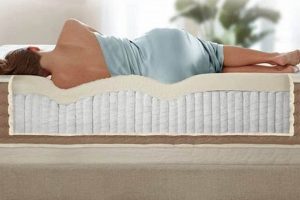
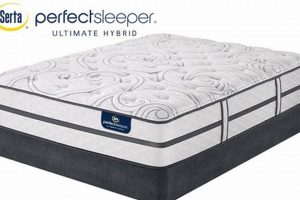
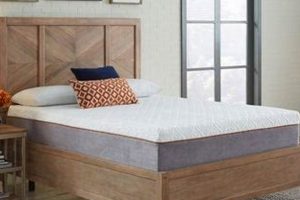
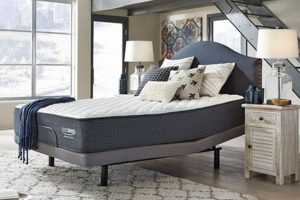
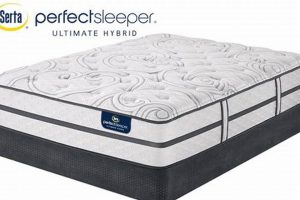
Products designed to optimize rest by incorporating research-backed principles of sleep physiology and biomechanics. These products often involve layered construction using materials intended to minimize pressure points, regulate temperature, and provide appropriate spinal alignment. For instance, a product of this type might include a memory foam comfort layer, a transition layer for support, and a base layer for stability.
The significance of such designs lies in their potential to improve sleep quality, reduce discomfort, and promote overall well-being. Historically, bedding advancements focused primarily on comfort and aesthetics. Modern approaches, however, emphasize the integration of scientific findings to address specific sleep-related issues, such as back pain, insomnia, and temperature regulation. This shift towards evidence-based design reflects a growing understanding of the crucial role sleep plays in physical and cognitive health.
The following sections will delve into the specific materials used in these products, the scientific principles guiding their construction, and the key factors to consider when selecting the optimal product for individual needs and preferences. Further discussion will also cover independent assessments and considerations regarding the correlation between product features and sleep outcomes.
Guidance for Selection and Use
Optimal utilization of a product engineered for improved rest hinges on several key considerations. Understanding these factors can maximize the potential benefits and ensure a more restorative sleep experience.
Tip 1: Assess Individual Needs: Consider pre-existing conditions, body weight, preferred sleep position, and sensitivity to temperature. These factors directly influence the type of support and comfort levels required.
Tip 2: Evaluate Material Composition: Investigate the materials used in construction. Memory foam, latex, and innerspring systems offer varying degrees of support, pressure relief, and breathability. Ensure materials are certified for low VOC emissions.
Tip 3: Prioritize Spinal Alignment: Proper spinal alignment is crucial for minimizing back pain and promoting healthy posture. The product should adequately support the natural curvature of the spine in the user’s preferred sleep position.
Tip 4: Consider Temperature Regulation: Overheating can disrupt sleep. Look for models incorporating breathable materials or cooling technologies to maintain a comfortable sleep environment.
Tip 5: Inquire About Trial Periods and Warranties: A generous trial period allows for adequate assessment of the product’s suitability. A comprehensive warranty provides protection against manufacturing defects and premature wear.
Tip 6: Research Independent Reviews: Consult reputable sources and independent reviews to gain insights into real-world performance and durability. Pay attention to recurring themes and potential drawbacks.
Tip 7: Utilize Proper Bedding: The selection of appropriate sheets, pillows, and mattress protectors can enhance the overall sleep experience and extend the lifespan of the product. Choose breathable, hypoallergenic materials.
Adhering to these guidelines can significantly increase the likelihood of selecting a product that effectively addresses individual sleep needs and contributes to improved rest quality.
The concluding section will summarize the discussed points and offer final recommendations for informed decision-making regarding these specialized sleep products.
1. Material Composition

The functional efficacy of a “sleep science mattress” is fundamentally determined by its material composition. Each layer and component, from the comfort layer to the support core, contributes uniquely to the overall performance and longevity of the product. The selection of specific materials is not arbitrary; it is predicated on scientific principles governing sleep physiology and biomechanics. For example, memory foam is frequently incorporated due to its viscoelastic properties, conforming to the body’s contours to distribute pressure evenly and minimize stress on specific pressure points. Latex, both natural and synthetic, offers resilient support and breathability, crucial for temperature regulation. Innerspring systems, with their coil configurations and gauge, dictate the level of support and motion isolation provided.
The interplay between these materials determines the product’s ability to provide optimal spinal alignment, a critical factor in mitigating back pain and promoting restorative sleep. An inadequate support core, regardless of the comfort layer’s properties, can lead to spinal misalignment and exacerbate discomfort. Similarly, materials with poor breathability can trap heat, disrupting sleep cycles and reducing overall rest quality. Furthermore, the long-term durability and resilience of the product are directly influenced by the quality and composition of the materials used. Lower-grade foams, for instance, may degrade prematurely, leading to sagging and a decline in performance. The practical significance of understanding material composition lies in the ability to make informed purchasing decisions, selecting a product that aligns with individual needs and preferences while ensuring long-term value.
In summary, material composition is an indispensable component of the optimized sleep product. Careful consideration of material properties, construction techniques, and alignment with individual needs is essential for maximizing the potential benefits of these products. Though cost factors may present challenges, prioritizing material quality within budgetary constraints remains crucial for long-term satisfaction and effective utilization.
2. Spinal Alignment Support

Spinal alignment support represents a core tenet in the design and functionality of sleep products employing scientific principles. The relationship between spinal posture during sleep and overall health outcomes necessitates careful consideration of product features that promote neutral alignment.
- Pressure Distribution and Contouring
The capacity of a “sleep science mattress” to distribute pressure evenly across the body is intrinsically linked to spinal alignment. Materials such as memory foam and advanced latex conform to the body’s contours, reducing localized pressure points. By minimizing stress on the spine, these materials encourage a more natural and aligned posture throughout the night. For example, side sleepers often require greater pressure relief at the shoulders and hips to maintain spinal neutrality. A product failing to accommodate these needs can lead to spinal compression and discomfort.
- Zoned Support Systems
Advanced designs often incorporate zoned support systems, where varying levels of firmness are strategically placed to provide targeted support to different regions of the body. The lumbar region, for instance, typically requires enhanced support to prevent excessive spinal curvature. Conversely, the shoulder region may benefit from softer support to allow for natural sinking and contouring. Zoned support systems are engineered to address the unique support needs of different spinal segments, thereby promoting optimal alignment.
- Core Stability and Edge Support
The stability of the product’s core and the integrity of its edge support are crucial for maintaining consistent spinal alignment across the entire sleep surface. A weak or unstable core can lead to sagging, resulting in spinal misalignment and discomfort. Robust edge support prevents roll-off and ensures that the user maintains proper alignment even when sleeping near the edge of the product. These features contribute to a more stable and supportive sleep environment.
- Material Density and Firmness
Different materials have different density and firmness. High-density foam or material provide support to alignment. The firmness is not how hard or soft materials. The density determines long lasting and stable for support.
The aforementioned facets highlight the multifaceted nature of spinal alignment support within the context of “sleep science mattress” design. The interplay between material properties, construction techniques, and targeted support systems dictates the product’s ability to promote neutral spinal alignment. Careful consideration of these elements is essential for selecting a product that effectively addresses individual needs and contributes to improved sleep quality and musculoskeletal health.
3. Temperature regulation
Temperature regulation is a crucial element within the framework of sleep products engineered with scientific principles. Core body temperature naturally decreases during sleep initiation and remains lower throughout the sleep cycle. External factors that disrupt this thermal regulation can significantly impair sleep quality, leading to awakenings, reduced slow-wave sleep, and compromised overall restfulness. Thus, the design and material selection of a “sleep science mattress” must prioritize effective temperature management.
Materials traditionally used in bedding, such as conventional polyurethane foam, often exhibit poor breathability, trapping heat and moisture and creating a microclimate conducive to overheating. In contrast, modern designs incorporate materials known for their thermal conductivity and ventilation properties. Examples include open-cell memory foam, which allows for greater airflow compared to traditional memory foam, and latex, which possesses inherent breathability due to its open-cell structure. Furthermore, phase change materials (PCMs) are increasingly utilized to absorb and release heat, maintaining a consistent temperature within the sleep environment. For instance, a product incorporating PCM-infused fabric can help regulate temperature fluctuations throughout the night, preventing both overheating and excessive cooling. Active cooling technologies, such as integrated ventilation systems, represent another approach to temperature management, albeit at a higher cost.
Effective temperature regulation within the sleep environment directly contributes to improved sleep quality and overall well-being. A product engineered to maintain optimal thermal conditions minimizes sleep disruptions, promotes deeper sleep stages, and enhances the body’s natural restorative processes. Understanding the principles of heat transfer, material properties, and their impact on sleep physiology is essential for making informed decisions when selecting a “sleep science mattress.” Prioritizing temperature regulation, alongside other crucial factors such as spinal alignment and pressure relief, is integral to optimizing the sleep experience and maximizing the benefits of these scientifically designed products.
4. Pressure point relief
The reduction of concentrated stress on specific areas of the body is a critical objective in the design of sleep surfaces engineered through scientific principles. Adequate pressure point relief facilitates improved circulation, reduces discomfort, and promotes more restful sleep. “Sleep science mattress” designs often prioritize pressure relief through material selection and construction techniques.
- Conforming Materials and Support
Materials such as memory foam and certain types of latex exhibit viscoelastic properties, allowing them to conform to the body’s shape and distribute weight more evenly. This reduces localized pressure on bony prominences such as the hips, shoulders, and spine. A sleep surface failing to provide adequate conforming support can result in increased pressure point discomfort and disrupted sleep.
- Layered Construction and Transition Zones
The strategic layering of materials with varying densities and firmness levels contributes to pressure relief. Transition zones between layers help to minimize abrupt changes in support, preventing concentrated pressure. For example, a layer of high-density foam beneath a softer comfort layer can provide underlying support while allowing the surface to conform to the body’s contours.
- Surface Tension and Encasement Fabrics
The surface tension of the sleep surface and the properties of the encasement fabric can influence pressure distribution. Stretchy, conforming fabrics allow the sleeper to sink into the comfort layers, maximizing pressure relief. Conversely, tightly woven or non-conforming fabrics can create surface tension that exacerbates pressure points.
- Zoned Support and Targeted Relief
Some designs incorporate zoned support systems to provide targeted pressure relief to specific areas of the body. Softer support in the shoulder region, for example, can accommodate the broader contours of the shoulder while maintaining proper spinal alignment. Firmer support in the lumbar region can prevent excessive sinking and maintain lower back support, reducing pressure on the spine.
The interplay between conforming materials, layered construction, surface tension, and zoned support systems defines the effectiveness of a “sleep science mattress” in mitigating pressure points. Optimizing these factors is essential for promoting restful sleep, reducing discomfort, and improving overall sleep quality. This consideration of pressure relief exemplifies the application of scientific principles in the design of effective sleep surfaces.
5. Motion Isolation

Motion isolation, or the capacity to minimize the transfer of movement across a sleep surface, represents a key attribute of sleep systems designed using scientific principles. The disruption of sleep due to partner movement is a common concern, and effective motion isolation mitigates this issue, fostering more consolidated rest. The design and materials used in a “sleep science mattress” directly influence its motion isolation capabilities.
- Material Damping Properties
Materials such as memory foam and certain types of latex possess inherent damping properties, absorbing energy and minimizing the propagation of movement. These materials conform to the body, creating localized support zones that isolate motion. Conversely, innerspring systems with interconnected coils tend to transmit movement more readily, reducing motion isolation effectiveness. The choice of materials fundamentally dictates the extent to which a sleep surface isolates motion.
- Layered Construction and Decoupling
The strategic layering of materials, particularly the incorporation of decoupling layers, enhances motion isolation. Decoupling layers, often consisting of dense foams or specialized fabrics, interrupt the transmission of movement between different sections of the sleep surface. This construction technique prevents disturbances from propagating across the entire mattress, isolating motion to the immediate area of impact.
- Coil Systems and Pocketed Coils
The type of coil system used in hybrid or innerspring products significantly impacts motion isolation. Pocketed coil systems, where individual coils are encased in fabric pockets, operate independently, minimizing the transfer of movement between coils. In contrast, interconnected coil systems tend to transmit movement more uniformly, reducing motion isolation effectiveness. The design of the coil system is a critical factor in determining motion isolation performance.
- Density and Viscoelasticity
Higher density materials with increased viscoelasticity tend to absorb and dissipate motion energy more effectively. Denser foams and higher-quality latex are better at minimizing motion transfer compared to lower-density alternatives. The inherent properties of these materials contribute significantly to the overall motion isolation capabilities of the product.
These aspects showcase the multifaceted role of motion isolation in “sleep science mattress” design. By considering material damping properties, layered construction techniques, coil system design, and material density, it is possible to engineer sleep surfaces that effectively minimize motion transfer and promote undisturbed sleep. A focus on motion isolation exemplifies the application of scientific principles to enhance sleep quality.
6. Durability assessment
The longevity of a “sleep science mattress” is a significant factor influencing its long-term value and user satisfaction. A comprehensive durability assessment aims to predict how the product will perform over an extended period of use, considering factors such as material degradation, structural integrity, and resistance to wear and tear. The assessment process typically involves a combination of laboratory testing, simulated use scenarios, and analysis of material properties. For example, cyclic compression tests simulate years of normal use, evaluating the loss of firmness and support over time. Material analysis can identify potential weaknesses or vulnerabilities to degradation, such as foam oxidation or fabric breakdown. The results of these assessments inform design decisions and material selection, ultimately impacting the lifespan of the product. A product with a high durability rating offers better long-term value, as it maintains its performance characteristics and support levels for an extended period.
Real-world examples illustrate the practical significance of durability assessment. A product using low-density foam may initially provide adequate comfort but can quickly degrade, leading to sagging and loss of support within a relatively short timeframe. This, in turn, affects spinal alignment and pressure relief, negating the benefits associated with a “sleep science mattress.” Conversely, a product constructed with high-quality, durable materials and a robust support system is more likely to maintain its performance characteristics over time, providing consistent comfort and support. Reputable manufacturers often provide warranty coverage that reflects their confidence in the product’s durability, offering recourse in the event of premature failure. Independent testing organizations also conduct durability assessments, providing consumers with objective information to inform their purchasing decisions.
In conclusion, durability assessment is an indispensable component of a “sleep science mattress” evaluation. The long-term performance and value of the product depend on its ability to withstand the stresses of repeated use and maintain its key performance characteristics. A thorough assessment process, incorporating laboratory testing, material analysis, and simulated use scenarios, provides valuable insights into the product’s expected lifespan and overall durability. Prioritizing products with proven durability ensures a greater return on investment and a more consistently comfortable and supportive sleep experience.
7. Certifications and standards

The implementation of certifications and adherence to established standards play a critical role in assuring the quality, safety, and performance characteristics of sleep products engineered with scientific principles. These benchmarks provide consumers with verifiable indicators of product attributes, mitigating risks associated with unsubstantiated claims.
- CertiPUR-US Certification
CertiPUR-US certification, a widely recognized standard for flexible polyurethane foam, verifies that the foam components within a “sleep science mattress” have been tested and meet specific criteria for emissions, content, and durability. Certified foams are free from prohibited phthalates, ozone depleters, mercury, lead, and other heavy metals. They also exhibit low volatile organic compound (VOC) emissions, contributing to improved indoor air quality. This certification assures consumers that the foam materials used in the product have been rigorously evaluated for potential health and environmental impacts.
- Global Organic Textile Standard (GOTS)
The Global Organic Textile Standard (GOTS) applies to textile materials, such as mattress covers and fillings, ensuring that they are produced using organic farming practices and meet stringent environmental and social criteria throughout the supply chain. GOTS certification guarantees that the textile components of a “sleep science mattress” are free from harmful chemicals and dyes, minimizing the risk of allergic reactions and skin sensitivities. The standard also promotes fair labor practices and environmentally responsible manufacturing processes.
- OEKO-TEX Standard 100
OEKO-TEX Standard 100 is a comprehensive testing and certification system for textile products, verifying that they are free from harmful substances at all stages of production. This standard covers a wide range of chemicals and substances, including pesticides, heavy metals, and allergenic dyes. A “sleep science mattress” bearing the OEKO-TEX Standard 100 label assures consumers that all textile components have been rigorously tested for potentially harmful substances, minimizing the risk of skin irritation and allergic reactions.
- Standards for Flammability
Regulations concerning flammability, such as those established by the Consumer Product Safety Commission (CPSC) in the United States, mandate that mattresses meet specific requirements for fire resistance. These standards aim to reduce the risk of fire-related injuries and fatalities. Compliance with these regulations ensures that a “sleep science mattress” has been designed and constructed to minimize its flammability and mitigate the spread of fire. Testing protocols may involve exposure to open flames or other ignition sources to assess the product’s fire resistance characteristics.
Adherence to these certifications and standards provides consumers with objective assurance that a “sleep science mattress” has been manufactured according to established quality, safety, and environmental guidelines. These benchmarks serve as valuable indicators of product integrity and promote responsible manufacturing practices within the bedding industry.
Frequently Asked Questions About Sleep Science Mattress
The following questions address common inquiries and misconceptions surrounding specialized sleep products designed to optimize rest through the application of scientific principles.
Question 1: What distinguishes a sleep science mattress from a conventional mattress?
A sleep science mattress incorporates research-backed principles of sleep physiology and biomechanics. It differs from conventional mattresses in its focus on optimizing spinal alignment, pressure point relief, temperature regulation, and motion isolation through the strategic selection of materials and construction techniques. Traditional mattresses often prioritize comfort and aesthetics without explicitly addressing the scientific aspects of sleep.
Question 2: How does a sleep science mattress address spinal alignment?
These products typically incorporate zoned support systems, varying levels of firmness, and conforming materials to promote neutral spinal alignment. Zoned support targets specific areas of the body, providing enhanced support to the lumbar region and accommodating broader contours in the shoulder region. Conforming materials, such as memory foam and latex, distribute weight evenly, minimizing stress on the spine and encouraging natural alignment.
Question 3: Can a sleep science mattress alleviate back pain?
While a sleep science mattress is not a medical treatment, it can potentially alleviate back pain by promoting proper spinal alignment and reducing pressure on sensitive areas. Adequate support minimizes spinal compression and discomfort, contributing to improved musculoskeletal health. Individual results may vary, and consultation with a healthcare professional is advised for persistent back pain.
Question 4: What is the expected lifespan of a sleep science mattress?
The lifespan of such a product depends on factors such as material quality, construction techniques, and usage patterns. Higher-quality products constructed with durable materials are expected to last longer. Cyclic compression tests and material analysis provide insights into expected longevity. Review warranty terms and independent assessments to evaluate a product’s durability.
Question 5: What certifications are relevant when assessing a sleep science mattress?
Relevant certifications include CertiPUR-US (for foam components), Global Organic Textile Standard (GOTS) (for organic textiles), and OEKO-TEX Standard 100 (for textile safety). These certifications indicate that the product has been tested for harmful substances and meets established standards for quality, safety, and environmental responsibility.
Question 6: How does temperature regulation impact sleep quality?
Optimal temperature regulation is crucial for maintaining a stable sleep environment. A sleep science mattress designed with breathable materials or cooling technologies prevents overheating and promotes a consistent temperature throughout the night, minimizing sleep disruptions and enhancing restorative processes. Materials like open-cell foam and phase change materials are commonly used to regulate temperature effectively.
In conclusion, the efficacy of a “sleep science mattress” depends on the integration of scientifically informed design principles, material selection, and construction techniques to optimize sleep quality and address individual needs. Understanding these key aspects facilitates informed decision-making when selecting a suitable product.
The subsequent section provides resources for further research and exploration of optimized sleep products.
Conclusion
The preceding analysis has explored diverse aspects of “sleep science mattress” design, encompassing material composition, spinal alignment support, temperature regulation, pressure point relief, motion isolation, durability, and adherence to relevant certifications and standards. The integration of these elements, grounded in scientific principles, directly impacts the efficacy and longevity of these specialized sleep products. A thorough understanding of these factors empowers consumers to make informed decisions aligned with individual needs and preferences.
The ongoing advancement of sleep science continues to refine bedding technology, promising enhanced restorative sleep outcomes. Further research and development will likely yield even more sophisticated solutions for optimizing sleep environments. Prioritizing evidence-based design and material innovation remains crucial for maximizing the benefits derived from these products and fostering improved overall well-being.