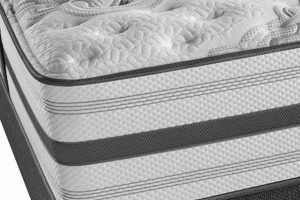
A specialized sleeping surface designed to fit within a standard full-sized convertible couch is commonly sought when the original mattress becomes worn or uncomfortable. These mattresses typically measure approximately 54 inches wide by 75 inches long and are engineered to fold and unfold smoothly within the sofa bed mechanism. Examples of materials used in their construction include memory foam, innerspring coils, and hybrid combinations, each offering varying levels of support and comfort.
The need for a substitute sleeping platform arises from the degradation of the original, improving overall sleep quality and extending the lifespan of the convertible sofa. A more supportive and comfortable surface can alleviate pressure points, reduce tossing and turning, and contribute to a more restful night. Historically, these mattresses were often thin and basic, prioritizing compactness over comfort; however, advancements in materials and manufacturing have led to increasingly sophisticated and comfortable options.
The following sections will delve into the types of materials used in their construction, the factors to consider when selecting a suitable option, and the maintenance practices that can prolong its usability. Understanding these aspects is vital for making an informed purchase and ensuring optimal comfort and longevity.
Selecting a Suitable Substitute Sleeping Surface
The following tips outline key considerations for those seeking a replacement sleeping surface designed for a standard full-sized convertible couch.
Tip 1: Measure Dimensions Precisely: Confirm the exact dimensions of the existing mattress cavity within the sofa bed frame. Deviations from standard full-size measurements may necessitate a custom-made option.
Tip 2: Evaluate Material Composition: Consider the advantages and disadvantages of various materials. Memory foam offers pressure relief, innerspring provides support, and hybrid models attempt to combine the benefits of both. Evaluate based on individual sleep preferences and needs.
Tip 3: Assess Mattress Thickness: Ensure the selected replacement mattress thickness is compatible with the sofa bed’s folding mechanism. Overly thick options may impede closure, while excessively thin options may compromise comfort.
Tip 4: Inquire About Density and ILD Ratings: Density, measured in pounds per cubic foot (PCF), reflects the material’s durability and support. Indentation Load Deflection (ILD) indicates firmness. Higher density and ILD ratings typically correlate with greater support and longevity.
Tip 5: Scrutinize Cover Material and Construction: Opt for a breathable and durable cover material that resists wear and tear. Look for reinforced seams and high-quality stitching to prolong the cover’s lifespan.
Tip 6: Verify Warranty and Return Policies: Understand the manufacturer’s warranty terms and return policy before making a purchase. This provides recourse in case of defects or dissatisfaction with the product’s performance.
Tip 7: Consider Weight Restrictions: Evaluate the weight capacity of the sofa bed frame and ensure that the replacement mattress, in conjunction with the anticipated occupants, does not exceed this limit. Overloading can damage the mechanism and compromise safety.
Adhering to these guidelines will assist in selecting a suitable substitute sleeping platform that enhances comfort and extends the usability of the sofa bed. Prioritizing these factors promotes both restful sleep and the longevity of the furniture.
The final section will address maintenance and care recommendations to maximize the lifespan of your newly acquired mattress.
1. Dimensions (54" x 75")

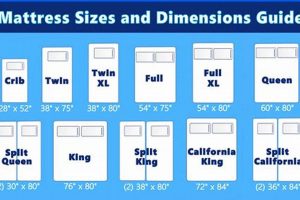
The specification “Dimensions (54″ x 75″)” directly defines the physical size of a “sofa bed replacement mattress full size.” These measurements, representing width and length in inches respectively, are critical because they determine whether the mattress will properly fit within the confines of a standard full-size sofa bed frame. Any significant deviation from these dimensions will likely result in the mattress being either too large to fit or too small, leading to instability and discomfort when used as a bed. For example, attempting to install a mattress measuring 56″ x 77″ into a space designed for 54″ x 75″ will prevent the sofa bed from closing correctly, potentially damaging the mechanism. Conversely, a mattress of 52″ x 73″ will leave gaps and provide inadequate support.
The standardization of these dimensions is based on established furniture manufacturing practices and is intended to ensure compatibility across different brands of sofa beds and replacement mattresses. The 54″ x 75″ size is the industry standard for a “full-size” mattress, enabling consumers to purchase replacements without the need for custom fabrication, assuming the sofa bed frame conforms to the same standard. Without these standardized dimensions, consumers would face the complex task of measuring their existing mattresses with extreme precision and commissioning bespoke replacements, increasing cost and complexity.
In conclusion, the dimensions 54″ x 75″ are not merely descriptive; they are a fundamental requirement for a “sofa bed replacement mattress full size” to function correctly. Adherence to these measurements ensures proper fit, support, and usability, enabling the sofa bed to serve its dual purpose as both seating and sleeping accommodation. Neglecting these dimensions compromises the functionality and longevity of both the mattress and the sofa bed frame.
2. Material (Foam, Innerspring)
The selection of materials, specifically foam or innerspring, fundamentally impacts the comfort, durability, and overall suitability of a “sofa bed replacement mattress full size.” This decision influences factors ranging from spinal support to ease of folding and storage within the sofa bed mechanism. The choice is rarely arbitrary; it depends on balancing desired comfort levels with the practical constraints of a convertible sofa.
- Foam Composition and its Implications
Foam-based mattresses, often utilizing memory foam or polyurethane blends, prioritize pressure relief and contouring. Memory foam, for example, conforms to the body’s shape, distributing weight and reducing pressure points. However, foam can retain heat, potentially leading to discomfort for some individuals. Furthermore, the density and quality of the foam directly correlate with its durability; lower-density foams may degrade more quickly, compromising support and longevity. In the context of a “sofa bed replacement mattress full size,” foam’s compressibility is advantageous, allowing for easier folding and storage within the sofa frame.
- Innerspring Construction and Support
Innerspring mattresses, characterized by a network of metal coils, offer firmer support and enhanced airflow compared to all-foam alternatives. The gauge and configuration of the coils determine the level of firmness and support provided. While innerspring mattresses may provide better spinal alignment for some individuals, they can be less adaptable to body contours and potentially transmit motion more readily. When considering an innerspring option for a “sofa bed replacement mattress full size,” the coil system must be sufficiently resilient to withstand repeated folding and unfolding without compromising its structural integrity.
- Hybrid Designs: Combining Foam and Innerspring
Hybrid mattresses seek to combine the benefits of both foam and innerspring constructions. These models typically feature a coil support core topped with layers of foam, aiming to provide both pressure relief and robust support. A well-designed hybrid “sofa bed replacement mattress full size” can offer a balanced sleeping experience, mitigating some of the drawbacks associated with solely foam or innerspring options. However, hybrid mattresses can be more expensive and may still present challenges in terms of foldability, depending on the thickness and composition of the foam layers.
- Material Durability and Lifespan Considerations
Regardless of whether foam, innerspring, or a hybrid design is chosen, the long-term durability of the material is paramount. The repeated stresses of folding and unfolding place significant demands on the mattress’s construction. Lower-quality materials will degrade more quickly, leading to sagging, loss of support, and reduced comfort. A “sofa bed replacement mattress full size” constructed from high-density foam or tempered steel coils will generally offer a longer lifespan and maintain its performance characteristics over time. Understanding the material’s composition and expected lifespan is essential for making an informed purchasing decision.
In summary, the material composition of a “sofa bed replacement mattress full size” is a crucial factor influencing its comfort, support, durability, and suitability for use within a convertible sofa. Each material type presents its own advantages and disadvantages, and the optimal choice depends on individual preferences, budget constraints, and the specific requirements of the sofa bed frame. Careful consideration of these factors is essential for ensuring a satisfactory and long-lasting sleeping solution.
3. Thickness (Compatibility)
The factor of “Thickness (Compatibility)” holds paramount importance when selecting a “sofa bed replacement mattress full size.” It directly impacts the functionality of the sofa bed mechanism and the overall comfort experienced by the user. A mismatch between mattress thickness and the sofa bed’s design can lead to operational difficulties, premature wear, and diminished sleep quality. Understanding this relationship is critical for a successful replacement.
- Operational Clearance and Folding Mechanism
The thickness of the replacement mattress must be compatible with the sofa bed’s folding mechanism. If the mattress is too thick, the sofa bed may be impossible to close or may close only with excessive force, potentially damaging the frame or the mechanism itself. Conversely, a mattress that is too thin may not provide adequate support when in bed configuration and may shift or bunch up within the frame when folded, hindering the transformation process. Precise measurements and manufacturer specifications are essential to ensure proper operational clearance.
- Seating Height and Comfort in Sofa Configuration
The mattress thickness also influences the seating height when the sofa bed is in its sofa configuration. An excessively thick mattress can result in an uncomfortably high seating position, while a thin mattress may lead to a low and less supportive seating experience. Ideally, the replacement mattress should maintain the original seating height, preserving the intended ergonomic design of the sofa. This involves careful consideration of both the mattress thickness and the frame’s internal dimensions.
- Storage Space Considerations within the Sofa Bed Frame
Many sofa beds incorporate storage compartments within their frames. The thickness of the replacement mattress can impact the availability of this storage space. A thicker mattress reduces the volume available for storing bedding or other items, potentially limiting the functionality of the sofa bed. Evaluating the storage requirements and selecting a mattress thickness that allows for adequate storage is therefore important.
- Impact on Support and Overall Comfort Levels
While compatibility with the mechanism is crucial, the mattress thickness also plays a direct role in the level of support and comfort provided. Thicker mattresses generally offer greater cushioning and support, particularly for side sleepers. However, excessive thickness can compromise the foldability of the mattress. Finding the optimal balance between thickness and compressibility is therefore essential to ensure both comfort and functionality. The material composition and internal construction also influence the support characteristics, regardless of the overall thickness.
In summation, the “Thickness (Compatibility)” aspect of a “sofa bed replacement mattress full size” extends beyond simple fit. It significantly influences the operation of the sofa bed, its seating comfort, storage capacity, and the overall quality of the sleeping experience. Neglecting this factor can lead to functional problems, reduced comfort, and premature wear of the sofa bed mechanism. Therefore, careful consideration of the thickness and its compatibility with the specific sofa bed frame is a crucial step in the replacement process.
4. Foldability (Mechanism clearance)

The characteristic “Foldability (Mechanism clearance)” constitutes a critical design parameter for any “sofa bed replacement mattress full size.” This term describes the mattress’s ability to smoothly and reliably fold and unfold within the confines of the sofa bed’s internal mechanism. A failure to adequately address foldability often results in operational impediments, premature component wear, and a compromised user experience. The mattress must compress and conform to the folding geometry without excessive force or resistance. For instance, a mattress utilizing overly dense or inflexible materials may bind within the mechanism, preventing full closure or causing stress on the frame and hinges. Conversely, a mattress that folds too easily might lack adequate support in its deployed configuration.
Real-world examples underscore the practical significance of understanding mechanism clearance. A replacement mattress that exceeds the designed clearance when folded can render the sofa bed unusable as a sofa, forcing the user to choose between seating and sleeping functionality. Furthermore, repeated attempts to force the mechanism closed with an incompatible mattress can lead to deformation of the frame, bending of support arms, or even complete failure of the hinges. Manufacturers often specify a maximum thickness and a minimum compression rate for replacement mattresses to mitigate these risks. Choosing a mattress outside these parameters is analogous to installing an oversized engine in a car it may initially appear functional, but the long-term consequences can be severe.
In conclusion, “Foldability (Mechanism clearance)” is not merely a desirable attribute but a fundamental requirement for a successful “sofa bed replacement mattress full size.” It dictates the ease of use, longevity of the sofa bed mechanism, and ultimately, the user’s satisfaction. Ignoring this critical design constraint introduces unnecessary risks of damage and functional impairment, negating the intended benefits of a replacement mattress. Therefore, diligent attention to the manufacturer’s specifications and a thorough understanding of the folding mechanism are essential when selecting a suitable replacement.
5. Support (Spinal alignment)

Adequate support, specifically as it relates to spinal alignment, is a primary consideration in the selection of a “sofa bed replacement mattress full size.” The sleeping surface must promote a neutral spinal posture to mitigate discomfort and potential long-term musculoskeletal issues. A properly supportive mattress will distribute weight evenly, preventing pressure points and minimizing spinal curvature during sleep.
- Material Density and Spinal Curvature
The density of the materials used in the mattress construction directly impacts spinal alignment. High-density foams or innerspring coils provide greater resistance to compression, ensuring that the spine remains in a neutral position regardless of sleeping posture. Insufficient density allows the body to sink too deeply, leading to spinal misalignment and associated pain. For instance, a low-density foam mattress may conform excessively to the sleeper’s contours, resulting in spinal flexion, particularly in the lumbar region. In contrast, a high-density latex or memory foam core provides stable support, maintaining the natural curves of the spine.
- Zoned Support Systems and Pressure Relief
Zoned support systems within the mattress are designed to provide varying levels of firmness to different areas of the body. These systems often incorporate targeted zones for the shoulders, hips, and lumbar region, ensuring optimal spinal alignment regardless of sleeping position. For example, a zoned support system may feature firmer coils or denser foam in the lumbar region to prevent sagging and maintain proper spinal curvature. This targeted approach addresses the specific support needs of different body areas, promoting a more balanced and comfortable sleep experience. Lack of zone support can lead to back or neck pain.
- Edge Support and Spinal Stability
The quality of edge support is crucial for maintaining spinal alignment, particularly for individuals who sleep near the edge of the bed. Adequate edge support prevents the mattress from collapsing or sagging, ensuring that the sleeper remains level and the spine remains aligned. Weak or nonexistent edge support can cause the sleeper to roll towards the edge, leading to spinal misalignment and discomfort. Reinforced edge coils or high-density foam borders are common features designed to enhance edge support in a “sofa bed replacement mattress full size.”
- Firmness Levels and Individual Spinal Needs
The appropriate firmness level of the mattress is a highly individual consideration, as it depends on factors such as body weight, sleeping position, and personal preference. A mattress that is too soft may not provide adequate support for heavier individuals, leading to spinal misalignment. Conversely, a mattress that is too firm may not conform sufficiently to the body’s contours, resulting in pressure points and discomfort for lighter individuals. Aligning mattress firmness with individual needs is essential for promoting optimal spinal alignment and a comfortable sleep experience. For example, side sleepers generally benefit from a softer mattress that conforms to the shoulders and hips, while back sleepers typically require a firmer mattress to maintain spinal alignment.
The relationship between “Support (Spinal alignment)” and “sofa bed replacement mattress full size” is inextricably linked to the sleeper’s overall well-being. A properly selected mattress, considering material density, zoned support, edge support, and firmness level, promotes a neutral spinal posture, mitigating discomfort and preventing potential long-term health issues. While individual preferences play a role, the underlying objective remains consistent: to facilitate a sleeping surface that supports the spine in its natural alignment, fostering restful and restorative sleep.
6. Durability (Lifespan)
The attribute of “Durability (Lifespan)” represents a critical investment consideration for any “sofa bed replacement mattress full size.” The inherent nature of sofa bed mattresses, often subjected to repeated folding and unfolding, places significant stress on their structural integrity. Therefore, the expected lifespan directly influences the long-term cost-effectiveness and overall value proposition of the replacement.
- Material Composition and Degradation Resistance
The inherent materials’ resilience dictates the overall lifespan. High-density foams, tempered steel coils, and reinforced fabrics resist degradation caused by compression and friction. For example, a low-density polyurethane foam mattress may exhibit sagging and loss of support within a year or two, whereas a high-density memory foam mattress can maintain its form and comfort for several years. Similarly, coil systems constructed from low-gauge steel are prone to deformation and breakage, compromising support and contributing to premature failure. The materials’ capacity to withstand sustained use directly influences the product’s useful life.
- Construction Techniques and Structural Integrity
The manner in which the mattress is assembled impacts its ability to withstand repeated folding and unfolding. Reinforced seams, robust stitching, and secure bonding of layers prevent separation and maintain structural integrity. A mattress with poorly constructed seams may experience tearing or unraveling along the edges, leading to internal component displacement and reduced support. Similarly, inadequate bonding between foam layers can result in delamination, compromising the mattress’s ability to conform to the body and provide consistent support. Durable construction techniques contribute significantly to extending the mattress’s lifespan.
- Usage Frequency and Weight Load
The frequency of use and the weight load placed upon the mattress influence its rate of degradation. A mattress used daily by heavier individuals will experience greater stress and wear compared to one used infrequently by lighter individuals. Consistent high weight loads can accelerate compression and breakdown of internal components, leading to sagging and loss of support. Similarly, frequent folding and unfolding cycles place repeated stress on the mattress’s structure, potentially weakening seams and coil systems. Understanding the anticipated usage patterns and weight loads is essential for selecting a replacement with adequate durability.
- Warranty Provisions and Expected Lifespan
The manufacturer’s warranty provides a measure of assurance regarding the expected lifespan and performance of the mattress. Longer warranties typically indicate greater confidence in the product’s durability. However, it is essential to carefully review the warranty terms and conditions, as they may exclude certain types of damage or degradation. Moreover, the warranty period should be considered in conjunction with the expected lifespan, which can vary depending on the quality of materials and construction techniques. A comprehensive warranty, coupled with a realistic assessment of the mattress’s durability, aids in making an informed purchasing decision.
In conclusion, the relationship between “Durability (Lifespan)” and a “sofa bed replacement mattress full size” is a financial and functional one. High durability translates to a longer useful life, mitigating the need for frequent replacements and maximizing the return on investment. Understanding the factors influencing durability allows for a more informed purchasing decision, ensuring that the selected replacement mattress provides long-lasting comfort and support within the constraints of a convertible sofa. Prioritizing durability is paramount for optimizing the value and practicality of the replacement mattress.
7. Weight (Sofa capacity)
The factor of “Weight (Sofa capacity)” constitutes a fundamental safety and structural consideration when selecting a “sofa bed replacement mattress full size.” This parameter dictates the maximum load-bearing capacity of the sofa bed frame and mechanism, directly influencing its ability to safely and reliably support occupants when in both sofa and bed configurations. Exceeding this weight limit poses significant risks of structural damage, mechanical failure, and potential injury.
- Frame Material and Load Distribution
The materials used in the sofa bed frame’s construction directly determine its weight-bearing capacity. Steel frames, for instance, generally offer greater strength and durability compared to wood or composite materials. The design of the frame also influences load distribution, with evenly distributed weight minimizing stress on individual components. A poorly designed frame, even if constructed from robust materials, may be susceptible to localized stress concentrations, leading to premature failure. The type of material can directly effect the sofa bed frame strength. For example, a sofa bed with a wooden frame should require a lighter sofa bed replacement mattress full size than a metal one.
- Mechanism Design and Weight Limits
The complexity and robustness of the sofa bed’s folding mechanism directly affect its ability to support weight. Intricate mechanisms with numerous moving parts may be more susceptible to wear and tear, reducing their overall load-bearing capacity. Manufacturers typically specify a maximum weight limit for the mechanism, which should not be exceeded. Overloading the mechanism can cause bending, cracking, or complete failure of its components, rendering the sofa bed unusable and potentially dangerous. Complex or cheap mechanics should be checked and possibly adjusted. For instance, a pull-out mechanism may be able to withhold more weight compared to a click-clack mechanism.
- Mattress Weight Contribution to Total Load
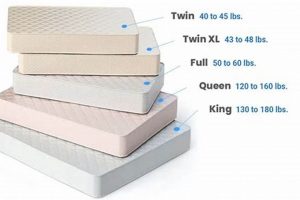
The replacement mattress itself contributes to the overall weight load on the sofa bed frame. Denser mattresses, such as those constructed from high-density memory foam or innerspring coils, add significant weight compared to lighter foam alternatives. This additional weight must be factored into the total load calculation to ensure that it does not exceed the sofa’s capacity. Overlooking the mattress’s weight can lead to an underestimation of the total load and a subsequent overloading of the frame. The weight of the replacement should be considered. For example, if the total weight capacity of the bed is 350lbs and two people approximately weighing 160 lbs are sleeping on it, the sofa bed replacement mattress full size must be less than 30 lbs.
- Occupant Weight and Safety Margins
The intended occupants’ combined weight is a primary factor in determining whether the sofa bed’s capacity is sufficient. Manufacturers typically incorporate a safety margin into their weight limit specifications to account for dynamic loads and occasional overloads. However, consistently exceeding the stated weight limit, even if only by a small margin, can accelerate wear and tear and increase the risk of structural failure. Adhering to the recommended weight limit is crucial for ensuring the safety and longevity of the sofa bed. The occupant’s weight should be considered to prevent breaking the sofa bed structure. For example, a king size bed is expected to withstand more weight compared to a sofa bed replacement mattress full size.
In summary, the “Weight (Sofa capacity)” parameter is not merely a suggestion but a critical safety guideline that must be carefully considered when selecting a “sofa bed replacement mattress full size.” Ignoring this factor can have serious consequences, ranging from premature wear and tear to catastrophic structural failure. Therefore, a thorough understanding of the sofa bed’s weight capacity, the mattress’s weight contribution, and the intended occupants’ combined weight is essential for ensuring safe and reliable operation.
Frequently Asked Questions
This section addresses commonly encountered queries and misconceptions regarding replacement mattresses designed for full-size sofa beds. The information presented aims to provide clarity and informed decision-making.
Question 1: What are the standard dimensions for a full-size sofa bed replacement mattress?
The standard dimensions are approximately 54 inches wide and 75 inches long. Deviations from these measurements may result in improper fit and compromised functionality.
Question 2: Can any full-size mattress be used as a replacement in a sofa bed?
No. Standard full-size mattresses are generally too thick and inflexible for sofa bed mechanisms. Replacement mattresses specifically designed for sofa beds are necessary.
Question 3: What type of mattress material is most suitable for a sofa bed replacement?
Foam (memory foam, polyurethane foam) and innerspring are common choices. Foam offers compressibility, while innerspring provides support. Hybrid models combine both material properties. Selection depends on individual preferences and sofa bed mechanism compatibility.
Question 4: How does mattress thickness affect sofa bed functionality?
Excessive thickness can impede the sofa bed’s ability to close properly, potentially damaging the frame or mechanism. Insufficient thickness may compromise comfort and support when used as a bed.
Question 5: How frequently should a sofa bed replacement mattress be replaced?
Replacement frequency depends on usage, material quality, and construction. Signs of wear, sagging, or reduced support indicate the need for replacement. Generally, a lifespan of 3-7 years can be expected.
Question 6: What factors contribute to the durability of a sofa bed replacement mattress?
High-density materials, reinforced seams, and robust construction techniques enhance durability. Proper maintenance, including regular rotation and cleaning, can also prolong lifespan.
Selecting a suitable replacement sleeping surface requires careful consideration of dimensions, material, thickness, and overall durability. Prioritizing these factors ensures both comfort and longevity.
The subsequent material explores maintenance practices and care recommendations.
Concluding Remarks
The preceding sections have methodically explored the complexities surrounding the selection and maintenance of a “sofa bed replacement mattress full size.” Key considerations, including dimensional accuracy, material composition, thickness compatibility, support characteristics, and overall durability, have been thoroughly examined. Adherence to these guidelines is crucial for ensuring both the operational integrity of the sofa bed mechanism and the provision of a comfortable and supportive sleeping surface.
Ultimately, the acquisition of a suitable “sofa bed replacement mattress full size” represents a significant investment in long-term comfort and functionality. A judicious approach, characterized by meticulous evaluation and informed decision-making, is essential for maximizing the value and lifespan of both the mattress and the sofa bed itself. Diligence in this pursuit not only enhances the user experience but also mitigates the risk of premature wear and costly replacements.
![Tempur-Pedic Full Mattress: Best [Full] Sleep Ever! | Organic & Natural Mattress Buyer’s Guide: Non-Toxic Sleep Solutions](https://mattressworldpa.com/wp-content/uploads/2025/07/th-2892-300x200.jpg "Tempur-Pedic Full Mattress: Best [Full] Sleep Ever! Organic & Natural Mattress Buyer’s Guide: Non-Toxic Sleep Solutions")

![Best Full Intex Air Mattress: Reviews & Guide [Year] | Organic & Natural Mattress Buyer’s Guide: Non-Toxic Sleep Solutions](https://mattressworldpa.com/wp-content/uploads/2025/07/th-2888-300x200.jpg "Best Full Intex Air Mattress: Reviews & Guide [Year] Organic & Natural Mattress Buyer’s Guide: Non-Toxic Sleep Solutions")