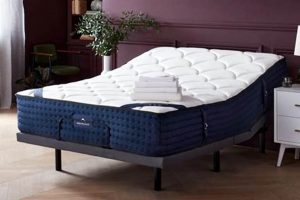
These specialized sleep systems combine the features of a separable mattress design with the functionality of an adjustable bed frame. The separable construction allows each side of the bed to be independently adjusted, accommodating individual preferences for elevation and support. This configuration is commonly utilized in situations where sleepers have differing needs or medical conditions that necessitate customized sleeping positions.
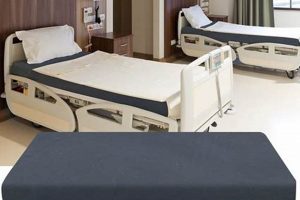
The principal advantage of these systems lies in their ability to provide personalized comfort and support. This can be particularly beneficial for individuals with back pain, sleep apnea, or acid reflux, as the adjustable base allows for specific elevation adjustments to alleviate symptoms. Historically, adjustable beds were primarily found in hospital settings; however, advancements in technology and materials have made them increasingly accessible and desirable for residential use, contributing to enhanced sleep quality and overall well-being.
The subsequent sections will delve into the various aspects of selecting an appropriate separable mattress design for use with an adjustable base, explore the range of available adjustable base features, and examine the practical considerations for incorporating such a system into a bedroom setting. Further discussion will address common concerns related to compatibility, maintenance, and cost-effectiveness.
Selecting a Split Mattress Adjustable Bed
Choosing the right split mattress adjustable bed requires careful consideration of various factors to ensure optimal comfort, support, and longevity of the system.
Tip 1: Mattress Compatibility: Verify that the selected mattress is specifically designed for use with adjustable bed frames. Mattresses lacking sufficient flexibility may be damaged by the articulating motion.
Tip 2: Independent Adjustment Capabilities: Assess the range of motion and adjustability offered by the base. Ensure it meets the specific elevation needs of each individual utilizing the system.
Tip 3: Motor Quality and Noise Level: Investigate the motors durability and operational noise. A robust, quiet motor is essential for long-term reliability and minimal sleep disturbance.
Tip 4: Frame Construction and Stability: Evaluate the sturdiness of the bed frame. A well-constructed frame provides adequate support and prevents wobbling or instability during adjustments.
Tip 5: Remote Functionality and Features: Examine the ease of use and features offered by the remote control. Programmable positions, massage options, and under-bed lighting can enhance the overall experience.
Tip 6: Mattress Material and Firmness: Consider individual preferences for mattress material, such as memory foam, latex, or innerspring. Select a firmness level that provides appropriate spinal alignment and pressure relief.
Tip 7: Warranty Coverage: Review the warranty terms for both the mattress and the adjustable base. Comprehensive warranty coverage protects against potential defects and ensures long-term value.
By carefully evaluating these considerations, individuals can select a split mattress adjustable bed system that provides personalized comfort, enhances sleep quality, and promotes overall well-being.
The following sections will elaborate on the practical aspects of setting up and maintaining such a system, addressing common issues and troubleshooting tips to ensure its continued optimal performance.
1. Independent Adjustability

Independent adjustability represents a core functional advantage of split mattress adjustable beds. This feature facilitates individualized comfort and support, addressing the diverse needs of co-sleeping individuals. Its relevance lies in mitigating compromises often inherent in shared sleep environments.
- Personalized Sleep Positions
Independent adjustability allows each side of the bed to be configured to different positions. One individual may prefer a raised head and foot for managing acid reflux, while the other may require a flat sleeping surface for back pain. This customization promotes individual comfort without impacting the other sleeper.
- Alleviation of Medical Conditions
Specific medical conditions often necessitate particular sleeping positions. Independent adjustability accommodates these needs by enabling targeted elevation for issues such as sleep apnea, snoring, or edema. This eliminates the need for cumbersome pillows or wedges, providing a more stable and comfortable solution.
- Motion Isolation and Reduced Partner Disturbance
Adjusting one side of a split mattress adjustable bed minimally affects the other side. This minimizes motion transfer, preventing disturbances to the sleeping partner. This feature is particularly valuable for light sleepers or individuals with differing sleep schedules.
- Enhanced Lifestyle Integration
Independent adjustability extends beyond medical needs, supporting various lifestyle activities. One individual may choose to elevate their back for reading or watching television, while the other continues to sleep undisturbed. This flexibility allows for greater autonomy and enjoyment within the shared bed space.
In summation, independent adjustability is a fundamental element that elevates the utility of split mattress adjustable beds. It directly addresses the challenges of shared sleep by enabling personalized comfort, accommodating medical needs, minimizing partner disturbance, and integrating diverse lifestyle preferences.
2. Mattress Compatibility

Mattress compatibility represents a critical consideration when evaluating split mattress adjustable beds. The dynamic nature of adjustable bases places specific demands on mattress construction, requiring materials and designs that can withstand repeated articulation without compromising support or durability. The suitability of a mattress directly impacts the longevity and performance of the entire sleep system.
- Flexibility and Conformability
Mattresses intended for use with adjustable bases must exhibit a high degree of flexibility. Materials like memory foam, latex, and certain hybrid designs are generally well-suited due to their ability to conform to the contours of the adjustable frame without bunching or creating pressure points. In contrast, traditional innerspring mattresses, particularly those with a rigid coil structure, may lack the necessary flexibility and can become damaged over time. A real-world example involves the cracking or deformation of an innerspring mattress when repeatedly bent at sharp angles by the adjustable base.
- Thickness and Weight Considerations
The thickness a
nd weight of the mattress must be compatible with the lifting capacity of the adjustable base. Overly thick or heavy mattresses may strain the base’s motor and reduce its range of motion. Furthermore, a mattress that is too thin may not provide adequate support and cushioning when the base is adjusted to various positions. Manufacturers typically specify weight limits and recommended mattress thicknesses for their adjustable bases; adhering to these guidelines is essential for optimal performance and safety. - Construction and Material Durability
The internal construction of the mattress plays a vital role in its ability to withstand the stresses imposed by an adjustable base. Reinforced edges, high-density foam cores, and durable stitching can enhance the mattress’s resistance to wear and tear. Materials with inherent elasticity, such as latex, are often favored for their ability to recover their shape after repeated compression and bending. Conversely, mattresses with weak seams or low-quality foam may exhibit premature sagging or deformation.
- Split Design Considerations
In the context of split mattress adjustable beds, the compatibility extends to the specific design of the split itself. The gap between the two mattress halves must be sufficient to allow for independent adjustment without causing binding or interference. Additionally, the edges of the split should be reinforced to prevent unraveling or sagging. An improperly designed split can lead to uneven support and discomfort, negating the benefits of the adjustable base.
In summary, mattress compatibility is a multifaceted consideration that encompasses flexibility, weight, durability, and split design. Selecting a mattress specifically designed for use with adjustable bases is paramount for maximizing comfort, ensuring long-term performance, and preserving the integrity of both the mattress and the adjustable frame. Failure to prioritize compatibility can result in diminished support, premature wear, and ultimately, a compromised sleep experience.
3. Motion Isolation
Motion isolation, in the context of split mattress adjustable beds, is a critical characteristic stemming directly from the design and materials used. The segmented nature of a split mattress inherently reduces the transfer of movement between sides. The adjustable base further enhances this effect by allowing each side to operate independently, mitigating disturbances caused by positional changes or getting in and out of bed. In essence, the split design acts as a physical barrier to motion, while the independent adjustability prevents the transmission of movement through a shared frame. The practical significance of this is seen in situations where one sleeper is restless or has a different sleep schedule. For example, if one individual frequently adjusts their sleeping position due to discomfort or a medical condition, the motion isolation feature ensures that the other individual’s sleep remains undisturbed. This minimizes sleep fragmentation and contributes to improved sleep quality for both parties.
Further contributing to motion isolation is the type of material used in the mattress construction. Memory foam and latex, for example, excel at absorbing and isolating movement compared to traditional innerspring mattresses. A practical demonstration of this is evident when placing a glass of water on one side of a split mattress adjustable bed and then having someone move or adjust the other side; with adequate motion isolation, the water remains undisturbed. This principle is particularly relevant for couples where one partner is a light sleeper. The combination of a split design, adjustable base functionality, and motion-isolating materials addresses a primary concern in shared sleep environments the disruption of one sleeper by the movements of the other.
In summary, motion isolation is an essential component of split mattress adjustable beds. The design inherently provides a physical barrier to motion transfer, supported by adjustable functionality and specific mattress materials. This combined effect directly contributes to improved sleep quality in shared bed environments by minimizing partner disturbance. The challenge lies in selecting a mattress material and base configuration that optimizes this motion isolation effect, considering individual sleep preferences and needs. The benefits of this are consistent, uninterrupted sleep for both partners.
4. Frame Durability
Frame durability constitutes a foundational element in the overall performance and longevity of split mattress adjustable beds. Given the dynamic functionality of these systems, the frame must withstand significant and repeated stress, ensuring both the stability of the sleeping surface and the reliable operation of the adjustable mechanisms.
- Material Composition and Construction
The selection of materials, such as heavy-gauge steel or reinforced alloys, directly dictates the frame’s capacity to bear weight and resist deformation. Welding techniques and joint design further contribute to structural integrity. Frames constructed with inferior materials or weak joints are prone to bending, cracking, or failure under normal use conditions, compromising the functionality of the adjustable base. A concrete example involves comparing a frame constructed of tubular steel versus one assembled from lightweight aluminum; the former will inherently possess greater load-bearing capacity and resistance to structural fatigue.
- Motor Mount Stability
The secure mounting of the adjustable base’s motors is paramount. Inadequate motor mounts can lead to misalignment, vibration, and premature motor failure. A durable frame incorporates reinforced mounting points and vibration-dampening features to minimize stress on the motors and ensure smooth, quiet operation. For instance, motors that are directly bolted to a thin, unreinforced frame may generate excessive noise and vibration during adjustments, reducing the overall user experience.
- Weight Capacity and Distribution
Frame durability is inextricably linked to weight capacity. The frame must be engineered to support the combined weight of the mattresses, adjustable mechanisms, and occupants without exceeding its design limits. Uneven weight distribution can exacerbate stress points and accelerate frame degradation. Manufacturers typically specify weight limits for their adjustable bases; exceeding these limits can void warranties and pose safety risks. A scenario would involve a frame rated for 600 pounds attempting to support a combined weight of 800 pounds; this overloading would likely result in premature failure of the frame components.
- Long-Term Performance and Reliability
The durability of the frame directly influences the long-term performance and reliability of the entire split mattress adjustable bed system. A robust frame ensures consistent operation over time, minimizing the need for repairs or replacements. Conversely, a weak or poorly constructed frame is likely to experience premature wear and tear, leading to functional impairments and reduced lifespan. The difference between a high-quality frame and a low-quality one can be measured in years of reliable use versus months of frustrating malfunctions and eventual replacement.
The described facets are fundamentally important to the functionality of
split mattress adjustable beds. Consequently, the design is not only beneficial when the frame and other components are produced durably, but it also ensures consumer satisfaction.
5. Customized support

The availability of customized support is intrinsically linked to the concept of split mattress adjustable beds. The separable nature of the mattress, combined with the independent adjustability of the base, directly facilitates the provision of individualized support levels for each sleeper. This contrasts with traditional mattresses, which offer a uniform level of support across the entire sleeping surface, potentially compromising comfort for one or both individuals sharing the bed. The cause-and-effect relationship is clear: the split design and adjustable base enable a degree of customization unattainable with conventional sleep systems. An example highlights this: One sleeper may require firmer lumbar support due to chronic back pain, while the other prefers a softer surface for optimal pressure relief. A split mattress adjustable bed allows for the independent selection of mattress firmness and base adjustments to meet these disparate needs. The importance of customized support, therefore, lies in its capacity to address specific physical requirements and comfort preferences, leading to enhanced sleep quality and reduced discomfort.
The practical applications of customized support extend beyond mere comfort. Individuals with conditions such as sleep apnea, acid reflux, or circulatory problems can benefit from specific elevation adjustments provided by the adjustable base. The ability to elevate the head and torso, for instance, can alleviate sleep apnea symptoms and reduce acid reflux. Similarly, elevating the legs can improve circulation and reduce swelling. The split design allows one sleeper to utilize these adjustments without affecting the other’s sleeping position. Furthermore, customized support can be achieved through the selection of different mattress types for each side of the bed. Memory foam, latex, and innerspring mattresses offer varying levels of support and responsiveness, allowing individuals to choose the material that best suits their individual needs. Real-world scenarios include partners recovering from different types of surgeries with different sleeping position requirements, or individuals with vastly different body weights and shapes needing specialized support to prevent pain or pressure sores.
In summary, the connection between customized support and split mattress adjustable beds is fundamental. The ability to independently adjust support levels is a direct result of the split design and adjustable base functionality. The practical significance of this customization lies in its capacity to address specific medical needs, enhance comfort, and improve overall sleep quality. While challenges remain in optimizing mattress selection and base adjustments for individual preferences, the underlying principle of customized support remains a key advantage of split mattress adjustable bed systems.
Frequently Asked Questions
This section addresses common inquiries regarding split mattress adjustable beds, providing clarity and guidance for prospective users.
Question 1: What defines a split mattress in the context of adjustable beds?
A split mattress, in this context, refers to a mattress design where the upper portion is divided into two separate sections. This separation allows each side to be independently adjusted on a compatible adjustable bed frame, accommodating varying preferences and needs.
Question 2: Are all mattresses compatible with split adjustable bed frames?
No, not all mattresses are suitable for use with adjustable bed frames, including those with a split design. Mattresses lacking sufficient flexibility may sustain damage when the bed is articulated. It is essential to verify mattress compatibility with the specific adjustable base before purchase. Memory foam, latex, and certain hybrid mattresses are often recommended.
Question 3: What are the primary benefits of using split mattress adjustable beds?
The primary benefits include personalized comfort and support for co-sleeping individuals, independent adjustment capabilities to accommodate differing needs or medical conditions, and reduced motion transfer between sides of the bed.
Question 4: Do split mattress adjustable beds require specialized bedding?
While standard bedding can often be used, fitted sheets designed specifically for split mattresses may provide a more secure and tailored fit. These sheets typically feature deeper pockets and elasticized edges to accommodate the independent movement of each mattress section.
Question 5: What is the typical weight capacity of a split adjustable bed frame?
Weight capacities vary depending on the manufacturer and model. However, most split adjustable bed frames are designed to support a combined weight of between 500 and 750 pounds. It is imperative to consult the manufacturer’s specifications before use to avoid damage or injury.
Question 6: How does the cost of split mattress adjustable beds compare to traditional beds?
Split mattress adjustable beds generally represent a higher initial investment compared to traditional beds due to the advanced technology and features incorporated in their design. However, the potential benefits in terms of improved sleep quality, comfort, and health may justify the increased cost for some individuals.
In summary, the defining characteristics and benefits of split mattress adjustable beds hinge on compatibility, proper usage, and understanding of their features.
The following section will address maintenance and troubleshooting for split mattress adjustable bed systems.
Conclusion
This exploration has elucidated the multifaceted nature of split mattress adjustable beds. The distinctive design, characterized by independent adjustability and customizable support, addresses the diverse needs of co-sleeping individuals. These systems offer a demonstrable advantage in accommodating varying comfort preferences and specific medical requirements. Key considerations such as mattress compatibility, frame durability, and motion isolation directly influence the overall performance and long-term value of these sleep solutions.
The acquisition and utilization of split mattress adjustable beds necessitate careful evaluation and informed decision-making. While the initial investment may be substantial, the potential for enhanced sleep quality and improved well-being warrants serious consideration. Further research and technological advancements may continue to refine these systems, offering even greater personalization and therapeutic benefits. The future of sleep technology lies in addressing individual needs with precision and efficacy, and split mattress adjustable beds represent a significant step in that direction.