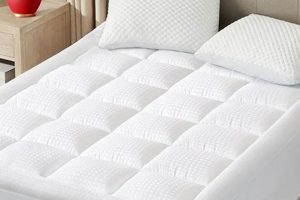
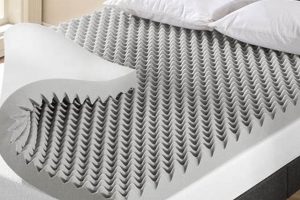
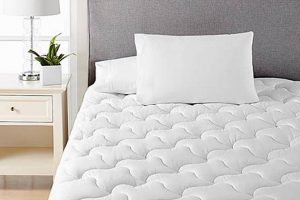
This bedding accessory is designed for adjustable beds, specifically those of a queen size, that feature independently moving sides. It offers a tailored fit, accommodating the individual articulation of each side of the mattress. The design ensures that each person can adjust their side of the bed without affecting their partner’s comfort or sleep surface.
The primary advantage of such a product is the ability to maintain a smooth and protected sleep surface on adjustable beds. It provides a barrier against spills, stains, and wear, prolonging the life of the mattress. The design caters to couples with differing sleep preferences or medical needs, offering independent adjustability without sacrificing the unified feel of a standard queen-sized bed. Historically, solutions for adjustable beds were often custom-made; this type of bedding offers a commercially available and cost-effective alternative.
The following sections will delve into the various material options, construction methods, and care instructions associated with this specialized bedding. Attention will also be paid to the factors to consider when selecting a suitable product for individual needs, including depth of pocket, hypoallergenic properties, and temperature regulation capabilities.
Tips for Selecting a Split Queen Mattress Pad
This section outlines key considerations when choosing a suitable split queen mattress pad, ensuring compatibility with adjustable beds and optimizing sleep quality.
Tip 1: Verify Pocket Depth: Measure the mattress depth, including any toppers, to ensure the chosen pad has adequate pocket depth for a secure fit. Insufficient depth can cause slippage and discomfort.
Tip 2: Assess Material Composition: Evaluate material options based on personal preferences and sensitivities. Consider hypoallergenic materials such as bamboo or organic cotton for allergy sufferers. Memory foam or quilted constructions offer varying degrees of cushioning and support.
Tip 3: Evaluate Temperature Regulation: Certain materials, like breathable cotton or cooling gel-infused memory foam, promote airflow and reduce heat retention, particularly beneficial for hot sleepers. Prioritize temperature regulation features for optimal comfort.
Tip 4: Check for Secure Attachment Mechanisms: Look for pads with robust attachment mechanisms, such as elastic corner straps or a fitted sheet design, to prevent shifting and maintain a snug fit during bed adjustments.
Tip 5: Prioritize Washability and Durability: Opt for machine-washable and dryer-safe pads for convenient care. Check the manufacturer’s warranty and read reviews to assess the product’s longevity and resistance to wear and tear.
Tip 6: Consider Split Configuration: Ensure the pad is specifically designed for split queen mattresses, featuring the appropriate split at the head of the bed to accommodate independent adjustability without compromising coverage.
Tip 7: Inquire About Noise Levels: Some materials, like certain types of waterproof lining, can generate noise during movement. Read reviews or test the pad if possible to assess its noise level and prevent sleep disruption.
By carefully considering these factors, individuals can select a split queen mattress pad that effectively protects their mattress, enhances comfort, and accommodates the unique features of an adjustable bed.
The following sections will provide guidance on proper care and maintenance, extending the life of this specialized bedding accessory.
1. Adjustable bed compatibility
The operational efficacy of a split queen mattress pad is intrinsically linked to its adjustable bed compatibility. This compatibility is not merely a desirable feature; it represents a foundational requirement for the product to function as intended. A split queen mattress pad, by definition, must be engineered to conform to the specific articulation points and dimensional characteristics of a split queen adjustable bed frame. Without proper compatibility, the pad will likely bunch, shift, or otherwise fail to provide a smooth and protective sleep surface, negating its core purpose.
Consider the scenario where a standard, non-split queen mattress pad is placed on a split queen adjustable bed. As one side of the bed is raised or lowered, the single, continuous pad will create tension and potentially tear. Further, the uneven distribution of material will lead to discomfort and impede the adjustability function. In contrast, a compatible pad, with its precisely located split, allows each side of the mattress to move independently without affecting the other. This design facilitates the therapeutic benefits of adjustable beds, such as improved circulation and reduced pressure points, while simultaneously safeguarding the mattress from wear and tear.
In summary, adjustable bed compatibility is not simply an attribute of a split queen mattress pad, but rather a defining characteristic. Its presence ensures proper function, comfort, and protection, while its absence renders the product largely ineffective. The importance of this compatibility necessitates careful evaluation of product specifications before purchase, ensuring that the pad is specifically designed for and compatible with split queen adjustable bed systems. This approach mitigates potential user dissatisfaction and maximizes the benefits derived from both the adjustable bed and the mattress pad.
2. Independent motion accommodation
Independent motion accommodation is a critical design factor directly impacting the functionality and user experience of split queen mattress pads. These pads are specifically engineered to conform to and facilitate the independent movement capabilities inherent in adjustable beds. Without adequate accommodation for independent motion, the benefits of an adjustable bed are significantly compromised, and the protective function of the pad is undermined.
- Material Flexibility and Resilience
The composition of the mattress pad must exhibit sufficient flexibility to stretch and compress without bunching or tearing as the two sides of the adjustable bed articulate. Materials such as flexible knits or specialized stretch fabrics are commonly employed to ensure the pad conforms to the changing contours of the mattress. The resilience of the material is equally important to ensure the pad returns to its original shape after adjustment, preventing permanent stretching or deformation. For example, a pad constructed from a rigid or non-stretchable material would restrict the independent movement of the mattresses, potentially causing discomfort and hindering the functionality of the adjustable bed.
- Split Design Precision
The split in the mattress pad, typically located at the head of the bed, must be pr
ecisely aligned with the division in the split queen mattress. Imprecise alignment can result in binding or pulling of the fabric, restricting independent movement and potentially causing premature wear on the pad and the mattress. The split itself may incorporate reinforced seams or edges to prevent fraying or tearing during repeated adjustments. A split that is too narrow or positioned incorrectly will negate the independent movement capabilities of the adjustable bed, rendering the pad functionally inadequate. - Attachment System Integrity
The attachment system, typically comprising elastic straps or a fitted skirt, must maintain a secure grip on the mattress without impeding its articulation. Straps that are too tight or positioned incorrectly can restrict independent movement, while a loose or ineffective attachment system can lead to slippage and bunching. The attachment points should be strategically placed to minimize interference with the independent movement of each mattress half. Secure and unobtrusive attachment is essential for ensuring the pad remains in place during operation of the adjustable bed.
- Thickness and Padding Distribution
The thickness and distribution of padding within the mattress pad must be carefully considered to avoid creating pressure points or interfering with the contours of the mattress during articulation. An excessively thick or unevenly padded pad can create localized areas of discomfort or restrict the natural movement of the mattress. The padding material should be chosen to provide cushioning and support without compromising the independent movement capabilities of the adjustable bed. A well-designed pad will distribute padding evenly to ensure consistent comfort and support across the entire sleep surface, regardless of the bed’s configuration.
These facets collectively contribute to the effective independent motion accommodation of a split queen mattress pad. Without careful attention to material selection, split design, attachment system integrity, and padding distribution, the pad will fail to adequately support the functionality of the adjustable bed. The resulting compromise in comfort and mattress protection underscores the importance of selecting a split queen mattress pad specifically engineered to accommodate independent motion.
3. Material breathability

Material breathability constitutes a crucial performance attribute of split queen mattress pads, significantly impacting sleep quality and overall user comfort. The capacity of a mattress pad to facilitate airflow and moisture transport directly affects temperature regulation and the microclimate of the sleep environment. The selection of breathable materials is, therefore, a key consideration in maximizing the benefits of a split queen mattress pad.
- Fiber Composition and Air Permeability
The inherent properties of the fibers used in the mattress pad’s construction dictate its air permeability. Natural fibers like cotton, linen, and bamboo possess superior breathability compared to synthetic alternatives such as polyester or polyurethane. Open-weave constructions further enhance airflow, facilitating the dissipation of body heat and moisture. For instance, a split queen mattress pad made with tightly woven synthetic fibers will tend to trap heat, leading to discomfort and potentially disrupting sleep, whereas one crafted from open-weave cotton will promote airflow and maintain a cooler sleep surface.
- Moisture-Wicking Capabilities
Breathable materials actively transport moisture away from the body, preventing the build-up of humidity within the sleep environment. This moisture-wicking function is particularly important for individuals who experience night sweats or live in humid climates. Materials with enhanced moisture-wicking properties, such as merino wool or certain synthetic blends, help to maintain a dry and comfortable sleep surface. Consider a scenario where a person sleeping on a non-breathable mattress pad experiences perspiration; the moisture accumulates, creating a clammy and uncomfortable sleep environment. A breathable pad, however, would draw moisture away from the skin, promoting evaporative cooling and enhancing comfort.
- Impact on Allergen Accumulation
Material breathability indirectly influences allergen accumulation within the mattress pad. Adequate airflow inhibits the growth of mold and mildew, which are common allergens that can trigger respiratory issues. A breathable mattress pad is less likely to trap moisture and create a favorable environment for these allergens to thrive. For example, a split queen mattress pad with poor breathability can become a breeding ground for dust mites and mold, exacerbating allergies and asthma. Conversely, a breathable pad allows for better ventilation, reducing the risk of allergen build-up and promoting a healthier sleep environment.
- Influence on Temperature Regulation
The primary benefit of material breathability lies in its contribution to temperature regulation. By facilitating airflow and moisture transport, breathable mattress pads help to maintain a stable and comfortable sleep temperature. This is particularly important for split queen mattresses, where two individuals may have differing temperature preferences. A breathable mattress pad allows each person to regulate their body temperature without being negatively affected by their partner’s sleep environment. For instance, if one person tends to sleep hot, a breathable mattress pad can help to dissipate heat and prevent them from overheating, while the other person remains comfortable.
In summary, the material breathability of a split queen mattress pad is a crucial factor influencing sleep quality, hygiene, and overall comfort. By selecting pads constructed from breathable materials with effective moisture-wicking capabilities, users can optimize temperature regulation, minimize allergen accumulation, and create a more conducive sleep environment. The benefits of material breathability are particularly relevant in the context of split queen mattresses, where individual temperature preferences and the potential for moisture build-up necessitate careful material selection.
4. Secure fit mechanisms

Secure fit mechanisms are integral to the functionality of a split queen mattress pad, directly influencing user comfort and pad performance. The design of these mechanisms addresses a fundamental challenge: maintaining consistent pad placement on a segmented mattress subject to independent articulation. Without a reliable secure fit, the pad can shift, bunch, or detach, compromising its protective function and potentially disrupting sleep. Examples of such mechanisms include deep pocket fitted sheets with robust elastic perimeters, adjustable straps that anchor beneath the mattress, and non-slip materials integrated into the pad’s underside. The effectiveness of these features determines the pad’s ability to remain taut and in position, regardless of the adjustable bed’s configuration.
The consequence of inadequate secure fit mechanisms is multifaceted. A shifting pad can expose the mattress to spills and stains, reducing its lifespan and negating the primary protective benefit. Bunched fabric creates uneven sleep surfaces, leading to discomfort and potentially contributing to pressure points. Furthermore, a dis
lodged pad requires frequent readjustment, increasing the user’s maintenance burden. In contrast, a well-designed and executed secure fit system mitigates these issues, providing a consistently smooth and protected sleep surface. For instance, a pad utilizing both deep pockets and adjustable corner straps offers enhanced security compared to one relying solely on elastic edging. Such a system effectively accommodates variations in mattress thickness and adjustable bed movement, ensuring continuous performance.
In conclusion, secure fit mechanisms represent a critical component of split queen mattress pads, directly impacting their protective and comfort-enhancing capabilities. Their design and effectiveness are essential considerations in product selection, influencing long-term performance and user satisfaction. While various secure fit mechanisms exist, their shared objective is to maintain consistent pad placement amidst the dynamic contours of an adjustable split queen bed. The absence of these mechanisms undermines the pad’s intended purpose, highlighting their importance as a functional necessity rather than an optional feature.
5. Protection against wear
The function of a split queen mattress pad extends beyond simple comfort enhancement; it serves as a primary defense against the premature degradation of the mattress itself. The adjustable nature of split queen beds introduces unique wear patterns compared to stationary mattresses. Repeated articulation and friction against the bed frame can accelerate the breakdown of mattress materials, particularly along the split seam. A mattress pad acts as a sacrificial layer, absorbing this wear and tear before it reaches the more vulnerable mattress surface. The quality and construction of the pad directly correlate with its effectiveness in mitigating this degradation. For example, a thick, quilted pad constructed from durable materials will provide greater protection against abrasion and compression compared to a thinner, less robust alternative.
Furthermore, the protective role of a mattress pad is amplified by its ability to shield against spills, stains, and the accumulation of bodily fluids. These contaminants can seep into the mattress, fostering the growth of mold, mildew, and bacteria, leading to irreversible damage and compromising hygiene. A waterproof or water-resistant mattress pad creates a barrier against these threats, preserving the integrity of the mattress and extending its lifespan. Consider the instance of accidental spills or incontinence; without a protective pad, these incidents can quickly result in permanent staining and microbial growth within the mattress core. A properly designed pad prevents such occurrences, maintaining the mattress in a sanitary and usable condition.
In conclusion, the protection afforded by a split queen mattress pad is a critical investment in the longevity and hygiene of the underlying mattress. By absorbing friction, preventing contamination, and mitigating wear from adjustable bed mechanisms, the pad safeguards the mattress from premature deterioration. This protective function represents a significant value proposition, offsetting the cost of the pad by extending the lifespan of a more expensive mattress. The selection of a durable and appropriately designed mattress pad is, therefore, an essential consideration for owners of split queen adjustable beds seeking to maximize the value of their investment.
Frequently Asked Questions
This section addresses common inquiries regarding the use, selection, and maintenance of split queen mattress pads, providing clarity on their specific functionalities and benefits.
Question 1: What distinguishes a split queen mattress pad from a standard queen mattress pad?
A split queen mattress pad is specifically designed to accommodate adjustable beds where the head of the mattress is split into two independently movable sections. A standard queen pad lacks this split and is unsuitable for such beds as it restricts individual adjustability.
Question 2: How does a split queen mattress pad attach to the mattress to prevent slippage?
Attachment methods vary but commonly include deep pocket fitted sheet designs with elastic perimeters, adjustable corner straps that secure beneath the mattress, or non-slip materials integrated into the pad’s underside to ensure a snug and stable fit.
Question 3: Are split queen mattress pads available in waterproof or water-resistant materials?
Yes, many split queen mattress pads offer waterproof or water-resistant options. These materials provide an additional layer of protection against spills, stains, and bodily fluids, safeguarding the mattress from damage and maintaining hygiene.
Question 4: Can a split queen mattress pad improve sleep quality for individuals with differing sleep preferences?
While the pad itself primarily serves protective functions, selecting a pad with breathable or temperature-regulating materials can indirectly improve sleep quality by promoting a more comfortable and consistent sleep environment for both individuals sharing the bed.
Question 5: What is the recommended cleaning procedure for a split queen mattress pad?
Cleaning procedures vary depending on the material. Most pads are machine washable; however, it is imperative to consult the manufacturer’s care instructions for specific guidelines to avoid damage or shrinkage. Regular cleaning helps maintain hygiene and prolong the pad’s lifespan.
Question 6: Does the use of a split queen mattress pad affect the adjustable bed’s warranty?
Generally, using a mattress pad does not void the adjustable bed’s warranty, provided the pad is properly fitted and does not interfere with the bed’s functionality. It is advisable to review the bed manufacturer’s warranty terms for any specific stipulations regarding mattress pad usage.
In summation, split queen mattress pads offer a tailored solution for adjustable beds, providing essential protection, enhanced comfort, and improved hygiene. Careful consideration of material properties and attachment mechanisms is crucial for optimal performance.
The following section will explore the market landscape, highlighting available brands, pricing considerations, and customer reviews to aid in informed purchasing decisions.
Conclusion
This exploration of the split queen mattress pad highlights its critical role in protecting and enhancing the functionality of adjustable beds. A suitable split queen mattress pad is crucial for maintaining mattress hygiene, promoting user comfort, and ensuring the longevity of the sleep system.
Consideration of factors such as material breathability, secure fit mechanisms, and adjustable bed compatibility is paramount when selecting a split queen mattress pad. Thoughtful selection and regular maintenance will ensure sustained performance and maximize the investment in both the mattress pad and the underlying adjustable bed, leading to a better rest each and every night.