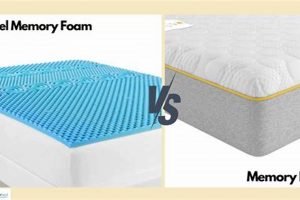
The central topic involves a comparison of two prevalent mattress types, one utilizing an internal network of metal coils for support, and the other relying on solid or layered polymer materials. The former relies on interconnected or individually pocketed metal structures for its supportive qualities, while the latter achieves support through varying densities and formulations of its constituent materials.
The significance of understanding the differences between these mattress constructions lies in their varying impacts on sleep quality, durability, and suitability for individual needs. Historically, coiled mattresses were the standard, but advancements in material science have led to the increased popularity and diversification of polymer-based options, each offering unique advantages in terms of pressure relief, motion isolation, and temperature regulation.
This article will delve into the specific characteristics of each mattress type, exploring their construction, performance attributes, and potential suitability for diverse sleeping preferences and physical requirements. Furthermore, it will examine the factors to consider when choosing between these options, including cost, longevity, and environmental impact.
Considerations for Mattress Selection
The selection of a suitable mattress involves evaluating various factors that align with individual needs and preferences. Understanding the core attributes of each type will aid in making an informed decision.
Tip 1: Evaluate Support Requirements: Assess individual body weight and sleeping position. Individuals with higher body weights may benefit from the firmer support offered by innerspring systems. Side sleepers may find the conforming nature of foam more comfortable for pressure relief.
Tip 2: Analyze Motion Isolation Properties: Consider whether sleep is frequently disturbed by a partner’s movements. Foam mattresses, particularly those with memory foam layers, generally excel at isolating motion, minimizing disturbance during sleep.
Tip 3: Examine Temperature Regulation: Recognize that some materials retain heat more than others. Innerspring mattresses typically offer better airflow and breathability. If overheating is a concern, consider foam options with cooling gel infusions or open-cell structures designed to dissipate heat.
Tip 4: Assess Durability Expectations: Understand the typical lifespan of each mattress type. Innerspring mattresses, especially those with higher coil counts and heavier gauge steel, can be quite durable. Foam mattress durability depends on the density and quality of the foam used; higher density foams tend to last longer.
Tip 5: Evaluate Edge Support: Edge support is the reinforcement along the perimeter of the mattress. Stronger edge support can prevent the feeling of rolling off the mattress and can make it easier to get in and out of bed. Some innerspring designs offer enhanced edge support. Foam mattresses can sometimes lack sufficient edge support unless specifically designed to include it.
Tip 6: Factor in Budget Constraints: Establish a budget and compare prices across different brands and models. While general statements about price are difficult to make, keep in mind materials and construction greatly influence the final cost.
Tip 7: Consider Trial Periods and Warranties: Take advantage of trial periods offered by retailers to test the mattress at home. Review the warranty carefully to understand the coverage and limitations.
Careful consideration of these factors will facilitate a more informed and satisfactory mattress selection process, promoting improved sleep quality and overall well-being.
The following sections will further elaborate on the construction details and specific benefits of each option to assist in making the most suitable choice.
1. Support

Support, in the context of mattress selection, refers to the mattress’s ability to maintain proper spinal alignment and distribute body weight evenly. This is a primary function and a critical differentiator between innerspring and foam mattress designs.
- Coil Configuration and Gauge (Innerspring)
Innerspring mattress support depends heavily on coil type (e.g., Bonnell, pocketed, continuous), coil count, and steel gauge. Lower gauge numbers indicate thicker, sturdier coils offering firmer support. The configuration dictates how weight is distributed across the mattress surface. For example, pocketed coils, individually wrapped, tend to contour to the body more effectively, reducing pressure points compared to interconnected Bonnell coils.
- Foam Density and Composition (Foam)
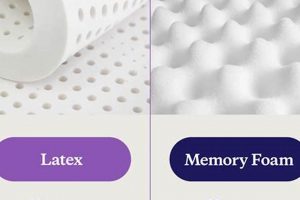
Foam mattress support is a function of foam density and the layering of different foam types. High-density foams provide firmer support and resist compression over time. Multi-layer construction often combines a high-density base layer for foundational support with softer, more conforming top layers like memory foam or latex. The arrangement of these layers dictates the overall feel and level of support provided.
- Edge Support Considerations
Edge support, the reinforcement along the mattress perimeter, influences the usable sleeping surface and ease of getting in and out of bed. Innerspring mattresses may incorporate reinforced edges (e.g., thicker gauge coils or foam encasement). Some foam mattresses lack robust edge support unless specifically designed with denser foams or reinforced perimeters, potentially leading to a feeling of roll-off at the edges.
- Spinal Alignment and Pressure Relief
Ultimately, the effectiveness of support is judged by its impact on spinal alignment and pressure relief. A mattress providing inadequate support can lead to discomfort, pain, and disrupted sleep. Innerspring mattresses, depending on their construction, can offer targeted support or uniform firmness. Foam mattresses, especially those with memory foam, are known for their conforming ability, distributing weight and reducing pressure points. However, excessively soft foam can lead to sinkage and misalignment.
The optimal choice between innerspring and foam mattresses for support depends heavily on individual factors such as body weight, sleeping position, and personal preferences. Understanding how coil configuration and foam density contribute to support is essential for selecting a mattress that promotes proper spinal alignment and a comfortable sleep experience.
2. Motion Isolation

Motion isolation, the ability of a mattress to absorb movement and prevent its transfer across the surface, is a crucial consideration within the dichotomy of spring versus foam mattress selection. Movement experienced on one side of the mattress should ideally not disturb a person sleeping on the other side. The fundamental construction of each mattress type dictates its motion isolation capabilities, influencing sleep quality for individuals sharing a bed.
Innerspring mattresses, particularly those with interconnected coil systems, tend to exhibit less effective motion isolation. When pressure is applied to one area, the interconnected coils transfer that movement across the mattress. In contrast, foam mattresses, especially those made of memory foam or latex, excel at absorbing motion. These materials contour to the body, minimizing the propagation of movement. For instance, consider a scenario where one partner frequently tosses and turns during the night. A spring mattress may transmit these movements, disturbing the other partner’s sleep. A foam mattress, due to its inherent damping properties, would significantly reduce or eliminate such disturbances. The practical significance of this difference is substantial, directly impacting the restfulness and consistency of sleep for co-sleepers.
In conclusion, the selection between spring and foam mattresses necessitates careful consideration of motion isolation capabilities, particularly for couples or individuals sensitive to movement during sleep. Foam mattresses provide superior motion isolation compared to traditional innerspring models, leading to a potentially more restful and undisturbed sleep experience for both partners. While hybrid mattresses attempt to bridge this gap by combining elements of both technologies, understanding the underlying material properties remains essential for making an informed decision. The trade-offs between support, temperature regulation, and motion isolation must be carefully weighed against individual needs and preferences.
3. Temperature
Temperature regulation is a crucial aspect of sleep comfort, and the materials used in mattress construction significantly impact this factor. Spring mattresses, due to their internal air spaces created by the coil system, generally offer enhanced breathability compared to many foam options. This airflow facilitates heat dissipation, potentially reducing the likelihood of overheating during sleep. Conversely, some foam types, particularly traditional memory foam, have a tendency to retain heat due to their dense structure, which restricts airflow. This can lead to a warmer sleep environment, which may be undesirable for certain individuals. The magnitude of this effect depends on the specific materials and design elements involved.
Modern mattress technology has addressed some of these temperature-related challenges. Gel-infused memory foam, for instance, incorporates gel particles intended to draw heat away from the body. Open-cell foam structures are designed with larger pores to promote airflow. Hybrid mattresses, combining innerspring systems with foam layers, attempt to leverage the breathability of the springs while providing the conforming comfort of foam. The effectiveness of these technologies varies, and independent testing or user reviews can provide insights into their real-world performance. Individuals who tend to sleep hot should carefully consider these factors and potentially prioritize mattresses with enhanced cooling features.
In summary, the temperature regulation characteristics of mattresses are directly related to their construction materials. While traditional innerspring mattresses generally offer better airflow, advancements in foam technology are aimed at mitigating heat retention. Understanding individual temperature preferences and carefully evaluating mattress materials and design features are essential for selecting a mattress that promotes a comfortable sleep environment. Failure to consider this factor can result in disrupted sleep and overall discomfort.
4. Durability
Durability, a critical attribute of any mattress, represents its ability to withstand prolonged use and maintain its structural integrity and performance characteristics over time. The expected lifespan of a mattress is directly linked to the materials and construction techniques employed, influencing both the initial investment and long-term value proposition. The dichotomy between spring and foam mattress types highlights distinct durability considerations.
- Coil Fatigue and Sagging (Innerspring)
In innerspring mattresses, coil fatigue and subsequent sagging are common indicators of declining durability. The repeated compression and decompression cycles experienced during sleep can weaken the steel coils, leading to a loss of support and the development of indentations. The gauge of the steel used, the coil type (e.g., Bonnell vs. pocketed), and the overall construction quality influence the rate of coil fatigue. Mattresses with lower gauge coils and less robust construction are more susceptible to premature sagging.
- Foam Degradation and Compression (Foam)
Foam mattresses are prone to degradation through compression set, a phenomenon where the foam material permanently loses its ability to rebound to its original shape after repeated compression. This results in a flattening of the mattress surface and a reduction in its ability to provide adequate support. The density and type of foam used (e.g., memory foam, latex, polyurethane) significantly impact its resistance to compression set. Higher density foams generally exhibit greater durability and a longer lifespan.
- Material Quality and Construction Techniques
Regardless of the mattress type, the quality of the raw materials and the precision of the manufacturing process play a crucial role in determining overall durability. Inferior quality steel or foam, coupled with poor construction techniques, can drastically shorten the lifespan of a mattress. Reinforced edges, robust stitching, and well-designed internal support structures contribute to the longevity of both innerspring and foam mattresses.
- User Weight and Sleeping Habits
User weight and sleeping habits exert a considerable influence on mattress durability. Higher body weights place greater stress on the mattress materials, accelerating wear and tear. Similarly, consistently sleeping in the same position can lead to localized compression and sagging. Rotating and flipping the mattress (if applicable) can help to distribute wear more evenly, potentially extending its lifespan.
In summary, assessing the durability of both spring and foam mattresses necessitates a comprehensive evaluation of material quality, construction techniques, and anticipated usage patterns. While innerspring mattresses are susceptible to coil fatigue, foam mattresses are prone to compression set. A well-constructed mattress, regardless of type, utilizing high-quality materials and subjected to reasonable use, will provide a longer period of comfortable and supportive sleep. Careful consideration of these durability factors contributes to a more informed and economically sound mattress purchase.
5. Cost

The financial outlay required for a mattress represents a significant consideration for consumers. The cost differential between innerspring and foam mattresses is influenced by various factors, including materials, construction complexity, and brand positioning. Understanding these cost drivers is crucial for making an informed purchasing decision.
- Raw Materials and Manufacturing Processes
The cost of raw materials, such as steel for coils in innerspring mattresses or various polymers for foam mattresses, contributes directly to the final price. The complexity of the manufacturing process also impacts cost. For instance, individually pocketed coils require more intricate assembly compared to interconnected coil systems. Similarly, the layering of different foam densities and the incorporation of specialized features like gel infusions increase the production cost of foam mattresses. The origin of materials and labor costs associated with manufacturing further influence the price point.
- Mattress Technology and Features
Advanced technologies and specialized features incorporated into mattresses can significantly elevate their cost. Memory foam with cooling gel, open-cell foam structures designed for enhanced breathability, and individually wrapped coil systems all add to the production expenses. The inclusion of these features often reflects a higher level of engineering and material sophistication, justifying a premium price point. However, consumers must carefully evaluate whether these features align with their specific needs and preferences to determine if the added cost is warranted.
- Brand Recognition and Marketing Expenses
Brand recognition and marketing expenditures play a substantial role in pricing. Established brands with a strong reputation often command higher prices, reflecting consumer confidence and perceived quality. Extensive marketing campaigns, celebrity endorsements, and retail partnerships contribute to the overall cost structure of the mattress, which is ultimately passed on to the consumer. Less established brands may offer comparable products at lower prices, focusing on value proposition rather than brand prestige.
- Retail Markup and Distribution Channels
The retail markup and the chosen distribution channel impact the final cost to the consumer. Brick-and-mortar stores typically have higher overhead costs compared to online retailers, resulting in larger markups. Direct-to-consumer mattress companies, bypassing traditional retail channels, often offer lower prices due to reduced operational expenses. Sales events, promotional discounts, and financing options can also influence the effective cost of the mattress. The availability of trial periods and return policies provides consumers with an opportunity to assess the mattress before committing to a purchase, mitigating the risk associated with online transactions.
In conclusion, the cost of a mattress is determined by a confluence of factors encompassing material selection, manufacturing complexity, technological features, brand positioning, and distribution strategies. While innerspring mattresses generally represent a more economical option at the entry level, advanced foam and hybrid models often command premium prices. Consumers must carefully weigh their budgetary constraints against their individual needs and preferences to determine the optimal balance between cost and performance. A thorough understanding of these cost drivers empowers consumers to make informed decisions and maximize the value of their mattress investment.
6. Conformability

Conformability, in the context of mattress technology, refers to the ability of a sleep surface to adapt to the unique contours of the human body. This characteristic exerts a significant influence on pressure distribution, spinal alignment, and overall sleep comfort. The “spring mattress vs foam” debate often centers on the degree to which each type excels in providing individualized support and alleviating pressure points through varying levels of surface adaptation. The extent to which a mattress conforms to the body is a primary determinant of its suitability for different sleeping positions and body types. Inadequate conformity can lead to localized pressure, discomfort, and disrupted sleep patterns.
Innerspring mattresses, traditionally characterized by a more rigid structure, offer a relatively limited degree of conformability. While individual coil systems (e.g., pocketed coils) can provide some localized give, the overall interconnectedness of the coils often restricts their ability to fully adapt to the body’s curves. Foam mattresses, particularly those incorporating memory foam or latex, exhibit a far greater capacity for contouring. These materials possess inherent viscoelastic properties, allowing them to mold to the body’s shape and distribute weight more evenly. For example, a side sleeper might experience significant pressure on their shoulder and hip when using a less conforming innerspring mattress. In contrast, a memory foam mattress would cushion these pressure points, promoting better spinal alignment and reducing discomfort. Hybrid mattresses attempt to bridge this gap by combining the support of an innerspring core with the conforming properties of a foam comfort layer, offering a compromise between the two extremes.
The practical significance of understanding the conformability differences between spring and foam mattresses lies in its direct impact on sleep quality and musculoskeletal health. Individuals with pre-existing back pain or joint issues often benefit from the enhanced pressure relief provided by conforming foam surfaces. However, excessive conformability can lead to a feeling of being “stuck” in the mattress, which may be undesirable for some sleepers. The ideal level of conformability is subjective and depends on individual preferences and physical needs. Carefully evaluating personal sleeping habits and considering any specific musculoskeletal conditions is crucial for selecting a mattress that provides optimal comfort and support. The long-term effects of consistently sleeping on a mattress with inadequate conformability can manifest as chronic pain, stiffness, and reduced sleep quality, underscoring the importance of this factor in mattress selection.
Frequently Asked Questions
The following section addresses common inquiries pertaining to the comparison of spring and foam mattresses, offering concise and factual responses based on established knowledge.
Question 1: What are the primary structural differences between innerspring and foam mattresses?
Innerspring mattresses utilize a network of metal coils as their primary support system, often encased in fabric and padding. Foam mattresses, conversely, rely on solid or layered polymer materials, such as memory foam, latex, or polyurethane, for support and comfort.
Question 2: Which mattress type generally offers superior motion isolation?
Foam mattresses, particularly those constructed with memory foam, typically exhibit superior motion isolation compared to innerspring mattresses. The dense, viscoelastic properties of foam absorb movement, minimizing the transfer of motion across the mattress surface.
Question 3: Is one mattress type inherently more durable than the other?
The durability of both innerspring and foam mattresses depends on the quality of materials and construction. Innerspring mattresses may be susceptible to coil fatigue, while foam mattresses can experience compression set. High-density foams and robust coil systems tend to enhance longevity.
Question 4: Which mattress type is better suited for individuals who tend to sleep hot?
Innerspring mattresses generally offer better breathability due to the open spaces within the coil system, facilitating airflow and heat dissipation. Foam mattresses, especially traditional memory foam, may retain heat. However, advancements such as gel-infused foams and open-cell structures aim to mitigate heat retention in foam mattresses.
Question 5: Does body weight influence the optimal choice between innerspring and foam mattresses?
Body weight is a relevant factor. Individuals with higher body weights may benefit from the firmer support provided by innerspring mattresses or high-density foam options. Lighter individuals may find sufficient support and comfort in softer foam mattresses.
Question 6: What role does sleeping position play in selecting between innerspring and foam mattresses?
Sleeping position is a significant consideration. Side sleepers often benefit from the conforming properties of foam mattresses, which cushion pressure points on the shoulders and hips. Back and stomach sleepers may prefer the firmer support offered by innerspring mattresses or firmer foam options.
In summary, selecting the appropriate mattress type requires careful consideration of individual needs, preferences, and physical characteristics. Evaluating factors such as motion isolation, temperature regulation, durability, body weight, and sleeping position is essential for making an informed decision.
The following section presents key considerations for consumers when selecting a mattress.
spring mattress vs foam
This analysis has explored the contrasting characteristics of spring and foam mattresses, outlining key distinctions in support, motion isolation, temperature regulation, durability, cost, and conformability. Understanding these attributes allows for a more informed decision-making process when selecting a sleep surface. The suitability of each type is contingent upon individual factors, necessitating a careful evaluation of personal needs and preferences.
The selection of an appropriate mattress represents a significant investment in sleep quality and overall well-being. Further research and, where possible, practical testing are encouraged to ensure optimal alignment with individual requirements. As mattress technology continues to evolve, a discerning approach to evaluating product claims and prioritizing objective performance criteria remains paramount.