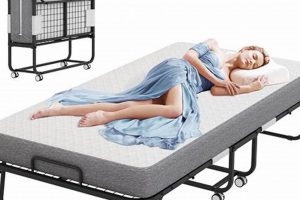
The typical vertical distance from the floor to the top surface of a sleeping platform, including the supporting frame and overlying cushion, generally falls within a defined range. This measurement influences ease of access, perceived comfort, and overall bedroom aesthetics. For example, a common measurement is approximately 25 inches, although variations exist based on design and intended use.
This dimension plays a critical role in ergonomic considerations, facilitating easier ingress and egress, especially for individuals with mobility limitations. Historically, platform elevations have varied across cultures and time periods, reflecting diverse sleeping customs and available materials. A well-considered elevation can enhance both the functionality and visual appeal of a bedroom space, contributing to a more comfortable and accessible environment.
The following discussion will elaborate on the factors influencing this measurement, exploring specific design variations, and outlining considerations for selecting an appropriate configuration based on individual needs and preferences.
Considerations for Selecting an Appropriate Sleeping Platform Elevation
The subsequent points offer guidance when assessing the ideal sleeping platform elevation. Careful consideration of these aspects contributes to optimal comfort, accessibility, and overall well-being.
Tip 1: Evaluate Physical Capabilities: Assess individual mobility, including ease of movement when rising from or lying down on a surface. Individuals with joint pain or limited range of motion may benefit from a higher platform, minimizing strain.
Tip 2: Account for Bedroom Space: Smaller rooms may benefit from platforms with integrated storage. However, consider the resulting height increase and its impact on perceived spaciousness.
Tip 3: Consider Mattress Thickness: The cushion’s profile significantly affects the final elevation. Thicker cushions will naturally result in a higher overall surface. Factor in the thickness to ensure the resultant height aligns with individual ergonomic needs.
Tip 4: Evaluate Frame Design: Platform frame designs influence the final elevation. Low-profile frames offer a minimalist aesthetic, while frames with built-in storage or adjustable legs provide additional functionality but may impact overall height.
Tip 5: Assess Existing Furniture: Account for the height of adjacent furniture, such as nightstands, to maintain visual harmony and ergonomic efficiency. A significant height discrepancy can impact usability and aesthetic appeal.
Tip 6: Explore Adjustable Options: Adjustable frames offer flexibility in customizing the elevation to suit individual requirements. These models accommodate changing needs or preferences, providing long-term adaptability.
Tip 7: Consult with Healthcare Professionals: Individuals with specific medical conditions or mobility limitations should seek guidance from healthcare professionals regarding the most appropriate elevation for their needs. This ensures optimal support and minimizes potential risks.
Optimal sleeping platform elevation enhances comfort, improves accessibility, and contributes to overall well-being. Thoughtful evaluation of personal needs and environmental constraints allows for selection of a configuration that promotes restful sleep and minimizes physical strain.
The following sections will delve into specific design variations and practical applications, providing further insights into optimizing sleeping platform elevation for diverse needs.
1. Accessibility

Accessibility, in the context of sleeping platform elevation, refers to the ease with which individuals can get into and out of a platform. The vertical distance significantly affects the physical effort required for these actions. An inappropriately low platform necessitates excessive bending and strain on joints, while an excessively high platform requires climbing, increasing the risk of falls. The measurement, therefore, must align with the physical capabilities of the user.
Consider, for instance, the needs of older adults or individuals with mobility impairments. A platform that is too low can exacerbate joint pain and limit independence. Conversely, a platform that is too high can present a significant obstacle, increasing the risk of falls and injuries. A standard height, designed with accessibility in mind, facilitates safer and more independent use. Hospitals and assisted living facilities often utilize adjustable frames to accommodate the diverse needs of their patients or residents, demonstrating the practical application of accessibility principles in healthcare settings.
In conclusion, platform accessibility is a critical factor in promoting user safety, independence, and overall well-being. Selecting an appropriate height requires careful consideration of individual physical capabilities and potential limitations. Ignoring accessibility considerations can lead to unnecessary physical strain, increased risk of injuries, and diminished quality of life. Therefore, platform designs must prioritize accessibility to ensure comfortable and safe use for all individuals.
2. Ergonomics

Ergonomics, the science of designing and arranging things to maximize efficiency and safety, is intrinsically linked to the consideration of sleeping platform elevation. The relationship directly influences spinal alignment, muscle strain, and overall sleep quality. Optimizing this relationship contributes to a more restful and restorative sleep experience.
- Spinal Alignment and Posture
An appropriate elevation facilitates maintaining a neutral spinal posture when lying down and rising. A platform that is too low necessitates excessive bending, straining the back muscles and disrupting spinal alignment. Conversely, a platform that is too high may cause awkward angles and unnatural positioning. Correct elevation promotes optimal spinal health and reduces the risk of back pain.
- Muscle Strain and Joint Stress
Improper platform dimensions contribute to increased muscle strain and joint stress, particularly in the lower back, hips, and knees. A platform elevation that is too low requires significant effort to rise from a supine position, placing undue stress on these joints. Similarly, an excessively high platform necessitates more strenuous effort, potentially leading to discomfort and injury. Optimized dimensions reduce strain on muscles and joints, promoting greater comfort and minimizing the risk of musculoskeletal issues.
- Ease of Ingress and Egress
Ergonomic principles dictate that individuals should be able to enter and exit the sleeping surface with minimal effort and maximum safety. A well-designed elevation facilitates smooth and natural movements, reducing the risk
of falls or injuries. This is particularly important for individuals with mobility limitations, such as older adults or those with disabilities. The height should allow for comfortable sitting on the edge before standing, providing stability and support. - Impact on Sleep Quality
Discomfort and strain associated with an improperly sized sleeping platform negatively impact sleep quality. Individuals experiencing pain or difficulty getting in and out of bed are more likely to experience disrupted sleep patterns and reduced restorative benefits. Optimizing the elevation, based on ergonomic principles, contributes to improved sleep quality, leading to increased energy levels and enhanced overall well-being.
The ergonomic design of a sleeping platform, including the selection of an appropriate measurement, represents a significant investment in long-term health and well-being. By carefully considering factors such as spinal alignment, muscle strain, ease of access, and impact on sleep quality, individuals can make informed decisions that promote comfort, safety, and restorative sleep. The benefits extend beyond mere convenience, encompassing improved physical health, enhanced mental well-being, and a higher overall quality of life.
3. Aesthetics

Aesthetics, in the context of sleeping platform elevation, encompasses the visual harmony and overall design coherence within a bedroom space. The vertical distance influences the perceived proportionality of furniture elements and contributes significantly to the room’s ambiance.
- Proportional Harmony
The measurement of a sleeping platform affects the perceived proportionality of other bedroom furnishings, such as nightstands, dressers, and seating. A platform that is disproportionately low or high can disrupt the visual balance of the room, creating an unsettling or awkward aesthetic. Maintaining proportional harmony contributes to a sense of visual order and tranquility.
- Visual Flow and Space Perception
The dimensions influence the visual flow and perception of space within a room. A lower profile can enhance the sense of spaciousness, particularly in smaller bedrooms, while a higher platform may create a more imposing presence. Strategic selection based on room size and layout optimizes visual flow and enhances the overall spatial experience.
- Style Integration
Platform height influences the integration of the sleeping platform into the overall design style of the room. A minimalist aesthetic may favor a lower profile, while a more traditional style may incorporate a higher, more substantial design. Consideration of the existing design elements ensures seamless integration and aesthetic coherence.
- Color Palette and Material Selection
The visible portion of the sleeping platform frame contributes to the overall color palette and material selection within the room. The color and texture of the frame should complement the existing furnishings and dcor. Careful consideration of these elements enhances the visual appeal and contributes to a cohesive design scheme.
Integrating aesthetic considerations into the selection process for sleeping platform elevation is essential for creating a visually pleasing and harmonious bedroom environment. By carefully considering proportional harmony, visual flow, style integration, and the interplay of color and materials, individuals can enhance the aesthetic appeal of their sleeping space and create a more restful and inviting atmosphere.
4. User preference

Individual preference significantly influences the perception of an appropriate sleeping platform elevation. While “standard” measurements offer a general guideline, personal factors such as body type, sleeping habits, and pre-existing physical conditions contribute to the subjective determination of optimal height. The interaction between these subjective elements and established standards dictates user satisfaction and long-term comfort.
For instance, an individual with longer legs might find a “standard” height platform uncomfortably low, requiring excessive bending upon ingress and egress. Conversely, a shorter individual may perceive the same height as excessive, necessitating an awkward climb. Preference also extends to aesthetic considerations. Some individuals favor the minimalist appearance of a low-profile platform, while others prefer the perceived grandeur of a higher, more substantial design. The selection process, therefore, necessitates a balance between standardized measurements and personalized requirements. Retailers increasingly offer adjustable frames to accommodate this spectrum of individual needs, demonstrating a practical response to the importance of personalization.
Ultimately, the effective application of “standard” dimensions involves a process of individual evaluation and adjustment. Relying solely on standardized measurements without considering personal preferences can result in discomfort, dissatisfaction, and potentially adverse health outcomes. The ideal configuration is one that effectively integrates established guidelines with the unique physical and aesthetic requirements of the individual, ensuring a sleeping environment that promotes both comfort and well-being.
5. Frame style
Frame style exerts a direct influence on the overall elevation of a sleeping platform, including the underlying support structure and overlying cushion. Variations in frame design platform, sleigh, panel, or adjustable dictate the base height upon which the cushion rests. This base measurement is a critical component in determining the final vertical distance, impacting accessibility, ergonomics, and aesthetic considerations. For example, a platform frame, characterized by its low-profile design and integrated support system, typically results in a lower overall measurement compared to a traditional frame with a box spring. Similarly, an adjustable frame, designed with motorized mechanisms, can significantly alter the vertical distance, allowing for customized positioning and accommodating diverse user needs.
The selection of a frame style, therefore, necessitates careful consideration of its impact on the final sleeping surface. Failure to account for this influence can lead to ergonomic challenges, visual disharmony, and reduced user satisfaction. Consider a scenario where an individual selects a thick cushion for a platform frame, resulting in an excessively low sleeping surface, thereby impeding accessibility and causing discomfort. Conversely, pairing a thin cushion with a high-profile frame may result in an unnaturally elevated surface, disrupting visual balance and potentially increasing the risk of falls. Frame style, therefore, is not merely an aesthetic choice but a functional determinant of the overall sleeping experience.
In conclusion, frame style constitutes an integral factor in determining the total elevation of a sleeping surface. Understanding the relationship between frame design, base height, and the eventual vertical distance is crucial for optimizing comfort, accessibility, and aesthetic integration. The effective selection of a frame style requires careful consideration of i
ndividual needs, ergonomic principles, and design preferences, ensuring a sleeping environment that promotes both well-being and visual harmony.
6. Mattress profile
Mattress profile, defined as the vertical thickness of the cushioning, directly impacts the overall elevation of a sleeping platform, including the supporting frame. The profile functions as a critical variable in achieving a desirable and ergonomically sound measurement. Variations in mattress thickness, ranging from low-profile models to significantly thicker designs, result in corresponding fluctuations in the final vertical distance. Consider a scenario where a low-profile frame is paired with a particularly thick mattress. The resultant sleeping surface may exceed typical expectations, potentially compromising accessibility for individuals with mobility limitations. Conversely, a thin mattress atop the same frame might result in an uncomfortably low platform, requiring excessive bending and strain. The profile, therefore, constitutes a primary determinant of the ultimate height.
The selection of an appropriate mattress profile should align with the specific dimensions of the sleeping platform frame and the ergonomic requirements of the user. A taller frame may necessitate a thinner mattress to maintain a manageable and comfortable elevation. Conversely, a lower frame may benefit from a thicker mattress to achieve an optimal sleeping surface. In practice, individuals often overlook this interplay, leading to discomfort and potential postural issues. For example, elderly individuals selecting a thick mattress for an already tall platform may find the resulting elevation challenging to navigate, increasing the risk of falls. Understanding the interplay between mattress profile and frame height is therefore crucial for promoting safety, comfort, and ergonomic well-being. Furthermore, the choice of mattress profile often influences the selection of accompanying bedding. Deep-pocket sheets, for instance, are specifically designed to accommodate thicker mattresses, further emphasizing the interconnectedness of mattress selection and overall sleep environment design.
In summary, mattress profile significantly contributes to the final vertical measurement of a sleeping platform. Careful consideration of this factor, in conjunction with frame design and individual needs, is essential for creating a comfortable, accessible, and aesthetically pleasing sleeping environment. Ignoring this interplay can lead to ergonomic challenges and reduced user satisfaction. Prioritizing the integration of mattress profile into the overall design process ensures a harmonious and functional sleeping space.
Frequently Asked Questions
The following addresses common inquiries regarding typical sleeping platform elevations, encompassing both the supporting structure and overlying cushioning. These responses aim to clarify misconceptions and provide objective information for informed decision-making.
Question 1: What constitutes the generally accepted vertical measurement for a sleeping platform, including both the frame and overlying cushion?
A commonly cited measurement falls within the range of 24 to 30 inches from the floor to the top surface of the mattress. This range accommodates variations in frame design and mattress thickness.
Question 2: Why does sleeping surface elevation matter?
The vertical distance impacts ease of access, ergonomic considerations, and overall visual aesthetics within a bedroom. Inappropriate measurements can lead to physical strain and diminished sleep quality.
Question 3: Does mattress thickness significantly affect the final measurement?
The profile of the mattress contributes directly to the overall elevation. Thicker mattresses will invariably result in a higher sleeping surface compared to thinner models.
Question 4: Are sleeping platform elevations standardized across all manufacturers?
No. Variations exist based on design style, intended purpose, and manufacturer specifications. Consumers should verify measurements prior to purchase.
Question 5: How do adjustable sleeping platforms affect standard measurements?
Adjustable frames offer customized elevation options, deviating from fixed measurements. This provides flexibility in accommodating individual needs and preferences.
Question 6: Is the “standard” height appropriate for all individuals?
The “standard” measurement serves as a general guideline. Individuals with mobility limitations or specific ergonomic needs should consider customized solutions.
Accurate knowledge of sleeping platform elevation is crucial for optimizing comfort, accessibility, and overall well-being. Awareness of these factors empowers individuals to make informed choices aligned with their unique requirements.
The next section will explore strategies for selecting a sleeping platform that meets individual ergonomic and aesthetic requirements.
Conclusion
This discussion has illuminated the multifaceted considerations surrounding the typical vertical distance from the floor to the top of a sleeping platform, inclusive of both the supporting frame and the overlying mattress. Ergonomic factors, accessibility needs, aesthetic preferences, frame styles, and mattress profiles each contribute significantly to the ultimate determination of a suitable measurement. A comprehensive understanding of these elements is essential for informed decision-making.
The optimal selection requires a synthesis of standardized guidelines and individual requirements. Continued awareness of these interacting variables will promote enhanced comfort, improved accessibility, and optimized well-being within the sleeping environment, yielding long-term benefits for physical health and overall quality of life.



![Best Foldable Murphy Bed Mattress [Guide] for Small Spaces | Organic & Natural Mattress Buyer’s Guide: Non-Toxic Sleep Solutions](https://mattressworldpa.com/wp-content/uploads/2025/07/th-7312-300x200.jpg "Best Foldable Murphy Bed Mattress [Guide] for Small Spaces Organic & Natural Mattress Buyer’s Guide: Non-Toxic Sleep Solutions")
![Best Sofa Bed Blow Up Mattress [Guide & Deals] | Organic & Natural Mattress Buyer’s Guide: Non-Toxic Sleep Solutions](https://mattressworldpa.com/wp-content/uploads/2025/07/th-7311-300x200.jpg "Best Sofa Bed Blow Up Mattress [Guide & Deals] Organic & Natural Mattress Buyer’s Guide: Non-Toxic Sleep Solutions")