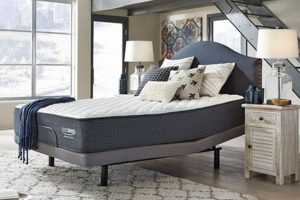
The term refers to a sleep surface specifically engineered to provide optimal support and comfort for individuals who predominantly sleep on their stomach. These mattresses typically prioritize firmness and spinal alignment to mitigate potential strain on the back and neck. For instance, a firmer model with minimal sinkage is often recommended to prevent excessive arching of the spine during sleep.
Proper spinal alignment, facilitated by an appropriately designed sleep surface, is crucial for preventing back pain and ensuring restful sleep. The development of specialized bedding for specific sleep positions reflects an increasing awareness of the connection between sleep posture and musculoskeletal health. Historically, mattress design focused less on individual sleep styles; however, modern advancements incorporate biomechanical considerations for targeted support.
The subsequent sections will delve into the specific features and materials that contribute to the suitability of a sleep surface for stomach sleepers, discuss the potential advantages and disadvantages of this sleep position, and provide guidance on selecting a model that best addresses individual needs and preferences.
Guidance for Selecting Appropriate Bedding
Choosing a sleep surface conducive to stomach sleeping requires careful consideration of several key factors. Ignoring these points can lead to discomfort and potential musculoskeletal issues.
Tip 1: Prioritize Firmness. A firmer surface is essential to prevent excessive sinking of the midsection, maintaining proper spinal alignment. Soft mattresses exacerbate spinal curvature, leading to back pain.
Tip 2: Consider Low-Profile Pillows. Thick pillows elevate the neck, creating an unnatural angle that can cause neck strain and headaches. A thin or no pillow is often preferable.
Tip 3: Evaluate Core Support. A mattress with reinforced edge support can prevent rolling off the edge and maintain consistent support across the entire surface, important for restless sleepers.
Tip 4: Assess Material Breathability. Stomach sleeping can restrict airflow, leading to increased body temperature. Opt for materials like latex or open-cell memory foam that promote ventilation.
Tip 5: Examine Pressure Relief. While firmness is important, some contouring is needed to alleviate pressure points on the ribs and hips. A mattress with a thin comfort layer can provide this balance.
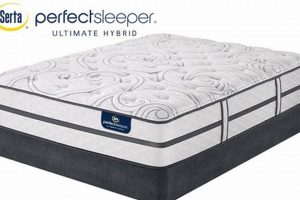
Tip 6: Investigate Hybrid Options. Hybrid mattresses combine the support of innerspring coils with the comfort of foam layers, potentially offering an ideal balance of firmness and pressure relief.
Tip 7: Trial Before Purchase. Whenever possible, test the mattress in a store or utilize a trial period to assess its suitability for individual needs and sleeping habits.
By carefully evaluating these factors, individuals can select a sleep surface that promotes spinal alignment, minimizes pressure points, and optimizes comfort for stomach sleeping.
The following section will address potential drawbacks associated with stomach sleeping and explore alternative sleep positions.
1. Firmness is Paramount

For individuals who primarily adopt a prone position during sleep, the firmness of the sleep surface assumes critical importance. This characteristic directly influences spinal alignment and the mitigation of musculoskeletal strain, fundamental considerations in the selection of a suitable stomach sleeper mattress.
- Prevention of Spinal Curvature
Insufficient firmness allows the sleeper’s midsection to sink excessively into the mattress, inducing an unnatural curvature of the spine. This hyperextension can lead to chronic lower back pain and discomfort. A firmer surface provides resistance, maintaining a more neutral spinal position and minimizing strain on supporting muscles.
- Optimal Weight Distribution
A stomach sleeper mattress with adequate firmness facilitates a more even distribution of body weight. This reduces concentrated pressure on the ribs, hips, and other bony prominences, preventing localized discomfort and potential circulatory restrictions. A softer surface, conversely, exacerbates pressure points and can disrupt sleep.
- Enhanced Core Engagement
Sleeping on a firmer surface engages the core muscles to a greater extent, promoting stability and preventing the torso from rotating excessively during the night. This active engagement can contribute to improved posture and reduced back pain over time. Softer mattresses offer less resistance and can contribute to postural instability.
- Improved Breathing Mechanics
While seemingly indirect, mattress firmness can influence breathing. Excessive sinkage can compress the chest cavity, potentially restricting lung capacity and impacting respiratory efficiency. A firmer surface maintains a more open chest cavity, facilitating easier and more efficient breathing during sleep.
In summary, the firmness of a stomach sleeper mattress is not merely a matter of preference but a crucial determinant of spinal health, weight distribution, core engagement, and even breathing mechanics. Selecting a mattress with sufficient firmness is therefore a prerequisite for optimizing sleep quality and minimizing the risk of musculoskeletal complications associated with prone sleeping.
2. Spinal Alignment Support

Maintaining proper spinal alignment is paramount when selecting a stomach sleeper mattress. Due to the inherent tendency of this sleep position to induce spinal hyperextension, a mattress engineered to provide specific support is crucial for minimizing musculoskeletal stress and promoting restorative sleep.
- Lumbar Region Reinforcement
The lumbar region, or lower back, is particularly vulnerable in stomach sleepers. A mattress with enhanced support in this area prevents excessive sinking of the hips and abdomen, mitigating spinal curvature. Examples include mattresses with zoned support systems, where the central third of the mattress offers greater resistance. Failure to provide adequate lumbar support can lead to chronic lower back pain and stiffness.
- Minimization of Neck Strain
Stomach sleeping often necessitates turning the head to one side for extended periods, placing undue stress on the neck. A mattress that facilitates a neutral neck position is essential. This can be achieved through the use of a thin or no pillow, combined with a mattress that does not elevate the shoulders excessively. Elevated shoulders force the neck into an unnatural angle, potentially causing neck pain, headaches, and even nerve compression.
- Consistent Surface Plane
Variations in mattress surface height can disrupt spinal alignment. Areas of significant sinkage or elevation create uneven pressure distribution and torsional stress on the spine. A high-quality stomach sleeper mattress maintains a consistent, relatively flat surface, ensuring that the spine remains aligned throughout the night. Inconsistent surfaces, such as those found in older or poorly constructed mattresses, can exacerbate existing spinal issues.
- Material Composition and Support Cores
The materials used in the mattress’s construction directly impact its ability to provide spinal alignment support. High-density foams, individually wrapped coils, and latex are commonly used to create supportive sleep surfaces. The core support system, whether innerspring or foam-based, must be robust enough to prevent sagging and maintain its shape over time. Sagging mattresses compromise spinal alignment and negate any benefits derived from other design features.
In summary, spinal alignment support within a stomach sleeper mattress is a multifaceted concept involving lumbar reinforcement, neck strain minimization, consistent surface plane maintenance, and appropriate material selection. These factors collectively contribute to a sleep environment that promotes spinal health and minimizes the risks associated with the stomach sleeping position. Prioritizing these considerations during mattress selection is essential for individuals who prefer to sleep on their stomach.
3. Pressure Point Relief

Pressure point relief is a critical factor in mattress design, particularly for stomach sleepers. The prone position concentrates body weight on specific areas, potentially leading to discomfort and disrupted sleep. An appropriately designed mattress must mitigate these concentrated pressures to promote restful sleep and prevent long-term musculoskeletal issues.
- Rib Cage and Hip Accommodation
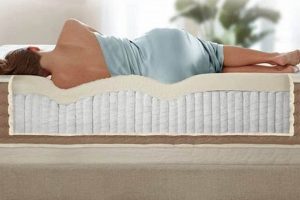
Stomach sleeping inherently places significant pressure on the rib cage and hip bones. A mattress engineered for pressure relief in these areas utilizes conforming materials, such as memory foam or latex, to distribute weight more evenly. These materials contour to the body, reducing the intensity of pressure on bony prominences. For example, a mattress with a zoned construction may incorporate softer foams in the rib and hip regions while maintaining firmer support elsewhere to ensure proper spinal alignment. The absence of adequate pressure relief can result in localized pain, numbness, and restricted circulation.
- Shoulder and Chest Support
While less pronounced than pressure on the ribs and hips, the shoulder and chest regions also require accommodation. The positioning of the arms and upper body in the prone position can create pressure points that disrupt sleep. Mattresses with comfort layers designed to cradle the shoulders and chest can alleviate these pressures. These comfort layers may consist of gel-infused memory foam or other pressure-relieving materials that conform to the contours of the upper body. Failure to address pressure in these areas can contribute to shoulder pain, chest discomfort, and restricted breathing.
- Prevention of Nerve Compression
Sustained pressure on specific body parts can lead to nerve compression, resulting in tingling, numbness, or pain. Mattresses designed for pressure relief minimize the risk of nerve compression by distributing weight more evenly and reducing localized pressure. For example, a mattress with a network of individually wrapped coils can conform to the body’s curves and reduce pressure points compared to a traditional innerspring mattress. Nerve compression can disrupt sleep and contribute to chronic pain syndromes.
- Circulation Enhancement
Excessive pressure on body parts can restrict blood flow, leading to discomfort and potential health issues. Mattresses with pressure-relieving properties promote healthy circulation by minimizing concentrated pressures and allowing for more efficient blood flow. Materials such as latex and open-cell memory foam are known for their ability to promote air circulation and reduce heat buildup, further enhancing comfort and preventing circulation problems. Restricted circulation can lead to restless sleep, muscle cramps, and, in severe cases, tissue damage.
The concept of pressure point relief is inextricably linked to the selection of a stomach sleeper mattress. Mattresses that effectively mitigate concentrated pressures on the ribs, hips, shoulders, and chest promote restful sleep, prevent nerve compression, enhance circulation, and reduce the risk of musculoskeletal problems. The materials and construction techniques employed in a mattress directly impact its ability to provide pressure relief, making it a critical consideration for stomach sleepers seeking optimal comfort and health.
4. Breathable Materials

The selection of breathable materials in a sleep surface is of particular relevance for stomach sleepers. This sleep position often results in increased body contact with the mattress, potentially leading to heat retention and discomfort. The implementation of breathable materials aims to mitigate these issues, fostering a more comfortable and temperature-regulated sleep environment.
- Enhanced Airflow and Ventilation
Breathable materials, by definition, promote the circulation of air within the mattress. This enhanced airflow facilitates the dissipation of body heat and moisture, preventing the buildup of heat that can lead to restless sleep. Materials such as open-cell memory foam, latex, and natural fibers like cotton or wool possess inherent ventilation properties, allowing for the continuous exchange of air. In contrast, closed-cell foams and synthetic materials tend to trap heat, creating an uncomfortable sleeping environment. The degree of airflow within a mattress directly impacts the sleeper’s perceived temperature and overall comfort.
- Moisture Wicking Properties
In addition to heat dissipation, breathable materials often exhibit moisture-wicking capabilities. This refers to the material’s ability to draw moisture away from the body and release it into the surrounding air. Fabrics like wool and bamboo are particularly effective at wicking moisture, helping to keep the sleeper dry and comfortable throughout the night. This is especially beneficial for stomach sleepers, who may experience increased perspiration due to the close contact with the mattress surface. The management of moisture levels directly influences skin health and overall sleep quality.
- Material Structure and Composition
The breathability of a material is intrinsically linked to its structure and composition. Open-cell foam, for instance, contains interconnected air pockets that allow for the free flow of air. Natural latex, derived from rubber trees, possesses a naturally open-cell structure that promotes ventilation. In contrast, densely packed synthetic foams can restrict airflow. The choice of materials and their structural properties is a primary determinant of a mattress’s breathability and its ability to regulate temperature.
- Surface Temperature Regulation
The primary function of breathable materials is to regulate the surface temperature of the mattress. By promoting airflow and wicking moisture, these materials prevent the buildup of heat that can lead to overheating and discomfort. A mattress constructed with breathable materials will maintain a more consistent and comfortable temperature, regardless of the sleeper’s body heat. This temperature regulation is crucial for promoting restful sleep and preventing nighttime awakenings. The use of breathable materials is therefore a critical consideration in the design of mattresses specifically for stomach sleepers.
The incorporation of breathable materials into a stomach sleeper mattress is not merely a comfort enhancement; it is a functional necessity. By promoting airflow, wicking moisture, and regulating surface temperature, these materials create a sleep environment that minimizes heat retention and maximizes comfort. The choice of materials and their structural properties are key determinants of a mattress’s breathability, making it a critical consideration for stomach sleepers seeking optimal sleep quality.
5. Edge Support Strength
Edge support strength is a critical attribute of a sleep surface, particularly for those who sleep on their stomachs. The perimeter of a mattress often receives less direct weight distribution compared to the center, and insufficient edge support can lead to a compromised sleep experience, especially for stomach sleepers who may utilize the full surface area.
- Prevention of Roll-Off
Stomach sleepers often require the use of the entire mattress surface, extending closer to the edges than other sleep positions might necessitate. Strong edge support prevents the sensation of rolling off the mattress, enhancing perceived security and stability. A lack of robust edge support can cause a feeling of instability, leading to disrupted sleep and potential anxiety about falling. Mattresses with reinforced edges, such as those utilizing high-density foam encasements or specialized coil systems, mitigate this risk.
- Consistent Surface Support
Weak edge support compromises the overall consistency of the sleep surface. The edges may sag or compress more readily than the center, leading to an uneven sleep plane. This unevenness can exacerbate spinal misalignment, a common concern for stomach sleepers. Mattresses with enhanced edge support maintain a more uniform surface, ensuring that the sleeper receives consistent support regardless of their position on the mattress. This consistent support contributes to improved spinal alignment and reduced back pain.
- Increased Usable Sleep Surface
Strong edge support effectively increases the usable sleep surface area of the mattress. Without robust edge support, the perimeter of the mattress becomes less functional, as sleepers avoid the edges due to the sensation of instability. A mattress with solid edge support maximizes the available sleep area, allowing stomach sleepers to stretch out and move freely without feeling confined. This is particularly important for couples sharing a bed, as it prevents either individual from encroaching on the other’s space due to the compromised edge support.
- Enhanced Durability and Longevity
Mattresses with reinforced edges are generally more durable and exhibit greater longevity. The edges of a mattress are subjected to considerable stress from getting in and out of bed, sitting on the edge, and general movement. Strong edge support prevents premature sagging and breakdown of the mattress structure, extending its lifespan. This translates to a better long-term investment, as the mattress maintains its support and comfort characteristics for a longer period. A mattress with weak edge support is more likely to develop sagging edges, leading to decreased comfort and reduced support over time.
In conclusion, the strength of edge support is a critical factor to consider when selecting a sleep surface, especially for stomach sleepers. Robust edge support contributes to a more stable, comfortable, and durable sleep environment, promoting spinal alignment, preventing roll-off, maximizing usable sleep surface, and enhancing overall longevity of the mattress. Failing to consider edge support can lead to a compromised sleep experience and potentially exacerbate musculoskeletal issues.
Frequently Asked Questions
The following questions address common inquiries regarding the selection and utilization of sleep surfaces designed for individuals who primarily sleep on their stomachs. The information provided aims to clarify crucial considerations for optimizing sleep quality and minimizing potential health risks.
Question 1: What level of firmness is generally recommended for a stomach sleeper mattress?
A medium-firm to firm mattress is typically advised to prevent excessive sinking of the midsection, which can lead to spinal hyperextension and subsequent lower back pain. The specific firmness level should be tailored to individual body weight and preference, but a general guideline is to prioritize a surface that maintains a relatively flat spinal alignment.
Question 2: Are there specific materials that should be prioritized or avoided in a stomach sleeper mattress?
Materials that offer both support and breathability are generally favored. High-density foams, latex, and innerspring coils provide structural support, while open-cell foams, natural fibers (such as cotton or wool), and gel infusions enhance breathability. Conversely, materials that trap heat and lack sufficient support, such as low-density polyurethane foams, are often less suitable.
Question 3: Is a pillow necessary when using a stomach sleeper mattress?
The use of a pillow is often discouraged, or a very thin pillow is recommended, to minimize neck strain. Elevated head and neck positions can exacerbate spinal misalignment. If a pillow is deemed necessary, it should be thin enough to maintain a neutral neck angle, preventing excessive flexion or extension.
Question 4: How can a stomach sleeper mattress help alleviate back pain?
By promoting proper spinal alignment, a stomach sleeper mattress reduces stress on the musculoskeletal system. The firmness and support characteristics prevent excessive curvature of the spine, mitigating strain on the lower back and neck. When combined with appropriate sleep posture, a suitable mattress can contribute to a reduction in back pain and improved sleep quality.
Question 5: What are the potential drawbacks of stomach sleeping, even with a suitable mattress?
Even with an optimized sleep surface, stomach sleeping may still contribute to neck strain, as the head must be turned to one side for extended periods. Additionally, the prone position can compress the chest cavity, potentially affecting breathing. Alternative sleep positions, such as side or back sleeping, are often recommended for individuals with chronic pain or respiratory issues.
Question 6: How does edge support impact the suitability of a mattress for stomach sleepers?
Strong edge support is crucial, as stomach sleepers often utilize the entire surface area of the mattress. Insufficient edge support can lead to a feeling of instability and potential roll-off, disrupting sleep. Mattresses with reinforced edges provide consistent support across the entire surface, maximizing usable sleep space and enhancing overall comfort.
In summary, the selection of a mattress engineered for stomach sleepers involves careful consideration of firmness, material composition, pillow usage, and edge support. While a suitable mattress can mitigate some of the risks associated with stomach sleeping, it is important to acknowledge potential drawbacks and consider alternative sleep positions if necessary. Ultimately, individual comfort and spinal alignment should be the primary determinants in mattress selection.
The subsequent section will explore alternative sleep positions and their respective benefits for spinal health and overall well-being.
Concluding Remarks on Stomach Sleeper Mattress Considerations
The preceding discussion has explored the critical elements of a “stomach sleeper mattress,” emphasizing the significance of firmness, spinal alignment support, pressure point relief, material breathability, and edge support strength. The prone sleep position necessitates careful consideration of these features to mitigate potential musculoskeletal strain and promote restorative sleep. Selecting a mattress specifically designed for stomach sleepers is not merely a matter of comfort preference but a proactive step towards safeguarding long-term spinal health.
Individuals are encouraged to critically evaluate their sleep surfaces and prioritize spinal alignment and postural support. While a properly chosen stomach sleeper mattress can offer significant benefits, the potential drawbacks of this sleep position should also be acknowledged. Further research into personalized sleep solutions and continuous advancements in mattress technology hold promise for optimizing sleep quality and overall well-being. The pursuit of informed decisions regarding sleep surfaces remains paramount for those seeking to maximize the benefits of rest and minimize the risks of musculoskeletal complications.