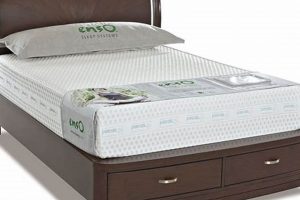
A sleeping surface combining the support of innerspring coils with the comfort layers of memory foam or latex, specifically sized for a single sleeper, represents an advancement in sleep technology. This design aims to offer a balance between responsive support and conforming pressure relief. For instance, the coil system provides a stable foundation, while the foam layers contour to the body’s curves, leading to improved spinal alignment.
The integration of these materials allows for enhanced airflow compared to traditional all-foam constructions, potentially leading to a cooler sleeping experience. Furthermore, the combination can offer durability and longevity. These products address a need for more adaptable sleep solutions, catering to individual preferences and body types. The development reflects an evolution in bedding aimed at improving sleep quality and overall well-being.
Subsequent sections will delve into specific aspects of these sleeping solutions, including their construction details, suitability for various sleeping positions, potential benefits for different body types, and factors to consider when selecting a suitable product. Further exploration will also touch upon related topics such as mattress protectors and proper care to extend the lifespan of this investment.
Guidance on Selecting a Twin Hybrid Mattress
The following recommendations offer practical advice for individuals considering the purchase of a combined coil and foam sleeping surface for a single occupant. Thoughtful consideration of these points can contribute to a more satisfactory purchase decision.
Tip 1: Assess Individual Sleep Preferences: Prior to purchase, evaluate preferred sleep position (side, back, stomach). This informs the optimal firmness level. A firmer surface often suits back or stomach sleepers, while a softer surface may benefit side sleepers.
Tip 2: Consider Body Weight: Body weight influences the required support. Individuals with higher body weight may necessitate a thicker coil system or higher-density foam layers to prevent excessive sinking and maintain proper spinal alignment.
Tip 3: Research Material Composition: Investigate the types of foam utilized (memory foam, latex, polyfoam). Latex offers greater responsiveness and breathability, while memory foam excels at pressure relief. Ensure materials are certified for low VOC emissions.
Tip 4: Evaluate Coil System: Understand the type of coil system employed (pocketed coils, continuous coils). Pocketed coils minimize motion transfer, which may be beneficial for light sleepers sharing a room.
Tip 5: Check for Trial Periods and Warranties: Reputable manufacturers typically offer trial periods and warranties. These provisions allow for assessment of comfort and provide protection against manufacturing defects.
Tip 6: Read Customer Reviews: Research consumer experiences with specific models. While individual preferences vary, recurring issues or positive feedback can provide valuable insight.
Tip 7: Consider Edge Support: Edge support enhances usable surface area and facilitates ease of getting in and out of bed. Evaluate the construction of the perimeter of the sleeping surface to ensure adequate stability.
Diligent adherence to these guidelines may contribute to a more informed selection process, increasing the likelihood of a comfortable and supportive sleeping experience. The convergence of these factors facilitates a personalized approach to mattress selection.
The subsequent section will explore considerations for care and maintenance of this type of bedding, offering guidance on preserving its integrity and extending its usable lifespan.
1. Size Specifications

Accurate dimensional understanding forms a cornerstone in the selection process. The term “twin” within the context of a hybrid mattress designates a specific set of standardized dimensions, playing a crucial role in determining suitability for various applications and environments.
- Standard Dimensions and Room Compatibility
Twin-sized mattresses typically measure approximately 38 inches in width and 75 inches in length. These dimensions facilitate integration into smaller bedrooms, dormitories, or guest rooms. Verification of these measurements against available floor space is essential to ensure unobstructed room functionality and prevent spatial constraints.
- Suitability for Specific User Groups
The specified dimensions cater primarily to single sleepers, including children, adolescents, and single adults. Consideration of individual height is paramount. Individuals exceeding a certain height threshold may find the standard twin length inadequate and may necessitate exploration of longer options, such as a Twin XL.
- Frame and Bedding Compatibility
Adherence to standardized dimensions ensures compatibility with readily available bed frames, sheets, and other bedding accessories. Deviations from these dimensions may necessitate custom orders or modifications, potentially increasing costs and logistical complexity. Verification of frame dimensions prior to purchase is advisable.
- Impact on Sleep Quality
The dimensions of the sleeping surface influence sleep comfort. Insufficient width may restrict movement during sleep, potentially leading to discomfort or sleep disturbances. Assessment of individual sleep habits and preferred sleeping positions is crucial in determining the adequacy of the dimensions.
In summation, dimensional specifications significantly impact space utilization, user suitability, accessory compatibility, and overall sleep quality. The selection process should involve rigorous dimensional verification to ensure alignment with individual needs and environmental constraints. The designated dimensions are not merely arbitrary; they represent a carefully calibrated balance between space efficiency and user comfort.
2. Coil System Type

The coil system within a combined coil and foam sleeping surface constitutes a critical structural component directly influencing support, responsiveness, and overall durability. Its design and configuration significantly impact the comfort and performance characteristics of the finished product.
- Pocketed Coils (Encased Coils)
Pocketed coils are individually wrapped in fabric, operating independently to minimize motion transfer. This configuration enhances contouring to the body and reduces disturbances caused by movement, a relevant feature for light sleepers or those sharing a bed, even in a single-occupant scenario. The individual encapsulation also contributes to reduced noise. This design’s complexity generally increases manufacturing costs, impacting the final price point.
- Bonnell Coils (Open C
oils)Bonnell coils represent a more traditional and economical coil design, characterized by an hourglass shape and interconnected construction. This system provides a firmer, more uniform support but exhibits greater motion transfer compared to pocketed coils. While cost-effective, the interconnected nature may lead to increased noise and reduced individual contouring. Its widespread availability contributes to lower initial purchase prices.
- Continuous Coils
Continuous coil systems utilize a single wire that is formed into a series of interconnected coils. This design aims to provide durability and consistent support across the sleeping surface. Motion transfer remains a concern with this system, and the overall comfort level may be less adaptable than pocketed coil alternatives. This option presents a middle ground between pocketed and Bonnell coils in terms of cost and performance.
- Gauge and Coil Count
Coil gauge, measured numerically, indicates the thickness of the wire used in the coil construction. Lower gauge numbers denote thicker, firmer coils, typically offering greater support and durability. Coil count refers to the number of individual coils within the mattress. Higher coil counts generally translate to improved support and contouring, although the coil type and arrangement also play significant roles. These factors collectively contribute to the overall support and feel of the bedding.
The coil system selected for a specific combined coil and foam sleeping surface significantly impacts its performance characteristics. The choice between pocketed, Bonnell, or continuous coils, coupled with considerations of gauge and coil count, influences motion isolation, support level, durability, and overall cost. A thorough understanding of these factors facilitates a more informed purchase decision aligned with individual sleep preferences and budgetary constraints.
3. Foam Layer Density

Foam layer density, measured in pounds per cubic foot (PCF), constitutes a primary determinant of a combined coil and foam sleeping surface’s durability, support, and overall comfort level. Higher densities generally correlate with enhanced longevity and resistance to compression, influencing the lifespan of the product.
- Impact on Support and Pressure Relief
Foam layer density directly affects its capacity to provide both support and pressure relief. Higher-density foams offer enhanced support, preventing excessive sinking and maintaining proper spinal alignment. Simultaneously, these foams can distribute weight more evenly, reducing pressure points and minimizing discomfort. For instance, a memory foam layer with a density of 4 PCF or higher is commonly considered suitable for providing adequate support for most individuals. Lower-density foams may compress more readily, leading to diminished support and potential discomfort over time.
- Influence on Durability and Longevity
Density is a key indicator of a foam layer’s durability. Higher-density foams exhibit greater resistance to wear and tear, maintaining their shape and supportiveness for extended periods. This translates to a longer lifespan for the mattress. Lower-density foams are more susceptible to compression and degradation, potentially leading to sagging or indentations. The higher initial cost of higher-density foams is often offset by their increased durability and reduced need for replacement.
- Relationship to Temperature Regulation
Foam density can indirectly influence temperature regulation. Denser foams tend to retain more heat compared to less dense alternatives. Open-cell foam structures and the incorporation of cooling gels or other temperature-regulating materials can mitigate this effect. The choice of foam type and density should consider individual temperature preferences and potential for overheating during sleep.
- Effect on Motion Isolation
While coil systems primarily dictate motion isolation, foam layer density can contribute to this characteristic. Higher-density foams are generally more effective at absorbing and dissipating motion, minimizing disturbances caused by movement. This can be particularly relevant for light sleepers or individuals sharing a bed, where minimizing motion transfer is a priority.
In summation, foam layer density plays a multifaceted role in determining the overall performance and longevity of a combined coil and foam sleeping surface. Its impact on support, durability, temperature regulation, and motion isolation underscores the importance of considering this factor during the selection process. The optimal foam density is contingent upon individual preferences, body weight, and specific sleep needs, highlighting the need for careful assessment before making a purchase.
4. Edge Support Design
Edge support design, in the context of a combined coil and foam sleeping surface for a single occupant, refers to the structural reinforcement implemented along the perimeter. This reinforcement serves to prevent edge collapse, maximize usable surface area, and facilitate ease of ingress and egress. The design impacts both the perceived comfort and functional lifespan of the bedding.
- Foam Encasement
Foam encasement involves surrounding the coil system with high-density foam rails. This design provides a firm, supportive edge, minimizing roll-off sensation and maximizing the available sleeping area. Examples include high-density polyurethane foam borders. The effectiveness is contingent upon the density and thickness of the foam used. This design improves stability when sitting on the edge and enhances the overall structural integrity of the mattress.
- Reinforced Coil Perimeter
A reinforced coil perimeter employs thicker gauge coils or additional coils around the edge of the mattress. This approach provides a firmer edge support compared to standard coils. Examples include the use of heavier gauge steel in the perimeter coils. This enhances the responsiveness of the edge, facilitating easier transitions in and out of bed, and reducing the likelihood of sagging over time. The design is often integrated with foam encasement for improved performance.
- Steel Rod Edge Support
Steel rod edge support involves the inclusion of a rigid steel rod or wire along the perimeter of the mattress. This provides a very firm and stable edge, minimizing edge compression. An example is the use of a tempered steel wire that is clipped to the outer coils. This design is particularly effective for maximizing usable surface area and providing robust support for individuals who frequently sit on the edge of the bed. However, it may reduce flexibility at the edge.
- Hybrid Edge Support Systems
Hybrid systems combine multiple edge support techniques to maximize performance. This may include a combination of foam encasement, reinforced coils, and steel rod support. An example is the implementation of high-density foam rails surrounding pocketed coils with a steel rod along the very edge. This design seeks to optimize both comfort and support along the perimeter. The selection of an appropriate hybrid design is dependent on the desired balance between edge firmness and overall comfort.
The choice
of edge support design significantly influences the functionality and perceived value of a combined coil and foam sleeping surface for single sleepers. The foam encased perimeter, reinforced coil perimeter, and hybrid edge support systems all contribute to an increased surface, reducing edge sagging and preventing roll-off. The appropriateness of any specific design depends on factors such as user weight, sleeping habits, and the intended use of the bedding.
5. Temperature Regulation
Temperature regulation represents a critical factor in the overall comfort and sleep quality associated with combined coil and foam sleeping surfaces, particularly within the context of a twin-sized product. The materials used and the construction methods employed directly influence the airflow and heat retention properties, ultimately affecting the sleeper’s thermal environment. Inadequate temperature regulation can lead to overheating, restlessness, and disrupted sleep patterns. For example, densely packed memory foam layers, while offering pressure relief, can restrict airflow and trap heat, a factor which must be addressed through design modifications in hybrid constructions.
The integration of innerspring coils into the hybrid design provides a degree of ventilation compared to all-foam mattresses. The open structure of the coil system facilitates air circulation, dissipating heat and moisture. Furthermore, manufacturers often incorporate specific materials designed to enhance cooling properties. These include gel-infused memory foam, which aims to draw heat away from the body, and breathable fabrics used in the mattress cover. For instance, some covers utilize plant-derived fibers known for enhanced wicking properties to facilitate sweat evaporation. The effectiveness of these features is contingent upon the materials’ quality and the overall design of the sleeping surface.
Addressing thermal regulation in combined coil and foam sleeping solutions for single sleepers requires a holistic approach. The interaction between the coil system, foam layers, and cover material dictates the effectiveness of temperature management. Design considerations prioritize maximizing airflow, minimizing heat retention, and promoting moisture evaporation to foster a comfortable sleep environment. Understanding the specific properties of each component and their combined effect enables informed purchasing decisions that align with individual thermal comfort preferences.
Frequently Asked Questions
The following section addresses common inquiries regarding the selection, use, and maintenance of combined coil and foam sleeping surfaces designed for single occupancy, aiming to provide clarity and guidance to prospective buyers.
Question 1: What distinguishes a twin hybrid mattress from a traditional innerspring mattress?
The primary distinction lies in the composition. While both incorporate innerspring coils for support, a combined coil and foam sleeping surface integrates comfort layers of memory foam, latex, or polyfoam atop the coil system. This combination seeks to offer the support of coils with the conforming pressure relief of foam, a feature absent in traditional innerspring designs.
Question 2: Is a combined coil and foam sleeping surface suitable for all sleeping positions?
Suitability varies based on individual preferences and the specific construction of the sleeping surface. Generally, models with a firmer feel may be preferred by back and stomach sleepers, while those with a softer feel may be more comfortable for side sleepers. Assessment of individual sleep position and firmness preferences is crucial.
Question 3: How does the coil count affect the performance of a twin hybrid mattress?
Higher coil counts generally correlate with enhanced support and contouring, as more coils provide greater responsiveness and weight distribution. However, coil type and arrangement also play significant roles. A higher coil count alone does not guarantee superior performance; the overall coil system design must be considered.
Question 4: What is the typical lifespan of a twin hybrid mattress?
Lifespan depends on factors such as material quality, construction, and usage patterns. However, a well-constructed model can typically last between 7 to 10 years. Proper maintenance, including the use of a mattress protector and regular rotation, can contribute to longevity.
Question 5: How does foam density impact the comfort and durability of a twin hybrid mattress?
Higher foam densities generally offer enhanced support, pressure relief, and durability. Denser foams resist compression and maintain their shape for longer periods, contributing to a longer lifespan. Lower density foams may compress more readily, potentially leading to sagging or indentations over time.
Question 6: What considerations are pertinent when selecting a combined coil and foam sleeping surface for a child or teenager?
Key considerations include support, durability, and hypoallergenic properties. Ensuring adequate support for proper spinal alignment is essential for developing bodies. Durable materials are necessary to withstand the rigors of active use, and hypoallergenic materials can mitigate allergy concerns.
In conclusion, understanding these frequently asked questions provides valuable insight into the selection and maintenance of combined coil and foam sleeping surfaces designed for single occupancy, contributing to a more informed purchase decision.
The subsequent section will offer a summary of the key factors to consider when purchasing this type of bedding.
Conclusion
This exposition has detailed the defining characteristics, selection criteria, and maintenance considerations pertinent to a combined coil and foam sleeping surface for a single occupant. The synthesis of innerspring support with foam-based comfort layers represents a significant advancement in sleep technology. Critical factors include coil system type, foam layer density, edge support design, and temperature regulation, each influencing the product’s performance and longevity. Careful evaluation of individual needs and preferences remains paramount in the acquisition process.
The decision to invest in a twin hybrid mattress should be predicated on a thorough understanding of these fundamental principles. The ultimate goal is to secure a sleeping solution that promotes optimal rest and contributes to long-term well-being. Continued advancements in materials and construction techniques suggest ongoing refinements in this product category, warranting continued diligence in assessing available options and emerging innovations.
![Buy Best Stearns & Foster Twin Mattress [Deals] | Organic & Natural Mattress Buyer’s Guide: Non-Toxic Sleep Solutions](https://mattressworldpa.com/wp-content/uploads/2025/07/th-5154-300x200.jpg "Buy Best Stearns & Foster Twin Mattress [Deals] Organic & Natural Mattress Buyer’s Guide: Non-Toxic Sleep Solutions")
![Your Dream Mattress at Mattress Firm Twin Falls [Deals!] | Organic & Natural Mattress Buyer’s Guide: Non-Toxic Sleep Solutions](https://mattressworldpa.com/wp-content/uploads/2025/07/th-5151-300x200.jpg "Your Dream Mattress at Mattress Firm Twin Falls [Deals!] Organic & Natural Mattress Buyer’s Guide: Non-Toxic Sleep Solutions")