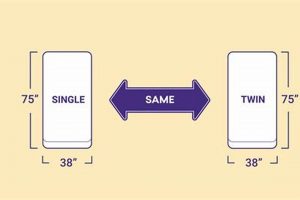
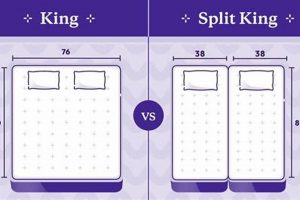
Two common mattress sizes exist for accommodating varying individual needs and room dimensions: the narrower option and the wider alternative. The narrower option typically measures approximately 38 inches wide by 75 inches long, while the wider alternative expands to around 54 inches in width, maintaining a similar length. An example illustrates this difference: a single adult might find the narrower option sufficient for solo sleeping, whereas a growing teenager or an individual desiring more space may prefer the wider alternative.
The selection between these mattress dimensions significantly impacts sleep quality and room functionality. Choosing appropriately maximizes comfort, ensures restful sleep, and optimizes the use of available space. Historically, the narrower option gained popularity for its space-saving attributes in shared living environments, such as dormitories. The wider alternative evolved as a more comfortable solution for single sleepers seeking added room and for couples in smaller living spaces.
The subsequent discussion will delve into a detailed comparison of these mattress sizes, exploring factors such as dimensions, cost, suitability for different individuals and room sizes, and the availability of bedding and accessories. This comprehensive overview aims to provide the necessary information for informed decision-making when selecting a mattress.
Guidance on Selecting Between Mattress Dimensions
The following guidance assists in making an informed decision regarding appropriate mattress dimensions based on individual requirements and spatial considerations.
Tip 1: Assess Individual Sleep Needs. Prioritize comfort and sleep quality. Individuals who move frequently during sleep or prefer additional personal space should consider the wider mattress dimension.
Tip 2: Evaluate Room Dimensions. Measure the intended bedroom space. Ensure adequate room for movement around the bed and placement of other furniture. The narrower dimension is often suitable for smaller rooms or shared spaces.
Tip 3: Consider Budgetary Constraints. The narrower mattress dimension generally presents a more economical option compared to its wider counterpart. Factor in the cost difference when making a selection.
Tip 4: Determine Intended Occupancy. For single occupancy, either mattress dimension may suffice depending on personal preference and space availability. For couples, the wider dimension is generally more appropriate, although it may be less suitable for smaller rooms.
Tip 5: Investigate Bedding Availability. Verify that suitable bedding, including sheets, comforters, and bed frames, is readily available for the chosen mattress dimension. Standard sizes typically offer a wider selection of options.
Tip 6: Project Future Needs. Consider potential changes in sleeping arrangements or living situations. A wider mattress dimension may offer greater versatility in the long term.
Adhering to these recommendations will facilitate a more informed selection, leading to optimized sleep quality, efficient space utilization, and minimized financial burden.
The subsequent section provides a comprehensive conclusion, summarizing the key factors to consider when choosing between mattress dimensions.
1. Dimensions

Dimensions serve as a fundamental differentiating factor when evaluating mattress options. The physical measurements directly influence suitability for individual sleepers, compatibility with bedroom layouts, and overall comfort levels.
- Width Disparity
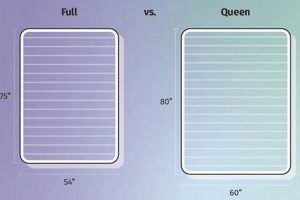
The most significant dimensional difference lies in width. A twin mattress typically measures around 38 inches wide, while a full mattress extends to approximately 54 inches. This 16-inch difference drastically affects the available sleeping space. For example, a restless sleeper benefits more from the full size to avoid feeling confined. Conversely, the narrower twin dimension is conducive to smaller bedrooms or shared living spaces.
- Length Consistency
Both twin and full mattresses commonly share a similar length, usually around 75 inches. This shared length implies that height accommodations are generally comparable between the two options. However, taller individuals, particularly those exceeding six feet, should consider alternative mattress sizes with extended length dimensions, irrespective of the twin versus full comparison.
- Impact on Room Layout
Mattress dimensions critically influence room layout planning. A full mattress occupies significantly more floor space than a twin, potentially restricting movement or limiting furniture placement in smaller rooms. Before purchasing, accurate room measurements and consideration of existing furniture are crucial to ensure the chosen mattress dimensions integrate seamlessly into the existing space.
- Weight and Handling
Dimension dictates the mattress weight and difficulty moving it. Full mattresses, because they’re larger, are generally more unwieldy and require more people to move. Conversely, twin mattresses’s compact dimension are easier to manage. This facet is very important for the customer because the price will reflect on the moving aspect.
In summary, dimensional considerations form a cornerstone in the selection process. Width discrepancies directly impact individual comfort and space utilization, while the relatively consistent length necessitates attention to overall height accommodations. Thoughtful assessment of bedroom dimensions guarantees the chosen mattress integrates functionally and aesthetically within the environment.
2. Occupancy

Occupancy, specifically the number of individuals intended to occupy a mattress, directly dictates the suitability of a twin or full mattress. The limited surface area of a twin mattress, approximately 38 inches by 75 inches, typically restricts its use to a single occupant. Attempting to accommodate two individuals on a twin mattress results in significant discomfort, restricted movement, and compromised sleep quality due to overcrowding. Conversely, a full mattress, measuring roughly 54 inches by 75 inches, offers greater surface area, potentially accommodating two individuals in certain circumstances. An example would be: a dorm with a twin size bed will not permit occupancy of two individuals.
The determination of single versus double occupancy necessitates a careful evaluation of individual sleeping habits, body sizes, and tolerance for proximity. While a full mattress might theoretically accommodate two adults, the resulting lack of personal space can lead to disrupted sleep patterns and decreased overall comfort. Therefore, even in scenarios involving double occupancy, a full mattress remains most appropriate for smaller individuals or temporary sleeping arrangements. A teenager may share a full size mattress with a sibling.
In conclusion, occupancy stands as a crucial determinant in mattress selection. While the twin mattress remains exclusively suited for single occupants, the full mattress presents a limited solution for double occupancy, contingent upon individual size and tolerance for reduced personal space. Recognizing the direct correlation between intended occupancy and mattress dimensions ensures optimal comfort and sleep quality. Prioritizing single use of the twin mattress maximizes individual comfort and proper space.
3. Room size

Room size presents a critical constraint in the selection between a twin and a full mattress. The available floor space dictates the feasibility of accommodating either mattress size while maintaining adequate room for movement and other essential furnishings.
- Minimum Room Dimensions
Twin mattresses, with a standard width of 38 inches and a length of 75 inches, necessitate a minimum room size to allow for comfortable circulation. Cramped conditions impede usability and diminish the overall living experience. The larger full mattress requires substantially more square footage to prevent overcrowding, impacting room functionality.
- Furniture Placement
The presence of existing or planned furniture necessitates careful consideration of mattress dimensions. Larger dressers, desks, or nightstands can further restrict available space, making a twin mattress the more practical choice. Failure to account for furniture can result in obstructed pathways and a cluttered aesthetic.
- Usability and Circulation
Adequate space around the bed is crucial for ease of access and comfortable movement. A full mattress, while providing more sleeping surface, can compromise circulation in smaller rooms, leading to inconvenience and a diminished sense of spaciousness. The twin mattress offers a more streamlined profile for maximizing usability in confined spaces.
- Aesthetic Considerations
The chosen mattress size impacts the overall aesthetic of the room. A disproportionately large mattress overwhelms smaller spaces, creating a visually unbalanced environment. Conversely, a twin mattress in a larger room may appear diminutive and insignificant. Careful consideration of proportional harmony contributes to a more visually pleasing and functional living space.
Ultimately, room size serves as a primary determinant in the mattress selection process. The dimensions of the room, the presence of other furniture, and the desired aesthetic dictate whether a twin or full mattress represents the more appropriate and practical choice.
4. Cost

The economic implications directly correlate with mattress dimensions, establishing a cost differential between twin and full options. This disparity manifests across multiple cost-related aspects, influencing purchasing decisions. Initial acquisition costs for full-size mattresses generally exceed those of twin mattresses due to increased material requirements. The greater surface area necessitates more fabric, padding, and support structures, translating to higher manufacturing expenses ultimately passed on to the consumer. For example, a basic twin mattress from a mid-range manufacturer might retail for $200, while a comparable full-size mattress from the same manufacturer could retail for $300.
The economic effects extend beyond the initial purchase price. Bedding and accessories such as sheets, comforters, and bed frames also reflect this cost gradient. Full-size bedding sets typically carry a higher price point than their twin-size counterparts, again due to the increased material usage. Consider the long-term implications: replacing bedding regularly will incur cumulative expenses that amplify the initial cost difference. Furthermore, logistical considerations such as delivery and potential setup fees may also be marginally higher for the larger, heavier full-size mattress.
Therefore, budgetary constraints significantly impact the choice between twin and full mattresses. The decision requires careful evaluation of not only the upfront cost but also the ongoing expenses associated with bedding and accessories. While a full-size mattress offers increased sleeping space, the associated higher cost may render it an economically imprudent choice for budget-conscious consumers, particularly those for whom the smaller twin mattress provides adequate sleeping arrangements. Conversely, for those prioritizing comfort and space and possessing sufficient financial resources, the increased cost of a full-size mattress may be a justifiable investment.
5. Bedding

The selection of appropriate bedding is intrinsically linked to the decision between a twin and a full mattress. Mattress dimensions directly dictate the size and type of bedding required. Consequently, differences in mattress size impact the availability, variety, and cost of suitable bedding options. A twin mattress necessitates twin-sized sheets, comforters, and bed frames. Conversely, a full mattress requires bedding specifically designed for full-size dimensions. Using improperly sized bedding results in poor fit, discomfort, and reduced lifespan of both the bedding and the mattress. An example would be: Twin bedding will not fit on a full mattress.
The availability of bedding options varies between twin and full sizes. Twin bedding is often more readily accessible and available in a wider range of styles, particularly in stores catering to children and adolescents. Full-size bedding, while generally available, may present fewer options in certain niche designs or specialized materials. Cost considerations also play a significant role. As previously noted, full-size bedding typically incurs a higher price point than comparable twin-size items, reflecting the increased material usage. The consumer will need to be aware of the different material on each type of bedding because of allergies or fabric softness preferences.
In summary, the mattress size predetermines the required bedding dimensions, directly influencing availability, selection, and cost. The proper match between mattress and bedding ensures optimal comfort, longevity, and aesthetic appeal. Neglecting this connection can lead to practical inconveniences and economic inefficiencies. Bedding is one of the most important factors on deciding which twin size or full size to buy.
Frequently Asked Questions
The following section addresses commonly encountered inquiries regarding mattress dimensions, providing objective and comprehensive responses.
Question 1: What distinguishes a twin mattress from a full mattress?
The primary distinction lies in width. A twin mattress measures approximately 38 inches wide, whereas a full mattress extends to approximately 54 inches. Length is generally consistent between both sizes.
Question 2: Is a full mattress suitable for two adults?
While a full mattress can technically accommodate two adults, it may result in limited personal space and potential sleep disruption. It is generally more suitable for smaller individuals or temporary sleeping arrangements.
Question 3: In what scenarios is a twin mattress the more appropriate choice?
A twin mattress is typically more appropriate for single sleepers, children, teenagers, or situations where space is limited, such as dormitories or small bedrooms.
Question 4: Does mattress size impact bedding costs?
Yes, bedding for full mattresses generally incurs a higher cost than comparable items for twin mattresses due to the increased material requirements.
Question 5: Can a twin mattress frame accommodate a full mattress?
No, a twin mattress frame is specifically designed for the dimensions of a twin mattress and cannot safely or effectively support a full mattress. Incompatible dimensions may cause damage.
Question 6: How does mattress size relate to room size requirements?
Full mattresses require more floor space than twin mattresses, necessitating larger rooms to ensure comfortable movement and prevent overcrowding. Careful consideration of room dimensions is critical for proper mattress selection.
In summary, careful evaluation of factors such as occupancy, space constraints, and budgetary considerations is crucial in determining the optimal mattress dimensions.
The next section offers a conclusion that emphasizes the different factors to be considered for optimal choice.
Twin vs Full Mattress
The preceding analysis has rigorously examined the critical distinctions between twin and full mattresses. Dimensions, occupancy suitability, spatial requirements, economic implications, and bedding availability each present unique considerations demanding thorough evaluation. The optimal selection hinges on a synthesis of these factors, tailored to individual needs and constraints. Failure to adequately assess these variables can result in compromised sleep quality, inefficient space utilization, and unnecessary financial burdens.
The choice between mattress dimensions represents a significant investment in personal well-being and domestic harmony. Therefore, informed decision-making, predicated on objective assessment and careful consideration of long-term implications, remains paramount. Prioritize individual requirements and spatial limitations to ensure a selection that promotes both restful sleep and efficient living.