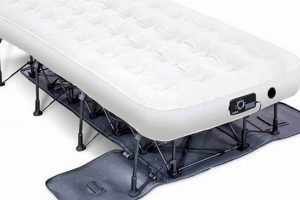
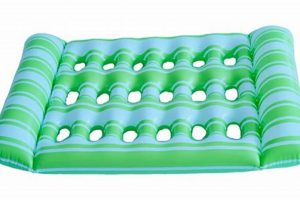
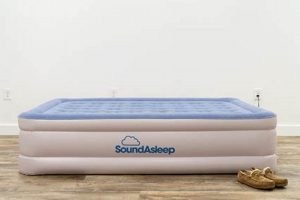
Inflatable sleeping platforms designed for use inside automobiles, trucks, and SUVs offer a convenient solution for temporary bedding. These products typically conform to the interior dimensions of a specific vehicle, utilizing the available space to create a relatively flat surface for rest. Examples include models designed for the back seats of sedans or the cargo areas of SUVs, providing a comfortable alternative to sleeping directly on the vehicle’s seats.
The advantages of using these inflatable platforms are multifaceted. They provide a measure of comfort and support superior to that offered by bare vehicle seating. These products also offer a space-saving alternative to traditional camping mattresses, eliminating the need to transport bulky bedding. Historically, improvised sleeping arrangements were common in vehicles, but specialized inflatable platforms represent a significant improvement in comfort and practicality.
This analysis will delve further into the materials, design considerations, inflation methods, and potential applications of these automotive accessories. Furthermore, safety considerations and comparative analyses with alternative in-vehicle sleeping solutions will be explored.
Vehicle Air Mattress Usage
Optimal utilization of an automotive inflatable sleeping platform requires careful consideration of several factors. The following guidelines are intended to maximize comfort, safety, and longevity of the product.
Tip 1: Measure Available Space. Prior to purchase, accurately measure the interior dimensions of the vehicle. Ensure the selected inflatable sleeping platform is appropriately sized for the intended location, accounting for wheel well intrusions and seat configurations.
Tip 2: Follow Inflation Guidelines. Adhere strictly to the manufacturer’s recommended inflation pressure. Overinflation can lead to seam failure, while underinflation results in inadequate support. A portable air pump with a pressure gauge is recommended.
Tip 3: Prepare the Surface. Clear the area of any sharp objects or debris that could puncture the inflatable material. Utilize a protective layer, such as a blanket or fitted sheet, to minimize abrasion and soiling.
Tip 4: Temperature Considerations. Extreme temperatures can affect the air pressure within the mattress. In cold conditions, the air will contract, requiring additional inflation. Conversely, hot environments may cause expansion, necessitating deflation to prevent overpressure.
Tip 5: Secure the Mattress. If the design incorporates straps or anchors, utilize them to secure the platform within the vehicle. This will prevent shifting during use, enhancing stability and safety.
Tip 6: Ventilation is Crucial. Ensure adequate ventilation within the vehicle to prevent condensation buildup and maintain air quality. Crack windows slightly, or utilize a ventilation device.
Tip 7: Safe Parking Practices. Select a level and stable parking location. Avoid areas with significant inclines or uneven terrain, as these can compromise comfort and safety.
By adhering to these practical guidelines, users can ensure a comfortable and safe experience when using inflatable sleeping platforms inside vehicles, while also extending the lifespan of the product.
This concludes the tips section. The subsequent segments will address product maintenance and troubleshooting.
1. Inflatable Convenience

The characteristic of inflatable convenience fundamentally defines the utility of sleeping platforms intended for vehicular use. It encompasses various elements contributing to ease of setup, storage, and overall user experience, directly impacting its appeal as an automotive accessory.
- Rapid Deployment
The ability to quickly inflate and prepare the sleeping surface is a crucial component of inflatable convenience. Electric pumps significantly reduce inflation time compared to manual methods. For instance, some models inflate fully within minutes, enabling immediate use after parking.
- Compact Storage
Deflated size and storage requirements are vital considerations. These products are designed to compress into relatively small packages when not in use, facilitating storage in vehicle trunks or cargo areas without occupying excessive space. Many include dedicated storage bags for added organization.
- Portability
Lightweight materials contribute to ease of transport. The ability to effortlessly move and reposition the platform within the vehicle or between vehicles enhances its versatility. This is particularly advantageous for travelers or individuals who frequently change locations.
- Simplified Maintenance
The ease of cleaning and maintaining the inflatable material contributes to overall convenience. Many surfaces are designed to be easily wiped clean, minimizing the time and effort required for upkeep. Durable materials also reduce the likelihood of punctures or tears, further simplifying maintenance.
The sum of these elementsrapid deployment, compact storage, portability, and simplified maintenancedirectly translates to a high degree of user-friendliness. It allows the vehicle to quickly transition into a mobile sleeping space. This functionality enhances the value proposition, making it a practical alternative for camping, road trips, or temporary rest stops.
2. Size Compatibility

The attribute of size compatibility is critical in determining the functionality and usability of automotive inflatable sleeping platforms. A properly sized platform maximizes the available space within a vehicle, providing a comfortable and safe sleeping surface. Incompatibility can render the product useless or, worse, create a hazardous condition.
- Vehicle-Specific Dimensions
Accurate vehicle interior measurements are paramount. Sleeping platforms are often designed for specific vehicle types (e.g., SUVs, sedans, trucks). Matching the platform’s dimensions to the vehicle’s interior ensures a snug fit, preventing shifting and maximizing the usable surface area. Failure to consider wheel well intrusions, seat configurations, and cargo area limitations can result in a poor fit and compromised comfort.
- Inflation Dynamics and Tolerances
Even within specified dimensions, inflation levels can affect compatibility. Overinflation may cause the platform to exceed the available space, resulting in buckling or pressure against the vehicle’s interior panels. Conversely, underinflation may lead to sagging and reduced support. Manufacturers typically provide recommended inflation ranges to optimize the fit within specific vehicle models.
- Load Capacity and Weight Distribution
Size is indirectly linked to l
oad capacity. A larger platform may accommodate a greater weight distribution, but exceeding the recommended weight limits can compromise its structural integrity and potentially damage the vehicle’s interior. Proper weight distribution is essential, particularly in larger platforms intended for multiple occupants. - Safety Implications
An improperly sized platform can pose safety risks. If the platform obstructs access to safety features, such as seat belts or airbags, it can compromise the vehicle’s safety systems. A secure fit is essential to prevent shifting during transit, which could distract the driver or cause an accident. Adherence to size guidelines ensures the platform does not interfere with critical vehicle functions.
In essence, size compatibility is not merely a matter of fitting a product into a space; it is about ensuring optimal functionality, comfort, and safety. Precise measurements, attention to inflation dynamics, and consideration of weight distribution are all essential elements in maximizing the benefits of an inflatable sleeping platform within a vehicle.
3. Material Durability
Material durability is a critical factor influencing the longevity and utility of vehicular inflatable sleeping surfaces. The materials employed directly dictate the product’s resistance to punctures, abrasions, and environmental degradation, thereby affecting its lifespan and suitability for repeated use.
- Polymer Composition and Strength
The selection of polymers, such as PVC, TPU, or reinforced nylon, determines the material’s inherent strength and resistance to tearing. Higher-denier fabrics, indicating greater fiber density, offer improved puncture resistance. Examples include multi-layered PVC constructions that incorporate reinforced scrims to enhance tensile strength and prevent stretching. A product constructed from low-grade PVC is more susceptible to damage from sharp objects or repeated folding, leading to air leaks and premature failure.
- Seam Construction and Integrity
The method of seam construction significantly impacts the overall durability. Welded seams, utilizing heat or radio frequency welding, create a stronger bond compared to stitched seams, minimizing the risk of air leakage. Reinforcing tape applied along seams further enhances their integrity. Poorly constructed seams are prone to separation under pressure, rendering the product unusable. Products utilizing double-welded seams offer increased resistance to separation under stress.
- Surface Coating and Abrasion Resistance
The application of protective coatings enhances the material’s resistance to abrasion and UV degradation. Coatings, such as polyurethane (PU), provide a durable outer layer that shields the underlying polymer from wear and tear. This is particularly important in environments where the sleeping platform is subjected to friction against vehicle interiors. Products lacking adequate surface coatings are susceptible to scratches, scuffs, and eventual material breakdown, reducing their lifespan.
- Environmental Resistance and Stability
Exposure to temperature extremes, humidity, and sunlight can degrade the material over time. UV inhibitors incorporated into the polymer formulation help to mitigate the effects of sunlight exposure, preventing fading and embrittlement. Materials exhibiting low thermal expansion coefficients maintain their dimensional stability across a wide range of temperatures. Products designed for use in harsh climates require enhanced environmental resistance to prevent premature failure.
The interrelationship of these material properties defines the overall durability of vehicular inflatable sleeping surfaces. Selecting products constructed from robust polymers, featuring strong seam construction, enhanced surface coatings, and environmental resistance is crucial for ensuring long-term functionality and reliability. The investment in higher-quality materials translates directly into increased lifespan and reduced risk of failure, making it a critical consideration for consumers.
4. Inflation Method

The inflation method employed for a vehicular sleeping platform directly influences user convenience, setup time, and overall practicality. The choice of inflation method is not arbitrary; it reflects a trade-off between portability, effort, and speed, impacting the suitability of the product for various applications.
- Manual Inflation: Foot Pump or Hand Pump
Manual inflation methods, utilizing either a foot pump or a hand pump, offer independence from electrical power sources. This is advantageous in remote locations or during power outages. However, these methods require physical exertion and can be time-consuming, particularly for larger platforms. Examples include integrated foot pumps built into the mattress or separate hand pumps that connect via a valve. The implication is a slower setup but increased reliability in off-grid scenarios.
- Electric Pump: AC/DC Powered
Electric pumps, powered by either AC (household) or DC (vehicle) power, provide a faster and more convenient inflation solution. AC pumps require access to a standard electrical outlet, while DC pumps can be connected to a vehicle’s cigarette lighter socket or 12V power port. This method reduces physical effort and significantly shortens inflation time. Examples include portable electric pumps specifically designed for inflating automotive accessories. The implication is a faster setup, but reliance on a power source.
- Self-Inflating Valves
Self-inflating valves combine elements of both manual and automatic inflation. These valves allow air to passively enter the platform when opened, requiring only a final top-up with a few breaths or a brief pump action. The self-inflation process is driven by the expansion of internal foam. Examples include sleeping platforms with open-cell foam cores and integrated valves. The implication is a partially automated inflation process, reducing both time and physical effort.
- Integrated Inflation Systems
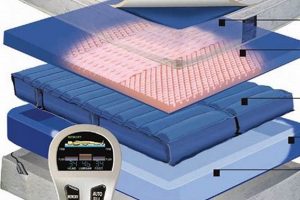
Some high-end sleeping platforms incorporate integrated inflation systems, featuring built-in electric pumps and pressure sensors. These systems offer automated inflation and deflation, ensuring consistent firmness and preventing over-inflation. Examples include digitally controlled platforms with preset pressure levels. The implication is maximum convenience and precision, but at a potentially higher cost and complexity.
The selection of an appropriate inflation method hinges on individual needs and priorities. Manual methods prioritize independence from power sources, while electric pumps emphasize speed and convenience. Self-inflating valves offer a middle ground, and integrated systems provide the highest level of automation. The chosen method should align with the intended use case and the user’s tolerance for physical effort and reliance on external power.
5. Storage Efficiency

Storage efficiency is a significant consideration when evaluating inflatable sl
eeping platforms designed for vehicles. The limited cargo space inherent in most automobiles necessitates that such accessories be compact and easily storable when not in use. Inadequate storage efficiency can negate the convenience benefits of a vehicular sleeping platform, rendering it impractical for everyday use. The ability to compress the deflated mattress into a small volume directly influences its portability and the degree to which it impinges upon available cargo space. For instance, a platform that deflates to the size of a small duffel bag is significantly more advantageous than one that requires substantial storage volume, particularly in smaller vehicles. This directly affects the likelihood of the item being readily available for spontaneous use.
The material composition and design of the inflatable platform profoundly affect its storage efficiency. Materials that are both durable and flexible, such as specific grades of PVC or TPU, allow for tighter folding and compression without compromising the material’s integrity. Furthermore, the internal structure of the mattress influences its deflation characteristics. Designs incorporating multiple, smaller air chambers may deflate more completely and evenly than those with a single, large chamber, resulting in a more compact folded size. Practical applications include scenarios where the sleeping platform is used infrequently, requiring it to be stored for extended periods. The degree to which it occupies valuable cargo space during these times is a crucial factor in its overall utility. Consider a family road trip where the platform is used only for occasional rest stops; its unobtrusive storage during the majority of the journey is paramount.
In summary, storage efficiency is a fundamental aspect of vehicular sleeping platform design. It directly impacts the product’s practicality and convenience, influencing its suitability for various automotive environments. Challenges remain in balancing durability and comfort with minimal storage volume. Future developments may focus on innovative materials and folding techniques to further enhance the storage efficiency of these automotive accessories, increasing their appeal to a broader range of users.
6. Comfort Level

The comfort level afforded by vehicular inflatable sleeping platforms represents a primary determinant of their overall utility and user satisfaction. A positive correlation exists between the perceived comfort and the likelihood of repeated use, particularly in situations involving extended travel or unexpected overnight stays. Factors influencing the comfort level are multifaceted, encompassing material properties, design features, and user-specific preferences.
- Surface Texture and Material Compliance
The texture and compliance of the platform’s surface material directly impact tactile comfort. Smooth, non-abrasive surfaces, often achieved through flocking or specialized coatings, minimize friction against the skin. Material compliance, referring to the material’s ability to conform to the body’s contours, contributes to pressure distribution and reduces localized discomfort. For example, platforms constructed from high-compliance TPU (thermoplastic polyurethane) tend to provide a more conforming and comfortable sleeping surface compared to those made from rigid PVC (polyvinyl chloride). The implications of these material properties manifest in reduced pressure points and enhanced sleep quality.
- Internal Structure and Air Distribution
The internal structure, comprising air chambers and baffles, governs the distribution of air pressure and support across the sleeping surface. Multi-chamber designs, often incorporating longitudinal or transverse baffles, provide more uniform support and minimize motion transfer. This prevents the formation of pressure hotspots and reduces the likelihood of sagging or rolling. For instance, a platform with interconnected air chambers and strategically placed baffles will provide more consistent support compared to a single-chamber design, contributing to improved comfort. The ramifications of these structural features are improved weight distribution and enhanced stability.
- Insulation and Thermal Regulation
The insulating properties of the platform’s materials and construction influence thermal comfort, particularly in varying ambient temperatures. Materials with high thermal resistance, such as closed-cell foams or multi-layered fabrics, minimize heat loss in cold conditions and reduce heat absorption in warm conditions. Features such as reflective coatings or insulated baffles further enhance thermal regulation. Platforms lacking adequate insulation may result in discomfort due to temperature fluctuations, affecting sleep quality. The consequences of these thermal characteristics are improved temperature regulation and enhanced comfort in diverse environmental conditions.
- Ergonomic Design and Support Features
Ergonomic design elements, such as raised headrests or contoured surfaces, enhance postural support and reduce strain on the neck and back. These features contribute to a more natural and comfortable sleeping position. Some platforms incorporate adjustable lumbar support or integrated pillows to further customize the sleeping experience. For example, a platform with an integrated headrest can significantly improve comfort compared to a flat, unsupportive surface. The implications of these ergonomic features are improved spinal alignment and reduced musculoskeletal strain.
In conclusion, the comfort level afforded by vehicular inflatable sleeping platforms is a complex function of material properties, structural design, insulation characteristics, and ergonomic features. Optimizing these factors is crucial for maximizing user satisfaction and promoting the adoption of these accessories as viable sleeping solutions within automotive environments. The pursuit of enhanced comfort remains a driving force in the ongoing development and refinement of vehicular sleeping platforms.
Frequently Asked Questions
The following addresses common inquiries and misconceptions regarding inflatable sleeping platforms designed for vehicular use. This information aims to provide clarity and inform purchasing decisions.
Question 1: What vehicles are compatible with a vehicle air mattress?
Compatibility varies based on the design and dimensions of the product. Models are available for sedans, SUVs, trucks, and minivans. The vehicle’s interior dimensions must be accurately measured to ensure a proper fit. Generic models designed for universal fit may compromise comfort and stability. Refer to the manufacturer’s specifications and compatibility charts for specific vehicle models.
Question 2: How durable are inflatable sleeping platforms for automotive use?
Durability is contingent upon the materials used and the construction methods employed. High-quality PVC, TPU, or reinforced nylon offer greater resistance to punctures and abrasions. Welded seams provide superior strength compared to stitched seams. Surface coatings enhance resistance to UV degradation. Products constructed from substandard materials are prone to failure and should be avoided.
Question 3: What is the weight capacity of a typical vehicle air mattress?
Weight capacity varies based on the size and construction of the product. Most models are designed to support between 200 and 500 pounds. Exceeding the recommended weight limit can compromise the platform’s structural integrity and potentially damage the vehicle’s interior. Consult
the manufacturer’s specifications for the specific weight capacity of the chosen model.
Question 4: How are inflatable platforms for vehicle sleeping inflated?
Inflation methods vary, encompassing manual pumps (foot or hand), electric pumps (AC or DC powered), and self-inflating valves. Electric pumps offer the most convenient and rapid inflation. Manual pumps require physical exertion but provide independence from power sources. Self-inflating valves offer a partially automated solution. The appropriate method depends on the user’s needs and available resources.
Question 5: Are these sleeping platforms safe for use while the vehicle is in motion?
Inflatable sleeping platforms are intended for stationary use only. Use while the vehicle is in motion is strictly prohibited and presents a significant safety hazard. Platforms can obstruct access to safety features, such as seat belts and airbags, and can cause distractions to the driver. Always ensure the vehicle is parked and stable before using the platform.
Question 6: How should a vehicle air mattress be stored when not in use?
Proper storage is crucial for maintaining the product’s longevity. Deflate the platform completely, fold it according to the manufacturer’s instructions, and store it in a dry, cool place away from direct sunlight. Avoid storing the platform in extreme temperatures or in contact with sharp objects. A dedicated storage bag is recommended to protect the platform from damage.
Understanding these key aspects ensures informed decision-making and safe, effective utilization of these vehicular accessories.
The subsequent section will focus on comparative analyses of different brands and models currently available in the market.
Vehicle Air Mattress
This analysis has presented a comprehensive exploration of the inflatable sleeping platform designed for vehicular use. Key areas addressed encompassed functionality, size compatibility, material durability, inflation methods, storage efficiency, and comfort levels. The inherent trade-offs between these attributes influence purchasing decisions and inform practical application within diverse automotive environments.
As the market for vehicular accessories continues to evolve, understanding the critical design parameters and safety considerations remains paramount. Consumers should prioritize informed selection and responsible utilization to maximize the benefits of the vehicle air mattress as a temporary sleeping solution. Further research and development should focus on enhancing material properties and improving user safety to expand the viability of this product category.