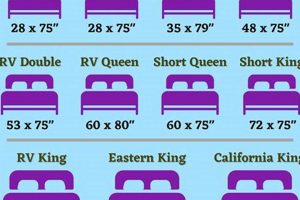
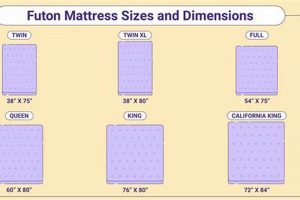
A standard full-size mattress, often referred to as a double mattress, typically measures approximately 54 inches in width and 75 inches in length. This size offers more sleeping space than a twin mattress, making it a suitable option for single sleepers who desire additional room to stretch out or for smaller couples in compact living spaces. The availability of this size in various mattress types and comfort levels contributes to its widespread adoption.
The appeal of this mattress size lies in its versatility and practicality. Its dimensions provide a balance between space efficiency and sleeping comfort, rendering it a popular choice for guest rooms, teenagers’ bedrooms, and apartments where space is at a premium. Historically, its emergence addressed the need for a bed that could comfortably accommodate one or two individuals without occupying excessive floor area, filling a niche between the smaller twin and larger queen sizes.
Understanding these measurements is critical when selecting bedding, such as sheets, comforters, and mattress protectors, to ensure a proper fit. Furthermore, these dimensions should be considered when planning bedroom layouts and furniture placement to optimize room functionality. Factors such as individual sleep preferences, room size constraints, and budget considerations should be carefully evaluated when determining if this mattress is the appropriate selection.
Guidance Regarding Mattress Selection
The subsequent information outlines essential considerations when evaluating this specific mattress size. These tips aim to provide clarity and assist in making an informed purchasing decision.
Tip 1: Measure the Available Space. Before purchase, accurately measure the bedroom area to ascertain if the mattress’s footprint is suitable. Account for additional furniture and walking space to prevent overcrowding.
Tip 2: Consider Sleeper Occupancy. This mattress size is best suited for a single adult or, in certain instances, two smaller individuals. For couples seeking ample personal space, a larger mattress should be considered.
Tip 3: Evaluate Mattress Type. This size is available in various mattress types, including innerspring, memory foam, and hybrid models. Research the properties of each to determine which best suits individual sleep preferences and needs.
Tip 4: Assess Frame Compatibility. Ensure the existing or planned bed frame is designed to accommodate this mattress dimensions. Incompatible frames can lead to inadequate support and premature mattress wear.
Tip 5: Factor in Budgetary Constraints. Mattress pricing can vary considerably. Establish a realistic budget prior to shopping and compare prices across different retailers and brands.
Tip 6: Review Warranty Information. Scrutinize the manufacturer’s warranty details. Understand the terms and conditions regarding potential defects and replacement policies.
These guidelines offer a framework for evaluating this mattress option based on practical considerations. Careful adherence to these suggestions will contribute to a more satisfactory purchase.
Having reviewed crucial tips for navigating mattress options, the next section will explore potential alternatives and concluding thoughts on this subject.
1. Width

The width of 54 inches is a defining characteristic of a full-size mattress, forming a critical component of its overall dimensions. This measurement directly impacts the usable sleeping surface and differentiates it from narrower options such as twin mattresses and wider alternatives like queen and king sizes. A deviation from this standard width would fundamentally alter the classification and intended use of the mattress.
This width dictates the capacity for accommodating one or two sleepers. For a single sleeper, 54 inches provides ample room to move freely during the night. When shared by two individuals, this width allows approximately 27 inches of personal space per person, which can be sufficient for smaller individuals or those who prefer close sleeping arrangements. A practical example of the width’s significance arises when selecting bed linens; sheets designed for a full-size mattress are tailored to fit this 54-inch width, ensuring a snug and secure fit. Similarly, bed frames are engineered to provide adequate support based on these dimensions. Understanding this measurement prevents compatibility issues and ensures proper mattress support.
In summary, the 54-inch width is integral to understanding the function and applications of a full-size mattress. It influences the comfort level for single and double occupancy, dictates the compatibility with accessories like sheets and frames, and plays a crucial role in space planning within a bedroom. While other measurements, such as length, are equally important, the width establishes a fundamental parameter for characterizing this particular mattress size.
2. Length
The 75-inch length is a fixed dimension critical to the definition of a standard full mattress. As a component of the mattress’s overall dimensions, this measurement directly influences the suitability of the mattress for individuals of varying heights. Its importance stems from the fundamental requirement that a sleeper’s body should be accommodated within the confines of the sleeping surface without undue constraint. For instance, an individual measuring 6 feet tall (72 inches) would have minimal excess space at the head and foot of the bed, potentially leading to discomfort if they tend to stretch out during sleep. This illustrates the direct cause-and-effect relationship between the length of the mattress and the sleeper’s comfort.
A practical example of the 75-inch length’s significance arises in furnishing smaller bedrooms or guest rooms where maximizing available space is paramount. The mattress’s relatively compact length, in comparison to queen or king sizes, allows for greater flexibility in furniture placement and overall room design. Conversely, the 75-inch length directly dictates the corresponding dimensions of bed frames and bedding, creating a standardized system that simplifies the selection process for consumers. Understanding this fixed measurement also enables informed decisions regarding mattress placement in relation to doorways, windows, and other architectural features of the room.
In summary, the 75-inch length is an immutable attribute of the full mattress, inextricably linked to its function and applications. Its interaction with the sleeper’s height, space limitations, and frame compatibility underscores its central role. Addressing potential challenges related to taller individuals requiring longer mattresses, the full size presents a compromise between space efficiency and comfort for a specific segment of the population, solidifying its place within the broader mattress market.
3. Surface Area

The surface area of a full mattress is a direct consequence of its dimensions and serves as a quantifiable metric representing the available sleeping space. Its calculation and interpretation have significant implications for sleeper comfort and suitability relative to occupancy needs.
- Calculation of Surface Area
The surface area is determined by multiplying the mattress’s width (54 inches) by its length (75 inches). This yields a total surface area of 4050 square inches, or approximately 28.125 square feet. This figure represents the two-dimensional space available for occupants and their movements during sleep. It enables a direct comparison with mattresses of different dimensions.
- Occupancy and Comfort
For a single sleeper, this surface area generally offers sufficient room for comfortable movement and varied sleeping positions. However, when shared by two individuals, the available space per person is halved. This reduction in personal space can lead to disrupted sleep patterns and discomfort if occupants have significantly different sleep styles or require more individual space. The total surface area sets a limit on the potential comfort level for shared occupancy.
- Comparison with Other Mattress Sizes
The surface area of a full mattress can be contrasted with that of other standard mattress sizes. For example, a queen-size mattress typically offers a larger surface area, translating to more individual space for shared occupancy. Understanding the relative surface areas of different mattress sizes allows consumers to make informed decisions based on their specific needs and preferences, weighing factors such as room size and preferred sleeping arrangements.
- Impact on Bedding Selection
The surface area indirectly influences the selection of appropriate bedding. While the length and width directly determine the necessary dimensions for sheets and mattress protectors, the overall surface area provides context for choosing the correct blanket or comforter size. A larger surface area may necessitate a larger blanket to ensure adequate coverage and prevent drafts during sleep.
In summary, the surface area derived from a full mattress’s dimensions serves as a fundamental parameter in assessing its suitability for specific applications. It directly relates to occupancy comfort, enables comparisons across different mattress sizes, and influences the selection of compatible bedding. Recognizing the significance of this metric empowers informed purchasing decisions based on individual needs and circumstances.
4. Frame Compatibility

Frame compatibility is intrinsically linked to the dimensions of a full mattress. Adherence to standardized measurements, specifically 54 inches in width and 75 inches in length, is crucial for ensuring proper fit and support. A full-size mattress, regardless of construction material or internal components, requires a frame engineered to accommodate these precise dimensions. Failure to adhere to this standard can result in inadequate support, premature mattress wear, and potential safety hazards. An instance of incompatibility would arise if a mattress were placed on a frame designed for a queen-sized bed, leading to instability and compromising the mattress’s structural integrity. The accurate matching of frame dimensions to mattress dimensions guarantees optimal weight distribution and prevents sagging or deformation. The direct cause-and-effect relationship between frame compatibility and mattress dimensions cannot be overstated, serving as a cornerstone of bed system longevity and performance.
In practical application, frame compatibility dictates the overall lifespan and performance of the sleep system. A properly sized and supportive frame equally distributes the weight of the mattress and its occupants, preventing localized stress points that can lead to indentations or structural failures. Conversely, an undersized or poorly constructed frame may not adequately support the mattress, resulting in uneven wear and reduced comfort. Consider a scenario where a memory foam mattress is placed on a slatted frame with excessive gaps. The foam may conform to these gaps over time, resulting in permanent indentations and diminished support. Therefore, verifying that the frame is designed to provide consistent and adequate support across the entire surface area is essential.
Understanding the connection between frame compatibility and mattress dimensions represents a fundamental aspect of bed system selection. While mattresses may offer varying levels of comfort and construction, their performance is ultimately contingent upon proper support. Deviations from standardized dimensions can lead to a cascade of issues affecting both the mattress and the frame, culminating in a compromised sleep experience. Ensuring that the frame is specifically designed for a full-size mattress, adhering to the established width and length measurements, is a crucial step in maximizing the investment and promoting long-term sleep quality.
5. Shipping Dimensions

Shipping dimensions represent a crucial, yet often overlooked, aspect directly influenced by the inherent size of a full mattress. These dimensions encompass the physical space occupied by the packaged mattress during transit and delivery, impacting logistical considerations ranging from storage and handling to transportation costs. Understanding these dimensions is vital for both retailers and consumers to facilitate a seamless delivery process.
- Compressed vs. Uncompressed Packaging
Many full mattresses, particularly those constructed from memory foam or latex, are compressed and rolled for shipping. This drastically reduces the volume of the package compared to shipping the mattress uncompressed. The compressed dimensions significantly affect shipping costs and ease of handling, especially in confined spaces. For instance, a compressed full mattress might ship in a box measuring 56x16x16 inches, while the uncompressed dimensions reflect the actual 54x75x(mattress height) inches. The choice between these methods influences the final logistical considerations.
- Weight Considerations
While not a dimension in the traditional sense, the weight of the packaged full mattress is intrinsically linked to its shipping dimensions. Heavier mattresses necessitate specialized handling equipment and may incur higher shipping fees. Density of materials such as memory foam or innerspring construction can drastically affect the final weight, regardless of shipping volume. For example, a hybrid full mattress might weigh considerably more than a similarly sized all-foam model, increasing the overall shipping cost and logistical complexity. The intersection between weight and shipping dimensions is a crucial factor in determining the overall cost-effectiveness of transportation.
- Delivery Accessibility
The shipping dimensions of a full mattress directly affect its deliverability to the intended location. Narrow hallways, stairwells, or apartment building elevators may pose significant challenges if the packaged dimensions are not carefully considered. Assessing potential obstacles prior to shipment prevents delivery delays or the need for specialized equipment. A compact package, achieved through compression, can mitigate these accessibility issues. This contrasts starkly with uncompressed mattresses, which require greater maneuvering space and may limit delivery options.
- Impact on Storage Requirements
Retailers and distributors must account for the shipping dimensions of full mattresses when planning storage space in warehouses and distribution centers. Compact, uniformly sized packages optimize storage density and streamline inventory management. Compressed mattresses enable efficient stacking and reduced storage footprint compared to their uncompressed counterparts, leading to cost savings in warehousing operations. These advantages highlight the importance of packaging considerations in the broader supply chain.
In conclusion, the shipping dimensions are a crucial consequence of “what are the dimensions of a full mattress”, impacting packaging methods, transportation logistics, delivery feasibility, and storage requirements. Understanding these interdependencies is crucial for optimizing the entire distribution process and ensuring a seamless experience for both businesses and consumers. Failure to address these factors can lead to increased costs, logistical challenges, and potential customer dissatisfaction. Therefore, they warrant careful consideration when selecting and delivering any mattress.
6. Mattress Thickness

Mattress thickness, while not strictly a dimension defining the base size of a full mattress (54″ x 75″), is a critical measurement influencing overall comfort, support, and compatibility with bedding and bed frames. It is an independent variable that interacts with the established length and width to determine the final feel and suitability of the mattress for the end user.
- Impact on Support and Comfort
Thickness directly affects the amount of material available for support layers and comfort layers within the mattress. A thicker mattress can accommodate more substantial support cores, such as thicker coil systems or denser foam layers, leading to improved spinal alignment and reduced pressure points. For example, a thinner mattress may bottom out under heavier individuals, compromising support. Increased thickness typically translates to enhanced comfort and durability, directly affecting the perceived value and lifespan of the product. This interdependency affects the consumers perceptions of “what are the dimensions of a full mattress”, as the functionality changes with thickness.
- Bed Frame and Bedding Compatibility
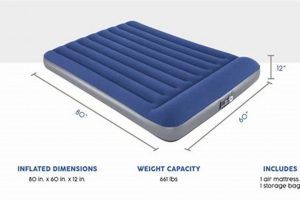
Mattress thickness plays a key role in determining the appropriate bed frame and bedding. A thicker mattress may require a lower-profile bed frame to maintain a comfortable bed height, while thinner mattresses can be paired with taller frames. Similarly, bedding, particularly fitted sheets, must be compatible with the mattress’s thickness to ensure a secure fit. A discrepancy between the sheet pocket depth and the mattress height may result in the sheet slipping off or excessive strain on the fabric. If the mattress has unusual length or width compared to normal products, the sheets might not fit at all.
- Accessibility and Ease of Use
The overall height of the bed, determined by the combined height of the bed frame and mattress, influences accessibility, particularly for individuals with mobility limitations. An excessively tall bed can be difficult to get into and out of, while a bed that is too low may strain the joints. The thickness of the mattress contributes significantly to this overall height, demanding careful consideration of user needs and physical capabilities. This is often overlooked in the process, but can result in bad experiences with “what are the dimensions of a full mattress” and its related products.
- Perception of Value and Quality
Thickness can influence the perceived value and quality of a mattress. Consumers often associate greater thickness with higher quality materials and enhanced comfort. While this is not always accurate, as material density and construction techniques also play a crucial role, a thicker mattress often conveys an impression of luxury and durability. The visual impact of a thick mattress can also contribute to the overall aesthetic appeal of the bedroom.
While the standard dimensions define the footprint of “what are the dimensions of a full mattress”, the thickness measurement interacts significantly with these dimensions to influence support, comfort, compatibility, accessibility, and perceived value. Therefore, careful attention must be paid to thickness when making mattress selection to optimize the overall sleeping experience.
Frequently Asked Questions
The following section addresses commonly encountered queries concerning the dimensions of a full mattress, aiming to provide clear and concise information.
Question 1: Is the stated size of a full mattress universally consistent across all manufacturers?
While generally adhering to the 54-inch by 75-inch standard, slight variations of up to an inch may occur due to manufacturing tolerances. Discrepancies should be verified with the manufacturer prior to purchase, particularly when pre-existing bed frames are utilized.
Question 2: Does mattress thickness affect the overall dimensions of a full-size mattress?
Mattress thickness does not alter the base dimensions (width and length). However, it influences the total height of the sleeping surface and should be considered when selecting bed frames and bedding.
Question 3: Are the shipping dimensions of a full mattress the same as its actual dimensions?
Shipping dimensions often differ from the actual dimensions, particularly for mattresses compressed and rolled for transport. Compressed dimensions are smaller, facilitating easier handling and reduced shipping costs. Always check product specification.
Question 4: What is the ideal room size to accommodate a full-size mattress comfortably?
A minimum room size of 10 feet by 10 feet is recommended to comfortably accommodate the mattress and additional bedroom furniture, allowing adequate walking space. Smaller dimensions can constrain mobility and room functionality.
Question 5: How does the surface area of a full mattress compare to that of a twin or queen mattress?
A full mattress provides greater surface area than a twin but less than a queen. Exact values can be calculated and compared, factoring in individual sleeping needs and occupancy requirements.
Question 6: Can two adults comfortably sleep on a full-size mattress?
While possible for smaller adults or those who prefer close sleeping arrangements, the reduced space per person often leads to compromised comfort. A larger mattress size is typically recommended for optimal comfort.
These answers provide insight into common queries regarding the dimensions of “what are the dimensions of a full mattress”. Careful attention to these factors can aid in making a well-informed purchasing decision.
Having clarified the dimensions of a full mattress and addressed common queries, the next section summarizes the key takeaways and offers concluding thoughts on the topic.
What Are the Dimensions of a Full Mattress
This exposition has detailed the essential dimensions of a full mattress, emphasizing its 54-inch width and 75-inch length as defining characteristics. The exploration extended to considerations of surface area, frame compatibility, shipping dimensions, and mattress thickness, clarifying the influence of these factors on suitability, comfort, and practical application. The standard dimensions dictate a range of logistical and qualitative impacts, directly affecting end-user satisfaction.
A thorough comprehension of mattress dimensions is paramount for informed purchasing decisions. Careful evaluation of these attributes, alongside individual needs and space constraints, enables the selection of a mattress that aligns with intended use and optimizes sleep quality. Further research into specific mattress types and construction methods is encouraged to complement this foundational understanding, promoting well-informed consumer choices in the sleep product market.