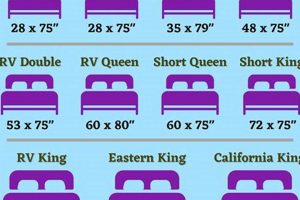
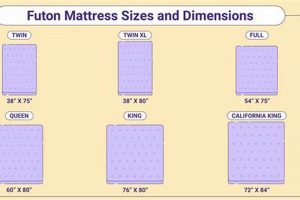
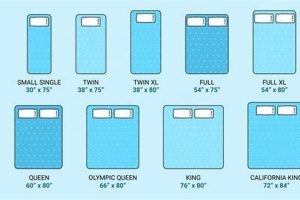
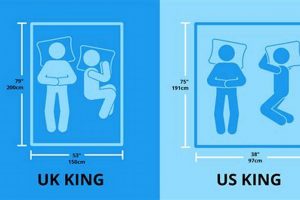
The standard measurements of a king bed mattress are typically 76 inches in width and 80 inches in length. These dimensions offer ample space for individuals or couples who desire a larger sleeping surface. This substantial size distinguishes it from other mattress sizes like queen or full, providing additional room to stretch out and move comfortably during sleep.
The generous surface area promotes undisturbed rest, particularly beneficial for individuals who tend to move frequently while asleep or for couples who wish to minimize sleep disruption. A larger sleeping area can also be advantageous in warmer climates as it allows for greater air circulation around the body, potentially contributing to a cooler and more comfortable sleep environment. The availability of such a large mattress reflects evolving consumer preferences for enhanced comfort and a more luxurious sleep experience.
Understanding these measurements is crucial when selecting bedding, bedroom furniture, and when planning the layout of the bedroom. The subsequent sections will delve into the nuances of these dimensions, exploring common variations and factors to consider when purchasing a bed of this size.
Considerations for King Mattress Dimensions
Proper understanding of king mattress dimensions is essential when making purchasing decisions and planning bedroom layouts. Adhering to the following guidelines can ensure a successful and comfortable bedroom setup.
Tip 1: Measure the Bedroom: Before purchasing, accurately measure the bedroom’s dimensions. Account for other furniture, walkways, and door swing clearances to ensure the mattress fits comfortably without overcrowding the space.
Tip 2: Account for Bed Frame Size: The dimensions specified are for the mattress itself. The bed frame will add additional width and length. Consult the bed frame’s specifications to determine its total footprint and ensure sufficient room.
Tip 3: Consider Access and Delivery: Evaluate doorways, hallways, and stairwells to ensure the mattress can be delivered and maneuvered into the bedroom. A split king configuration, comprising two separate mattresses, may be easier to manage in constrained spaces.
Tip 4: Factor in Bedding Requirements: King-size bedding is specifically designed to fit these dimensions. Ensure that sheets, comforters, and other bedding items are appropriately sized to avoid fitting issues or inadequate coverage.
Tip 5: Evaluate Sleep Partner Needs: The expansive sleeping surface offers significant benefits for couples. However, consider individual sleep preferences, such as mattress firmness, when making a selection to optimize comfort for both individuals.
Tip 6: Consider Special King Mattress Sizes: While standard measurements exist, variations such as California King or Split King may better suit particular needs or preferences. Research available options and their specific measurements prior to purchase.
By carefully addressing these considerations, a well-informed decision can be made regarding the suitability of dimensions, ensuring a comfortable and functional sleep environment.
The subsequent sections will delve into comparing king mattress dimensions against other standard sizes.
1. Width

The width of 76 inches is a defining characteristic of a standard king-size bed mattress and a critical component of its overall dimensions. This dimension directly influences the available sleeping surface and distinguishes the king size from other mattress sizes, such as the queen, which typically measures 60 inches wide. The additional width provides increased personal space for couples, reducing the likelihood of sleep disturbance caused by a partner’s movements. A practical example is a couple where one partner tends to spread out during sleep; the 76-inch width allows for greater freedom of movement without encroaching on the other partner’s space.
The specified width also affects the selection of appropriate bedding and bed frames. Bed sheets, comforters, and other linens must be specifically designed for a king-size bed to ensure proper fit and coverage. Similarly, bed frames intended for king-size mattresses are constructed to accommodate this particular width, providing adequate support and stability. Failure to consider the width dimension may result in ill-fitting bedding or an unstable bed frame, impacting comfort and safety.
In summary, the 76-inch width is an integral measurement that defines the standard dimensions. Its primary function is to create a spacious sleeping surface, particularly beneficial for couples. Correctly understanding this dimension is essential for selecting compatible bedding and bed frames, ultimately contributing to a comfortable and functional sleep environment.
2. Length

The 80-inch length is a critical dimension defining a standard king-size bed mattress. This measurement directly impacts suitability for individuals of varying heights and the overall comfort experienced during sleep, and is, therefore, intrinsically linked to the overall definition and utility of such a mattress.
- Accommodation of Taller Individuals
The 80-inch length provides adequate space for individuals of above-average height to sleep comfortably without their feet extending beyond the mattress edge. This prevents discomfort and promotes proper spinal alignment, contributing to restful sleep. A shorter mattress length may result in a cramped sleeping posture, leading to back pain or other musculoskeletal issues.
- Relationship to Bed Frame Selection
Bed frames designed for king-size mattresses are specifically manufactured to accommodate the 80-inch length. Using an incompatible frame can lead to inadequate support, mattress slippage, and potential damage to both the mattress and the frame. Prior to purchase, ensure the bed frame’s stated dimensions align with the standard 80-inch length to guarantee a secure and stable sleeping platform.
- Influence on Bedroom Layout
The 80-inch length, combined with the 76-inch width, contributes significantly to the overall footprint of the bed. Careful consideration of bedroom dimensions is necessary to ensure the mattress and bed frame fit comfortably within the space, allowing for adequate walking room and the placement of other furniture. A bedroom that is too small may feel cramped and restrict movement.
- Distinction from California King
While both are considered king-size mattresses, the standard king differs from the California king in length. The California king typically measures 84 inches in length but is narrower at 72 inches. The selection between these two sizes depends on individual height and bedroom proportions; the standard king is generally preferred for wider rooms, while the California king is favored by taller individuals who require the extra length.
Therefore, the 80-inch length dimension of a standard king-size bed mattress is not merely an arbitrary measurement but a crucial factor influencing comfort, bed frame compatibility, bedroom layout, and the overall suitability of the mattress for individual needs. Its proper consideration is vital when determining what are the dimensions of a king size bed mattress are most suitable for a particular user.
3. Surface Area

The surface area of a king-size bed mattress, directly derived from its width and length, is a primary determinant of its overall suitability for various sleep scenarios. With standard dimensions of 76 inches by 80 inches, a standard king mattress provides a total surface area of 6,080 square inches. This expansive sleeping surface offers significant advantages, particularly for couples or individuals who value ample personal space during sleep. The increased area directly translates to reduced instances of sleep disturbance caused by partner movement and allows for greater freedom of movement throughout the night.
The practical significance of understanding the relationship between dimensions and surface area is evident in several applications. When selecting a mattress for a couple, the available surface area should be a key consideration. A king-size mattress provides considerably more space per person compared to a queen-size, contributing to enhanced sleep quality and reduced partner interference. Furthermore, individuals with medical conditions that require specific sleeping positions or those who tend to toss and turn frequently benefit from the larger surface area, as it allows them to shift positions comfortably without the risk of falling off the bed. The difference in surface area between a king and queen is also relevant to pet owners who share their bed with animals, as the additional space accommodates both individuals and pets more comfortably.
In summary, the surface area, intrinsically linked to the dimensions, plays a crucial role in dictating the overall comfort and functionality of a king-size bed mattress. Understanding its importance allows consumers to make informed decisions based on their specific sleep needs and preferences. The generous surface area promotes restful sleep, reduces partner disturbance, and caters to individuals with specific medical or lifestyle requirements, highlighting the practical benefits of its increased dimensions.
4. Frame Compatibility

Frame compatibility is inextricably linked to the specified measurements, forming an essential consideration when selecting a king-size bed mattress. The documented width of 76 inches and length of 80 inches dictate the internal dimensions required of a compatible bed frame. A mismatch between the mattress size and the frame can lead to inadequate support, premature wear of the mattress, and potential instability, posing a risk to the user. For example, if a mattress is slightly larger than the frame, it may overhang the edges, causing sagging and uneven weight distribution. Conversely, if the mattress is too small, it can shift within the frame, creating discomfort and potentially damaging the surrounding structure.
The structural integrity of a bed frame specifically designed to accommodate the king size is crucial for optimal performance. Such frames are engineered to provide uniform support across the entire mattress surface, preventing localized stress and prolonging the mattress’s lifespan. Many modern bed frames incorporate features like center support beams, side rails, and sturdy slats or foundations, all meticulously designed to uphold the weight and dimensions. The absence of these features, or their inadequacy, can result in a compromised sleep surface, negating the benefits of a high-quality mattress. Consider the scenario of a platform bed with widely spaced slats; over time, the mattress can conform to the gaps, leading to indentations and decreased comfort.
In conclusion, frame compatibility is not merely a matter of aesthetic preference but a fundamental requirement for ensuring the proper functioning and longevity of a king-size bed mattress. Adhering to the specified dimensions is paramount when selecting a bed frame, as a compatible frame provides essential support, prevents structural damage, and contributes to a comfortable and safe sleep environment. Failure to address this aspect can lead to dissatisfaction, increased maintenance costs, and compromised sleep quality, underscoring the practical significance of this seemingly straightforward consideration.
5. Height Variations
Height variations in king-size bed mattresses, while not directly altering the core 76-inch width and 80-inch length dimensions, significantly impact the overall sleep experience, ease of access, and aesthetic integration within a bedroom setting. The vertical dimension influences factors ranging from bed-making convenience to the suitability of the mattress for individuals with mobility limitations.
- Impact on Bedding Fit
Increased mattress height necessitates deeper pocket sheets to ensure a secure and proper fit. Standard sheets may not adequately cover thicker mattresses, leading to slippage and discomfort. Conversely, a lower-profile mattress may require alterations to standard bedding to avoid excess fabric bunching or dragging on the floor. The selection of appropriate bedding directly correlates with the mattress’s height, affecting both functionality and appearance.
- Influence on Ease of Entry and Exit
Mattress height dictates the overall bed height, impacting the ease with which individuals can enter and exit the bed. A higher mattress may be challenging for individuals with mobility issues, such as older adults or those with physical limitations, while a mattress that is too low may require excessive bending, placing strain on the back and joints. The optimal height facilitates a comfortable and ergonomic transition between standing and lying positions.
- Effects on Bedroom Aesthetics
Mattress height contributes to the overall visual profile of the bed and influences the perceived spaciousness of the room. A taller mattress can create a more substantial and luxurious appearance, while a lower-profile mattress may contribute to a minimalist or modern aesthetic. The selection of a mattress height should align with the existing decor and furniture proportions to achieve a cohesive and visually appealing bedroom design.
- Relationship to Foundation Type
The foundation, or lack thereof, significantly alters the overall height of the bed. Using a box spring foundation increases the bed height, while a platform bed frame minimizes it. The choice of foundation should be considered in conjunction with the mattress height to achieve the desired overall bed height and ensure adequate support for the mattress. Combining a thick mattress with a high-profile foundation may result in an excessively tall bed, while using a thin mattress on a low platform may create an uncomfortably low sleeping surface.
The aforementioned facets collectively demonstrate that mattress height, despite not altering the essential width and length parameters, is a critical consideration within the context of standard dimensions of a king size bed mattress. Height variation affects the selection of bedding, the ease of access to the bed, the aesthetic impact on the room, and the compatibility with different foundation types, ultimately influencing the overall functionality and comfort of the sleep experience.
Frequently Asked Questions
The following section addresses common inquiries regarding the size specifications of a king-size bed mattress, aiming to provide clarity and assist in informed purchasing decisions.
Question 1: Are the dimensions of all king-size mattresses uniform across different manufacturers?
While a standard king-size bed mattress is generally 76 inches wide and 80 inches long, slight variations may occur due to manufacturing tolerances. It is advisable to verify the exact dimensions of a specific mattress model before purchasing bedding or bed frames.
Question 2: How do the dimensions of a king-size mattress compare to those of a queen-size mattress?
A king-size mattress is significantly larger than a queen-size mattress. A queen-size mattress typically measures 60 inches wide and 80 inches long, making it 16 inches narrower than a king. The length is the same for both.
Question 3: What is the recommended room size for a bedroom accommodating a king-size bed mattress?
While personal preference varies, a minimum room size of 12 feet by 10 feet is generally recommended to comfortably accommodate a king-size bed mattress and allow for adequate space around the bed. Larger rooms provide greater flexibility in furniture placement.
Question 4: Can two twin XL mattresses be used as an alternative to a king-size mattress?
Yes, two twin XL mattresses, each measuring 38 inches wide and 80 inches long, can be placed side-by-side to create a sleeping surface equivalent in size to a king-size mattress. This configuration is often referred to as a “split king.”
Question 5: Do the specified dimensions include the mattress’s height or thickness?
No, the specified dimensions refer to the width and length of the mattress. The height or thickness varies depending on the specific mattress model and construction. The height is a separate measurement and should be considered independently.
Question 6: Are there variations in king-size mattress dimensions for specific purposes, such as adjustable beds?
Yes, adjustable beds often require mattresses specifically designed for articulation. While the width and length may adhere to standard dimensions, the construction and materials used must accommodate the bed’s movement. Using an incompatible mattress may damage the bed or the mattress itself.
In summary, comprehending these frequently asked questions enhances understanding of the dimensional characteristics of a king-size bed mattress and facilitates informed decisions aligned with individual requirements and spatial constraints.
The subsequent section will delve into the advantages of a king-size bed mattress.
Conclusion
This exploration has comprehensively detailed what are the dimensions of a king size bed mattress, emphasizing the importance of the 76-inch width and 80-inch length, and their direct implications on surface area, frame compatibility, and height variations. Understanding these specifications is not merely academic; it is essential for informed purchasing, effective bedroom planning, and ensuring compatibility with bedding and frames.
Therefore, prospective buyers are urged to meticulously consider these dimensional factors. Thoughtful consideration ensures a sleep environment that is not only comfortable but also functionally optimized for individual needs and spatial constraints. Ignoring these considerations can lead to compromised sleep quality and unnecessary expenses. The dimensions constitute a core element of the sleeping experience and deserve careful scrutiny.