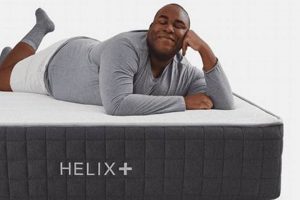
The determination of the most suitable sleeping surface for individuals experiencing discomfort in the spinal region hinges on a multifaceted evaluation. This assessment encompasses factors such as spinal alignment, pressure point mitigation, and the unique physiological needs of the individual. The goal is to identify a product that fosters restful sleep while simultaneously alleviating or preventing exacerbation of existing back problems. The selection process is highly personalized, varying significantly based on individual factors like sleeping posture, body weight, and pre-existing conditions.
Selecting an appropriate sleep support system is crucial for maintaining spinal health and promoting overall well-being. Historically, insufficient or inadequate sleeping arrangements have been linked to increased reports of back-related ailments. The potential benefits of choosing a supportive mattress include reduced muscular strain, improved circulation, and a decreased likelihood of developing chronic pain. Furthermore, a well-chosen surface can contribute to better sleep quality, leading to improved cognitive function and emotional stability.
The subsequent sections will delve into the various types of available sleeping surfaces, their respective advantages and disadvantages, and the key considerations for choosing a mattress that optimizes spinal support and promotes comfortable, pain-free sleep. These considerations include material composition, firmness levels, and suitability for different sleeping positions, all designed to provide the information needed to make an informed decision.
Guidance for Selecting a Mattress to Mitigate Back Discomfort
The following guidelines offer insights into the key considerations when procuring a sleeping surface intended to alleviate or prevent back pain. Adhering to these principles can significantly impact sleep quality and spinal health.
Tip 1: Prioritize Spinal Alignment: The primary function of a suitable sleep surface is to maintain the spine’s natural curvature. Improper alignment can exacerbate existing back issues or create new ones. Seek products that offer adequate support to prevent sagging or excessive pressure on specific areas of the back.
Tip 2: Evaluate Firmness Based on Sleeping Position: The appropriate firmness level is largely dictated by the primary sleeping position. Side sleepers generally benefit from a softer surface to accommodate the shoulders and hips. Back sleepers typically require a medium-firm option for balanced support. Stomach sleepers often need a firmer surface to prevent excessive arching of the lower back.
Tip 3: Consider Material Composition: The materials used in the construction of the mattress significantly impact its performance and longevity. Memory foam conforms to the body, potentially reducing pressure points. Latex offers a resilient and supportive feel. Innerspring systems provide traditional support but may not distribute weight as evenly. Hybrid models combine multiple materials to offer a balance of comfort and support.
Tip 4: Account for Body Weight: Individuals with higher body weights generally require a firmer and more supportive sleep surface. Lighter individuals may find softer options more comfortable and accommodating.
Tip 5: Research and Compare: Thoroughly research different brands and models. Read reviews and compare specifications. Consider visiting showrooms to test different options in person, if feasible. Online resources often provide detailed comparisons and unbiased assessments.
Tip 6: Factor in Pressure Relief: A mattress designed to relieve pressure points can significantly reduce back discomfort. Look for features like zoned support or specialized foam layers that target sensitive areas like the shoulders, hips, and lower back.
Tip 7: Assess Motion Isolation: If sharing a bed, consider a product with good motion isolation properties. This feature minimizes the transfer of movement, preventing disturbances from a partner’s tossing and turning.
The implementation of these suggestions provides a framework for selecting a sleeping surface that effectively supports spinal health and promotes restorative sleep, ultimately leading to a reduction in back-related pain and discomfort.
The subsequent sections will explore specific mattress types and their relevance to addressing particular back pain conditions, offering a more granular approach to finding the optimal solution.
1. Spinal Alignment

Spinal alignment constitutes a fundamental criterion when discerning an appropriate sleep surface for individuals experiencing back discomfort. The natural curvature of the spine must be maintained during sleep to prevent exacerbation of existing conditions or the development of new musculoskeletal issues. A mattress that fails to support this alignment can lead to undue stress on the spinal discs, ligaments, and muscles, contributing to pain and stiffness. A mattress that is either too soft or too firm can compromise spinal posture. For example, an excessively soft surface allows the hips to sink too deeply, creating an unnatural arch in the lower back, whereas an overly firm surface fails to conform to the body’s contours, resulting in pressure points and misaligned posture. The impact of compromised alignment extends beyond immediate discomfort; chronic misalignment can contribute to long-term spinal degeneration and associated complications.
The correlation between proper spinal alignment and a suitable mattress can be observed in the prevalence of back pain complaints among individuals utilizing inadequate sleep surfaces. Studies consistently demonstrate that individuals sleeping on mattresses designed to support spinal curvature report lower levels of back pain and improved sleep quality. Conversely, those using older, sagging mattresses or surfaces ill-suited to their sleeping position and body type are more likely to experience back pain. The selection of a mattress that promotes alignment is not merely a matter of comfort, but a proactive step in preserving spinal health and preventing future problems. This is especially true for those with pre-existing spinal conditions such as scoliosis, herniated discs, or arthritis, where proper support is paramount.
In conclusion, the maintenance of optimal spinal alignment represents a critical component in selecting a mattress intended to alleviate back pain. The failure to adequately support the spine’s natural curvature can lead to increased discomfort, compromised sleep quality, and the potential for long-term musculoskeletal problems. Therefore, individuals seeking a mattress to address back pain should prioritize options that offer appropriate support and contouring to ensure proper spinal alignment throughout the night, as this is a vital factor in ensuring a beneficial sleep experience.
2. Pressure Relief

Pressure relief, in the context of mattress selection for back pain mitigation, refers to a mattress’s ability to distribute body weight evenly, minimizing concentrated stress on specific areas. This characteristic is crucial for alleviating discomfort and promoting restful sleep. The following facets explore the key aspects of pressure relief and its influence on determining an optimal sleep surface.
- Contouring and Conformity
Contouring refers to the mattress’s ability to adapt to the unique shape of the body. Materials such as memory foam and latex are known for their conforming properties. When a mattress effectively contours, it reduces pressure points by distributing weight across a larger surface area. For example, a mattress that conforms to the curves of the spine minimizes stress on the vertebral discs and surrounding muscles. The absence of adequate contouring can lead to increased pressure on bony prominences, such as the hips and shoulders, particularly in side sleepers, resulting in pain and discomfort.
- Material Density and Responsiveness
Material density plays a significant role in a mattress’s ability to provide pressure relief. High-density materials offer greater support and durability, while also effectively distributing weight. Responsiveness refers to how quickly the mattress recovers its shape after pressure is removed. A responsive material prevents the feeling of being “stuck” in the mattress and promotes easier movement during sleep. An example of this is latex, which has a rapid recovery rate compared to some memory foams. A material that is slow to respond may create localized pressure, hindering circulation and causing discomfort.
- Zoned Support Systems
Zoned support systems incorporate varying levels of firmness across different sections of the mattress. These systems are designed to provide targeted support to different areas of the body. For instance, a mattress may feature firmer support in the lumbar region to maintain spinal alignment and softer support in the shoulder and hip areas to alleviate pressure. The implementation of zoned support can significantly improve pressure relief by accommodating the unique needs of different body regions. The lack of such zoning can result in inadequate support in critical areas, leading to misalignment and increased pressure on specific joints.
- Impact on Circulation
Prolonged pressure on certain areas of the body can impede circulation, leading to discomfort and potentially contributing to the development of pressure ulcers. Mattresses that effectively distribute weight and minimize pressure points help to maintain healthy blood flow. Improved circulation facilitates tissue repair and reduces the risk of inflammation. Conversely, a mattress that creates significant pressure can restrict blood flow, leading to numbness, tingling, and pain. This is especially relevant for individuals with pre-existing circulatory issues.
The facets above illustrate the direct correlation between pressure relief and the selection of an appropriate mattress for mitigating back pain. The ability of a mattress to contour to the body, its material density, the presence of zoned support, and its impact on circulation all contribute to its effectiveness in reducing pressure points and promoting spinal health. Consequently, when considering options, the capacity to provide adequate pressure relief is a critical factor in determining the optimal choice for pain management and improved sleep quality.
3. Firmness Level

Firmness level, in the context of selecting a mattress to alleviate back pain, denotes the degree of resistance a sleep surface offers to pressure. This characteristic directly influences spinal alignment, pressure distribution, and overall comfort. An inappropriate firmness level can exacerbate existing back problems or initiate new musculoskeletal issues. The relationship between firmness and pain mitigation is not absolute; the optimal choice varies according to individual factors such as body weight, sleeping position, and specific spinal conditions. The selection of an optimal firmness level is paramount; a surface too soft will provide inadequate support, while a surface too firm may create excessive pressure points.
The influence of firmness on back pain is demonstrated through various scenarios. A lighter individual who sleeps on their side may find a softer mattress optimal, allowing the shoulders and hips to sink slightly, maintaining spinal alignment. Conversely, a heavier individual sleeping on their back may require a firmer mattress to prevent excessive sinking, ensuring proper support for the lumbar region. Individuals with specific conditions such as lumbar stenosis or degenerative disc disease may require a carefully calibrated firmness to minimize pressure on affected areas. Ignoring the firmness level leads to compromised spinal alignment, resulting in muscle strain, nerve compression, and the potential for chronic pain. Therefore, the evaluation and careful selection of an adequate firmness level becomes an important factor to consider when choosing what is best mattress for back pain. Choosing a mattress with this factor in mind, leads to reducing pain, supporting posture, and giving users a good night’s sleep.
In conclusion, firmness level represents a critical determinant in the selection of a mattress intended to mitigate back pain. Individual requirements necessitate a tailored approach to determining the optimal firmness, considering factors such as body weight, sleeping position, and pre-existing conditions. While generalized recommendations exist, the ultimate selection should be based on a comprehensive understanding of individual needs and preferences, with the goal of supporting spinal alignment and minimizing pressure points. Improper firmness selection can compromise treatment plans and fail to provide a much needed improvement in sleep quality.
4. Material Composition

Material composition constitutes a primary determinant in evaluating a mattress’s suitability for alleviating back pain. The specific materials employed directly influence the mattress’s capacity to provide adequate support, pressure relief, and spinal alignment. A nuanced understanding of these materials is crucial for informed selection. The goal is to consider both short term and long term comfort benefits, thus making an appropriate mattress selection for those suffering from back pain.
- Memory Foam
Memory foam, composed of viscoelastic polyurethane foam, conforms closely to the body, distributing weight and reducing pressure points. Its density influences its firmness and support level. Higher-density memory foam offers greater support and durability. However, memory foam can retain heat, potentially causing discomfort for some users. Newer formulations incorporate cooling technologies, such as gel infusions, to mitigate this issue. The slow response time of some memory foams may restrict movement for certain individuals. Its pressure-relieving properties are advantageous for those with chronic pain conditions; however, its potential for heat retention and restricted movement warrant consideration.
- Latex
Latex, derived from either natural rubber or synthetic materials, offers a resilient and supportive sleep surface. Natural latex, sourced from rubber trees, is consider
ed more durable and eco-friendly. Latex provides a responsive feel, facilitating movement and preventing the sensation of sinking into the mattress. Its open-cell structure promotes airflow, minimizing heat retention. Latex is known for its durability and resistance to dust mites, making it a suitable option for individuals with allergies. The buoyant nature of latex provides a balance of support and comfort, making it an effective choice for those seeking spinal alignment and pressure relief. However, natural latex mattresses tend to be more costly than other materials. - Innerspring
Innerspring mattresses consist of a network of coils that provide support. The gauge and configuration of the coils influence the firmness and responsiveness of the mattress. A higher coil count generally indicates greater support and durability. However, innerspring mattresses may not conform as closely to the body as memory foam or latex, potentially leading to increased pressure points. The lack of conforming capabilities often requires a comfort layer made of other materials like memory foam or latex to improve pressure distribution. Innerspring systems can offer good airflow, minimizing heat retention, but may transfer motion more readily than other mattress types. The reduced conforming capabilities in comparison to memory foam and latex often positions them as less desirable for significant pressure point relief.
- Hybrid
Hybrid mattresses combine multiple materials, typically incorporating an innerspring system with layers of memory foam or latex. This design aims to provide a balance of support, comfort, and pressure relief. Hybrid mattresses often offer the benefits of both innerspring and foam systems, such as good airflow and conforming capabilities. The specific characteristics of a hybrid mattress depend on the types and thicknesses of the materials used. A well-constructed hybrid mattress can provide excellent spinal alignment and pressure relief while minimizing heat retention and motion transfer. The layering of the foam affects firmness and how well it conforms to one’s body, thus it is important to note the qualities of both systems when choosing a hybrid mattress.
In conclusion, the material composition of a mattress significantly impacts its suitability for addressing back pain. Memory foam and latex offer conforming properties that reduce pressure points and promote spinal alignment. Innerspring systems provide support and airflow, while hybrid mattresses aim to combine the benefits of multiple materials. The optimal choice depends on individual needs and preferences, considering factors such as body weight, sleeping position, and specific spinal conditions. Careful evaluation of these materials is crucial for making an informed decision that promotes spinal health and alleviates discomfort and pain.
5. Support System

The support system of a mattress is a critical element in determining its suitability for individuals seeking relief from back pain. This system directly affects spinal alignment, pressure distribution, and overall sleep quality. The integrity and design of the support system play a significant role in preventing or mitigating back discomfort.
- Coil Density and Configuration
Coil density and configuration within innerspring or hybrid mattresses influence the level of support provided. Higher coil counts and strategically arranged coils can offer enhanced contouring and weight distribution. For example, pocketed coils, where each coil is individually encased, reduce motion transfer and provide targeted support to different areas of the body. A support system with inadequate coil density may lead to sagging and spinal misalignment, exacerbating back pain. The arrangement and type of coils are crucial for maintaining proper spinal curvature during sleep.
- Base Layer Composition
The composition of the base layer, typically constructed from high-density foam or a similar material, provides foundational support to the upper layers of the mattress. This layer prevents sagging and ensures the mattress maintains its shape over time. A weak or inadequate base layer compromises the performance of the entire support system, diminishing its capacity to provide proper spinal alignment. The materials chosen for the base layer contribute significantly to the overall durability and stability of the mattress.
- Edge Support Reinforcement
Edge support reinforcement, often achieved through the use of firmer coils or foam encasements along the perimeter of the mattress, prevents edge collapse and maximizes the usable sleep surface. Strong edge support allows individuals to sleep comfortably near the edge of the bed without experiencing a roll-off sensation. This feature is particularly important for those who share a bed or require assistance getting in and out of bed. Weak or nonexistent edge support compromises the integrity of the entire support system and can lead to discomfort and instability.
- Zoned Support Implementation
Zoned support systems incorporate varying levels of firmness across different areas of the mattress, targeting specific regions of the body. For example, the lumbar region may receive firmer support to maintain spinal alignment, while the shoulder and hip areas receive softer support to alleviate pressure. Zoned support systems are designed to accommodate the unique needs of different body areas, promoting optimal spinal health. The absence of such zoning can lead to inadequate support in critical areas, contributing to misalignment and increased back pain.
These elements of the support system collectively influence the effectiveness of a mattress in alleviating back pain. Adequate coil density, a stable base layer, reinforced edge support, and strategically implemented zoned support contribute to proper spinal alignment, pressure distribution, and overall sleep quality. When selecting a mattress for back pain relief, careful consideration of these support system components is essential for making an informed decision and promoting optimal spinal health.
6. Motion Isolation

Motion isolation, in the context of mattress selection, denotes a sleep surface’s capacity to minimize the transmission of movement from one area to another. This characteristic is especially relevant for individuals sharing a bed, as it can significantly impact sleep quality and the prevention of back pain exacerbation. The efficacy of motion isolation is directly related to mattress construction and material properties.
- Dampening Vibrations
Effective motion isolation dampens vibrations caused by movement, preventing them from propagating across the mattress surface. Materials such as memory foam and latex possess inherent damping properties, absorbing energy and minimizing disturbance. For instance, when one partner shifts positions, the other partner experiences minimal disruption due to the foam’s ability to absorb and dissipate the movement. This contrasts with innerspring mattresses, where interconnected coils can transmit motion more readily.
- Independent Support Systems
Mattresses employing independent support systems, such as pocketed coils, enhance motion isolation. These systems feature individually encased coils that respond independently to pressure, limiting the spread of movement.
In contrast to interconnected coil systems, pocketed coils prevent widespread disturbance, as compression in one area does not directly impact adjacent areas. This reduces the likelihood of one partner being disturbed by the other’s movements during sleep. - Material Density and Layering
Material density and the layering of different materials contribute to motion isolation performance. Denser materials absorb more energy and restrict movement transmission. Layering different materials, such as a high-density foam base with a memory foam comfort layer, can further enhance motion isolation by combining the support of the base with the vibration-absorbing properties of the comfort layer. The strategic combination of materials optimizes the mattress’s ability to minimize motion transfer.
- Impact on Sleep Quality and Back Pain
Effective motion isolation promotes uninterrupted sleep, allowing individuals to maintain proper spinal alignment and reduce muscle tension. Frequent disturbances due to motion transfer can disrupt sleep cycles, leading to fatigue and increased sensitivity to pain. By minimizing these disturbances, a mattress with good motion isolation contributes to a more restful sleep environment, which is particularly beneficial for individuals experiencing back pain. The connection between uninterrupted sleep and pain management underscores the importance of motion isolation in selecting a supportive sleep surface.
The aforementioned aspects of motion isolation underscore its importance in mattress selection, particularly for individuals seeking to mitigate back pain. The ability of a mattress to dampen vibrations, utilize independent support systems, employ dense materials, and layer materials effectively contributes to a sleep environment that promotes both comfort and spinal health. Therefore, the evaluation of motion isolation capabilities is a crucial step in identifying a mattress that supports uninterrupted sleep and reduces the potential for back pain exacerbation.
Frequently Asked Questions
The following section addresses common inquiries regarding mattress selection for individuals experiencing back pain. These questions and answers provide valuable insights to inform the decision-making process.
Question 1: Does mattress firmness directly correlate with back pain relief?
The relationship between mattress firmness and back pain relief is not linear. The ideal firmness level is contingent upon individual factors such as body weight, sleeping position, and specific spinal conditions. A mattress that is either too firm or too soft can exacerbate back pain by compromising spinal alignment and pressure distribution.
Question 2: Can a mattress alone resolve chronic back pain?
A mattress can significantly contribute to back pain management, but it is unlikely to be the sole solution for chronic conditions. A comprehensive treatment plan, including physical therapy, medication, and lifestyle modifications, may be necessary to address underlying causes and provide long-term relief. A suitable mattress serves as a supportive component within a broader treatment strategy.
Question 3: What role does spinal alignment play in mattress selection?
Spinal alignment is a paramount consideration. A mattress should support the natural curvature of the spine, preventing excessive pressure on spinal discs, ligaments, and muscles. Proper alignment reduces strain and minimizes the risk of pain exacerbation. The mattress should conform to individual body contours while maintaining overall spinal integrity.
Question 4: How does sleeping position influence the optimal mattress type?
Sleeping position significantly influences mattress selection. Side sleepers often benefit from mattresses that contour to the body, such as memory foam or latex. Back sleepers typically require a medium-firm mattress for balanced support. Stomach sleepers generally need a firmer mattress to prevent excessive arching of the lower back.
Question 5: Are more expensive mattresses inherently better for back pain?
Price does not guarantee superior back pain relief. While higher-priced mattresses may incorporate advanced materials or construction techniques, their suitability depends on individual needs. It is essential to evaluate specific features and performance characteristics rather than relying solely on price as an indicator of quality.
Question 6: How often should a mattress be replaced to maintain its back pain-relieving properties?
Mattress replacement frequency varies depending on factors such as material quality, usage, and individual weight. As a general guideline, mattresses should be replaced every 7-10 years. Signs of wear, such as sagging, indentations, or reduced support, indicate the need for replacement, regardless of the mattress’s age.
The content provided offers an overview to the selection of mattresses that have back pain mitigating qualities. Individuals seeking a mattress to address back pain should prioritize options that provide adequate support, pressure relief, and spinal alignment. The subsequent sections will explore the considerations for specific conditions.
These FAQs serve as a foundation for understanding the complexities of choosing a mattress with characteristics and functionality that help reduce or remove back pain. The considerations presented here will help to build a better understanding when selecting the right mattress for your circumstances.
Concluding Assessment
This exploration has identified essential factors influencing the selection of “what is best mattress for back pain.” Spinal alignment, pressure relief, firmness level, material composition, support system, and motion isolation have been established as critical determinants. Optimal mattress selection necessitates a comprehensive understanding of these elements, combined with individualized considerations such as body weight, sleeping position, and pre-existing spinal conditions. A singular solution does not exist; the appropriate mattress is a function of specific physiological requirements.
The information presented herein provides a framework for informed decision-making. Further research and consultation with healthcare professionals are recommended to tailor the selection process to individual circumstances. Prioritizing spinal health and comfort through appropriate mattress selection represents a proactive approach to managing and mitigating back pain. The long-term benefits of an informed choice extend beyond immediate comfort, contributing to improved overall well-being and a reduced risk of chronic musculoskeletal issues.
![Top Best Affordable Mattress Companies of [Year] Reviewed | Organic & Natural Mattress Buyer’s Guide: Non-Toxic Sleep Solutions](https://mattressworldpa.com/wp-content/uploads/2025/07/th-7840-300x200.jpg "Top Best Affordable Mattress Companies of [Year] Reviewed Organic & Natural Mattress Buyer’s Guide: Non-Toxic Sleep Solutions")

![Top-Rated: Best Firm Innerspring Mattress [Guide & Reviews] | Organic & Natural Mattress Buyer’s Guide: Non-Toxic Sleep Solutions](https://mattressworldpa.com/wp-content/uploads/2025/07/th-7838-300x200.jpg "Top-Rated: Best Firm Innerspring Mattress [Guide & Reviews] Organic & Natural Mattress Buyer’s Guide: Non-Toxic Sleep Solutions")

![Top Spots: Best Place to Buy Twin Mattress [Guide] | Organic & Natural Mattress Buyer’s Guide: Non-Toxic Sleep Solutions](https://mattressworldpa.com/wp-content/uploads/2025/07/th-7836-300x200.jpg "Top Spots: Best Place to Buy Twin Mattress [Guide] Organic & Natural Mattress Buyer’s Guide: Non-Toxic Sleep Solutions")