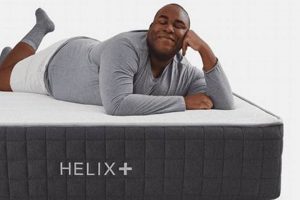
The selection of a mattress optimized for individuals who primarily sleep on their side is a critical decision impacting spinal alignment, pressure point relief, and overall sleep quality. These mattresses are engineered to contour to the body’s curves, specifically accommodating the shoulder and hip areas, which bear the brunt of the weight in the side-sleeping position. The ideal sleeping surface minimizes stress on joints and promotes a neutral spinal posture throughout the night.
A well-chosen sleeping surface offers significant benefits, including reduced back pain, improved circulation, and enhanced sleep quality. Historically, side sleepers have faced challenges finding mattresses that adequately balance support and cushioning. Innovations in mattress technology, such as memory foam, latex, and hybrid constructions, have led to improved options for this sleep position, catering to various body types and comfort preferences.
This article will explore key considerations for selecting a mattress specifically designed to meet the needs of those who favor side sleeping, including material types, firmness levels, and construction techniques. Factors such as individual body weight, preferred sleep temperature, and budget constraints will also be addressed to guide the reader toward an informed purchasing decision.
Tips for Identifying a Suitable Mattress for Side Sleepers
Selecting a mattress appropriate for side sleeping necessitates careful consideration of several key factors to ensure optimal comfort, support, and spinal alignment.
Tip 1: Prioritize Pressure Relief: Side sleepers require mattresses that effectively alleviate pressure on the shoulders and hips. Materials like memory foam and latex excel in conforming to the body’s contours, distributing weight evenly, and minimizing discomfort in these high-pressure areas.
Tip 2: Choose a Medium-Firmness Level: A mattress with a medium-firmness level typically provides the ideal balance of support and cushioning for side sleepers. This firmness range allows for sufficient sinkage to relieve pressure points while maintaining spinal alignment.
Tip 3: Consider Mattress Construction: Hybrid mattresses, which combine the benefits of innerspring coils and foam layers, can be a suitable option. The coil system provides support, while the foam layers offer pressure relief and comfort.
Tip 4: Evaluate Edge Support: Strong edge support is essential for side sleepers, particularly those who tend to sleep near the edge of the bed. Robust edge support prevents sagging and ensures a consistent sleep surface across the entire mattress.
Tip 5: Assess Spinal Alignment: Before purchasing, it’s advisable to lie on the mattress in the side-sleeping position to assess spinal alignment. A properly aligned spine should maintain a neutral curve, without excessive sinking or pressure points.
Tip 6: Factor in Body Weight: Individuals with higher body weights may require a firmer mattress to prevent excessive sinkage and maintain spinal support. Conversely, lighter individuals may find a softer mattress more comfortable.
Tip 7: Read Reviews and Seek Recommendations: Consulting reviews from other side sleepers can provide valuable insights into the performance and suitability of different mattress models. Professional recommendations from sleep experts can also be beneficial.
By adhering to these guidelines, individuals can significantly enhance their chances of selecting a mattress that caters specifically to the needs of side sleeping, resulting in improved sleep quality and reduced discomfort.
The subsequent sections will delve deeper into specific mattress types and technologies, offering a more detailed analysis of their suitability for side sleepers.
1. Pressure Point Relief

Pressure point relief is a paramount consideration when determining an optimal sleeping surface for side sleepers. The side-sleeping position concentrates body weight on a smaller surface area, specifically the shoulders and hips. This concentration can lead to localized pressure, potentially causing discomfort, pain, and disrupted sleep patterns. Therefore, the capacity of a mattress to alleviate these pressure points is directly correlated with its suitability for this sleep style.
- Material Conformation
Mattress materials possessing high conformability, such as memory foam and certain types of latex, play a crucial role in pressure point relief. These materials contour to the body’s shape, distributing weight more evenly across the mattress surface. This reduces localized pressure on prominent areas like the shoulders and hips, minimizing discomfort. In contrast, mattresses with minimal give may exacerbate pressure point pain.
- Firmness Level
The firmness of a mattress significantly impacts pressure point relief. A mattress that is too firm may not allow sufficient sinkage for the shoulders and hips, resulting in increased pressure. Conversely, a mattress that is too soft may lack the necessary support, causing spinal misalignment and potentially exacerbating pressure points. A medium-firm mattress often provides the best balance for side sleepers, offering both support and pressure relief.
- Zoned Support Systems
Some mattresses incorporate zoned support systems, featuring varying levels of firmness in different areas of the mattress. These systems are designed to provide targeted support and pressure relief to specific body zones. For example, a mattress may have softer zones in the shoulder and hip areas to accommodate the side-sleeping position, promoting spinal alignment and reducing pressure points.
- Impact on Circulation
Sustained pressure on certain areas of the body can impede circulation. By effectively relieving pressure points, a mattress can promote healthy blood flow throughout the night. This can reduce the likelihood of tossing and turning, leading to more restful and restorative sleep. Individuals with circulatory issues may find pressure-relieving mattresses particularly beneficial.
The features outlined directly influence a mattress’s effectiveness in addressing the specific needs of side sleepers. The selection of a mattress lacking adequate pressure point relief may result in discomfort, disrupted sleep, and potentially long-term musculoskeletal issues. Therefore, careful assessment of pressure-relieving properties is essential when evaluating a mattress for this sleep position.
2. Spinal Alignment Support

Spinal alignment support constitutes a foundational element in the context of selecting a suitable mattress for side sleepers. The lateral sleeping position inherently places increased
stress on the spinal column, necessitating a sleep surface capable of maintaining its natural curvature. Inadequate spinal alignment during sleep can lead to various musculoskeletal issues, including back pain, neck stiffness, and nerve impingement. Therefore, a mattress’s ability to provide appropriate support to the spine is a critical determinant of its suitability for side sleepers.
A mattress that facilitates proper spinal alignment will generally exhibit a balance of support and contouring. Excessive sinking into the mattress can cause spinal misalignment, while insufficient give may create pressure points and discomfort. The ideal scenario involves the mattress conforming to the body’s contours while simultaneously providing adequate support to prevent spinal distortion. For example, a medium-firm memory foam mattress often proves effective in achieving this balance, contouring to the body’s curves while preventing excessive sinking. Conversely, an old innerspring mattress with worn coils will likely fail to provide the necessary support, resulting in spinal misalignment and discomfort. The practical significance of understanding this relationship lies in the ability to make informed purchasing decisions, avoiding mattresses that may exacerbate existing spinal issues or contribute to the development of new ones.
In summary, spinal alignment support is not merely a desirable feature but an essential requirement for a mattress intended for side sleepers. The interplay between support and contouring is crucial in maintaining the spine’s natural curvature, preventing musculoskeletal problems, and promoting restful sleep. A thorough evaluation of a mattress’s capacity to provide adequate spinal alignment support is paramount in the selection process, ensuring long-term comfort and well-being.
3. Medium firmness ideal

The assertion of “medium firmness ideal” in the context of selecting the optimal mattress for side sleepers stems from a biomechanical consideration of spinal alignment and pressure distribution. Side sleeping concentrates body weight on a smaller surface area, particularly the shoulders and hips. A mattress exhibiting medium firmness provides a critical balance between conforming to these contours and offering sufficient support to prevent spinal misalignment. A surface lacking adequate firmness may allow excessive sinking, leading to spinal curvature and potential back pain. Conversely, a mattress that is excessively firm may fail to accommodate the shoulders and hips, resulting in pressure points and discomfort. The intermediate firmness level, therefore, is proposed as a means of mitigating these detrimental effects.
The practical application of this principle is evident in mattress design. Many manufacturers specifically target side sleepers with mattresses featuring a firmness level ranging from 5 to 7 on a scale of 1 to 10, where 1 represents the softest and 10 the firmest. These mattresses often incorporate materials like memory foam or latex in the comfort layers, enhancing their ability to contour to the body’s shape. The underlying support core, typically composed of innerspring coils or high-density foam, provides the necessary stability to maintain spinal alignment. Individuals experiencing back pain or discomfort while side sleeping on a mattress that is either too soft or too firm may find relief by transitioning to a mattress within the medium-firmness range. The effectiveness of this approach, however, is contingent upon individual body weight and personal preferences; lighter individuals may find a slightly softer mattress more comfortable, while heavier individuals may require a slightly firmer option.
In summary, the recommendation of “medium firmness ideal” for side sleepers is rooted in the need to maintain spinal alignment and minimize pressure points. While this general guideline provides a useful starting point, individual factors such as body weight, sleeping position nuances, and pre-existing health conditions necessitate a personalized approach to mattress selection. The ideal firmness level should be determined through careful consideration and, ideally, a trial period, to ensure optimal comfort and support. Deviations from the medium firmness range may be warranted based on these individual considerations, underscoring the importance of a holistic evaluation process when choosing a sleeping surface.
4. Material contouring ability

Material contouring ability is a critical determinant in assessing mattress suitability for side sleepers. The capacity of a mattress to conform to the body’s shape directly impacts spinal alignment, pressure distribution, and overall sleep comfort, thereby playing a significant role in identifying optimal mattresses for this sleep style.
- Pressure Relief and Body Weight Distribution
Materials that readily conform to the body’s contours, such as memory foam and latex, distribute weight more evenly, reducing pressure concentration on prominent joints like the hips and shoulders. This is particularly relevant for side sleepers, where these areas bear the brunt of body weight. Mattresses with minimal contouring may lead to pressure points, causing discomfort and disrupted sleep.
- Spinal Alignment Maintenance
Effective contouring facilitates the maintenance of natural spinal alignment for side sleepers. By allowing the shoulders and hips to sink slightly into the mattress, the spine can maintain a more horizontal orientation. Materials with limited contouring ability may force the spine into unnatural angles, leading to musculoskeletal strain and discomfort. The relationship between sinkage and support is a crucial factor; excessive sinking can also cause spinal misalignment.
- Adaptability to Body Shape and Size
The contouring ability of a mattress material directly impacts its adaptability to varying body shapes and sizes. Individuals with different body types will experience mattress firmness and support differently. Highly conforming materials can better accommodate these variations, providing personalized comfort and support. Conversely, less conforming materials may provide inadequate support for some body types and excessive sinking for others.
- Impact on Sleeping Temperature
The degree to which a mattress conforms to the body can influence sleeping temperature. Tightly conforming materials, such as some memory foams, may restrict airflow and trap body heat. Materials with open-cell structures or enhanced breathability, such as latex or gel-infused memory foam, can mitigate this issue. The choice of material, therefore, necessitates consideration of both contouring ability and its potential impact on thermal regulation.
The various facets of material contouring ability contribute to its overall impact on selecting a mattress specifically tailored for side sleepers. These characteristics are not mutually exclusive but interact to influence the sleeping experience. The choice of material, therefore, demands careful assessment of pressure relief, spinal alignment maintenance, adaptability to body shape, and thermal regulation properties. The ultimate goal is to identify a mattress that optimally addresses the unique requirements of the side-sleeping position, promoting both comfort and proper musculoskeletal health.
5. Edge support importance

Edge support plays a significant role in determining the suitability of a mattress, particularly for side sleepers. This feature affects the usable sleep surface, stability, and overall longevity of the mattress. Compromised edge support can negate other beneficial mattress characteristics, leading to discomfort and reduced sleep quality.
- Usable Sleep Surface
Adequate edge support maximizes the usable sleep surface of a mattress. Side sleepers, who often position themselves near the edge of the bed, require a stable surface to prevent the sensation of rolling off. Mattresses with weak edge support may exhibit significant compression near the perimeter, reducing the available area and potentially disrupting sleep. This is especially critical for couples sharing a bed.
- Ease of Entry and Exit
Strong edge support facilitates easier entry and exit from the bed. Individuals with mobility limitations or joint pain benefit from a firm and stable edge, providing a secure surface for sitting and standing. Mattresses lacking robust edge support may sag significantly when subjected to concentrated weight, increasing the risk of falls and injuries. The practical importance of this feature should not be understated, particularly for older adults or those with physical disabilities.
- Mattress Longevity and Structural Integrity
Edge support contributes to the overall structural integrity and longevity of a mattress. Over time, repeated compression on the edges can lead to sagging and deformation, reducing the mattress’s lifespan. Mattresses with reinforced edges are better equipped to withstand this wear and tear, maintaining their shape and support characteristics for a longer duration. This represents a tangible economic benefit, as it delays the need for mattress replacement.
- Support Consistency for Side Sleeping
Consistent support across the entire mattress surface, including the edges, is vital for proper spinal alignment in side sleepers. When the edge of a mattress collapses under body weight, it can lead to misalignment and pressure points, especially when the individual sleeps close to the perimeter. Therefore, strong edge support helps maintain consistent support throughout the night, contributing to improved sleep quality and reduced musculoskeletal discomfort.
The aforementioned aspects demonstrate that edge support is not merely a peripheral feature but an integral component in the design and selection of an optimal mattress, especially for side sleepers. Its influence on usable sleep surface, ease of mobility, mattress longevity, and consistent support underscores its relevance in ensuring both comfort and structural integrity. Therefore, it warrants careful consideration during the mattress selection process.
6. Body weight consideration
Body weight consideration is a significant variable in determining the optimal mattress for side sleepers. Individual weight influences mattress compression, support, and overall comfort, necessitating a tailored approach to mattress selection.
- Support Layer Compression and Longevity
Higher body weights exert greater force on a mattress’s support core, accelerating compression and potentially reducing its lifespan. A mattress designed for individuals of average weight may prematurely sag or lose its structural integrity when subjected to significantly higher loads. Conversely, mattresses designed for heavier individuals may feel excessively firm and uncomfortable for those of lower body weight. The selection of a mattress with an appropriate support layer is therefore crucial for ensuring long-term comfort and durability.
- Surface Contour and Pressure Relief
Body weight directly impacts the degree to which a mattress surface contours to the body’s shape. Side sleepers require sufficient surface contouring to relieve pressure on the shoulders and hips. Individuals of lower body weight may not experience adequate sinkage on a firmer mattress, leading to pressure points and discomfort. Higher body weights may result in excessive sinking, causing spinal misalignment and potentially exacerbating back pain. A balanced approach is necessary to ensure optimal pressure relief and spinal support.
- Firmness Perception and Preference
Perceived mattress firmness is subjective and influenced by body weight. A mattress described as “medium-firm” may feel significantly firmer to a lighter individual and softer to a heavier individual. This disparity necessitates careful consideration of firmness ratings in conjunction with individual weight. Consulting resources that correlate weight ranges with recommended firmness levels can provide valuable guidance.
- Material Selection and Performance
The type of material used in a mattress influences its performance characteristics in relation to body weight. For instance, memory foam may exhibit different levels of compression and recovery based on the weight applied. Latex, known for its resilience, may provide more consistent support across a broader range of body weights. The selection of materials with appropriate performance characteristics is essential for achieving optimal comfort and support.
The interplay between body weight and mattress characteristics underscores the importance of individualized mattress selection. While general guidelines regarding firmness and material types can be helpful, a thorough assessment of individual needs and preferences is essential. Ideally, prospective buyers should test mattresses in-store or take advantage of trial periods to ensure optimal comfort and support for their specific body weight and sleeping position. Ignoring this factor can lead to dissatisfaction, discomfort, and potentially exacerbate existing musculoskeletal issues.
7. Sleeping temperature control
Sleeping temperature control exerts a considerable influence on sleep quality, particularly for side sleepers. Body temperature naturally fluctuates throughout the sleep cycle, and disruptions to this regulation can lead to restlessness and awakenings. Mattress materials and construction significantly impact heat retention and airflow, thereby directly affecting the sleeper’s thermal environment. Individuals who sleep on their side often experience increased pressure and contact area with the mattress, potentially exacerbating heat retention issues. Consequently, the selection of a mattress promoting adequate temperature regulation is a critical component of achieving optimal sleep for this sleep position. For instance, a side sleeper using a traditional memory foam mattress may find the material traps heat, leading to discomfort and disrupted sleep. Conversely, a mattress incorporating cooling technologies, such as gel-infused foam or breathable latex, could mitigate these issues, promoting a more consistent and comfortable sleep temperature.
The connection between sleeping temperature and mattress selection necessitates consideration of material properties, construction techniques, and individual thermoregulatory needs. Materials like open-cell foam, latex,
and those infused with cooling gels are designed to enhance airflow and dissipate heat, counteracting the tendency of some mattresses to retain warmth. Mattress construction, including the presence of ventilation channels and breathable covers, further contributes to temperature regulation. In practice, a side sleeper prone to overheating may benefit from a hybrid mattress combining innerspring coils for airflow with a latex comfort layer for pressure relief and temperature neutrality. Individuals who tend to feel cold may prefer a mattress with a slightly denser foam layer to provide additional insulation. The objective is to select a mattress that complements the individual’s thermoregulatory capabilities, maintaining a comfortable sleep environment throughout the night.
In summary, sleeping temperature control is an essential consideration when selecting a mattress optimized for side sleepers. The impact of mattress materials and construction on heat retention and airflow directly affects sleep quality. By understanding the relationship between these factors and individual thermoregulatory needs, informed purchasing decisions can be made. The selection of a mattress that promotes a consistent and comfortable sleep temperature is a crucial step toward achieving restful and restorative sleep for those who favor the side-sleeping position. The integration of cooling technologies and breathable materials represents a significant advancement in mattress design, addressing a common challenge faced by side sleepers and contributing to overall sleep well-being.
Frequently Asked Questions
This section addresses common inquiries and clarifies essential considerations pertaining to mattresses designed for side sleeping, aiming to provide comprehensive guidance and dispel prevalent misconceptions.
Question 1: What mattress firmness is generally recommended for side sleepers?
A medium-firm mattress is often suggested, offering a balance of contouring for pressure relief and support for spinal alignment. However, individual preferences and body weight significantly influence this recommendation.
Question 2: Which mattress materials are best suited for side sleepers?
Memory foam and latex are frequently cited due to their ability to conform to the body’s curves, thereby alleviating pressure points. Hybrid mattresses, combining innerspring coils with foam layers, can also offer a suitable balance of support and comfort.
Question 3: How does body weight affect mattress selection for side sleepers?
Individuals with higher body weights may require a firmer mattress to prevent excessive sinking and maintain spinal alignment. Conversely, lighter individuals may find a softer mattress more comfortable and pressure-relieving.
Question 4: Is edge support a crucial factor for side sleepers?
Yes, adequate edge support maximizes the usable sleep surface and provides stability, particularly for those who sleep near the edge of the bed. This prevents roll-off sensations and contributes to overall sleep quality.
Question 5: How does sleeping temperature influence mattress selection for side sleepers?
Mattress materials and construction impact heat retention and airflow. Side sleepers should consider options with cooling technologies or breathable materials, such as gel-infused foam or open-cell structures, to mitigate overheating.
Question 6: Can the proper mattress alleviate back pain in side sleepers?
A mattress that promotes proper spinal alignment and pressure relief can significantly reduce back pain. However, it is important to consult with a healthcare professional to address underlying medical conditions contributing to back pain.
In essence, the optimal mattress for side sleepers is one that effectively balances comfort, support, and temperature regulation, taking into account individual body characteristics and preferences. A trial period is recommended to assess mattress suitability before making a final purchasing decision.
The subsequent section will delve into specific mattress brands and models that have garnered positive reviews from side sleepers, offering a practical guide for consumers seeking concrete recommendations.
Determining the Optimal Mattress for Side Sleepers
The preceding analysis underscores the multifaceted considerations inherent in the selection of a suitable mattress for side sleepers. Key factors, including pressure point relief, spinal alignment support, appropriate firmness, material contouring, edge support, body weight accommodation, and temperature regulation, collectively influence the sleeping experience. A mattress that effectively addresses these elements is essential for promoting restful sleep and minimizing musculoskeletal discomfort.
The ultimate determination of what is the best mattress for side sleepers rests upon a personalized assessment of individual needs and preferences. While general guidelines offer a valuable starting point, a thorough evaluation of specific mattress characteristics, combined with a trial period, is crucial for ensuring long-term satisfaction. Prioritizing both comfort and support will yield significant benefits in terms of sleep quality and overall well-being, mitigating the potential for adverse health outcomes associated with inadequate sleep support.
![Top Best Affordable Mattress Companies of [Year] Reviewed | Organic & Natural Mattress Buyer’s Guide: Non-Toxic Sleep Solutions](https://mattressworldpa.com/wp-content/uploads/2025/07/th-7840-300x200.jpg "Top Best Affordable Mattress Companies of [Year] Reviewed Organic & Natural Mattress Buyer’s Guide: Non-Toxic Sleep Solutions")

![Top-Rated: Best Firm Innerspring Mattress [Guide & Reviews] | Organic & Natural Mattress Buyer’s Guide: Non-Toxic Sleep Solutions](https://mattressworldpa.com/wp-content/uploads/2025/07/th-7838-300x200.jpg "Top-Rated: Best Firm Innerspring Mattress [Guide & Reviews] Organic & Natural Mattress Buyer’s Guide: Non-Toxic Sleep Solutions")

![Top Spots: Best Place to Buy Twin Mattress [Guide] | Organic & Natural Mattress Buyer’s Guide: Non-Toxic Sleep Solutions](https://mattressworldpa.com/wp-content/uploads/2025/07/th-7836-300x200.jpg "Top Spots: Best Place to Buy Twin Mattress [Guide] Organic & Natural Mattress Buyer’s Guide: Non-Toxic Sleep Solutions")