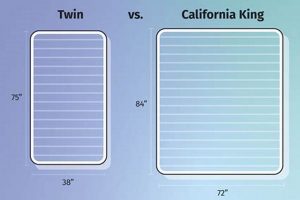
A standard king mattress typically measures 76 inches wide and 80 inches long. This substantial surface area provides ample space for couples to sleep comfortably without disturbing one another. As an example, individuals sharing a queen-size mattress who desire more personal space might find upgrading to this larger option beneficial.
The generous dimensions contribute to a less restricted sleeping experience, allowing for greater freedom of movement and potentially improving sleep quality. Historically, the development of larger mattress sizes catered to evolving consumer preferences for increased comfort and individual space within the marital bed.
Understanding these dimensions is crucial when considering bedroom size, selecting appropriate bedding, and planning the overall bedroom layout. Choosing the correct mattress size is essential for ensuring a restful and supportive sleep environment.
Tips for Determining if a King Mattress is Right for You
Consider these factors before investing in a king mattress to ensure it meets your needs and fits your lifestyle.
Tip 1: Measure Your Bedroom: Ascertain that the room dimensions accommodate a mattress measuring 76 inches by 80 inches, plus additional space for bedside furniture and ease of movement. A smaller room may feel cramped with an oversized bed.
Tip 2: Assess Your Sleep Needs: If sharing the bed, evaluate whether each individual requires ample personal space to sleep comfortably. A king provides significantly more space per person compared to smaller sizes, potentially leading to fewer sleep disturbances.
Tip 3: Evaluate Cost Considerations: King mattresses are generally more expensive than smaller sizes, both in terms of initial purchase and subsequent bedding requirements. Budget accordingly for both the mattress and appropriate sheets, blankets, and comforters.
Tip 4: Consider Transport and Setup: Due to its size, a king mattress can be challenging to transport and maneuver. Ensure adequate assistance and access points before delivery. Measure doorways and hallways to avoid potential logistical issues.
Tip 5: Think About Long-Term Use: Evaluate future lifestyle changes that might impact the suitability of a king mattress. Consider whether future moves or changes in sleeping arrangements could affect its practicality.
Tip 6: Check Bed Frame Compatibility: Verify that the existing bed frame is designed to support a king-size mattress. Using an unsuitable frame can damage the mattress and void warranty coverage. Invest in a sturdy and appropriate frame.
By carefully considering these factors, a more informed decision can be made regarding the suitability of a king mattress, ultimately leading to a more comfortable and supportive sleep experience.
Moving forward, the subsequent sections will delve into various aspects of mattress selection, addressing different needs and preferences.
1. Width

The measurement of 76 inches defining the width of a king-size mattress is a fundamental component of its overall dimensions. This parameter significantly influences the bed’s suitability for various bedroom sizes and sleeping arrangements. Understanding its implications is crucial when considering a purchase.
- Occupant Space
The 76-inch width directly impacts the amount of personal space available for each occupant in a shared bed. A greater width translates to less disturbance from a partner’s movements during sleep. For example, individuals who are sensitive to motion transfer may find a king mattress, with its substantial width, a more comfortable option.
- Bedroom Proportion
A 76-inch wide mattress necessitates a proportionally larger bedroom to avoid overcrowding. Before purchasing a king-size mattress, it is imperative to measure the room’s dimensions to ensure adequate space for movement and ancillary furniture. A room that is too small can make the bed feel overwhelming and detract from the room’s functionality.
- Bedding Compatibility
The defined width dictates the size requirements for bedding, including sheets, comforters, and bedspreads. Standard king-size bedding is manufactured to fit a mattress of this specific width. Deviations from this measurement can lead to ill-fitting linens, reducing both comfort and aesthetic appeal.
- Frame Selection
Bed frames designed for king-size mattresses are constructed to accommodate the 76-inch width. Using a frame that is too small can lead to inadequate support and potential damage to the mattress. It is essential to select a frame that is specifically designed for a king-size mattress to ensure proper support and longevity.
In summary, the 76-inch width of a king-size mattress is not merely an arbitrary measurement; it is a critical determinant of comfort, spatial harmony, and functional compatibility. Its relationship to these facets underscores the importance of careful consideration when evaluating this larger mattress option.
2. Length

The 80-inch length of a king mattress, when considered in conjunction with its width, definitively establishes its overall dimensions and directly impacts its suitability for individuals with varying height requirements. This dimension is not merely a secondary characteristic; it is an integral component defining what a king mattress is.
- Accommodation of Taller Individuals
The 80-inch length is specifically beneficial for individuals exceeding average height, providing sufficient legroom and preventing discomfort caused by dangling feet. For example, someone 6’3″ (75 inches) tall requires a mattress with at least 5 inches of extra length to ensure comfortable sleep posture. This dimension directly addresses the needs of a significant segment of the population.
- Spatial Efficiency Within Bedrooms
While providing ample sleeping space, the 80-inch length also necessitates careful consideration of bedroom dimensions. A room that is too short may not comfortably accommodate a king mattress without impeding movement or compromising furniture placement. Proper space planning is crucial to maximizing the benefits of the mattress without sacrificing functionality.
- Relationship to Bedding Standards
Manufacturers adhere to standardized sizing conventions, producing king-size sheets, blankets, and comforters specifically designed to fit an 80-inch long mattress. This standardization simplifies the process of selecting compatible bedding and ensures a proper fit, avoiding issues such as sheets that are too short or blankets that fail to provide adequate coverage.
- Impact on Sleep Qualityg>
By providing adequate length, the mattress contributes to improved sleep quality by allowing individuals to fully stretch out and adopt comfortable sleeping positions. Restrictive sleeping spaces can lead to restlessness and discomfort, disrupting sleep patterns and impacting overall well-being. The 80-inch length mitigates these potential issues.
The interaction between the 80-inch length and the various aspects of comfort, spatial planning, and bedding selection ultimately reinforces the importance of considering this dimension when determining if a king mattress is the appropriate choice. Evaluating individual height requirements and bedroom size remains paramount to ensuring a satisfactory sleep experience. The 80-inch measurement is a core element defining “what is the size of a king size mattress” and its practical implications.
3. Surface Area

The surface area of a king mattress, calculated as the product of its width (76 inches) and length (80 inches), totals 6,080 square inches. This substantial area is a primary determinant of its comfort and suitability for couples or individuals seeking ample sleeping space. The relationship between surface area and overall comfort is a direct correlation. A larger surface area allows for greater freedom of movement, minimizing disturbances caused by a partner’s tossing and turning during sleep. For example, couples accustomed to a full-size mattress, which offers significantly less individual space, often report improved sleep quality upon transitioning to the enhanced surface area afforded by a king.
The practical significance of understanding the surface area extends beyond mere comfort. It directly impacts considerations related to weight distribution, support, and the overall lifespan of the mattress. A larger surface area typically allows for a more even distribution of weight, reducing stress on specific areas of the mattress and potentially extending its durability. Moreover, this increased area can accommodate individuals of larger stature or those who prefer to sleep in sprawling positions. Selecting a mattress with adequate surface area is therefore a strategic investment in long-term sleep health and mattress longevity.
In summary, the surface area is a defining characteristic. While width and length are important, the calculated area is what provides a better amount of space and freedom to move when sleeping. The challenge lies in balancing the benefits of a larger surface area with the practical considerations of bedroom size and budget. Understanding the interplay between surface area and overall mattress dimensions is critical for making an informed purchasing decision, ultimately optimizing sleep quality and overall well-being.
4. Bed Frame Compatibility
The relationship between bed frame compatibility and mattress dimensions is fundamental to ensuring proper support, safety, and longevity. A mismatch between the bed frame and mattress, specifically concerning a king-size mattress, can result in compromised structural integrity and reduced sleep quality.
- Standard King vs. California King Frames
A standard king mattress measures 76 inches by 80 inches, whereas a California king measures 72 inches by 84 inches. Using a standard king mattress on a California king frame, or vice versa, will result in overhang or gaps, leading to uneven support and potential mattress damage. Matching the frame to the specific king variant is critical.
- Weight Capacity Considerations
King-size mattresses, particularly those constructed with heavier materials like memory foam or latex, require frames with sufficient weight-bearing capacity. A frame rated for lower weight may sag or break under the combined weight of the mattress and occupants, voiding warranties and posing safety risks. Confirming the frame’s weight capacity exceeds the anticipated load is essential.
- Support Structure Integrity
Bed frames provide essential support through slats or a solid platform. Inadequate or improperly spaced slats can lead to mattress sagging and uneven weight distribution. Frames designed for king-size mattresses should feature robust support structures to prevent premature wear and maintain proper spinal alignment during sleep. Inspecting the slat system for strength and spacing is crucial.
- Headboard and Footboard Attachment
King-size bed frames often include headboards and footboards for aesthetic and functional purposes. Ensuring compatibility between the mattress dimensions and the headboard/footboard design is necessary to prevent obstruction of the sleeping surface or instability. Confirming that the mattress fits securely within the headboard and footboard is important for both safety and visual appeal.
Understanding the nuanced interplay between bed frame compatibility and king-size mattress dimensions is crucial for maximizing the benefits of a larger sleeping surface. Selecting a frame specifically designed to accommodate the dimensions and weight of a king mattress will contribute to improved sleep quality, enhanced mattress longevity, and overall bedroom safety.
5. Sheet Dimensions

The selection of appropriate sheet dimensions is intrinsically linked to the specific measurements of a king-size mattress. Precise correspondence between the sheet dimensions and the mattress size ensures a secure fit, optimal comfort, and prevents premature wear of both the sheets and the mattress.
- Fitted Sheet Depth and Corner Design
Fitted sheets must possess sufficient depth to accommodate the mattress’s thickness, accounting for any additional mattress toppers. Deep-pocket fitted sheets are designed for thicker mattresses, preventing the corners from slipping off. The corner construction, including elastic strength and stitching, also impacts the sheet’s ability to remain securely in place. Ill-fitting fitted sheets can cause discomfort and necessitate frequent readjustment during sleep. An example would be a pillow-top mattress requiring deep-pocket sheets, while a thinner mattress would not.
- Flat Sheet Overhang and Tuck-In Allowance
The dimensions of the flat sheet dictate the amount of overhang on the sides and bottom of the bed, as well as the allowance for tucking the sheet under the mattress. Insufficient overhang can result in inadequate coverage and discomfort, while excessive overhang can appear untidy. A standard king-size flat sheet typically measures 108 inches wide by 102 inches long, providing ample coverage for a mattress measuring 76 inches by 80 inches. The proper sizing ensures comfort and aesthetics.
- Pillowcase Dimensions and Pillow Size
Although technically separate from the mattress itself, pillowcases are an integral part of bedding ensemble. King-size pillowcases are designed to accommodate king-size pillows, typically measuring 20 inches by 36 inches. Using standard-size pillowcases on king-size pillows results in a tight fit, potentially compromising the pillow’s loft and comfort. Coordinating pillowcase dimensions with pillow size is crucial for maintaining optimal sleep
quality and a cohesive aesthetic. - Material Shrinkage and Washing Instructions
Sheet dimensions, particularly after laundering, can be influenced by material shrinkage. Natural fibers such as cotton are prone to shrinkage, potentially altering the fit of the sheets. Following the manufacturer’s washing instructions, including water temperature and drying settings, can minimize shrinkage and preserve the original dimensions. Pre-shrunk fabrics are often preferred to mitigate this issue. This is an important consideration for long-term satisfaction with bedding.
In summary, the meticulous selection of sheet dimensions that precisely correspond to “what is the size of a king size mattress” is paramount for ensuring optimal comfort, aesthetic appeal, and longevity of both the sheets and the mattress. Discrepancies in sizing can lead to discomfort, premature wear, and a diminished sleep experience. Paying careful attention to these factors is essential for maximizing the benefits of a king-size sleep system.
6. Bedroom Dimensions
The relationship between bedroom dimensions and mattress size is a critical consideration in bedroom design, directly impacting functionality, aesthetics, and overall comfort. The suitability of a king-size mattress is significantly dependent on the room’s available space.
- Minimum Room Size Requirements
To comfortably accommodate a king mattress measuring 76 inches by 80 inches, a minimum room size of 12 feet by 10 feet is generally recommended. This allows for adequate space around the bed for movement, bedside tables, and other furniture. Smaller rooms may feel cramped and restrict functionality. For example, attempting to fit a king mattress into a 10-foot by 10-foot room leaves limited space for anything beyond the bed itself.
- Furniture Placement and Traffic Flow
Bedroom dimensions dictate the feasibility of various furniture arrangements. A king mattress consumes a substantial amount of floor space, potentially limiting options for placing dressers, chairs, or other bedroom furnishings. Careful planning is necessary to ensure an efficient traffic flow and prevent the room from feeling cluttered. Strategic furniture placement can mitigate spatial constraints and enhance the room’s functionality.
- Visual Proportion and Aesthetic Balance
The size of the mattress significantly influences the visual proportion of the room. A king mattress may overwhelm a smaller bedroom, creating an unbalanced aesthetic. Larger rooms can better accommodate the size of a king mattress without compromising the overall visual harmony. Achieving a balanced proportion between the mattress and the room’s dimensions is crucial for creating a visually pleasing and comfortable environment.
- Door and Window Placement Considerations
Door and window placement further constrains options. Ensuring that doors can open fully without obstruction and that windows are accessible for ventilation and natural light is essential. A poorly positioned king mattress can impede access to these critical features, reducing the room’s usability and comfort. Careful spatial planning must account for these architectural elements. As an illustration, a window behind the bed must be high enough to not be blocked.
These factors highlight the necessity of a thorough assessment of bedroom dimensions prior to investing in a king-size mattress. The practical implications extend beyond mere aesthetics, influencing the room’s functionality and overall comfort. The benefits of “what is the size of a king size mattress” become practical when the bedroom has appropriate dimensions for comfortable use. Proper planning will ensure that the increased sleeping surface does not come at the expense of overall room functionality.
Frequently Asked Questions about King Mattress Dimensions
The subsequent questions address common inquiries regarding the dimensions of a king-size mattress and their practical implications.
Question 1: What exactly constitutes the dimensions of a standard king mattress?
A standard king mattress measures 76 inches in width and 80 inches in length.
Question 2: How does the size of a king mattress compare to that of a queen mattress?
A king mattress is significantly wider than a queen mattress. A queen typically measures 60 inches wide, while a king measures 76 inches wide, offering considerably more sleeping space, especially for couples.
Question 3: What are the spatial requirements for a bedroom to comfortably accommodate a king mattress?
A room measuring at least 12 feet by 10 feet is generally recommended. This provides ample space for movement and additional furniture.
Question 4: Are specific sheet sizes mandated for a king-size mattress?
Yes, king-size sheets are designed to fit a mattress measuring 76 inches by 80 inches. Using smaller sheets can result in an improper fit and discomfort.
Question 5: Does the weight of a king-size mattress necessitate a specialized bed frame?
Yes, a robust bed frame with adequate weight-bearing capacity is essential to support the mattress and prevent sagging or damage.
Question 6: What factors should be considered when deciding between a king and California king mattress?
Height is a key consideration. A California king is longer (84 inches) but narrower (72 inches) than a standard king. Taller individuals may prefer the added length of a California king, while others may prefer the width of a standard king.
In summary, careful consideration of dimensions is paramount for ensuring compatibility between the mattress, bedroom space, and related accessories.
The next section will delve into alternative mattress sizes and their respective benefits.
What is the Size of a King Size Mattress
The preceding exploration has established the core dimensions of a standard king-size mattress as 76 inches in width and 80 inches in length. The implications of these measurements extend to bedroom size requirements, bedding selection, bed frame compatibility, and overall sleep comfort. Understanding these dimensional parameters is essential for making informed purchasing decisions and optimizing the sleep environment.
Accurate consideration of mattress dimensions, especially in relation to bedroom space, remains crucial. Proper planning facilitates not only comfortable sleep, but also ensures the functionality and aesthetic balance of the bedroom. Future advancements in mattress technology may introduce dimensional variations, but the foundational principles outlined herein will continue to serve as a relevant framework for evaluating mattress size and suitability. Careful consideration is urged to all stakeholders, to benefit to comfort of sleep.
![Ultimate Tempur-Pedic King Size Mattress [Guide & Review] | Organic & Natural Mattress Buyer’s Guide: Non-Toxic Sleep Solutions](https://mattressworldpa.com/wp-content/uploads/2025/07/th-8395-300x200.jpg "Ultimate Tempur-Pedic King Size Mattress [Guide & Review] Organic & Natural Mattress Buyer’s Guide: Non-Toxic Sleep Solutions")