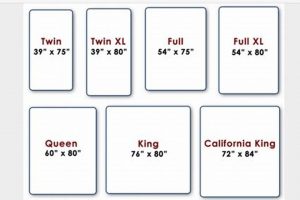
The standard dimensions for a twin mattress intended for use in a bunk bed configuration are typically 39 inches wide and 75 inches long. This standardized sizing ensures compatibility with most bunk bed frames designed to accommodate a twin mattress. Adherence to these dimensions is crucial for safety and proper fit.
Employing appropriately sized mattresses in bunk beds mitigates potential hazards associated with ill-fitting bedding, such as gaps that could lead to entrapment. Furthermore, the consistent application of the 39×75 inch standard allows for easier interchangeability and replacement of mattresses as needed, providing long-term cost-effectiveness and convenience. The historical establishment of this standard has fostered safer and more practical bunk bed designs across various manufacturers.
The subsequent sections will elaborate on factors to consider when selecting a mattress for a bunk bed, including thickness limitations, weight restrictions, and specific safety guidelines. Additional focus will be placed on material choices and construction techniques that contribute to both comfort and durability in the context of bunk bed usage.
Tips Regarding Twin Mattress Size for Bunk Beds
This section provides essential guidance for selecting the correct mattress size for bunk bed applications. Adherence to these recommendations ensures safety, comfort, and optimal functionality.
Tip 1: Measure the Bunk Bed Frame. Prior to purchasing a mattress, accurately measure the interior dimensions of the bunk bed frame. This verification ensures the mattress will fit snugly and securely within the designated space.
Tip 2: Consult Manufacturer Specifications. Review the bunk bed manufacturer’s specifications regarding recommended mattress thickness. Exceeding the specified maximum thickness can compromise the safety rail height, increasing the risk of falls.
Tip 3: Prioritize Safety Standards. Ensure the chosen mattress meets relevant safety standards and certifications. This verification confirms the mattress has undergone testing for flammability, toxicity, and other potential hazards.
Tip 4: Consider Mattress Weight. Verify the bunk bed frame’s weight capacity and select a mattress that falls within those limits. Exceeding the weight limit can weaken the frame, potentially leading to structural failure.
Tip 5: Assess Mattress Material. Evaluate the mattress material for durability and comfort. Options include innerspring, memory foam, and latex, each offering varying levels of support and longevity. Consider the needs of the intended user when making this selection.
Tip 6: Ensure Proper Support. A mattress providing adequate support is crucial for spinal alignment and comfortable sleep. Select a mattress with appropriate firmness to prevent sagging and maintain proper posture.
The outlined guidelines are vital for safeguarding bunk bed occupants and preserving the structural integrity of the furniture. Thoughtful consideration of these factors ensures a secure and comfortable sleep environment.
The following sections will explore specific mattress types suitable for bunk beds, focusing on features that enhance both safety and comfort.
1. Standard Dimensions

The phrase “what size twin mattress for bunk bed” presupposes a generally accepted standard. That standard, the 39″ x 75″ twin mattress dimension, forms the foundational component of suitable bedding for such structures. The inherent cause-and-effect relationship dictates that deviation from these dimensions can compromise the safety and functionality of the bunk bed. For instance, a mattress exceeding these dimensions may not fit securely, increasing the risk of slippage and potential injury. Conversely, a mattress smaller than the specified size could create hazardous gaps between the mattress and the bed frame.
The practical significance of adhering to the 39″ x 75″ standard manifests across various scenarios. Manufacturers design bunk beds with these measurements in mind, ensuring compatibility and ease of use. Retailers commonly categorize twin mattresses specifically for bunk bed applications, further simplifying the selection process for consumers. Ignoring these established dimensions introduces logistical complexities and potential safety hazards. An example would be purchasing a non-standard mattress and subsequently discovering it necessitates modification of the bunk bed frame or renders the safety rails ineffective.
In summary, the 39″ x 75″ standard for a twin mattress is inextricably linked to the question of “what size twin mattress for bunk bed.” Adherence to this standard ensures compatibility, safety, and optimal functionality. Challenges arise when manufacturers or consumers deviate from these established measurements. Therefore, a thorough understanding of these dimensions is critical for informed decision-making when furnishing a bunk bed.
2. Thickness Limitations

The phrase “what size twin mattress for bunk bed” implicitly includes a consideration of thickness, not solely length and width. Thickness limitations constitute a crucial safety parameter. A mattress that exceeds the bunk bed manufacturer’s specified maximum thickness diminishes the effective height of the safety rails. This reduction in barrier height increases the risk of occupants, particularly those on the upper bunk, falling out of bed during sleep. Consequently, understanding the allowed thickness is as vital as adhering to the 39″ x 75″ standard dimensions.
Examples illustrating the practical significance of thickness limitations are readily found in product specifications and safety guidelines. Bunk bed manufacturers routinely indicate the maximum permissible mattress thickness, often accompanied by a warning against exceeding this limit. Retail environments frequently display signage emphasizing this restriction. Consider a scenario where a parent purchases a twin mattress that is 12 inches thick for a bunk bed designed for a maximum of 8 inches. The resultant reduction in safety rail height transforms a safe sleep environment into a potentially hazardous one. Further, mattresses too thick can make it difficult for children to climb up and down from the top bunk, increasing the risk of accidents.
In summation, when determining “what size twin mattress for bunk bed,” thickness limitations cannot be overlooked. This dimension is inextricably linked to occupant safety, as it directly influences the effectiveness of safety rails. Exceeding the manufacturer’s recommended thickness compromises this safety feature, potentially leading to falls and injuries. A comprehensive understanding of thickness limitations, alongside standard length and width, is therefore essential for ensuring a safe and functional bunk bed setup.
3. Frame Compatibility

Frame compatibility represents a critical consideration in the context of “what size twin mattress for bunk bed.” The successful and safe integration of a mattress within a bunk bed structure hinges upon adherence to specified dimensions and design parameters. Mismatches can lead to instability, safety hazards, and compromised functionality.
- Internal Dimensions
The internal dimensions of the bunk bed frame dictate the acceptable range for mattress size. If the mattress is too large, it will not fit within the frame, causing bowing or preventing assembly. If the mattress is too small, gaps will form between the mattress and the frame, creating potential entrapment hazards. Accurate measurement of the frame’s internal dimensions is therefore paramount.
- Support Structure
The design of the bunk bed’s support structure must be compatible with the weight and construction of the mattress. Slatted supports, for example, may require a firmer mattress to prevent sagging. Solid platforms offer more uniform support and may be suitable for a wider range of mattress types. Inadequate support can compromise the mattress’s lifespan and the occupant’s comfort.
- Safety Rail Height
As previously noted with thickness limitations, frame compatibility impacts the height of the safety rails. A properly sized mattress will allow the safety rails to extend sufficiently above the mattress surface to prevent falls. A mattress that is too thick, or a frame with poorly designed safety rails, negates this critical safety feature. Relevant safety standards provide specific guidelines for minimum rail heights.
- Corner Construction
The construction of the bunk bed’s corners influences how securely the mattress is held in place. Rounded corners, for example, may allow for slight movement of the mattress, potentially creating gaps. Square or reinforced corners provide a more secure fit. Attention to the corner design and mattress placement can minimize the risk of shifting or displacement.
The aforementioned facets highlight the intricate relationship between frame compatibility and the selection of a suitable mattress for bunk bed applications. Addressing these points is fundamental to the safe and effective use of such furniture. Failure to account for these considerations can lead to structural instability and safety risks, underscoring the importance of meticulous attention to detail when considering “what size twin mattress for bunk bed.”
4. Weight Considerations

Weight considerations are an integral, albeit often overlooked, component of determining “what size twin mattress for bunk bed.” The dimensions of a mattresslength, width, and thicknessdictate its volume, which directly influences its overall weight. A heavier mattress places a greater load on the bunk bed frame, potentially leading to structural stress and, in extreme cases, failure. The manufacturer’s weight limit for the bunk bed must be strictly adhered to, taking into account both the weight of the mattress and the anticipated weight of the occupant.
The correlation between mattress composition and weight is significant. Innerspring mattresses, traditionally heavier due to their steel coil construction, exert more force on the bed frame compared to lighter alternatives like memory foam or latex. For example, a twin-size innerspring mattress might weigh 50-70 pounds, whereas a memory foam counterpart could range from 30-50 pounds. This disparity necessitates careful assessment of the bunk bed’s construction and material composition. Lightweight frames may necessitate the selection of a lighter mattress to remain within safe operating parameters. Failure to consider these factors could result in accelerated wear and tear, diminished stability, and increased risk of accidents.
In conclusion, the decision regarding “what size twin mattress for bunk bed” must incorporate a comprehensive evaluation of weight considerations. This includes understanding the bunk bed’s weight capacity, the mattress’s material composition, and the potential load exerted by the occupant. By prioritizing weight limitations, one can mitigate the risk of structural damage and ensure a safe and durable sleep environment. Neglecting this aspect introduces unnecessary hazards and compromises the long-term integrity of the furniture.
5. Safety Regulations

The determination of “what size twin mattress for bunk bed” is intrinsically linked to prevailing safety regulations designed to mitigate risks associated with bunk bed usage. These regulations, often established by governmental or industry bodies, mandate specific dimensional requirements for mattresses to ensure compatibility with bunk bed frames and prevent potential hazards. The cause-and-effect relationship is direct: non-compliance with these size regulations can compromise the structural integrity of the bunk bed system and elevate the risk of falls, entrapment, or other injuries.
The importance of safety regulations as a component of “what size twin mattress for bunk bed” is underscored by the fact that these standards are often incorporated into manufacturing guidelines and retail practices. For example, Consumer Product Safety Commission (CPSC) regulations in certain regions dictate minimum safety rail heights, which, in turn, influence the acceptable mattress thickness. Retailers are often required to provide information regarding recommended mattress sizes and thickness limitations to consumers, ensuring awareness of safety considerations. Ignoring these regulations can lead to legal liabilities for manufacturers and retailers, as well as potential harm to consumers.
Understanding the practical significance of these safety regulations is crucial for all stakeholders involved in the bunk bed lifecycle, from manufacturers to consumers. Challenges arise when non-standard or aftermarket mattresses are used, as these may not adhere to the prescribed safety dimensions. The interplay between mattress size, frame design, and safety rail height is essential. Adherence to safety regulations when selecting a twin mattress for a bunk bed is not merely a matter of compliance; it is a fundamental aspect of ensuring the well-being of those who use the furniture, ultimately reducing the incidence of preventable accidents and injuries.
Frequently Asked Questions
This section addresses common inquiries concerning the selection and suitability of twin mattresses for bunk bed applications. The information provided is intended to offer clarity and guidance for ensuring safety and optimal performance.
Question 1: What are the standard dimensions for a twin mattress intended for a bunk bed?
The established standard dimensions for a twin mattress designed for bunk bed use are 39 inches in width and 75 inches in length. Adherence to these dimensions is crucial for ensuring a proper fit within the bunk bed frame.
Question 2: Is there a maximum thickness recommended for a twin mattress used in a bunk bed?
Yes, a maximum thickness is typically specified by the bunk bed manufacturer. Exceeding this recommended thickness can c
ompromise the safety rail height and increase the risk of falls.
Question 3: Does the weight of the mattress matter when selecting one for a bunk bed?
The weight of the mattress is a significant factor. Bunk bed frames have weight limits, and exceeding these limits can lead to structural damage or collapse. Consult the manufacturer’s specifications to determine the maximum allowable mattress weight.
Question 4: What type of mattress is generally recommended for a bunk bed?
The type of mattress suitable for a bunk bed depends on individual preferences and the bunk bed’s design. However, thinner mattresses, such as those made of foam or innerspring, are often favored to ensure adequate safety rail height.
Question 5: Are there specific safety standards that mattresses used in bunk beds must meet?
Mattresses intended for bunk beds should comply with relevant safety standards and regulations, such as those pertaining to flammability and toxicity. Verification of compliance is crucial to ensuring occupant safety.
Question 6: Can any twin-sized mattress be used in a bunk bed?
While many twin mattresses adhere to standard dimensions, not all are suitable for bunk bed use. Considerations such as thickness, weight, and safety certifications must be evaluated to ensure compatibility and safety.
The aforementioned inquiries and responses underscore the importance of careful consideration when selecting a twin mattress for a bunk bed. Adherence to established standards and safety guidelines is essential for mitigating risks and ensuring a secure sleep environment.
The concluding section will summarize the key findings and offer a consolidated guide to selecting a twin mattress for bunk bed applications.
Conclusion
The preceding analysis has underscored the multifaceted considerations inherent in determining “what size twin mattress for bunk bed.” The standard dimensions of 39 inches by 75 inches, while fundamental, represent only one aspect of a more complex equation. Mattress thickness, weight, frame compatibility, and adherence to established safety regulations each contribute significantly to the overall suitability and safety of the bedding system. The interplay between these elements dictates the effectiveness of the bunk bed in providing a secure and comfortable sleep environment.
Prioritizing these factors enables informed decision-making, mitigating the risk of accidents and ensuring the longevity of the furniture. The responsible selection of a twin mattress for a bunk bed, grounded in a comprehensive understanding of these dimensional and safety imperatives, reflects a commitment to occupant well-being and responsible product stewardship. Further investigation into evolving safety standards and material innovations is encouraged to maintain optimal safety and performance as bunk bed technology advances.
![Best Twin Mattress Platform [Deals!] - Beds & More | Organic & Natural Mattress Buyer’s Guide: Non-Toxic Sleep Solutions](https://mattressworldpa.com/wp-content/uploads/2025/07/th-5168-300x200.jpg "Best Twin Mattress Platform [Deals!] - Beds & More Organic & Natural Mattress Buyer’s Guide: Non-Toxic Sleep Solutions")