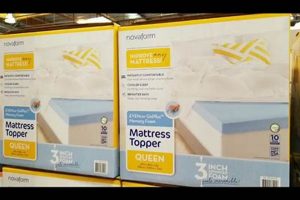
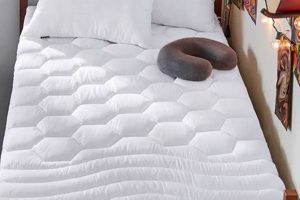
An extra-long mattress overlay serves as an additional layer of cushioning and support designed for beds exceeding standard lengths, typically used on twin XL or split king mattresses. This product enhances the comfort of a sleeping surface and can modify its firmness. For example, a memory foam option can soften a firm mattress, while a firmer latex alternative can add support to a softer one.
The use of these overlays can significantly improve sleep quality by alleviating pressure points, reducing motion transfer, and providing enhanced support. Historically, simpler versions were made of feathers or cotton batting, but modern iterations often incorporate advanced materials like memory foam, latex, or gel-infused foam. This evolution reflects a growing awareness of the impact of sleep on overall health and well-being.
The subsequent sections will elaborate on the various material options available in extended-length bed overlays, considerations for selecting the appropriate firmness and thickness, and best practices for maintaining their condition to ensure longevity and sustained performance.
Essential Considerations for Extra-Long Mattress Overlays
Selecting the appropriate extended-length bed overlay requires careful consideration of several factors. These tips are designed to guide the decision-making process to ensure optimal comfort, support, and product longevity.
Tip 1: Material Composition Assessment: Evaluate the core materials used in the overlay’s construction. Memory foam excels at conforming to the body, offering pressure relief, while latex provides resilient support and breathability. Gel-infused foams aim to regulate temperature, addressing potential heat retention.
Tip 2: Density Evaluation: Higher density overlays generally offer greater durability and support. Examine the product specifications to determine the density rating, which indicates the material’s ability to withstand compression over time.
Tip 3: Thickness Considerations: The overlay’s thickness directly impacts the level of cushioning and support provided. A thicker option will offer more significant contouring and pressure relief, particularly for individuals with joint pain or sensitive pressure points.
Tip 4: Firmness Level Determination: Align the firmness of the overlay with individual sleeping preferences and postural needs. A firmer overlay may be suitable for back or stomach sleepers requiring additional spinal support, while a softer overlay can enhance comfort for side sleepers.
Tip 5: Proper Fit Verification: Ensure the overlay dimensions precisely match the corresponding bed size. An ill-fitting overlay can shift during sleep, compromising comfort and support. Precise measurements are crucial for optimal performance.
Tip 6: Cover Material Analysis: The cover material contributes to breathability and moisture-wicking. Look for covers made from natural fibers like cotton or bamboo, which promote airflow and help regulate sleep temperature.
Tip 7: Maintenance Protocols: Adhere to the manufacturer’s recommended cleaning and care instructions. Regular cleaning prevents the buildup of allergens and dust mites, extending the overlay’s lifespan and maintaining a hygienic sleep environment.
By carefully evaluating material composition, density, thickness, firmness, and fit, individuals can make informed decisions when selecting an extended-length bed overlay, leading to enhanced sleep quality and improved comfort.
The following sections will delve into specific material types, maintenance procedures, and troubleshooting common issues associated with extra-long mattress overlays.
1. Dimensions and bed fit

The dimensional compatibility between an extra-long bed overlay and its intended mattress is paramount for achieving optimal performance and user satisfaction. Mismatched dimensions can lead to discomfort, diminished support, and premature wear.
- Precise Measurement Alignment
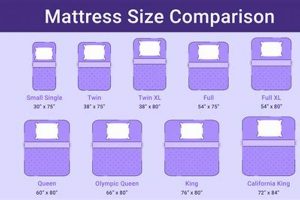
Accurate measurements of both the mattress and the overlay are essential. An overlay designed for a twin XL mattress, typically 39 inches wide and 80 inches long, must precisely match these dimensions to avoid overhang or insufficient coverage. Discrepancies can result in uneven support and potential shifting of the overlay during sleep.
- Elastic Straps and Securing Mechanisms
Many overlays incorporate elastic straps or other securing mechanisms to maintain their position on the mattress. These features are effective only if the overlay dimensions are appropriate for the bed. An overlay that is too large may bunch up, while one that is too small will fail to properly engage the securing mechanisms, leading to displacement and compromised comfort.
- Impact on Support and Pressure Relief
An overlay that does not fully cover the mattress surface will create inconsistencies in support and pressure relief. Areas of the mattress not covered by the overlay will retain their original firmness, leading to uneven weight distribution and potential discomfort. This is particularly relevant for overlays designed to alleviate pressure points or enhance spinal alignment.
- Longevity and Wear
Improper fit can accelerate wear and tear on both the overlay and the mattress. An overlay that is too small may be stretched excessively, leading to premature material breakdown. Conversely, an overlay that is too large may be compressed unevenly, causing localized wear and reduced lifespan.
In summary, achieving the intended benefits of an extended-length bed overlay hinges on ensuring precise dimensional compatibility with the underlying mattress. Careful measurement and adherence to manufacturer specifications are crucial for maximizing comfort, support, and product longevity.
2. Material density

Material density, measured in pounds per cubic foot (lbs/ft), is a critical determinant of an extended-length bed overlay’s performance and longevity. Within such overlays, density directly influences the degree of support, durability, and resistance to compression over time. Higher density materials, such as high-density memory foam or latex, offer enhanced support and are less prone to deformation under consistent pressure. This characteristic is particularly vital for individuals requiring significant support or those who experience above-average wear and tear on their sleeping surface. For example, a high-density memory foam overlay can effectively distribute weight, minimizing pressure points and maintaining spinal alignment, while a lower-density option may compress excessively, reducing its supportive capabilities.
The impact of density extends beyond mere support. Overlays with higher densities exhibit increased resilience to compression set, a phenomenon where the material permanently loses its original shape after repeated compression. This resilience translates to a longer lifespan, as the overlay maintains its support and comfort properties over an extended period. Conversely, overlays with lower densities are more susceptible to compression set, necessitating more frequent replacement. In practical terms, an individual purchasing an extended-length bed overlay for long-term use, such as in a college dorm or extended-stay accommodation, would benefit significantly from selecting a higher-density option to minimize the need for replacement and ensure consistent comfort.
In conclusion, material density plays a crucial role in the functionality and longevity of extended-length bed overlays. The selection of an appropriate density should align with individual support requirements, anticipated usage patterns, and budgetary constraints. While higher-density options may command a greater initial investment, their enhanced durability and sustained performance can result in long-term cost savings and a more satisfactory sleep experience. Challenges remain in accurately assessing density without direct product testing, emphasizing the importance of consulting manufacturer specifications and customer reviews to make informed purchasing decisions.
3. Firmness level

The selection of a bed overlay’s firmness level is a critical determinant of its suitability for individual sleepers. This factor, when considered in relation to extra-long mattress overlays, directly impacts comfort, support, and overall sleep quality.
- Spinal Alignment and Postural Support
The primary function of a mattress overlay is to enhance the support characteristics of the underlying mattress. Firmness directly affects spinal alignment. A too-soft overlay may cause excessive sinking, leading to spinal misalignment, while an overly firm overlay may not conform sufficiently to the body’s contours, resulting in pressure points. The ideal firmness level promotes a neutral spinal posture, reducing the risk of back pain and discomfort. Side sleepers generally benefit from softer overlays that allow the shoulders and hips to sink in, while back and stomach sleepers typically require firmer options to maintain spinal alignment.
- Pressure Point Relief
Overlays with appropriate firmness levels can effectively alleviate pressure points, particularly in the shoulders, hips, and knees. Softer overlays conform to these areas, distributing weight more evenly and reducing concentrated pressure. Conversely, overly firm overlays may exacerbate pressure points, leading to discomfort and potentially disrupting sleep. The choice of firmness should align with individual weight distribution and sleeping position to optimize pressure relief.
- Impact on Motion Transfer
The firmness level also influences motion transfer. Firmer overlays tend to transmit motion more readily than softer overlays. This consideration is particularly relevant for individuals who share a bed, as a softer overlay can minimize disturbances caused by a partner’s movements. However, extremely soft overlays may compromise support, so a balance between motion isolation and adequate support is crucial.
- Subjective Comfort and Personal Preference
Ultimately, the optimal firmness level is subjective and depends on individual preferences. Some sleepers prefer the cradling sensation of a soft overlay, while others prefer the firmer support of a more rigid option. Personal preference should be factored in alongside objective considerations such as spinal alignment and pressure relief to ensure satisfaction with the product.
The interaction between firmness level and extra-long mattress overlays is thus a complex interplay of biomechanical support, pressure redistribution, and subjective comfort. A thoughtful consideration of these facets is essential for selecting an overlay that promotes restful and restorative sleep.
4. Thickness options

Thickness represents a critical parameter in determining the performance and suitability of extra-long mattress overlays. Variations in thickness directly influence the level of cushioning, support, and overall comfort experienced by the user. Understanding the implications of different thickness options is essential for making informed purchasing decisions.
- Enhanced Pressure Relief
Increased overlay thickness generally correlates with improved pressure relief. A thicker overlay provides a greater buffer between the sleeper and the underlying mattress, allowing for more effective contouring and weight distribution. This is particularly beneficial for individuals with joint pain, pressure sores, or those who prefer a plusher sleeping surface. For example, a 4-inch memory foam option will typically offer more substantial pressure relief compared to a 2-inch alternative.
- Support and Stability Modulation
While thicker overlays tend to offer enhanced cushioning, they can also impact support and stability. An excessively thick overlay, particularly one constructed from a low-density material, may compromise support, leading to spinal misalignment. Conversely, a thinner overlay may not provide sufficient cushioning to effectively alleviate pressure points. The optimal thickness balances pressure relief with adequate support, depending on individual sleeping preferences and body weight.
- Impact on Bed Height
The addition of an extra-long mattress overlay will invariably increase the overall height of the bed. This factor is particularly relevant for individuals with mobility limitations or those using beds with pre-existing height constraints. Careful consideration should be given to the thickness of the overlay to ensure accessibility and prevent potential safety hazards. For example, a very thick overlay on a platform bed may make it difficult to get in and out of bed comfortably.
- Material-Specific Performance
The impact of thickness varies depending on the material composition of the overlay. A thicker latex option may provide a firmer feel compared to a similar thickness of memory foam. Conversely, a thicker down alternative overlay may offer a softer, more plush feel compared to other materials. Understanding the properties of different materials is crucial for selecting an overlay with the desired thickness and performance characteristics.
In summary, the thickness of an extra-long mattress overlay is a multifaceted parameter that significantly influences pressure relief, support, bed height, and overall comfort. The optimal thickness depends on individual preferences, physical needs, and the specific characteristics of the chosen material. Thorough consideration of these factors is essential for maximizing the benefits of an extended-length bed overlay.
5. Support and comfort
The relationship between support and comfort is paramount when considering extra-long mattress overlays. An understanding of how these two elements interact is crucial for optimizing sleep quality and overall well-being.
- Spinal Alignment and Posture
The primary role of a supportive mattress overlay is to maintain proper spinal alignment during sleep. Extra-long mattresses, commonly used by taller individuals, require overlays that adequately support the entire length of the body. For example, a memory foam option can conform to the unique contours of the spine, promoting a neutral posture and reducing the risk of back pain. Without adequate support, the spine may sag or arch, leading to discomfort and potential long-term musculoskeletal issues.
- Pressure Point Relief
Comfort is significantly influenced by the overlay’s ability to alleviate pressure points. Materials like gel-infused foam or latex can distribute weight evenly, minimizing pressure on areas such as the hips, shoulders, and knees. A person experiencing chronic joint pain may find significant relief through an overlay that effectively reduces pressure, allowing for a more restful and comfortable sleep experience. Inadequate pressure relief can result in tossing and turning, disrupting sleep cycles and diminishing overall sleep quality.
- Material Composition and Responsiveness
The material composition of the overlay directly affects both support and comfort. High-density memory foam offers firm support and excellent contouring, while softer materials like down alternatives provide a plusher, more cushioned feel. The responsiveness of the material, its ability to quickly adapt to changes in pressure, also contributes to comfort. For instance, a highly responsive latex overlay can provide both support and comfort by adapting to movements during sleep, preventing the feeling of being “stuck” in one position. The choice of material should align with individual preferences and specific support requirements.
- Temperature Regulation
Comfort is inextricably linked to temperature regulation. Overheating can significantly disrupt sleep, leading to discomfort and restlessness. Mattress overlays designed with breathable materials, such as open-cell foam or moisture-wicking fabrics, can promote airflow and prevent the buildup of heat. Individuals who tend to sleep hot may benefit from an overlay that incorporates cooling technologies, ensuring a more comfortable and consistent sleep temperature throughout the night.
In conclusion, the symbiotic relationship between support and comfort is central to the effectiveness of extra-long mattress overlays. These factors must be carefully considered in conjunction with individual needs and preferences to ensure a sleep surface that promotes both physical well-being and restful sleep. Failure to adequately address both support and comfort can result in a compromised sleep experience, potentially leading to negative health outcomes.
6. Temperature regulation

Temperature regulation is a critical performance parameter for extra-long mattress overlays. The inherent design and material composition of these overlays can significantly impact the sleep environment’s thermal properties, influencing comfort and sleep quality. Overlays, especially those constructed from synthetic materials such as memory foam, can impede airflow, leading to heat retention and elevated sleeping temperatures. The consequence is often disrupted sleep, characterized by restlessness and nighttime awakenings. Individuals residing in warmer climates or those prone to night sweats are particularly susceptible to these effects. The incorporation of cooling technologies, such as gel infusions or open-cell foam structures, aims to mitigate this issue by promoting enhanced airflow and dissipating heat more effectively. For example, an extended-length overlay incorporating phase-change materials (PCMs) can absorb and release heat, maintaining a more consistent sleeping temperature throughout the night.
The material’s breathability is a primary factor in determining temperature regulation. Natural materials like latex or cotton tend to exhibit superior breathability compared to synthetic alternatives. Furthermore, the overlay’s construction, including features like ventilated designs or channeled surfaces, can facilitate air circulation and reduce heat buildup. The effectiveness of these features, however, depends on the specific materials and design elements employed. A high-density memory foam overlay, even with ventilation channels, may still retain more heat than a low-density latex overlay. Conversely, some advanced synthetic materials incorporate moisture-wicking properties, actively drawing moisture away from the body to promote cooling. The integration of such features represents a targeted approach to improving the thermal performance of extended-length bed overlays.
In summary, effective temperature regulation is indispensable for optimizing the comfort and sleep quality afforded by extra-long mattress overlays. Careful consideration of material selection, construction techniques, and the incorporation of cooling technologies is essential for mitigating heat retention and promoting a consistent, comfortable sleeping temperature. The absence of adequate temperature regulation can negate other performance benefits, underscoring its importance in the overall design and evaluation of extended-length bed overlays.
7. Durability and lifespan
The durability and lifespan of an extra-long mattress overlay are critical considerations for consumers. These factors directly impact the long-term cost-effectiveness and sustained performance of the product. Material composition, manufacturing processes, and usage patterns significantly influence an overlay’s ability to resist degradation and maintain its intended properties over time. For instance, a high-density memory foam overlay is expected to exhibit greater resistance to compression and deformation compared to a low-density alternative, thereby extending its serviceable life. Improper care, such as exposure to direct sunlight or inadequate cleaning, can accelerate the degradation process and diminish the overlay’s lifespan. Therefore, the initial investment in a seemingly cost-effective overlay may prove uneconomical if its durability is compromised, necessitating frequent replacements.
The connection between the intended use environment and material selection is paramount in determining the durability of an extra-long mattress overlay. Overlays used in high-traffic settings, such as dormitories or extended-stay facilities, require robust construction and durable materials to withstand prolonged and intensive use. In such scenarios, latex or high-density foam options offer superior resistance to wear and tear compared to softer, less resilient materials. Regular rotation and flipping of the overlay, when applicable, can distribute wear more evenly and extend its lifespan. Furthermore, the integration of protective features, such as waterproof covers or stain-resistant treatments, can safeguard the overlay against damage from spills and accidents, further enhancing its longevity. Ignoring these preventative measures can lead to premature deterioration and necessitate replacement, offsetting any initial cost savings.
In conclusion, durability and lifespan represent integral performance characteristics of extra-long mattress overlays. These attributes are influenced by a complex interplay of material properties, construction techniques, usage patterns, and maintenance practices. A comprehensive understanding of these factors allows consumers to make informed purchasing decisions, selecting overlays that offer sustained performance, long-term cost-effectiveness, and a comfortable sleeping environment. The long term value derived from such a product is directly proportional to its ability to withstand wear and tear, providing consistent support and comfort for an extended period.
Frequently Asked Questions
The following section addresses common inquiries and misconceptions regarding extra-long mattress overlays, providing clear and concise answers to enhance understanding.
Question 1: How does an extra-long mattress overlay enhance sleep quality?
An extended-length bed overlay improves sleep quality by enhancing support, pressure relief, and temperature regulation. These overlays conform to the body, distributing weight evenly, and reducing stress on pressure points. The material composition also impacts temperature regulation, crucial for maintaining a comfortable sleep environment.
Question 2: What are the primary material options for extra-long mattress overlays, and what are their respective benefits?
The principal material choices include memory foam, latex, and gel-infused foam. Memory foam conforms closely to the body, offering exceptional pressure relief. Latex provides resilient support and breathability. Gel-infused foam aims to regulate temperature, mitigating heat retention issues associated with traditional memory foam.
Question 3: How should one determine the appropriate thickness for an extended-length bed overlay?
The ideal thickness depends on individual preferences and physical needs. Thicker overlays offer enhanced cushioning and pressure relief, particularly beneficial for individuals with joint pain. However, excessive thickness may compromise support, leading to spinal misalignment. The appropriate thickness balances cushioning with adequate support.
Question 4: How frequently should an extra-long mattress overlay be replaced?
The replacement frequency is contingent upon material quality, usage patterns, and maintenance practices. High-density overlays subjected to moderate use may last several years, while lower-density options or those exposed to heavy use may require more frequent replacement. Regular inspection for signs of wear and tear is advisable.
Question 5: How does the density of an extra-long mattress overlay affect its performance?
Density, measured in pounds per cubic foot, directly impacts the support, durability, and resistance to compression of the overlay. Higher-density materials provide greater support and are less prone to deformation under consistent pressure. This characteristic is particularly important for individuals requiring significant support or those who experience above-average wear on their sleeping surface.
Question 6: What are the recommended maintenance practices for preserving the condition of an extended-length bed overlay?
Maintenance practices include regular cleaning, proper ventilation, and protection against spills and stains. Following the manufacturer’s recommended cleaning instructions is crucial for preventing damage to the overlay. The use of a mattress protector can also help safeguard against moisture and other contaminants, extending the product’s lifespan.
In summary, the selection and maintenance of extended-length bed overlays require careful consideration of material properties, individual needs, and appropriate care practices. These FAQs aim to provide a foundation for making informed decisions.
The following section will explore advanced topics related to customizing extra-long mattress overlays for specific medical conditions and therapeutic applications.
Conclusion
This exploration has detailed the multifaceted aspects of extra-long mattress overlays, emphasizing the critical role of material composition, density, firmness, thickness, and dimensional compatibility in achieving optimal comfort and support. The analysis underscored the importance of temperature regulation, durability, and adherence to maintenance protocols in ensuring long-term performance and cost-effectiveness. It’s also important to choose right xl mattress topper for right use
The judicious selection and proper care of extra-long mattress overlays can significantly enhance sleep quality, promote spinal alignment, and alleviate pressure points, leading to improved overall well-being. Prospective purchasers should carefully evaluate their individual needs and preferences, consulting manufacturer specifications and customer reviews to make informed decisions that yield sustained benefits. The value of an appropriate extra-long mattress topper in contributing to restorative sleep should not be underestimated.
![Best Firm Mattress Twin XL [For Support & Comfort] | Organic & Natural Mattress Buyer’s Guide: Non-Toxic Sleep Solutions](https://mattressworldpa.com/wp-content/uploads/2025/07/th-916-300x200.jpg "Best Firm Mattress Twin XL [For Support & Comfort] Organic & Natural Mattress Buyer’s Guide: Non-Toxic Sleep Solutions")