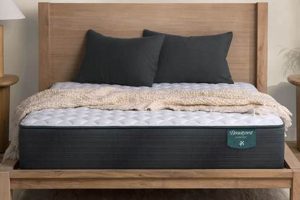
A sleep surface that offers minimal give under pressure and provides substantial support is considered firm. The advantages of this type of sleep support system are multifaceted, impacting spinal alignment, pressure distribution, and overall sleep quality.
Selecting a sleep surface with enhanced support can contribute to maintaining natural spinal curvature during rest, potentially alleviating back pain and discomfort. Furthermore, the even distribution of body weight facilitated by these surfaces can minimize pressure points, thus promoting improved circulation and reduced tossing and turning throughout the night.
The subsequent discussion will elaborate on specific advantages of supportive sleep surfaces, examining their impact on different sleep positions, potential health benefits, and factors to consider when evaluating options.
Guidance on Supportive Sleep Surfaces
When evaluating options for sleep, considering the level of support is paramount. The following guidance clarifies key considerations to aid in informed decision-making.
Tip 1: Assess Individual Sleep Preferences: Body weight, preferred sleep position, and existing health conditions influence the suitability of a supportive sleep surface. Lighter individuals or side sleepers may require a slightly softer surface to prevent pressure point development, while those who sleep on their back or stomach often benefit from greater support to maintain spinal alignment.
Tip 2: Prioritize Spinal Alignment: Regardless of sleep position, the primary goal should be maintaining the spine’s natural curvature. A sleep surface that is too soft allows the hips to sink, leading to spinal misalignment, while one that is too firm can create pressure points. Evaluate surfaces that promote a neutral spinal position.
Tip 3: Research Material Composition: The internal components impact the overall level of support. Look for models with dense core support layers and consider materials such as high-density foam or innerspring coils, as these tend to provide greater firmness and longevity.
Tip 4: Inquire About Trial Periods: Reputable retailers often offer trial periods, allowing individuals to test a sleep surface in their home environment. This is crucial for determining whether the level of support is suitable for individual needs and preferences.
Tip 5: Consider Partner Preferences: If sharing a bed, negotiate with a partner to find a middle ground. Options such as split firmness mattresses or adjustable bases can cater to individual needs while minimizing disruption to the other person’s sleep.
Tip 6: Evaluate Edge Support: Strong edge support prevents sagging along the perimeter, maximizing the usable sleep surface and facilitating ease of getting in and out of bed. This feature is particularly important for individuals who share a bed or have mobility limitations.
Prioritizing these factors can contribute to an informed selection process, optimizing the potential benefits of a supportive sleep surface for enhanced rest and well-being.
The succeeding section presents additional factors related to maintenance and longevity.
1. Spinal Alignment

Maintaining proper spinal alignment during sleep is crucial for musculoskeletal health and overall well-being. The selection of a sleep surface directly influences the spine’s curvature and stability throughout the night, and a firmer surface presents specific advantages in this regard.
- Neutral Spine Position
A firm sleep surface resists excessive sinking of the hips and shoulders, thereby promoting a neutral spinal posture. This prevents hyperextension or flexion of the spine, minimizing stress on vertebral discs, ligaments, and surrounding musculature. Individuals who sleep on their back or stomach often find that a firmer surface best supports their natural spinal curves.
- Reduced Risk of Back Pain
Misalignment during sleep can exacerbate existing back pain or contribute to the development of new pain. By providing consistent support and preventing spinal distortion, a firm surface can help alleviate pressure points and reduce the likelihood of waking up with stiffness or discomfort. This is particularly relevant for individuals with pre-existing back conditions such as scoliosis or herniated discs.
- Enhanced Core Muscle Engagement
While a firm surface provides support, it also requires the body’s core muscles to engage slightly to maintain stability. This subtle engagement can contribute to improved core strength over time, which further supports proper spinal alignment during both sleep and waking hours. However, it’s essential to balance firmness with comfort to avoid excessive muscle tension.
- Optimized Pressure Distribution
Although often associated with comfort, pressure distribution also plays a key role in spinal health. A surface that is too soft can create concentrated pressure points, leading to spinal distortion as the body attempts to compensate. A firm surface, in conjunction with appropriate padding, distributes weight more evenly, reducing localized pressure and promoting a more balanced spinal posture.
In summary, the connection between spinal alignment and firm surfaces is multifaceted. By facilitating a neutral spine position, reducing the risk of back pain, enhancing core muscle engagement, and optimizing pressure distribution, a firmer sleep surface can contribute significantly to musculoskeletal health and overall sleep quality. However, individual needs and preferences should always be considered when selecting a sleep surface to ensure optimal comfort and support.
2. Pressure Point Reduction

Pressure point reduction is a critical aspect of restorative sleep. Firm sleep surfaces, when properly designed, contribute significantly to this phenomenon by influencing the distribution of body weight across the contact surface.
- Weight Redistribution
A firm surface resists excessive compression, preventing localized areas of high pressure. This even weight distribution minimizes stress on bony prominences such as the hips, shoulders, and heels, reducing the potential for discomfort and pain that can disrupt sleep. By spreading the load, a firm surface allows for improved circulation to these areas.
- Capillary Constriction Mitigation
Prolonged pressure on specific areas of the body can constrict capillaries, impeding blood flow and leading to discomfort and potential tissue damage. Surfaces designed to minimize pressure points alleviate this constriction, promoting healthy circulation and nutrient delivery to tissues. This is particularly relevant for individuals with circulatory issues or those who spend extended periods in bed.
- Enhanced S
leep QualityDiscomfort caused by pressure points can trigger subconscious shifting and tossing throughout the night, disrupting sleep cycles and reducing overall sleep quality. By minimizing these pressure-induced disturbances, firm surfaces contribute to more restful and uninterrupted sleep. This, in turn, supports improved daytime alertness and cognitive function.
- Considerations for Individual Anatomy
While generally beneficial, the effectiveness of pressure point reduction depends on the individual’s anatomy and sleep position. Side sleepers, for example, may require a slightly softer surface or specialized pressure-relieving layers to accommodate the curvature of their spine and prevent excessive pressure on the shoulder and hip. The optimal firmness level is subjective and requires individual assessment.
In conclusion, the ability to reduce pressure points is a key attribute, contributing to improved sleep quality and overall well-being. The effectiveness of this benefit is influenced by individual factors and the specific construction of the sleep surface, necessitating careful consideration during the selection process.
3. Enhanced Support
Enhanced support, as a core component of firm sleep surfaces, directly correlates with improved spinal alignment, posture maintenance, and reduced back discomfort. The firmness counteracts excessive sinking, especially in heavier individuals, preventing spinal distortion during sleep. Without adequate support, the spine can curve unnaturally, leading to muscle strain and potential long-term musculoskeletal issues. For instance, individuals who spend extended periods sitting may find that a firm surface provides the necessary counter-pressure to alleviate pressure on the lower back, accumulated during the day. This support mechanism, inherent to firm mattresses, serves as a preventative measure against posture-related ailments.
Furthermore, enhanced support facilitates easier movement during sleep. Individuals are less likely to become “trapped” in a position due to excessive sinking, enabling smoother transitions between sleep positions. This promotes uninterrupted sleep cycles and can reduce restless tossing and turning. Consider the practical implications for individuals recovering from surgery or with limited mobility; a firm surface can facilitate independent movement and reduce reliance on assistance. Enhanced support also plays a role in minimizing motion transfer, benefiting couples by isolating movement and preventing disturbances to their partner’s sleep.
In summary, enhanced support is a defining characteristic that offers distinct advantages for specific individuals, including those with back issues and those seeking improved posture. The benefits range from preventative musculoskeletal care to improved sleep quality and increased ease of movement. While enhanced support is often associated with firm surfaces, individual preferences and needs should dictate the final selection, ensuring a balance between support and personalized comfort.
4. Improved Circulation
Adequate blood flow during sleep is essential for cellular regeneration, tissue repair, and overall physiological function. Firm sleep surfaces can contribute to improved circulation by minimizing pressure points that impede vascular flow. This is achieved through a more even distribution of body weight, reducing localized compression that can restrict blood vessels.
- Reduced Compression of Blood Vessels
Firm surfaces resist excessive sinking, preventing concentrated pressure on areas such as the hips, shoulders, and heels. This reduces the risk of capillary constriction, ensuring uninterrupted blood flow to peripheral tissues. For example, an individual with varicose veins may experience relief due to the diminished pressure on affected areas, promoting venous return.
- Minimized Tossing and Turning
Discomfort caused by pressure points can lead to restless sleep as the body attempts to alleviate the pressure. These movements disrupt sleep cycles and reduce the time spent in restorative sleep stages. A firm surface, by minimizing pressure points, promotes more comfortable and stable sleep, reducing the need to shift positions frequently. Reduced movement during sleep further ensures uninterrupted blood flow.
- Enhanced Tissue Oxygenation
Improved circulation directly translates to enhanced oxygen delivery to tissues. This is crucial for cellular repair and regeneration processes that occur primarily during sleep. The adequate supply of oxygen promotes faster recovery from physical exertion and supports overall tissue health. Conversely, restricted circulation can lead to tissue hypoxia and delayed healing.
- Support for Lymphatic Drainage
The lymphatic system relies on muscle contractions and body movement to facilitate fluid drainage. While a firm surface promotes stability, it also encourages subtle muscle engagement to maintain posture. This subtle engagement can indirectly support lymphatic drainage, aiding in the removal of waste products and toxins from tissues. Compromised lymphatic drainage can lead to fluid retention and inflammation.
The multifaceted connection between firm surfaces and improved circulation underscores the importance of selecting appropriate sleep support. While the focus is on minimizing pressure, the impact extends to tissue oxygenation, lymphatic drainage, and overall vascular health. This highlights the potential benefits for individuals with circulatory conditions or those seeking to optimize their physiological recovery during sleep.
5. Durability and Longevity
The durability and longevity of a sleep surface are intrinsically linked to its overall value proposition. In the context of firm sleep surfaces, these attributes directly impact the sustained delivery of associated advantages. A well-constructed firm sleep surface maintains its structural integrity and support characteristics over an extended period, ensuring consistent spinal alignment, pressure point reduction, and postural support. This sustained performance is crucial, as a decline in firmness or the development of sagging can negate the intended benefits and potentially contribute to discomfort or musculoskeletal issues. For example, a sleep surface that initially provides adequate support but deteriorates within a year may ultimately prove less cost-effective than a higher-quality option designed for long-term use.
The materials and construction techniques employed in manufacturing significantly influence durability and longevity. Models incorporating high-density foam cores, reinforced innerspring systems, or durable latex layers are generally more resilient and resistant to compression over time. Furthermore, factors such as proper maintenance, including regular rotation and the use of a protective mattress pad, can contribute to extending the lifespan. The economic significance of these considerations is substantial, as a longer lifespan translates to fewer replacement cycles and reduced overall expenditure. Moreover, the environmental implications of reduced c
onsumption and waste generation are increasingly relevant.
In summary, the durability and longevity of firm sleep surfaces are essential components of their overall value. These attributes ensure consistent performance, sustain the intended benefits, and contribute to long-term cost savings and environmental responsibility. Careful consideration of materials, construction, and maintenance practices is warranted to maximize the lifespan and realize the full potential of a supportive sleep system.
6. Reduced Motion Transfer
Reduced motion transfer, a crucial consideration for shared sleep surfaces, is closely associated with enhanced sleep quality and minimized partner disturbance. Firm sleep surfaces exhibit inherent characteristics that contribute to the dampening of movement, preventing the propagation of disturbances across the mattress.
- Minimized Interruption of Sleep Cycles
Firm surfaces, due to their limited give and enhanced stability, resist the transmission of movement caused by a partner’s tossing and turning. This results in fewer disruptions to individual sleep cycles, allowing for more restorative sleep and reduced instances of waking due to partner movement. For example, a light sleeper sharing a bed with someone prone to restlessness may experience a significant improvement in sleep continuity.
- Enhanced Sleep Quality for Both Partners
By isolating motion, each partner can maintain their preferred sleep position and rhythm without affecting the other. This leads to improved sleep quality for both individuals, as they are less likely to be awakened or disturbed by each other’s movements. Consequently, both individuals benefit from improved cognitive function, mood regulation, and overall well-being.
- Support for Differing Sleep Schedules
In households where partners maintain different sleep schedules, motion isolation becomes particularly valuable. One partner may retire to bed earlier or arise earlier, and the inherent stability of a firm sleep surface prevents their movements from disturbing the other partner’s sleep. This minimizes potential friction arising from differing routines and promotes harmonious coexistence.
- Suitability for Lightweight vs. Heavier Individuals
Firm surfaces are often well-suited for partners with significant weight disparities. The firmer support minimizes the impact of the heavier partner’s movements on the lighter partner’s side of the bed, ensuring that both individuals receive consistent support and experience minimal disturbance. This contributes to a more equitable and comfortable sleep experience for both.
In conclusion, the attributes of reduced motion transfer and enhanced sleep quality are mutually reinforcing, contributing significantly to the overall value proposition of a firm sleep surface, particularly in shared sleep environments. The stability and inherent motion-dampening characteristics facilitate undisturbed rest, benefitting both partners and promoting harmonious sleep dynamics.
7. Easier Movement

A significant advantage associated with firm sleep surfaces is the facilitation of easier movement during sleep and upon waking. The firmness inherent in these sleep systems reduces the degree to which an individual sinks into the mattress, thereby minimizing the effort required to change positions or get out of bed. This is particularly relevant for individuals with mobility limitations, such as the elderly or those recovering from injuries, where reduced effort translates directly to enhanced independence and decreased risk of falls.
The causal link between a firm surface and easier movement stems from the principle of resistance. A softer surface allows for greater immersion, increasing the contact area and frictional forces that must be overcome when shifting positions. Conversely, a firmer surface provides more support and less sinking, enabling smoother transitions and requiring less exertion. For example, an individual experiencing chronic back pain may find that a firm sleep surface reduces the strain on their back muscles when attempting to get out of bed, mitigating pain and promoting greater functional ability. This benefit extends to everyday activities and contributes to an enhanced quality of life.
In summary, the characteristic of easier movement is an integral component of the overall advantages derived from firm sleep surfaces. Its practical significance lies in its potential to improve mobility, reduce physical strain, and promote greater independence for individuals with diverse needs. While firmness must be balanced with individual comfort preferences, the contribution of easier movement to the overall well-being of users should not be underestimated.
Frequently Asked Questions About Firm Sleep Surfaces
The subsequent section addresses prevalent inquiries regarding the characteristics, advantages, and considerations associated with firm sleep surfaces. The information presented aims to provide clarity and assist in informed decision-making.
Question 1: Are firm sleep surfaces universally suitable for all individuals?
No, firmness preference is highly subjective and dependent on factors such as body weight, preferred sleep position, and individual health conditions. While offering support benefits, a surface that is excessively firm can create pressure points for lighter individuals or those who primarily sleep on their side.
Question 2: Can a firm sleep surface exacerbate existing back pain?
If the firmness is not properly matched to individual needs, it is possible. A surface that is too firm may not conform sufficiently to the body’s contours, leading to localized pressure and discomfort. Conversely, excessive softness can result in spinal misalignment and also contribute to back pain.
Question 3: How does one determine the appropriate level of firmness?
Ideally, the determination should involve a trial period to assess comfort and support in the user’s typical sleep environment. Factors to consider include spinal alignment, pressure point development, and subjective feelings of comfort and support. Consulting with a healthcare professional may be beneficial for individuals with specific medical conditions.
Question 4: Do firm sleep surfaces require special bedding or accessories?
While not strictly required, using appropriate bedding can enhance comfort and performance. A mattress pad or topper can provide additional cushioning and pressure relief if the firmness level is initially perceived as too high. Selecting supportive pillows is also important to maintain proper spinal alignment.
Question 5: How does the internal construction influence the overall firmness?
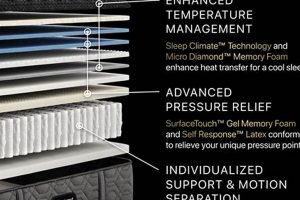
The materials and construction techniques used significantly impact the firmness. Models with high-density foam cores or tightly coiled innerspring systems generally exhibit greater firmness. The layering and arrangement of internal components also play a crucial role in determining the surface feel.
Question 6: What are the long-term maintenance considerations for firm sleep surfaces?
Regular rotation can promote even wear and prevent sagging. Using a protective matt
ress pad can shield the surface from stains and damage. Following the manufacturer’s recommendations regarding cleaning and maintenance is essential to maximize the lifespan and maintain the intended performance characteristics.
The responses provided above aim to address common concerns and misconceptions about firm sleep surfaces. Individual preferences and specific needs should always be prioritized when making a selection.
The succeeding segment will discuss the synthesis of findings and final recommendations.
Conclusion
This exploration has underscored the multifaceted advantages inherent in firm sleep surfaces. These advantages, encompassing spinal alignment, pressure point reduction, enhanced support, improved circulation, durability, reduced motion transfer, and ease of movement, collectively contribute to enhanced sleep quality and overall well-being. While individual needs and preferences necessitate careful consideration, the potential benefits of firm surfaces for specific populations, including those with back pain or mobility limitations, are demonstrably significant.
The selection of an appropriate sleep surface represents a critical investment in long-term health and comfort. Continued research and technological advancements promise further refinement in sleep surface design, optimizing support characteristics and individualizing sleep experiences. Individuals are encouraged to carefully evaluate their unique needs and seek professional guidance to maximize the potential benefits of a firm sleep surface and improve their overall quality of life.