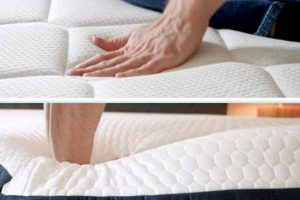
Sleep surfaces engineered to provide minimal give and maximum support can be a significant consideration for individuals experiencing discomfort in the dorsal region. These sleep products are designed to maintain spinal alignment by resisting compression and preventing excessive sinking of the body during rest. This contrasts with softer sleep surfaces that allow for greater contouring, potentially leading to misalignment and exacerbation of existing pain conditions. For example, a mattress with a high density core and minimal comfort layers would fall into this category.
The utilization of a highly supportive sleep surface has been linked to potential benefits such as reduced pressure on spinal discs, decreased muscle strain, and improved posture during sleep. Historically, firmer sleep surfaces were often recommended by medical professionals for individuals with back issues, reflecting a belief that minimizing spinal flexion could alleviate pain. While individual needs vary, the principle of promoting proper spinal alignment remains a central aspect of managing nocturnal back discomfort.
The following sections will delve into the specific construction elements that contribute to the firmness of a sleep surface, explore the potential advantages and disadvantages associated with its use, and provide guidance on selecting an appropriate option based on individual needs and preferences. Further discussion will address alternative sleep surfaces, such as adjustable beds and latex mattresses, offering a broader perspective on available solutions for individuals seeking relief from back pain.
Guidance on Extra Firm Mattress Selection
Selecting a sleep surface requires careful consideration, especially for those managing back discomfort. The following guidelines offer insight into navigating the selection process.
Tip 1: Research Material Composition. Prioritize mattresses constructed with high-density foam or innerspring systems that offer robust support. Lower-density materials tend to degrade more quickly, potentially compromising long-term spinal alignment.
Tip 2: Consider Body Weight and Sleeping Position. Individuals with higher body mass may benefit from a firmer surface to prevent excessive sinking. Stomach sleepers should also consider firmer options to maintain spinal alignment and prevent lower back strain.
Tip 3: Evaluate Layering and Construction. Examine the composition of the mattress layers. Thicker comfort layers atop a firm support core may provide a balance between support and pressure relief. However, ensure the comfort layers do not compromise the overall firmness.
Tip 4: Assess Edge Support. Strong edge support prevents roll-off and facilitates easier entry and exit from the bed, particularly beneficial for those with mobility limitations. Reinforced edges also contribute to the mattress’s overall longevity.
Tip 5: Inquire About Trial Periods and Return Policies. A trial period allows for an assessment of the mattress’s suitability in a home environment. Thoroughly review the return policy to understand the terms and conditions should the mattress not meet expectations.
Tip 6: Consult with Healthcare Professionals. Seeking advice from a physician or physical therapist is recommended, particularly for individuals with pre-existing back conditions. Healthcare professionals can provide tailored recommendations based on individual needs and medical history.
Tip 7: Verify Certifications. Look for certifications such as CertiPUR-US, which indicates the foam has been tested for harmful chemicals and emissions. This ensures a healthier sleep environment.
Choosing a sleep surface requires a balance between support and pressure relief. A well-informed decision, guided by these recommendations, can contribute to improved sleep quality and reduced back discomfort.
The subsequent section will explore alternative factors influencing sleep comfort and the importance of a holistic approach to back pain management.
1. Spinal Alignment

Maintaining proper spinal alignment during sleep is a critical consideration for individuals seeking relief from back pain. The choice of sleep surface significantly impacts the degree to which the spine is supported in its natural curvature. Inadequate support can lead to misalignment, exacerbating existing back conditions or contributing to the development of new ones. An extra firm mattress aims to address this concern by providing a stable and unyielding surface.
- Minimizing Spinal Flexion
Excessive spinal flexion, or rounding of the back, can compress intervertebral discs and strain surrounding muscles. An extra firm mattress resists this flexion, preventing the spine from sagging into an unnatural position. This is particularly relevant for individuals who sleep on their backs, where a softer surface might allow the pelvis to sink, causing the lower back to overarch. An example would be a person with lumbar spinal stenosis finding relief from reduced spinal bending achieved by a firm surface.
- Reducing Rotational Misalignment
Rotational misalignment occurs when the vertebrae twist out of their natural alignment. This can be caused by uneven support across the sleep surface, where one part of the body sinks more than another. An extra firm mattress provides uniform support, minimizing the potential for rotational forces to act on the spine. Consider a side sleeper who finds their upper shoulder and hip supported evenly, preventing the spine from twisting.
- Promoting Neutral Spinal Curvature
The spine has natural curves that should be maintained during sleep. An extra firm mattress assists in maintaining these curves by providing adequate support in areas where the body naturally dips, such as the lumbar region. This ensures that the spine is neither excessively flexed nor extended, but rather remains in a neutral and balanced position. This concept is akin to how a well-designed chair supports the natural curve of the lower back.
- Enhancing Muscle Relaxation
When the spine is properly aligned, the surrounding muscles are less likely to be strained and tense. An extra firm mattress contributes to muscle relaxation by providing the necessary support to maintain alignment, reducing the compensatory effort required from the muscles. Consequently, individuals may experience reduced muscle soreness and stiffness upon waking. For example, a person who typically experiences morning back stiffness may find it diminished with a firmer sleep surface.
The facets of spinal alignment highlight the interconnectedness of support, posture, and muscle function during sleep. While an extra firm mattress is often recommended for its ability to minimize flexion and promote a neutral spinal posture, individual needs vary. Therefore, it is essential to consider personal preferences and consult with healthcare professionals to determine the most appropriate sleep surface for managing back pain and op
timizing spinal health.
2. Pressure Distribution

Effective pressure distribution is a critical factor in the consideration of sleep surfaces designed for individuals experiencing back pain. The ability of a mattress to evenly distribute body weight across its surface directly impacts spinal alignment, muscle strain, and overall comfort levels. The following outlines the aspects of pressure distribution relevant to the selection of an extra firm mattress.
- Minimizing Pressure Points
Concentrated pressure on specific areas of the body, such as the shoulders, hips, and heels, can impede blood flow and lead to discomfort. While extra firm mattresses are known for their support, careful attention should be paid to how they manage pressure points. A mattress that is too firm may create localized pressure, particularly for individuals with lower body weight or those who sleep on their sides. For instance, a person with prominent hip bones may experience discomfort if the mattress does not offer adequate pressure relief in that area. The mattress surface must ideally distribute that pressure more evenly.
- Supporting Spinal Alignment
Even pressure distribution contributes to proper spinal alignment by ensuring that no one area of the body sinks excessively into the mattress. This is especially important for maintaining the natural curvature of the spine and preventing strain on the surrounding muscles and ligaments. A mattress that provides consistent support across its surface, preventing any one area from sagging, promotes optimal spinal alignment and reduces the risk of back pain. Someone with scoliosis, for instance, needs even distribution so one side does not sink more, further exacerbating the condition.
- Reducing Muscle Strain
When pressure is evenly distributed, the body’s muscles are able to relax more fully. This reduces the likelihood of muscle strain and tension, which can contribute to back pain. A mattress that allows for balanced support minimizes the compensatory effort required from the muscles to maintain spinal alignment, fostering a more relaxed and comfortable sleep experience. Consider someone who experiences chronic muscle spasms. Proper weight distribution can minimize these.
- Promoting Circulation
Adequate pressure distribution facilitates healthy blood circulation by preventing excessive pressure on blood vessels. This is crucial for overall health and comfort, as restricted blood flow can lead to discomfort, numbness, and even pain. A mattress that conforms to the body’s contours without creating excessive pressure allows for optimal circulation, contributing to a more restful sleep. For individuals with peripheral artery disease, good pressure distribution is essential for preventing reduced circulation in the lower extremities.
In summary, the effectiveness of an extra firm mattress is contingent upon its ability to evenly distribute pressure, minimize pressure points, support spinal alignment, reduce muscle strain, and promote circulation. While firmness is a key attribute for providing support, it must be balanced with a degree of pressure relief to ensure a comfortable and restorative sleep experience. Individual needs vary, and a mattress should be carefully selected based on personal preferences and consideration of any pre-existing health conditions.
3. Muscle Relaxation
The attainment of muscle relaxation during sleep is a significant objective for individuals seeking relief from back pain. The characteristics of the sleep surface directly influence the degree to which muscles can release tension and recover from daily strain. An extra firm mattress, when appropriately selected, can play a crucial role in facilitating muscle relaxation and alleviating back discomfort.
- Supporting Spinal Alignment to Reduce Muscle Strain
Muscle tension often arises as a compensatory mechanism to counteract spinal misalignment. An extra firm mattress, by providing a stable and supportive surface, minimizes spinal deviations and reduces the need for muscles to engage in corrective action. This allows muscles to relax more fully, reducing stiffness and pain. Consider an individual with chronic lower back pain caused by poor posture during the day. A firm mattress can prevent the spine from sagging during sleep, reducing the strain on the back muscles.
- Minimizing Pressure Points to Enhance Blood Flow
Excessive pressure on specific areas of the body can restrict blood flow, leading to muscle tension and discomfort. An extra firm mattress, while providing overall support, must also distribute weight evenly to minimize pressure points. Adequate blood flow is essential for muscle relaxation and recovery. For example, a person who experiences nighttime leg cramps might benefit from a firmer sleep surface that prevents pressure buildup and promotes circulation in the lower extremities.
- Promoting a Stable Sleep Environment to Reduce Muscle Spasms
Frequent tossing and turning during sleep can disrupt muscle relaxation and increase the likelihood of muscle spasms. An extra firm mattress provides a stable sleep surface that minimizes movement and allows muscles to remain in a relaxed state. This stability is particularly beneficial for individuals prone to nocturnal muscle spasms. Think of someone recovering from a back injury. A stable, firm surface reduces movement and prevents re-injury.
- Facilitating Deeper Sleep Stages for Muscle Recovery
Muscle repair and recovery primarily occur during the deeper stages of sleep. An extra firm mattress, by promoting spinal alignment, minimizing pressure points, and providing a stable sleep environment, can facilitate the attainment of these deeper sleep stages. This allows muscles to fully recover from daily activities and reduce overall tension. For instance, an athlete who engages in strenuous training might find that a firmer mattress improves muscle recovery and reduces soreness.
In summary, the relationship between an extra firm mattress and muscle relaxation is multifaceted, encompassing spinal alignment, pressure distribution, sleep stability, and sleep stage progression. An appropriately selected firm mattress can contribute to reduced muscle strain, improved blood flow, minimized spasms, and enhanced muscle recovery, all of which are essential for alleviating back pain and promoting overall well-being. However, individual needs vary, and professional medical advice should be sought when selecting a sleep surface for back pain management.
4. Support System

The support system within a sleep surface is paramount for its ability to address back pain. In the context of an extra firm mattress, this system dictates the degree to which the mattress can maintain spinal alignment, distribute weight effectively, and provide long-term durability. The following details explore the key components of a support system and their relevance to alleviating back pain.
- Innerspring Coils
Innerspring coils form a traditional support structure within mattr
esses. Their gauge, coil density, and interconnection method influence the firmness and support level. Higher gauge coils generally provide a firmer feel. Mattresses with densely packed coils offer more uniform support across the surface. Interconnected coil systems, such as those found in some traditional innerspring mattresses, tend to transfer motion more readily, which can be a disadvantage for co-sleepers. Individually wrapped or pocketed coils, on the other hand, minimize motion transfer, a potential advantage when seeking uninterrupted sleep. The innerspring system must adequately withstand compression forces to prevent sagging and maintain spinal alignment over time. For example, a lower-gauge coil system in an extra firm mattress is essential to prevent sagging, which would compromise the mattress’s ability to provide support for individuals with back pain. - Foam Core
Foam cores offer an alternative support system, often found in all-foam or hybrid mattresses. High-density foams, such as polyurethane or memory foam, are utilized to create a firm and stable foundation. The density of the foam directly correlates with its support capacity and durability. Lower-density foams tend to compress and degrade more quickly, potentially leading to a loss of support and increased back pain over time. A well-constructed foam core should provide consistent support across the entire mattress surface, preventing sinkage and maintaining proper spinal alignment. High-density polyurethane foam is often used to create an extra-firm sleep surface. Lower-density foam would more readily break down, lessening the support and leading to spinal misalignment and pain.
- Hybrid Construction
Hybrid mattresses combine innerspring coils with foam layers to provide a balance of support and comfort. The coil system provides the primary support, while the foam layers offer contouring and pressure relief. The effectiveness of a hybrid mattress depends on the quality and density of both the coils and the foam. A poorly constructed hybrid mattress may offer insufficient support or excessive sinkage, negating the potential benefits for back pain relief. For instance, a hybrid mattress designed as extra firm includes supportive coils to maintain spinal alignment but can also include thinner layers of foam for comfort to prevent pressure point problems. The firmness is maintained while improving sleep comfort.
- Reinforced Edge Support
Reinforced edge support is an important but often overlooked aspect of the support system. Strong edge support prevents the edges of the mattress from sagging or collapsing, which can make it easier to get in and out of bed and provide a more stable sleeping surface. This is particularly beneficial for individuals with mobility limitations or those who tend to sleep near the edge of the bed. Reinforced edges also contribute to the overall durability of the mattress, preventing premature wear and tear. Without reinforced edges, the mattress will quickly lose its support, again leading to back pain.
In summary, the support system is fundamental to the performance of an extra firm mattress in addressing back pain. Whether relying on innerspring coils, a foam core, or a hybrid construction, the key is to ensure adequate support, durability, and consistent spinal alignment. The selection of an appropriate support system should be based on individual needs, preferences, and consideration of any pre-existing back conditions, consulting with a medical professional to achieve the best outcome.
5. Durability

The longevity of a sleep surface is a crucial consideration, particularly when addressing chronic back pain. An extra firm mattress, specifically designed to provide optimal support and spinal alignment, loses its therapeutic value if it degrades prematurely. Durability directly affects the mattress’s ability to maintain its intended firmness and support characteristics over an extended period. A mattress that initially provides adequate support but deteriorates within a short timeframe compromises spinal alignment, potentially exacerbating existing back pain conditions. For example, a mattress with a high-density foam core may initially offer excellent support, but if the foam cells break down rapidly, the mattress will sag, negating its intended benefits.
The selection of materials and construction methods significantly impacts the durability of an extra firm mattress. High-density foams, robust innerspring systems, and reinforced edges contribute to the mattress’s ability to withstand prolonged use without significant deformation. Furthermore, factors such as the quality of stitching, the type of fabric used for the cover, and the presence of protective layers can all influence the mattress’s resistance to wear and tear. For instance, a mattress with reinforced edge support will maintain its structural integrity along the perimeter, preventing sagging and ensuring consistent support across the entire sleep surface, thereby maximizing its useful lifespan.
In summary, the durability of an extra firm mattress is inextricably linked to its effectiveness in managing back pain. A mattress that lacks durability will inevitably fail to provide the necessary support and spinal alignment, rendering it unsuitable for individuals seeking long-term relief from discomfort. Therefore, when selecting a sleep surface, it is essential to prioritize durability alongside firmness and support to ensure a lasting investment in spinal health and overall well-being. This involves careful consideration of materials, construction techniques, and warranty provisions.
6. Sleep Posture

Optimal body positioning during sleep directly influences spinal alignment and the distribution of pressure across the musculoskeletal system. The selection of an appropriate sleep surface is intrinsically linked to the ability to maintain these beneficial postures and mitigate nocturnal discomfort. The following outlines key sleep postures and their interaction with an extra firm mattress.
- Supine (Back Sleeping) Posture
This posture, characterized by lying flat on the back, necessitates a surface that prevents excessive sinking of the pelvis. An extra firm mattress is often recommended for supine sleepers as it resists spinal flexion and maintains the natural curvature of the lumbar region. However, individuals with pronounced lordosis (exaggerated lower back curve) may find that a surface that is too firm exacerbates pressure on the lumbar region. In such cases, a thin, supportive pillow placed beneath the knees can help to alleviate this pressure and promote neutral spinal alignment.
- Lateral (Side Sleeping) Posture
In the lateral position, the spine’s alignment is contingent on the surface’s ability to support the body’s contours without allowing excessive compression of the shoulder and hip. An extra firm mattress can be advantageous for side sleepers who require substantial support to prevent spinal misalignment. However, it is essential to ensure that the surface provides adequate pressure relief at the points of contact to avoid discomfort. A mattress topper or integrated comfort layer may be necessary to achieve this balance. The effectiveness of an extra firm mattress in this position is therefore dependent on the degree of contouring provided by additional layers.
- Prone (Stomach Sleeping) Posture
The prone position is generally discouraged due to its tendency to promote hyperextension of the neck and lower back. However, individuals who habitually sleep in this position may benefit from an extra firm mattress, as it minimizes the degree of spinal flexion and reduces the risk of exacerbating existing lower back conditions. It is advisable for prone sleepers to use a thin pillow or no pillow at all to minimize neck strain. The primary goal is to maintain as neutral a spinal alignment as possible, which an extra firm mattress can facilitate, albeit with careful consideration of pillow selection.
- Fetal Position
A variation of the lateral posture involves drawing the knees towards the chest. This posture can reduce pressure on the lumbar spine, but it can also restrict breathing if the body is overly compressed. An extra firm mattress can provide the necessary support to prevent excessive sinking and maintain a more open fetal position. However, it is important to ensure that the surface does not create undue pressure on the hips and shoulders, as this can lead to discomfort and restricted circulation. The success of this posture on an extra firm mattress hinges on achieving a balance between support and pressure relief.
In summary, the effectiveness of an extra firm mattress in supporting various sleep postures is dependent on individual spinal alignment needs and the specific construction of the mattress. While firmness is generally beneficial for preventing excessive spinal flexion, it is crucial to ensure adequate pressure relief at key contact points to avoid discomfort and promote optimal sleep quality. Consideration of individual sleep posture preferences, combined with informed mattress selection, is essential for achieving therapeutic benefits.
7. Pain Reduction
Alleviation of discomfort remains the central objective for individuals seeking an extra firm sleep surface. The interaction between the mattress and the sleeper’s body dictates the degree to which pain is mitigated. Understanding the facets of pain reduction as they relate to mattress characteristics is, therefore, paramount.
- Spinal Decompression
Intervertebral disc compression contributes significantly to back discomfort. An extra firm mattress, by resisting excessive sinking and maintaining spinal alignment, can reduce the pressure on these discs. This decompression allows for improved nutrient exchange within the discs and a reduction in nerve impingement, leading to decreased pain perception. Consider individuals with degenerative disc disease. A firmer surface minimizes spinal flexion, which can compress damaged discs, and, in turn, lower the pain signals. While this is not a cure, it is a potential mitigator.
- Muscle Tension Reduction
Sustained muscle tension exacerbates pain by creating localized areas of ischemia and triggering pain receptors. A sleep surface that promotes proper spinal alignment minimizes the need for compensatory muscle engagement. This reduction in muscle strain alleviates tension and promotes relaxation, contributing to overall pain reduction. For example, if a sleeper’s spine is supported and tension is reduced, morning back stiffness may be reduced as a result. This also lowers the likelihood of painful muscle spasms during the night.
- Pressure Point Alleviation
Concentrated pressure on bony prominences and sensitive tissues intensifies pain signals and can lead to localized discomfort. While an extra firm mattress is primarily designed for support, it should still distribute weight effectively to minimize pressure points. The addition of thin comfort layers or the use of a mattress topper can enhance pressure relief without compromising the support provided by the firm core. Think of a situation where a side sleeper experiences hip or shoulder pain because of concentrated pressure. A surface with some pressure relief capabilities is essential to preventing this increased pain.
- Inflammation Modulation
Chronic inflammation plays a crucial role in many back pain conditions. A sleep surface that promotes proper circulation and minimizes tissue stress can indirectly modulate inflammatory responses. By reducing pressure on blood vessels and preventing sustained muscle tension, an extra firm mattress can help to improve blood flow and reduce the accumulation of inflammatory mediators in the affected tissues. For example, reducing back pressure can help prevent or relieve edema by improving localized circulation. Improved circulation also helps maintain healthy tissue oxygenation.
The multifaceted approach to pain reduction highlights the complexity of selecting a sleep surface. While an extra firm mattress offers potential benefits in terms of spinal decompression, muscle tension reduction, pressure point alleviation, and inflammation modulation, individual needs vary. Consulting with healthcare professionals and carefully evaluating mattress characteristics is essential to optimizing pain relief and promoting restful sleep. The combination of proper sleep hygiene, exercise, and medication is recommended for the effective management of chronic back discomfort.
Frequently Asked Questions
The following addresses common inquiries regarding the use of extra firm mattresses for the management of back discomfort. The information provided is intended for educational purposes and does not constitute medical advice. Consult with a healthcare professional for personalized recommendations.
Question 1: Are extra firm mattresses universally recommended for all individuals with back pain?
No. While extra firm mattresses can provide significant support and spinal alignment, their suitability depends on individual factors such as body weight, sleeping position, and the specific nature of the back condition. A mattress that is too firm may exacerbate pain in some individuals.
Question 2: Can an extra firm mattress correct underlying spinal conditions?
No. An extra firm mattress is not a corrective device. It can assist in managing symptoms by providing support and maintaining spinal alignment during sleep, but it does not address underlying structural issues or cure spinal conditions.
Question 3: Do extra firm mattresses alleviate all types of back pain?
The efficacy of an extra firm mattress varies depending on the source of the discomfort. While it may benefit individuals with certain types of lower back pain, it may not be suitable for those with conditions such as fibromyalgia or arthritis, where pressure point sensitivity is a primary concern.
Question 4: How long does it typically take to adjust to an extra firm mattress?
Adaptation periods vary. Some individuals adjust within a few nights, while others may require several weeks. It is advisable to allow sufficient time for the body to acclimate to the new sleep surface before making a determination about its suitability.
Question 5: Are mattress toppers recommended for use with extra firm mattresses?
Mattress toppers can enhance comfort and pressure relief without compromising the support provided by the firm core. The selection of a topper depends on individual preferences and needs. Consider materials such as memory foam or latex for added cushioning.
Question 6: What certifications should one look for when purchasing an extra firm mattress?
Certifications such as CertiPUR-US indicate that the foam used in t
he mattress has been tested for harmful chemicals and emissions. Other certifications may address factors such as organic materials or sustainable manufacturing practices. These certifications provide assurance regarding the quality and safety of the product.
The appropriate selection of a sleep surface necessitates careful consideration of individual circumstances and a clear understanding of the potential benefits and limitations associated with extra firm mattresses. Consulting with a healthcare professional is recommended to ensure that the chosen mattress aligns with specific needs and promotes optimal spinal health.
The following sections will explore various considerations for mattress maintenance, optimizing its lifespan and ensuring continued efficacy in managing back discomfort.
Conclusion
The preceding discussion has detailed the multifaceted aspects of an extra firm mattress for back pain management. It has explored the influence of spinal alignment, pressure distribution, muscle relaxation, the crucial role of the support system, durability considerations, the impact of sleep posture, and the potential for pain reduction. Selecting a sleep surface requires a comprehensive evaluation of individual needs, considering physical condition, sleep habits, and professional medical advice.
The investigation into the utilization of an extra firm mattress as a tool for addressing back discomfort underscores the complex interplay of biomechanics, materials science, and personal well-being. While this exposition offers a foundation for informed decision-making, further research and individualized assessment remain crucial to optimizing sleep quality and managing chronic pain effectively. Individuals are strongly encouraged to consult with healthcare professionals for personalized guidance in the selection and implementation of strategies for back pain management.