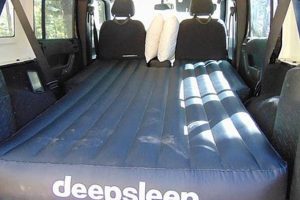
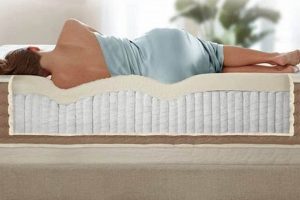
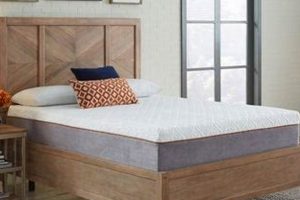
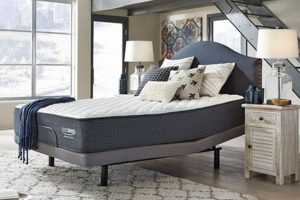
A mattress enhancement designed specifically for convertible couches aims to improve the comfort and support of the typically thinner and less supportive mattress found in these furniture pieces. For example, a memory foam layer placed atop the existing sleeper sofa mattress can alleviate pressure points and provide a more restful sleeping surface.
The significance of such an addition lies in its ability to transform a potentially uncomfortable sleeping arrangement into a more satisfactory one. This can be particularly beneficial for those who regularly host overnight guests or who rely on a convertible couch as their primary sleeping space. Historically, such add-ons have become increasingly popular as consumers seek cost-effective solutions to enhance the functionality and comfort of their existing furniture.
The subsequent sections will explore various types of these enhancements, factors to consider when selecting one, and practical considerations for installation and maintenance, providing a comprehensive guide to optimizing the sleep experience on a convertible couch.
Guidance for Selecting a Sleeper Sofa Mattress Enhancement
Selecting an appropriate mattress enhancement for a convertible couch requires careful consideration of several factors to ensure optimal comfort and support.
Tip 1: Evaluate Mattress Thickness: Measure the depth of the existing sleeper sofa mattress. The selected enhancement should complement the existing mattress, avoiding excessive thickness that may hinder the sofa’s folding mechanism.
Tip 2: Consider Material Composition: Memory foam, latex, and down alternatives offer varying degrees of support and temperature regulation. Memory foam conforms to the body, while latex provides a more responsive feel. Down alternatives are generally more affordable and hypoallergenic.
Tip 3: Prioritize Density: For memory foam options, density is a key indicator of quality and durability. Higher density foams tend to offer greater support and resist compression over time.
Tip 4: Assess Cover Material: Opt for a breathable and washable cover. Materials such as cotton or bamboo can help regulate temperature and improve hygiene.
Tip 5: Account for Storage: Consider the ease of storage when the enhancement is not in use. Some materials compress more easily than others, facilitating easier storage.
Tip 6: Check for Certifications: Look for certifications such as CertiPUR-US, which indicate that the foam has been tested for harmful chemicals and emissions.
Tip 7: Review Customer Feedback: Examine reviews from other users to gauge the enhancement’s performance in real-world conditions, paying attention to comments regarding comfort, durability, and ease of use.
Careful adherence to these guidelines can significantly improve the comfort and longevity of the sleeping experience on a convertible couch.
The following sections will delve into specific product recommendations and address common concerns related to the long-term care and maintenance of these enhancements.
1. Material Density

Material density is a critical determinant of the performance and longevity of a mattress enhancement used on a convertible couch. Density, typically measured in pounds per cubic foot (lbs/ft), directly impacts the level of support, durability, and resistance to compression over time. A higher density indicates a greater amount of material packed into the same volume, resulting in a firmer, more supportive surface. Conversely, a lower density suggests a softer, less supportive feel and a higher likelihood of premature sagging or flattening. For instance, a memory foam topper with a density of 4 lbs/ft or higher is generally considered suitable for providing adequate support and pressure relief on a sleeper sofa, particularly for individuals with higher body weights or those who prefer a firmer sleeping surface.
The selection of an appropriate density is particularly important for convertible couches due to the inherent limitations of their existing mattresses. These mattresses are often thinner and less supportive than traditional mattresses, making the density of the topper a crucial factor in compensating for these shortcomings. Furthermore, a higher density topper is more likely to withstand the repeated folding and unfolding of the sofa mechanism without significant degradation in its performance. Consider a scenario where a guest experiences back pain after sleeping on a sleeper sofa. This issue might be mitigated by adding a high-density memory foam topper that redistributes weight and reduces pressure points, thereby improving spinal alignment and overall comfort.
In summary, material density is a fundamental attribute that directly influences the effectiveness of a mattress enhancement intended for a convertible couch. Selecting a topper with an appropriate density is essential for ensuring adequate support, durability, and long-term satisfaction. Ignoring this parameter can lead to a less comfortable sleep experience and a shorter lifespan for the enhancement, ultimately negating its intended benefits.
2. Thickness Constraints

Thickness constraints represent a critical consideration when selecting a mattress enhancement for a convertible couch. The inherent design of these sofas dictates limitations on the added thickness to ensure proper folding and functionality. Exceeding these limits can hinder the sofa’s ability to convert smoothly between seating and sleeping configurations.
- Operational Interference
An excessively thick mattress enhancement can directly impede the operation of the sleeper sofa mechanism. This may manifest as difficulty in folding the sofa completely, requiring excessive force, or causing undue stress on the frame and hinges. Over time, such interference can lead to mechanical failure and reduced lifespan of the convertible couch.
- Storage Impairment
Even if the sofa can be folded with an overly thick enhancement, the resulting bulk may present storage challenges. The increased dimensions can make it difficult to fit the folded sofa within designated spaces or may require modification of existing storage arrangements. This is particularly relevant in smaller living spaces where efficient use of space is paramount.
- Aesthetic Disruption
A mattress enhancement that significantly alters the profile of the folded sofa can disrupt its aesthetic appeal. An awkwardly bulging sofa may appear out of place within the room’s decor and may detract from its overall visual integration. Maintaining a visually consistent and unobtrusive profile is often a key consideration in interior design.
- Compromised Comfort
While the goal is to improve comfort, exceeding thickness constraints can paradoxically lead to discomfort. If the enhancement is too thick, it can create an uneven sleeping surface, particularly at the points where the sofa folds. This can result in pressure points and misalignment, negating the intended benefits of the enhancement.
Therefore, when seeking a suitable mattress enhancement for a convertible couch, careful attention must be paid to the thickness specifications. Selecting a product that balances comfort with functional compatibility is essential to ensure both an improved sleeping experience and the continued usability of the furniture piece.
3. Support Requirements

The relationship between support requirements and the selection of a suitable mattress enhancement for a convertible couch is fundamentally causal. The specific needs of the individual user, in terms of postural alignment, pressure relief, and spinal support, directly dictate the type of topper that will prove most effective. Insufficient support can exacerbate existing musculoskeletal issues, leading to discomfort, pain, and disrupted sleep. Conversely, appropriate support promotes proper spinal alignment, reduces pressure on sensitive joints, and facilitates a more restful and restorative sleep experience. For instance, an individual with chronic back pain may require a firmer, higher-density topper to prevent spinal compression, while someone with joint pain may benefit from a softer, more conforming material that distributes weight evenly.
The significance of addressing support requirements is amplified by the inherent limitations of most sleeper sofa mattresses. These mattresses are often thinner and less supportive than traditional beds, making the selection of an appropriate topper all the more critical. The practical implications of this understanding are significant for both consumers and manufacturers. Consumers must carefully assess their individual needs and seek out toppers that specifically address these requirements. Manufacturers should clearly articulate the support characteristics of their products, providing detailed specifications regarding density, firmness, and material composition. Failure to adequately address support requirements can lead to customer dissatisfaction, product returns, and ultimately, a diminished reputation for the manufacturer.
In summary, the effectiveness of any mattress enhancement for a convertible couch hinges on its ability to meet the specific support requirements of the user. A thorough assessment of these needs, coupled with a careful evaluation of product specifications, is essential for ensuring a comfortable and restorative sleep experience. The challenge lies in balancing the desire for enhanced comfort with the practical limitations imposed by the design of the convertible couch, requiring a thoughtful and informed approach to product selection.
4. Heat Dissipation

Heat dissipation is a crucial factor to consider when evaluating the suitability of a mattress enhancement for a convertible couch. The materials used and their construction significantly influence the ability of the topper to regulate temperature, preventing excessive heat buildup and promoting a more comfortable sleep environment.
- Material Breathability
The inherent breathability of the materials composing the mattress enhancement directly affects its capacity for heat dissipation. Materials such as open-cell memory foam, latex, and natural fibers (e.g., cotton, bamboo) allow for greater airflow, facilitating the removal of heat and moisture. Conversely, closed-cell memory foam and synthetic materials tend to trap heat, leading to discomfort. For instance, a sleeper sofa user residing in a warm climate might find a latex topper with a cotton cover more suitable due to its superior breathability, preventing overheating during sleep.
- Construction Techniques
The method of construction employed in the topper can either enhance or impede heat dissipation. Perforated designs, convoluted surfaces, and channeled constructions promote airflow within the topper, allowing heat to escape more readily. Solid, dense constructions, on the other hand, restrict airflow and can contribute to heat retention. As an example, a memory foam topper with strategically placed ventilation channels will generally exhibit better heat dissipation properties than a solid slab of the same material.
- Cover Fabric Properties
The cover fabric that encases the mattress enhancement plays a vital role in regulating temperature. Breathable fabrics, such as cotton, linen, and bamboo, wick away moisture and promote airflow, contributing to a cooler sleep surface. Conversely, synthetic fabrics, such as polyester, tend to retain heat and moisture, potentially leading to discomfort. A topper with a bamboo cover, for example, would offer enhanced breathability and moisture-wicking capabilities compared to one with a polyester cover, promoting a more comfortable sleep experience.
- Impact of Body Weight and Room Temperature
The effectiveness of heat dissipation is influenced by both the user’s body weight and the ambient room temperature. Higher body weights generate more heat, increasing the demand for effective heat dissipation. Similarly, warmer room temperatures exacerbate the problem of heat retention. A heavier individual sleeping on a sleeper sofa in a poorly ventilated room would require a topper with exceptional heat dissipation properties to prevent overheating and ensure a comfortable sleep environment. Ignoring these external factors can lead to an inaccurate assessment of a topper’s suitability.
In summation, the capacity for heat dissipation is an integral aspect of a high-quality mattress enhancement for a convertible couch. Prioritizing materials, construction techniques, and cover fabrics that promote airflow and regulate temperature is essential for optimizing sleep comfort, particularly in warmer climates or for individuals prone to overheating. The interaction between these elements directly affects the user’s perception of comfort and the overall suitability of the topper.
5. Storage Feasibility

The practical utility of a mattress enhancement for a convertible couch is inextricably linked to its storage feasibility. The capacity to efficiently store the enhancement when the sofa is configured for seating directly impacts its long-term usability. A bulky, unwieldy enhancement that is difficult to store will likely be used less frequently, negating the intended benefits of improved sleep comfort. The design and materials of the enhancement must, therefore, prioritize compressibility and ease of handling to facilitate convenient storage.
For example, a memory foam topper, while providing excellent support and pressure relief, can present storage challenges due to its inherent density. However, vacuum-sealed compression bags offer a solution by significantly reducing the topper’s volume for storage. Conversely, a down alternative topper, composed of lighter and more pliable materials, typically requires less effort for compression and storage. Real-life scenarios often dictate the importance of this factor; in smaller apartments, where storage space is limited, a readily storable topper is essential for maintaining the functionality and aesthetics of the living space. Ignoring this consideration can result in the enhancement becoming a cumbersome obstacle rather than a beneficial addition.
In summary, storage feasibility is a non-negotiable aspect of a mattress enhancement intended for a convertible couch. The ability to efficiently store the topper when not in use directly correlates with its practical value and long-term adoption. Manufacturers and consumers alike must prioritize designs and materials that facilitate convenient storage, ensuring that the enhancement remains a functional asset rather than an inconvenient encumbrance.
Frequently Asked Questions
This section addresses common inquiries regarding the selection and utilization of mattress enhancements designed to improve the comfort of sleeper sofas. The following questions and answers aim to provide clarity and informed decision-making.
Question 1: What constitutes an ideal thickness for a sleeper sofa mattress enhancement?
The optimal thickness is contingent upon the specific mechanism of the sleeper sofa. Generally, a thickness of two to four inches is recommended to provide adequate comfort without hindering the folding and unfolding process. Exceeding this range may compromise the sofa’s functionality.
Question 2: Which materials are best suited for individuals with allergies?
Hypoallergenic materials, such as latex and certain memory foams with CertiPUR-US certification, are preferable for allergy sufferers. These materials resist dust mites and mold, minimizing potential allergic reactions. Covers made from natural fibers like bamboo can also offer additional protection.
Question 3: How can overheating be mitigated when using a memory foam enhancement?
Open-cell memory foam, gel-infused memory foam, or toppers with ventilation channels are designed to improve airflow and reduce heat retention. Selecting a breathable cover material, such as cotton or bamboo, can further enhance heat dissipation.
Question 4: Is a firm or soft mattress enhancement more suitable for back pain?
The optimal firmness level is subjective and depends on individual preferences and the specific nature of the back pain. Generally, a medium-firm topper provides a balance of support and pressure relief, promoting proper spinal alignment. Consulting with a medical professional is advisable for personalized recommendations.
Question 5: How should a mattress enhancement be cleaned and maintained?
Regular vacuuming is recommended to remove dust and debris. Spot cleaning with a mild detergent can address spills or stains. The cover, if removable, should be laundered according to the manufacturer’s instructions. Avoid using harsh chemicals or excessive moisture, which can damage the topper.
Question 6: What is the expected lifespan of a high-quality sleeper sofa mattress enhancement?
The lifespan varies depending on the material, density, and usage frequency. High-density memory foam or latex toppers, with proper care, can last five to seven years. Lower-quality materials may exhibit compression or degradation within a shorter timeframe.
These frequently asked questions serve to clarify key considerations when choosing a mattress enhancement for a sleeper sofa, ultimately guiding users toward a more informed purchasing decision.
The following section will offer practical tips for the installation and optimal use of these enhancements, ensuring a comfortable and long-lasting sleep experience.
Concluding Remarks
The preceding analysis has explored the various factors that contribute to the selection of an optimal mattress enhancement for convertible couches. Material density, thickness constraints, support requirements, heat dissipation properties, and storage feasibility each play a critical role in determining the overall suitability of a given product. Addressing these considerations ensures that the selected enhancement effectively transforms the sleeping experience on a typically less-supportive sleeper sofa.
Ultimately, the decision to invest in a quality mattress enhancement represents a commitment to improved comfort and well-being. A judicious choice, informed by a thorough understanding of individual needs and product specifications, can significantly extend the usability and enhance the overall value of the convertible couch. Continued advancements in materials science and design suggest a future trajectory of even more sophisticated and effective solutions for optimizing sleeper sofa comfort.