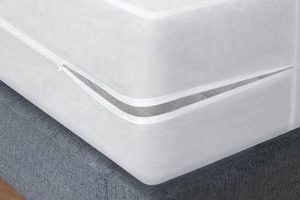
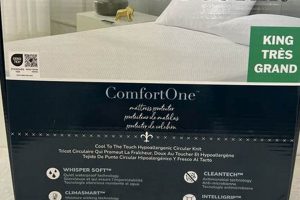
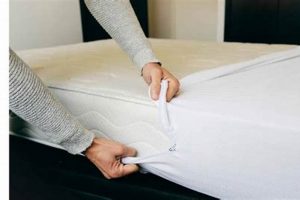
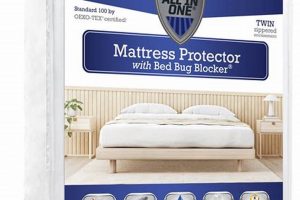
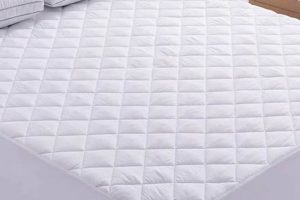
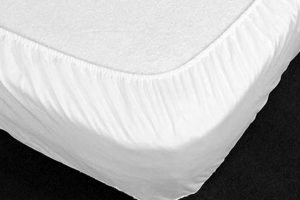
A protective covering designed to encase a mattress, typically constructed from a polyvinyl chloride material and featuring a closure system utilizing a zipper. This design offers a barrier against liquids, allergens, and dust mites, effectively safeguarding the mattress from potential damage and contamination. A common example is its use in healthcare facilities or households with young children where spills and accidents are more likely.
The utilization of such a product provides significant advantages, including extending the lifespan of the mattress by preventing stains and wear, promoting a more hygienic sleep environment by minimizing allergens, and simplifying mattress maintenance. Historically, protective mattress coverings were basic sheets or quilted pads, but the introduction of impermeable, zippered encasements marked a substantial improvement in mattress protection technology, offering a more comprehensive and secure barrier.
The subsequent sections will delve into the specific features, benefits, and considerations related to selecting and utilizing this type of mattress protection. Factors to consider will include material thickness, zipper quality, cleaning instructions, and suitability for different mattress types and individual needs. This comprehensive overview will provide readers with the necessary information to make informed decisions regarding mattress protection.
Essential Guidelines for Vinyl Mattress Encasements with Zippered Closure
The following recommendations are intended to maximize the protective capabilities and longevity of the encasement, thereby ensuring a hygienic and durable sleep surface.
Tip 1: Select Appropriate Gauge: Consider the denier, or thickness, of the material. Higher denier generally indicates greater durability and resistance to tearing, particularly important in environments with heavy use or potential for abrasion.
Tip 2: Prioritize Zipper Quality: Examine the zipper mechanism prior to purchase. Look for reinforced stitching around the zipper and a smooth, reliable glide. A robust zipper is crucial for maintaining a complete seal and preventing ingress of allergens or fluids.
Tip 3: Ensure Proper Fit: Measure the mattress dimensions accurately before selecting an encasement. An ill-fitting protector can bunch, tear, or fail to provide complete coverage, negating its protective benefits.
Tip 4: Implement Regular Cleaning: Establish a cleaning schedule appropriate for the use environment. While impermeable, the surface can accumulate dust and debris. Wipe down regularly with a damp cloth and mild detergent, ensuring thorough drying before re-covering with bedding.
Tip 5: Avoid Abrasive Cleaners: Refrain from using harsh chemicals or abrasive cleaning agents. These substances can degrade the material, leading to cracking or weakening of the vinyl, thereby compromising its barrier function.
Tip 6: Inspect Regularly for Damage: Conduct routine inspections for tears, punctures, or zipper malfunctions. Promptly address any damage to prevent compromise of the mattress’s protection.
Tip 7: Consider Allergen Sensitivity: If allergy concerns exist, ensure the selected encasement is specifically certified as allergen-proof, meeting established standards for pore size and breathability.
Adherence to these guidelines will optimize the effectiveness and lifespan of the encasement, safeguarding the mattress and promoting a healthier sleep environment.
The concluding section will provide a summary of the key considerations and final recommendations.
1. Impermeable Barrier

The characteristic of impermeability stands as a pivotal attribute directly correlating to the functionality of a vinyl mattress protector with a zippered closure. This feature fundamentally determines the product’s capacity to shield the mattress from liquid penetration and subsequent damage or contamination.
- Protection Against Liquid Damage
The primary function of the impermeable barrier is to prevent liquids, such as spills, bodily fluids, or cleaning solutions, from reaching the mattress core. The vinyl construction of the protector offers a non-porous surface, effectively blocking liquid absorption. In healthcare facilities, this is critical in maintaining sanitary conditions and preventing the spread of infection.
- Prevention of Allergen Accumulation
The barrier’s impermeability extends to allergens, such as dust mites and their waste. By preventing these allergens from penetrating the mattress, the protector contributes to a healthier sleep environment, particularly beneficial for individuals with allergies or asthma. This aspect is crucial in domestic environments and hospitality settings.
- Maintenance of Mattress Hygiene
The impermeable nature simplifies cleaning and maintenance. Spills can be easily wiped clean from the vinyl surface, preventing the growth of mold, mildew, or bacteria within the mattress. Regular cleaning of the protector maintains a hygienic sleep surface and prolongs the mattress lifespan. This is particularly relevant for long-term care facilities and rental properties.
- Prolongation of Mattress Lifespan
By preventing liquid damage, allergen accumulation, and microbial growth, the impermeable barrier indirectly contributes to extending the mattress’s lifespan. The protector safeguards the internal structure of the mattress from degradation caused by moisture and contaminants, reducing the need for frequent replacements. This benefit offers economic advantages in both residential and commercial contexts.
In essence, the effectiveness of a vinyl mattress protector with a zippered closure is fundamentally contingent upon its impermeability. This attribute underpins its capacity to safeguard the mattress, maintain hygiene, and promote a healthier sleep environment, thereby justifying its use in various settings where mattress protection is paramount.
2. Allergen Protection
The integration of allergen protection within a zippered vinyl mattress protector stems from the inherent properties of the vinyl material and the complete encasement design. The non-porous nature of vinyl prevents the penetration and accumulation of common allergens, such as dust mites, pet dander, and pollen, within the mattress fibers. The zippered closure further enhances this protection by creating a sealed barrier, preventing allergens from entering or escaping the mattress. For instance, individuals with asthma or allergies often experience symptom relief when using such a protector, as it minimizes their exposure to airborne allergens concentrated within the mattress.
The practical application of this understanding extends to various settings. In hospitals and healthcare facilities, these protectors are vital for maintaining a sterile environment and reducing the risk of allergic reactions among patients. Similarly, hotels and rental properties utilize them to ensure a clean and allergen-free sleeping surface for guests, regardless of prior occupancy. Regular cleaning of the vinyl surface further removes surface-level allergens, optimizing the protector’s effectiveness. The absence of suitable allergen protection can lead to increased allergic reactions, respiratory problems, and compromised sleep quality.
In summary, the combination of a vinyl barrier and a zippered closure significantly reduces allergen exposure, contributing to improved respiratory health and sleep quality. Challenges may include ensuring proper ventilation to prevent moisture build-up within the encasement and selecting protectors that are specifically certified as allergen-proof by reputable organizations. This understanding is crucial for informed consumers and facility managers seeking to create healthier indoor environments, aligning with broader efforts to minimize allergen exposure and promote well-being.
3. Zippered Encasement
The zippered encasement is a defining characteristic and critical component of the “vinyl mattress protector zippered.” The zipper transforms a simple covering into a complete protective barrier, fully enclosing the mattress on all sides. Without the zippered closure, the protector would function merely as a sheet, leaving gaps for the ingress of liquids, allergens, and pests. The presence of the zipper is, therefore, a causative element in achieving the primary function of the product: comprehensive mattress protection. For example, a mattress encased within a zippered vinyl protector is significantly less likely to be damaged by spills compared to one with a non-zippered cover. The zippered encasement elevates the utility of vinyl as a protective material, creating a sealed environment.
The practical significance of this design is evident in various scenarios. Hospitals rely on zippered encasements to maintain sanitary conditions and prevent cross-contamination between patients. Hotels utilize them to provide a clean and allergen-free sleep environment for a diverse clientele. In domestic settings, parents benefit from the ease of cleaning and protection against bedwetting accidents. The zippered nature of the encasement allows for convenient removal and replacement for cleaning purposes, enhancing its usability. The choice of zipper material and construction also impacts the product’s effectiveness; a robust zipper prevents tearing and ensures a tight seal, while a poorly constructed zipper can compromise the integrity of the protector.
In summary, the zippered encasement is an indispensable element of the “vinyl mattress protector zippered.” It is the key to creating a fully sealed barrier, providing comprehensive protection against liquids, allergens, and pests. The quality and design of the zipper itself are crucial factors in determining the product’s overall effectiveness and durability. While challenges exist in selecting the appropriate zipper material and ensuring proper ventilation, the benefits of a zippered encasement significantly outweigh the drawbacks, making it a valuable tool for maintaining mattress hygiene and prolonging its lifespan.
4. Durability
Durability is a cardinal attribute intrinsically linked to the efficacy and longevity of a vinyl mattress protector featuring a zippered closure. The inherent characteristics of the vinyl material, coupled with the design of the encasement, dictate the protector’s capacity to withstand wear, tear, and prolonged use. The thickness of the vinyl, measured in gauge or mil, directly influences its resistance to punctures, abrasions, and degradation from cleaning agents. Consequently, a protector constructed from a thicker, higher-gauge vinyl will inherently exhibit greater durability and offer extended protection to the underlying mattress. For instance, in environments such as hospitals or long-term care facilities, where mattresses are subjected to frequent use and cleaning, a highly durable vinyl protector is essential to maintain sanitary conditions and prevent costly mattress replacements.
Furthermore, the quality of the zipper mechanism contributes significantly to the overall durability of the encasement. A robust zipper, constructed from durable materials and featuring reinforced stitching, ensures a secure and reliable closure, preventing gaps or tears that would compromise the protector’s barrier function. In contrast, a poorly constructed zipper can fail prematurely, rendering the protector ineffective and necessitating replacement. The selection of appropriate cleaning agents is also critical for maintaining durability. Harsh chemicals and abrasive cleaners can degrade the vinyl material, leading to cracking, peeling, or weakening of the protective layer. Therefore, the adherence to recommended cleaning protocols is paramount for maximizing the lifespan of the vinyl mattress protector.
In summary, durability is a multifaceted consideration encompassing material thickness, zipper quality, and cleaning practices. A durable vinyl mattress protector with a zippered closure offers sustained protection against liquids, allergens, and wear, thereby extending the lifespan of the mattress and reducing replacement costs. Challenges include balancing durability with comfort and breathability, as thicker vinyl may result in reduced airflow. Nevertheless, the selection of a high-quality, durable protector, coupled with proper care and maintenance, represents a prudent investment for ensuring long-term mattress protection and hygiene.
5. Ease of Cleaning
The characteristic of simplified cleaning is a substantial benefit arising directly from the materials and design of a vinyl mattress protector equipped with a zippered closure. Vinyl, a non-porous polymer, inherently resists the absorption of liquids and stains, facilitating quick and efficient cleaning procedures. The zippered design enables complete removal of the protector, allowing for thorough surface cleaning without the encumbrance of the underlying mattress. This feature is particularly advantageous in environments where hygiene is paramount, such as healthcare facilities, childcare centers, and hospitality settings, where rapid turnover and potential for contamination necessitate streamlined cleaning processes. For instance, a spill on a vinyl-encased mattress can typically be resolved with a simple wipe-down using a damp cloth and a mild cleaning solution, as opposed to the extensive and often ineffective cleaning required for an unprotected mattress.
The practical implications of this ease of cleaning extend beyond mere convenience. Reduced cleaning time translates directly to cost savings in labor and resources, particularly in commercial contexts. Furthermore, the ability to effectively remove contaminants minimizes the risk of allergen accumulation and microbial growth, fostering a healthier sleep environment. In contrast, mattress protectors constructed from porous materials, or those lacking a zippered closure, often require more intensive cleaning methods, such as steam cleaning or professional laundering, which can be time-consuming, expensive, and potentially damaging to the mattress itself. The simplified cleaning protocol afforded by the vinyl and zippered design also encourages more frequent maintenance, further enhancing hygiene and prolonging the lifespan of both the protector and the mattress.
In summary, the inherent cleanability of a vinyl mattress protector with a zippered closure constitutes a significant advantage, contributing to reduced labor costs, improved hygiene, and extended product lifespan. While challenges may include ensuring proper ventilation to prevent moisture build-up and selecting appropriate cleaning agents to avoid material degradation, the benefits of simplified cleaning outweigh these concerns. This understanding underscores the importance of considering ease of cleaning as a key criterion when selecting a mattress protector, particularly in environments where hygiene and efficiency are critical priorities.
6. Mattress Longevity
Mattress longevity, defined as the duration a mattress maintains its structural integrity and hygienic condition while providing adequate support, is significantly influenced by the use of a vinyl mattress protector with a zippered closure. The protective encasement mitigates factors that commonly degrade mattresses, thereby extending their serviceable life. This is not merely a matter of comfort; it represents a substantial economic benefit, especially in settings with multiple mattresses, such as hotels or healthcare facilities.
- Protection Against Liquid Intrusion
The impermeable nature of vinyl prevents the penetration of liquids, including spills, bodily fluids, and cleaning solutions, into the mattress core. Moisture ingress fosters the growth of mold, mildew, and bacteria, leading to structural degradation and unsanitary conditions. By effectively blocking liquid intrusion, the vinyl protector safeguards the mattress from internal damage and maintains its hygienic state, thus prolonging its lifespan. For example, a mattress in a nursing home protected with a vinyl encasement is less likely to require premature replacement due to incontinence issues.
- Barrier Against Allergen Accumulation
Mattresses accumulate allergens, such as dust mites, pet dander, and pollen, over time. These allergens not only compromise hygiene but can also contribute to the breakdown of mattress fibers due to the presence of enzymes and organic matter. A vinyl mattress protector with a zippered closure creates a barrier that prevents allergens from penetrating the mattress, maintaining its cleanliness and extending its structural integrity. A household with pets, for instance, would benefit from this protection, preventing pet dander from embedding in the mattress.
- Mitigation of Physical Wear and Tear
While not impervious to physical damage, a vinyl protector can provide a degree of resistance against abrasion and general wear and tear. The encasement acts as a buffer between the mattress and external forces, reducing friction and stress on the mattress surface. This is particularly relevant in environments with heavy use, such as college dormitories, where mattresses are subjected to constant movement and pressure. The vinyl layer distributes weight and minimizes localized stress points, thereby contributing to a more even wear pattern.
- Facilitation of Easier Cleaning and Maintenance
The smooth, non-porous surface of vinyl simplifies cleaning and maintenance procedures. Spills and stains can be easily wiped clean, preventing long-term damage and maintaining a hygienic surface. This ease of cleaning reduces the need for harsh chemicals or aggressive cleaning methods, which can degrade mattress fibers over time. Regular cleaning of the protector contributes to the overall hygiene and longevity of the mattress. For example, in a daycare setting, spills and accidents can be quickly addressed, preventing permanent staining and odor retention within the mattress.
In conclusion, the factors influencing mattress longevityprotection against liquids and allergens, resistance to physical wear, and ease of cleaningare all positively impacted by the use of a vinyl mattress protector with a zippered closure. This type of protector provides a comprehensive defense against common causes of mattress degradation, thereby extending its serviceable lifespan and delivering a favorable return on investment. The cumulative effect of these protective measures translates into substantial cost savings and improved hygiene, especially in settings where mattress replacement represents a significant expense.
Frequently Asked Questions
The following section addresses common inquiries regarding the selection, usage, and maintenance of vinyl mattress protectors featuring zippered closures. These questions are intended to clarify typical concerns and provide practical guidance.
Question 1: What gauge of vinyl is recommended for optimal mattress protection?
The recommended vinyl gauge varies depending on the intended use environment. For residential applications with moderate use, a gauge of 6-8 mil is generally sufficient. In healthcare or commercial settings subjected to heavier use and frequent cleaning, a gauge of 10-12 mil or higher is advisable for enhanced durability and resistance to tearing.
Question 2: How should a vinyl mattress protector with a zippered closure be cleaned?
The protector should be cleaned regularly with a damp cloth and a mild, non-abrasive cleaning solution. Harsh chemicals and abrasive cleaners can degrade the vinyl, reducing its protective capabilities. Ensure the protector is completely dry before reapplying bedding.
Question 3: Can a vinyl mattress protector effectively prevent bed bug infestations?
A properly installed vinyl mattress protector with a secure zippered closure can significantly reduce the risk of bed bug infestations by denying bed bugs access to the mattress core. Regular inspection of the protector for tears or punctures is essential for maintaining its effectiveness.
Question 4: Are vinyl mattress protectors suitable for individuals with allergies?
Yes, vinyl mattress protectors are generally suitable for individuals with allergies as they create an impermeable barrier against dust mites and other allergens. However, it is advisable to select a protector specifically labeled as allergen-proof and ensure it is properly cleaned and maintained.
Question 5: How can proper ventilation be ensured to prevent moisture buildup within the protector?
While vinyl is not breathable, moisture buildup can be minimized by using a breathable mattress pad on top of the protector. Regular airing out of the mattress is also recommended to prevent the accumulation of moisture and potential mold growth.
Question 6: What are the potential drawbacks of using a vinyl mattress protector?
Potential drawbacks include a lack of breathability, which can lead to increased sweating, and a tendency to feel stiff or crinkly. These issues can be mitigated by using a quality mattress pad over the protector and selecting a vinyl material with a softer texture.
In summary, selecting the appropriate vinyl gauge, adhering to proper cleaning protocols, and ensuring a secure zippered closure are essential for maximizing the benefits of a vinyl mattress protector. Addressing potential drawbacks with appropriate measures can further enhance the user experience.
The concluding section will provide a concise summary of key considerations and final recommendations.
Conclusion
The preceding analysis has underscored the multifaceted benefits and considerations surrounding the implementation of a vinyl mattress protector zippered. Key points include the impermeable barrier it provides against liquids and allergens, its ease of cleaning, its role in extending mattress longevity, and the importance of selecting the appropriate vinyl gauge and zipper quality for specific needs. The comprehensive encasement offered by the zippered design distinguishes it from simpler mattress coverings, providing a more robust level of protection against contamination and wear.
Given the critical role mattresses play in hygiene and comfort, particularly in healthcare and hospitality settings, the selection of an appropriate mattress protector warrants careful consideration. The information presented herein should serve as a foundation for informed decision-making, enabling consumers and facility managers to select a vinyl mattress protector zippered that effectively safeguards their investment, promotes a healthier sleep environment, and minimizes long-term replacement costs. A vigilant approach to maintenance and regular inspection will further ensure the continued efficacy of the protector, maximizing its lifespan and contributing to overall well-being.