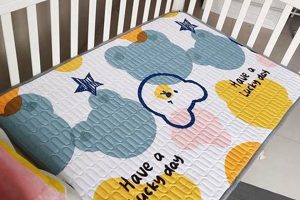
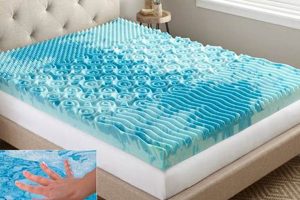
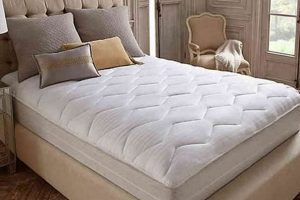
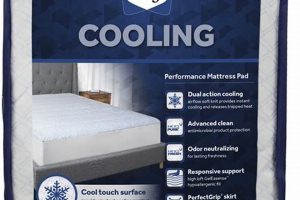
The fundamental distinction lies in purpose and construction. One is primarily designed to protect the mattress and add a thin layer of comfort, often resembling a fitted sheet with light padding. The other aims to significantly alter the feel of the sleep surface, providing a thicker, more substantial layer intended to enhance comfort or address specific needs such as pressure relief or temperature regulation.
Selecting the appropriate bedding accessory can contribute to mattress longevity and enhance sleep quality. Historically, protective layers were simple fabric coverings; however, advancements in materials and manufacturing have led to specialized options offering improved comfort and support. The correct choice depends on individual requirements, budget, and desired level of comfort enhancement.
Understanding the features and benefits associated with each type allows for informed decision-making. Key considerations include material composition, thickness, attachment method, and ease of care. The following sections will explore these aspects in detail, facilitating a clear understanding of their respective advantages and limitations.
Guidance on Mattress Layer Selection
Careful consideration of several factors is crucial when deciding between the two options. This section provides specific guidance to facilitate an informed decision.
Tip 1: Assess Existing Mattress Condition: If the mattress is relatively new and in good condition, the selection may be based solely on desired comfort enhancements. However, if the mattress is older and showing signs of wear, a thicker option might be more appropriate to compensate for lost support.
Tip 2: Determine Primary Need: Is the primary goal mattress protection, minor comfort improvement, or significant alteration of the sleep surface? Mattress pads offer basic protection and minimal comfort, while toppers address more pronounced comfort needs.
Tip 3: Consider Material Properties: Evaluate the material composition of both options. Memory foam provides contouring support, while down or feather offer a softer feel. Consider allergies and breathability when making a selection.
Tip 4: Evaluate Thickness and Density: Toppers vary in thickness; a thicker topper will generally offer more significant comfort enhancement. Density influences the level of support and durability.
Tip 5: Review Attachment Method: Examine how each option attaches to the mattress. Fitted sheet style mattress pads are common, while toppers may utilize elastic straps or a fitted skirt to secure placement.
Tip 6: Check Cleaning Instructions: Determine the ease of cleaning and maintenance. Some materials are machine washable, while others require professional cleaning.
Tip 7: Compare Costs: Evaluate the cost-effectiveness of each option based on its features and intended use. Price often correlates with material quality and thickness.
By carefully evaluating these factors, individuals can make a more informed and appropriate choice that aligns with their specific requirements and preferences.
The subsequent sections will explore specific material types and their respective benefits, providing a comprehensive overview of available options.
1. Thickness differential

The thickness differential represents a primary distinguishing factor. Mattress pads are characterized by a minimal profile, typically adding only a thin layer of padding to the mattress surface. This limited thickness is intentional, serving the purpose of protecting the mattress from stains, spills, and minor wear. The effect on the overall feel of the sleep surface is subtle, often providing only a slight increase in cushioning. For example, a standard quilted pad might add less than one inch of material, barely altering the contours of the underlying mattress.
In contrast, mattress toppers exhibit a significantly greater thickness, ranging from two to four inches or more. This increased depth directly contributes to their capacity to modify the feel of the mattress. The impact on comfort can be substantial, allowing for customization of firmness levels or the addition of pressure relief. A memory foam topper, for instance, molds to the body’s shape, distributing weight and reducing pressure points. The thickness of the topper dictates the degree of this effect; a thicker topper will offer more pronounced contouring and support.
Understanding the thickness differential is crucial for selecting the appropriate bedding accessory. If the primary concern is mattress protection, a thin pad is sufficient. However, if the goal is to enhance comfort or address specific sleep issues, a thicker topper is more suitable. The practical implication is that consumers must assess their individual needs and choose accordingly, recognizing that thickness directly correlates with the level of comfort modification and support provided. Choosing the wrong thickness can result in dissatisfaction, with a pad providing insufficient comfort and a topper proving unnecessarily bulky or altering the bed’s height uncomfortably.
2. Primary function

The fundamental divergence in primary function defines the distinction. A mattress pad’s chief purpose is to protect the mattress from stains, allergens, and general wear and tear. It serves as a barrier, extending the mattress’s lifespan and maintaining its condition. Real-life examples include scenarios where spills are contained by the pad, preventing irreversible damage to the underlying mattress. This protective function translates to cost savings by delaying the need for mattress replacement. The importance of this protective role should not be understated, as it directly impacts the longevity and hygiene of the sleeping environment.
In contrast, a mattress topper’s primary function is to enhance sleep comfort and address specific physical needs. It aims to modify the feel of the mattress, making it firmer, softer, or providing targeted support. For example, individuals experiencing pressure points may opt for a memory foam topper to alleviate discomfort. Others may seek a latex topper for increased support and responsiveness. The practical significance of this comfort-focused function is evident in improved sleep quality, reduced pain, and enhanced overall well-being. The choice to invest in a topper often stems from dissatisfaction with the existing mattress’s comfort level or a desire to customize the sleep experience.
In summary, the primary function is a critical determinant. One offers essential protection, safeguarding the investment in the mattress itself. The other provides enhanced comfort, addressing individual sleep preferences and physical requirements. Challenges arise when consumers misinterpret these functions, expecting a
pad to provide significant comfort enhancement or a topper to act as a comprehensive protective barrier. Understanding the distinct roles enables informed purchasing decisions, leading to improved sleep and optimized mattress care.
3. Material composition

Material composition is a fundamental differentiating factor. The materials used in their construction dictate the functional characteristics and overall performance profiles of each product, ultimately influencing their suitability for specific needs. The varied material choices reflect the distinct design objectives and intended applications. Consider the impact of cotton versus memory foam.
- Mattress Pad Materials: Cotton and Blends
Mattress pads frequently utilize cotton or cotton blends as their primary material. These materials are chosen for their breathability, affordability, and ease of care. Cottons inherent properties allow for air circulation, reducing heat retention and promoting a cooler sleep environment. Furthermore, cotton is relatively easy to clean and maintain, enhancing the convenience of the product. However, cotton offers limited cushioning and minimal impact on the overall feel of the mattress. A cotton pad primarily serves as a protective layer rather than a comfort enhancer. In cases where allergy control is a concern, some pads may incorporate hypoallergenic synthetic fibers.
- Mattress Topper Materials: Memory Foam
Memory foam is a common material in mattress toppers, renowned for its pressure-relieving properties. This material conforms to the body’s shape, distributing weight evenly and reducing pressure points. A memory foam topper can significantly alter the feel of a mattress, providing a softer, more supportive sleep surface. However, memory foam can retain heat, which may be a drawback for some users. The density of the memory foam influences its firmness and durability; higher-density foams offer greater support and longevity.
- Mattress Topper Materials: Latex
Latex, either natural or synthetic, is another popular option for mattress toppers. Latex provides a responsive and buoyant feel, offering both support and comfort. Natural latex is derived from the sap of rubber trees and is known for its durability and breathability. Synthetic latex, while less expensive, may not offer the same level of performance or longevity. Latex toppers are often preferred by individuals seeking a balance of support and pressure relief without the heat retention associated with memory foam. Real-world applications include athletes and those with back pain.
- Specialty Materials: Wool and Down Alternatives
Specialty materials such as wool and down alternatives are also used in both types of products. Wool provides natural temperature regulation, keeping sleepers warm in winter and cool in summer. Down alternatives, typically synthetic fibers, offer a similar feel to down but are hypoallergenic and easier to care for. These materials can enhance the comfort and performance of both mattress pads and toppers, but they often come at a higher price point. For example, a wool mattress pad can improve temperature regulation, while a down alternative topper can offer a plush, comfortable sleep surface.
In conclusion, the material composition fundamentally differentiates the two. Pads prioritize protection and ease of maintenance, often utilizing cotton and synthetic blends. Toppers emphasize comfort and support, employing materials like memory foam, latex, and specialty fibers to alter the sleep surface significantly. The selection hinges on aligning material properties with individual needs and preferences.
4. Attachment method

The attachment method significantly contributes to the difference between a mattress pad and a mattress topper. Mattress pads typically utilize an elasticized fitted sheet design, securing them to the mattress similarly to a fitted sheet. This method is practical for ease of installation and removal, facilitating frequent washing and maintenance. Its simplicity, however, implies a limited ability to provide substantial support or prevent shifting. For instance, a restless sleeper may find the pad prone to bunching or displacement, diminishing its protective function. The attachment mechanism is inherently linked to the pads lightweight construction and its primary purpose of surface protection rather than comfort enhancement.
Conversely, mattress toppers often employ more robust attachment systems. These may include elastic corner straps, fitted skirts with deeper pockets, or even full encasement designs. The more secure attachment is necessary due to the topper’s greater thickness and weight, ensuring it remains firmly in place despite movement during sleep. A memory foam topper, for example, requires a stable attachment to maintain its pressure-relieving properties. A topper that shifts or slides undermines its intended comfort enhancement, thereby negating its primary benefit. Furthermore, more elaborate attachment mechanisms can influence compatibility with various mattress depths and types. Some toppers may not securely fit thinner mattresses, while others may struggle to accommodate thicker pillow-top designs.
In summary, the attachment method is intrinsically linked to the design and function. Mattress pads prioritize ease of use and maintenance with a simple fitted sheet style, while mattress toppers necessitate more secure and robust systems to maintain their position and deliver intended comfort benefits. Challenges arise when consumers underestimate the importance of a secure attachment, resulting in discomfort and diminished product effectiveness. The choice hinges on understanding the interplay between the attachment method, the product’s weight and thickness, and the individual’s sleeping habits, ultimately impacting overall sleep quality and satisfaction.
5. Cost variance

Cost variance is an inherent element differentiating mattress pads and mattress toppers, arising directly from variations in materials, construction complexity, and intended functionality. The protective, thin nature of a mattress pad generally translates to lower manufacturing costs, reflected in a more accessible retail price point. For instance, a basic quilted mattress pad constructed from cotton or polyester blends can often be acquired for under $50. This affordability stems from the relatively simple manufacturing processes and the use of common, inexpensive materials. The purpose served by a mattress pad, primarily mattress protection, does not necessitate high-end materials or elaborate construction, further contributing to its lower cost.
Conversely, the enhanced comfort and support offered by mattress toppers necessitate more sophisticated materials and construction techniques, invariably driving up their price. A memory foam topper, designed to contour to the body and alleviate pressure points, utilizes specialized foam formulations and often features intricate layering. These factors elevate manufacturing costs, resulting in a higher retail price, frequently exceeding $100 and potentially reaching several hundred dollars for premium options. The same principle applies to latex toppers, which deman
d high-quality latex materials and specialized molding processes, further influencing cost variance. Real-world examples include individuals seeking enhanced sleep comfort being prepared to invest in higher-priced toppers, recognizing the direct correlation between price and performance in this product category.
In summary, cost variance is a direct consequence of the design goals and material composition. Mattress pads prioritize affordability and protection, while mattress toppers emphasize comfort and support, necessitating costlier materials and construction methods. The challenge lies in aligning budget considerations with desired functionality. Consumers must assess their individual needs and weigh the cost benefits of each option, understanding that a higher price typically reflects enhanced comfort and durability but may not always be necessary for basic mattress protection. The interplay between cost and functionality ultimately dictates the optimal choice for any given individual.
Frequently Asked Questions About Mattress Pads and Mattress Toppers
This section addresses common inquiries regarding the distinctions between mattress pads and mattress toppers, clarifying their respective purposes and optimal usage scenarios.
Question 1: What constitutes the primary difference between a mattress pad and a mattress topper?
The primary distinction lies in the intended function. A mattress pad primarily protects the mattress from stains, spills, and wear, while a mattress topper’s main purpose is to enhance comfort or modify the feel of the sleep surface.
Question 2: Can a mattress pad significantly improve mattress comfort?
Generally, no. Mattress pads are typically thin and offer minimal cushioning. Their contribution to overall comfort is usually subtle. For significant comfort enhancement, a mattress topper is recommended.
Question 3: Is a thicker topper always better?
Not necessarily. The optimal topper thickness depends on individual needs and preferences. A thicker topper provides more substantial comfort alteration but may not be suitable for all individuals or mattresses. Consider body weight, sleeping position, and existing mattress firmness when selecting a thickness.
Question 4: Which option is more suitable for allergy sufferers?
Both mattress pads and toppers can be beneficial, provided they utilize hypoallergenic materials. Encasement-style mattress protectors are particularly effective in preventing allergens from penetrating the mattress. Consider materials like hypoallergenic synthetic fibers or natural latex.
Question 5: Can a mattress pad or topper correct a sagging mattress?
Neither a pad nor a topper can fully rectify a severely sagging mattress. While a thick topper might provide some temporary relief, it is not a long-term solution. A sagging mattress indicates the need for replacement, not merely surface modification.
Question 6: How does the cleaning and maintenance differ between a mattress pad and a mattress topper?
Mattress pads, particularly those made of cotton or synthetic blends, are often machine washable. Mattress toppers, especially those made of memory foam, typically require spot cleaning or professional cleaning due to their bulk and material composition.
In summary, understanding the nuances between these products enables informed choices aligned with individual sleep needs and mattress care requirements.
The following section will delve into specific product recommendations and purchasing considerations.
Difference Between a Mattress Pad and a Mattress Topper
The preceding analysis has elucidated the fundamental differences between a mattress pad and a mattress topper, emphasizing distinctions in primary function, material composition, thickness, attachment methods, and cost. These elements collectively determine the suitability of each product for specific needs, ranging from basic mattress protection to significant sleep surface modification. The analysis reinforces the importance of discerning between the protective role of a pad and the comfort-enhancing capability of a topper.
Selecting the appropriate bedding accessory requires careful consideration of individual requirements and mattress condition. A clear understanding of the distinctions between a mattress pad and a mattress topper facilitates informed decision-making, optimizing sleep quality and prolonging mattress lifespan. Continued advancements in material science and manufacturing processes are expected to further refine these products, offering consumers an even wider range of options tailored to their precise needs. Investing time in understanding the nuances of each product translates directly into improved sleep health and long-term cost savings.