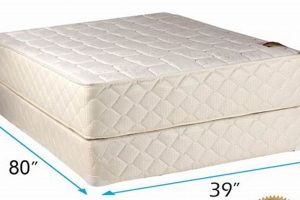
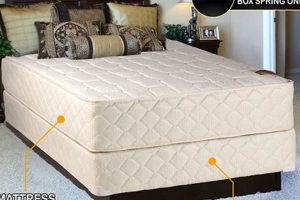
A foundational element in sleep systems, it offers support and elevation to the sleep surface. It typically consists of a sturdy frame containing springs or a supportive structure encased in fabric. This component plays a vital role in shock absorption, extending the lifespan of the primary sleeping surface and contributing to overall comfort. For example, a high-quality one can significantly improve the feel of a firmer sleep surface.
The employment of such a system provides numerous advantages. It enhances ventilation, minimizing the accumulation of moisture and allergens. By raising the sleeping surface, it facilitates easier access and egress. Historically, these underpinnings were designed primarily to protect innerspring constructions, but modern iterations offer diverse functionalities and compatibility with various sleep surface types, including memory foam and latex.
Consequently, understanding the features and benefits enables informed decisions about selecting a complementary base for optimal rest. Factors such as construction materials, height, and weight capacity should be carefully considered. This understanding will allow an assessment of specific features, materials, and their compatibility with different sleep surface technologies to enhance the overall sleep experience.
Essential Considerations
Selecting a suitable support structure for a sleep surface requires careful assessment of individual needs and preferences. The following guidelines offer practical advice for making an informed decision.
Tip 1: Assess Sleep Surface Compatibility: Before acquiring a new foundation, verify its compatibility with the intended sleep surface. Certain foam constructions may require specific types of support to prevent sagging or uneven wear. For example, some memory foam models perform optimally with solid, non-spring foundations.
Tip 2: Evaluate Height Requirements: Consider the desired height of the complete sleep system. Lower-profile foundations may be preferable for minimalist aesthetics or individuals with mobility limitations, while taller profiles offer more storage space beneath the bed.
Tip 3: Scrutinize Construction Quality: Examine the materials and build quality. A robust frame constructed from solid wood or reinforced steel ensures longevity and prevents premature degradation. Look for closely spaced support slats or coils to distribute weight evenly.
Tip 4: Determine Weight Capacity: Verify the weight capacity is adequate for the combined weight of the sleep surface and occupants. Exceeding the specified limit can compromise structural integrity and void warranties.
Tip 5: Consider Noise Reduction: Some older spring designs are prone to squeaking or creaking. Newer models often incorporate noise-dampening materials and construction techniques to minimize disruptive sounds.
Tip 6: Investigate Warranty Provisions: Review the manufacturer’s warranty to understand the terms and conditions. A comprehensive warranty provides recourse in case of defects or premature failure.
Tip 7: Factor in Foundation Assembly: Assess the ease of assembly. Some models require minimal assembly, while others may necessitate professional installation. Consider the time and effort required for setup.
Adhering to these guidelines enhances the likelihood of acquiring a durable and supportive foundation, ultimately contributing to improved rest and prolonged lifespan of the chosen sleep surface.
The subsequent sections will delve into specific models and their suitability for different needs and budgets.
1. Support and Stability

The correlation between structural integrity and sleep surface longevity is undeniable. A solid, well-constructed understructure mitigates excessive compression and prevents premature sagging. This is particularly crucial for heavier sleep surfaces or those occupied by multiple individuals. The direct consequence of inadequate support manifests as uneven wear, discomfort, and ultimately, a reduced lifespan of the upper layer. For example, a premium memory foam construction paired with a flimsy, substandard foundation may exhibit noticeable indentations and reduced responsiveness within a relatively short timeframe.
Fundamentally, it serves as a shock absorber, distributing weight evenly across its surface. Models constructed with high-gauge steel coils or closely spaced wooden slats are demonstrably superior in providing consistent reinforcement. Furthermore, the presence of a stable perimeter wire or reinforced edges enhances edge support, preventing roll-off and maximizing the usable sleep surface area. Consider the practical impact: a reinforced perimeter allows occupants to utilize the full surface without experiencing a sensation of instability, contributing to a more secure and comfortable night’s rest. This aspect is invaluable for individuals who tend to sleep near the edge of the bed.
In summary, the selection of a foundation boasting robust support and unwavering stability is a non-negotiable aspect of optimizing the sleep environment. Neglecting this critical component invariably leads to compromised sleep quality and diminished durability of the overall sleep system. Prioritizing a solid structural design provides a direct and measurable return on investment through extended lifespan, enhanced comfort, and consistent performance. The challenges of identifying suitable models can be overcome through careful assessment of construction materials and weight capacity specifications.
2. Durability and Lifespan

The lifespan of a sleep surface support system is intrinsically linked to its construction and the materials utilized. A well-constructed model will demonstrably extend the usable life of the sleep surface it supports. Conversely, a subpar unit may collapse prematurely, leading to uneven support and accelerated wear of the upper sleeping layer. This relationship highlights the importance of durability as a core attribute of a high-quality foundation. For instance, a frame constructed from kiln-dried hardwood and reinforced steel will withstand significantly greater stress and resist warping compared to those built with lower-quality materials. Over time, this translates into a more stable and reliable platform.
The choice of covering material also impacts longevity. A tightly woven, durable fabric protects the internal components from dust, allergens, and physical damage. Breathable fabrics reduce moisture accumulation, mitigating the risk of mold and mildew growth. Consider the consequences of neglecting these factors: a poorly constructed or maintained unit may develop squeaks, sags, or even structural failures, necessitating premature replacement of the entire sleep system. In contrast, a robust and well-maintained foundation can provide years of dependable service, contributing to a greater return on the initial investment.
Ultimately, prioritizing durability and lifespan in the selection process is an exercise in long-term cost savings. While the initial investment may be higher for a premium model, the extended usable life and enhanced performance more than compensate for the difference. The challenge lies in discerning between superficial features and genuine indicators of quality. However, by carefully examining the materials, construction techniques, and warranty provisions, individuals can make informed decisions that optimize their investment and ensure lasting comfort.
3. Compatibility

The effectiveness of a sleep system relies significantly on the harmonious interaction between its constituent elements. The appropriate match between a particular sleep surface and its support structure directly influences comfort, longevity, and overall performance.
- Sleep Surface Material
Different sleep surface materials exhibit unique characteristics and support requirements. Innerspring constructions necessitate a foundation capable of absorbing shock and preventing coil damage. Memory foam and latex surfaces, conversely, often benefit from a solid, non-spring foundation that provides uniform support and prevents sagging. The selection of an incompatible support structure can negate the benefits of the chosen sleep surface, leading to discomfort and premature wear.
- Foundation Type
The market offers diverse types of foundations, each possessing distinct attributes. Traditional spring models utilize coils for support and shock absorption. Platform models provide a solid, even surface, ideal for foam and latex surfaces. Adjustable bases offer customizable support and positioning. Mismatching the foundation type with the sleep surface can compromise support and reduce the overall lifespan of the bed. For example, placing a heavy memory foam surface on a worn-out spring foundation might lead to uneven compression and diminished comfort.
- Height Considerations
The overall height of the sleep system is a crucial factor in accessibility and aesthetics. Individuals with mobility limitations may benefit from a lower profile setup. Conversely, taller individuals or those seeking under-bed storage may prefer a higher profile. An inappropriately sized support system can compromise the ergonomics of the bed, making it difficult to get in and out of. This can also impact the aesthetic balance of the bedroom.
- Weight Distribution
The ability of the support structure to distribute weight evenly is essential for both comfort and durability. Uneven weight distribution can lead to localized compression, sagging, and premature wear. Certain models are specifically engineered to accommodate heavier weights or provide enhanced edge support. Failure to consider weight distribution can result in a compromised sleep experience and a reduced lifespan of the sleep surface.
Consequently, recognizing the compatibility requirements of different sleep surfaces and meticulously matching them with appropriate support structures is critical. This proactive approach ensures optimal comfort, prolonged durability, and a more satisfying sleep experience. Selecting a foundation without due consideration for compatibility can ultimately diminish the value of the sleep surface investment.
4. Noise Reduction
Noise emanating from a sleep support structure can significantly detract from the overall sleep experience. Therefore, noise reduction capabilities are a crucial consideration when evaluating the suitability of a base for a sleep surface. Minimizing disruptive sounds contributes directly to a more restful and undisturbed sleep environment.
- Construction Materials and Joinery
The materials used in construction, as well as the methods by which they are joined, directly impact the potential for noise generation. Frames constructed from solid wood with reinforced joints are inherently less prone to squeaking or creaking than those made from flimsy materials with loose connections. Examples include mortise-and-tenon joints or metal-on-metal connections. A poorly constructed foundation will amplify minor movements, translating them into disruptive sounds. A tightly fitted, robustly constructed foundation is less susceptible to noise generation.
- Spring System Design
For models incorporating springs, the design and construction of the spring system play a pivotal role in noise reduction. Open coil systems are generally more prone to noise than pocketed coil systems, as the coils can rub against each other during movement. Encasing each spring individually in fabric reduces friction and minimizes the potential for squeaking. Noise is particularly prevalent in older systems where the coils have degraded or the internal padding has deteriorated. Modern designs emphasize individually wrapped or interconnected coil systems to dampen noise.
- Fabric and Padding Integration
The integration of fabric and padding within the structure serves not only to provide a finished appearance but also to dampen vibrations and reduce noise. Strategically placed padding between the frame and spring system, or between the frame and the floor, can absorb vibrations and prevent the transmission of noise. Conversely, insufficient padding or loosely fitted fabric can exacerbate noise issues. Quality padding, often made of felt or foam, serves as a buffer to minimize contact between moving parts.
- Design for Vibration Dampening
Some support structures incorporate specific design features aimed at dampening vibrations and minimizing noise transmission. Examples include rubberized feet, which isolate the frame from the floor, and internal dampening mechanisms, which absorb vibrations within the spring system. These features are particularly important for individuals who are sensitive to noise or who share a bed with a restless sleeper. The inclusion of vibration-dampening elements can significantly enhance the sleep experience by minimizing disturbances.
The integration of these noise-reduction facets within the design and construction process directly contributes to the overall quality and suitability. Prioritizing foundations with robust construction, carefully designed spring systems, and integrated vibration-dampening features is crucial. Ignoring these factors may lead to a sleep environment characterized by disruptive sounds and diminished rest. These elements are essential for supporting a more restful sleep.
5. Height Considerations

The height of a sleep support system is a key factor influencing accessibility, comfort, and aesthetics. Its dimension, in conjunction with the sleep surface, determines the overall bed height. This directly affects ease of entry and exit, particularly for individuals with mobility limitations or specific medical conditions. An inappropriately low or high bed can exacerbate joint pain or increase the risk of falls. The selection of an optimal base height can mitigate these issues, promoting safer and more comfortable use of the sleep system. For example, individuals recovering from hip surgery may require a higher bed profile to minimize strain and facilitate easier transfers.
Furthermore, the overall height influences the aesthetic harmony of the bedroom. A disproportionately low profile may appear diminutive within a larger space, while an excessively tall bed can overwhelm a smaller room. Balance and proportion are essential elements of interior design. A carefully considered base height ensures the bed integrates seamlessly with the surrounding environment, contributing to a visually pleasing and cohesive aesthetic. Additionally, a higher profile may provide increased storage space beneath the bed, offering practical benefits for organization and maximizing space utilization.
Ultimately, evaluating height considerations is an integral aspect. The challenge lies in balancing individual needs, aesthetic preferences, and practical requirements. However, by carefully assessing factors such as mobility, room dimensions, and storage requirements, individuals can make informed decisions that optimize the overall sleep experience and enhance the functionality of the bedroom space. The consequence is a more functional and aesthetically pleasing sleep environment.
Frequently Asked Questions
The following addresses commonly asked questions regarding the selection and usage of a sleep surface support structure.
Question 1: What distinguishes a high-quality sleep surface support structure from a low-quality one?
The distinction lies primarily in construction materials, build quality, and design. High-quality models utilize durable materials, such as kiln-dried hardwood or reinforced steel, coupled with robust construction techniques to ensure longevity and stability. Conversely, low-quality units often employ cheaper materials and inferior construction, resulting in premature sagging and reduced lifespan.
Question 2: How does the choice of support system impact the performance and lifespan of the surface it supports?
The support system directly influences the sleep surface. A suitable foundation distributes weight evenly, preventing localized compression and premature wear. An inadequate foundation, conversely, can lead to sagging, uneven support, and reduced lifespan of the upper sleep surface.
Question 3: Are all types of sleep surface support structures compatible with all kinds of surfaces?
No, compatibility is a crucial consideration. Innerspring sleep surfaces necessitate a foundation capable of absorbing shock, while memory foam and latex often perform optimally on a solid, non-spring surface. Mismatching the two can compromise comfort and reduce the lifespan of both components.
Question 4: What are the primary benefits of employing this type of support structure?
The benefits encompass enhanced support, extended lifespan of the sleep surface, improved ventilation, increased accessibility, and potential noise reduction.
Question 5: How does one determine the appropriate height for a support system?
The appropriate height depends on individual needs and aesthetic preferences. Factors to consider include mobility limitations, desired bed height, and the size of the bedroom. A carefully selected height ensures ease of entry/exit and harmonious integration with the surrounding environment.
Question 6: What warranty provisions should be considered when purchasing a sleep surface support system?
The warranty should provide comprehensive coverage against defects in materials and workmanship. A longer warranty period typically indicates a higher level of confidence in the product’s durability.
In summary, careful consideration of materials, construction, compatibility, and individual needs is essential when choosing a support system. A well-informed decision ensures optimal comfort, longevity, and a more satisfying sleep experience.
The following section explores specific models and their features in greater detail.
Conclusion
The preceding analysis underscores the significance of carefully evaluating sleep surface support structures. Factors such as construction materials, compatibility with the intended sleep surface, and consideration of individual needs directly impact sleep quality and the longevity of the sleep system. Attention to detail throughout the selection process yields demonstrable benefits.
The pursuit of the best box spring mattress is not merely a quest for a supporting element, but rather a commitment to optimizing the sleep environment. Continued advancement in material science and design suggests future iterations will offer even greater levels of support, customization, and durability. The selection of a foundation remains a critical step in achieving restful and restorative sleep, an investment in overall well-being that merits careful consideration and diligent evaluation.
![Upgrade Your Sleep: Twin Mattress & Box Spring Set - [Year] | Organic & Natural Mattress Buyer’s Guide: Non-Toxic Sleep Solutions](https://mattressworldpa.com/wp-content/uploads/2025/07/th-3528-300x200.jpg "Upgrade Your Sleep: Twin Mattress & Box Spring Set - [Year] Organic & Natural Mattress Buyer’s Guide: Non-Toxic Sleep Solutions")