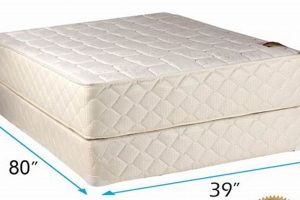
The compatibility of a foam mattress with a box spring foundation is a common query for individuals seeking optimal sleep support. A box spring, traditionally composed of coils or metal grids encased in a fabric-covered frame, is designed to provide support and elevation for a conventional innerspring mattress. A foam mattress, conversely, relies on its inherent density and construction to offer support, differing significantly from the mechanics of a spring-based system.
Employing a box spring can influence the lifespan and performance of a foam mattress. Historically, box springs were essential for distributing weight and absorbing shock, thereby prolonging the life of older mattress designs. In contemporary mattress technology, however, high-density foam mattresses are often engineered to function effectively on various support structures, including platform beds and adjustable bases. Utilizing a box spring in conjunction with certain foam mattresses may not be necessary and, in some instances, could even detract from the intended support characteristics of the foam material.
The subsequent discussion will delve into the factors determining compatibility, the potential advantages and disadvantages of using a box spring with a foam mattress, and alternative support options to consider for maximizing sleep comfort and mattress longevity. Considerations regarding warranty implications and manufacturer recommendations will also be addressed.
Guidance on Foam Mattress and Box Spring Usage
The following offers guidance on determining the appropriate use of a foam mattress in conjunction with a box spring foundation. Careful consideration should be given to these points before combining these sleep system components.
Tip 1: Consult Manufacturer Specifications: Always refer to the foam mattress manufacturer’s guidelines regarding recommended support structures. The warranty may be voided if an incompatible foundation is used.
Tip 2: Assess Box Spring Condition: A box spring with sagging coils or a damaged frame can negatively impact the support and longevity of any mattress, particularly foam mattresses. Ensure the box spring provides a stable and even surface.
Tip 3: Evaluate Mattress Type: High-density foam mattresses generally require less support than low-density options. Determine the density of the foam mattress before deciding if a box spring is necessary.
Tip 4: Consider Alternative Foundations: Platform beds, slatted foundations, and adjustable bases are viable alternatives to box springs and may be more suitable for certain foam mattress types.
Tip 5: Monitor for Sagging: Regularly inspect the foam mattress for any signs of sagging or unevenness, which could indicate an inadequate or deteriorating support structure.
Tip 6: Evaluate Height Preference: Combining a thick foam mattress with a box spring can result in an excessively high bed, potentially impacting accessibility and aesthetics. Consider the overall bed height and personal preferences.
Adhering to these guidelines can contribute to optimal sleep quality and maximize the lifespan of the foam mattress. Failure to consider these aspects could result in diminished comfort and premature mattress degradation.
The subsequent section will explore alternative foundation options and provide further details on maximizing the performance of a foam mattress.
1. Support Requirements

The support requirements of a foam mattress are paramount in determining its compatibility with a box spring. A mattress lacking adequate support can lead to discomfort, premature wear, and potential health issues. Thus, assessing these requirements is critical when considering if a box spring is appropriate.
- Density and Composition of the Foam
The density and material composition of the foam core directly influence the necessary level of support. High-density foam mattresses often possess inherent structural integrity and may not require the additional support of a box spring, performing adequately on platform beds or slatted foundations. Conversely, lower-density foam, particularly in thicker mattresses, may benefit from the added reinforcement of a box spring to prevent sagging and ensure even weight distribution. Memory foam, latex foam, and polyurethane foam each exhibit different support characteristics, necessitating individualized assessments.
- Weight Distribution and Pressure Relief
Foam mattresses are designed to contour to the body, distributing weight and alleviating pressure points. However, the underlying support structure impacts the mattress’s ability to perform this function effectively. An inadequate foundation, such as a damaged or sagging box spring, can create uneven pressure distribution, leading to discomfort and potential musculoskeletal issues. A box spring in good condition can enhance weight distribution, while an inappropriate one can undermine the mattress’s intended pressure-relieving properties. The weight of the individuals using the mattress is also important when considering support needs.
- Airflow and Moisture Management
The support structure also influences airflow within the mattress. While not directly a support function, adequate airflow is crucial for temperature regulation and moisture management, factors impacting comfort and hygiene. Some box springs can impede airflow compared to slatted or platform foundations, potentially leading to heat buildup and moisture accumulation within the foam. This is especially relevant for memory foam mattresses, which tend to retain heat more than other materials. The design of the support structure should therefore promote sufficient ventilation.
- Warranty Considerations
Manufacturers often specify foundation requirements in their mattress warranties. Using an incompatible support structure, including a box spring that does not meet the specified criteria, can void the warranty. These specifications are typically based on the support needs of the mattress and are designed to ensure its longevity and performance. Therefore, consulting the warranty information before deciding whether to use a box spring is essential to protect the investment and maintain warranty coverage.
The interplay between foam density, weight distribution, airflow, and warranty stipulations determines the optimal support system for a foam mattress. A careful evaluation of these factors, alongside adherence to manufacturer guidelines, is paramount in determining if a box spring is a suitable foundation option. Ignoring these support requirements can lead to compromised comfort, reduced mattress lifespan, and potential warranty invalidation. This reinforces the importance of understanding the support demands unique to each foam mattress before making a decision regarding its compatibility with a box spring.
2. Mattress Density

The density of a foam mattress significantly influences its performance characteristics and its compatibility with a box spring foundation. Mattress density, typically measured in pounds per cubic foot (PCF), indicates the amount of material packed into a given volume of foam. This characteristic affects support, durability, and overall feel, ultimately impacting whether a box spring is an appropriate or necessary accompaniment.
- Low-Density Foam (Less than 3 PCF)
Low-density foam mattresses generally offer a softer feel and lower cost. However, they tend to lack substantial support and durability compared to higher-density options. When placed on a box spring, a low-density foam mattress may exhibit increased sagging, particularly in areas of concentrated weight. While the box spring can provide some support, it may not fully compensate for the inherent limitations of the foam. Furthermore, the coils of the box spring could become more pronounced over time, potentially leading to uneven sleep surfaces. It is vital to consider the box spring condition to maximize the mattress support.
- Medium-Density Foam (3-5 PCF)
Medium-density foam mattresses strike a balance between comfort and support. They offer better durability than low-density options and provide a moderate level of contouring. When paired with a box spring, a medium-density foam mattress generally experiences improved weight distribution and reduced sagging compared to low-density alternatives. The box spring can provide a stable and even surface, enhancing the mattress’s overall performance. However, the need for a box spring is still dependent on the mattress’s specific construction and the user’s weight. Also consider the quality of the box spring and the type. A well-made box spring will extend the mattress lifetime and improve support quality.
- High-Density Foam (5 PCF or Greater)
High-density foam mattresses are known for their superior support, durability, and resistance to sagging. These mattresses often possess sufficient structural integrity to perform optimally on platform beds or adjustable bases without the need for a box spring. In some cases, placing a high-density foam mattress on a box spring can actually detract from its intended performance characteristics. The added height and potential for reduced airflow may not be beneficial, and the firmness of the box spring might interfere with the mattress’s contouring capabilities. When considering the use of a box spring with a high-density foam mattress, the specific design and construction of both the mattress and the box spring should be carefully evaluated. In most cases high density mattress are made for support, but the weight of the person is also a factor.
- Hybrid Constructions
Many mattresses marketed as “foam” include a variety of foam types, and sometimes incorporate innerspring systems. These hybrid constructions complicate the decision of box spring compatibility. If the mattress core consists primarily of low-density foams, the points made about that category apply. If the support core is a high-density foam or an innerspring system, a box spring may be redundant. Always check with the manufacturer’s specifications to determine if a box spring adds or detracts from a hybrid mattress’s performance.
In conclusion, the density of a foam mattress is a critical factor when determining its compatibility with a box spring. Lower-density options often benefit from the added support, while higher-density mattresses may not require or even benefit from such a foundation. Careful consideration of the mattress’s specific density and construction, alongside individual preferences and manufacturer recommendations, is essential to ensure optimal comfort and longevity.
3. Box Spring Condition

The physical condition of a box spring significantly impacts the suitability of using it as a support structure for a foam mattress. A compromised box spring can detract from the benefits a foam mattress is designed to provide, potentially leading to discomfort and reduced mattress lifespan. The following facets highlight the key considerations regarding box spring condition.
- Structural Integrity and Sagging
A box spring’s primary function is to provide uniform support. Over time, the internal components, whether coils or a grid system, can weaken and sag. This sagging creates an uneven surface, negating the pressure-relieving properties of the foam mattress. For example, if the center of the box spring sags, the foam mattress will conform to this depression, causing uneven weight distribution and potential back pain. A visually inspected box spring showing signs of dipping or sagging is unsuitable for use with a foam mattress.
- Coil or Grid System Damage
Box springs containing coils can suffer from broken or deformed coils, compromising the overall support. Grid-based box springs can experience fractures or bending, leading to similar issues. Damaged coils or grids create localized areas of reduced support, resulting in uneven wear on the foam mattress. These damaged areas can also poke into the foam, reducing its lifespan. A box spring with detectable damage should be replaced rather than used with a foam mattress.
- Frame Integrity and Stability
The wooden or metal frame of the box spring provides the overall structure and stability. A weakened or damaged frame compromises the entire support system. For instance, if the frame is warped or cracked, the box spring will not provide a level surface, leading to uneven support and potential mattress damage. Any instability in the frame can also cause noise and movement, further disrupting sleep. Inspecting the frame for signs of damage is essential before pairing it with a foam mattress.
- Fabric Covering and Hygiene
The fabric covering the box spring protects the internal components and provides a smooth surface for the mattress. Tears, stains, or excessive wear on the fabric can indicate underlying issues or compromise hygiene. Tears can expose the internal components, leading to damage or contamination. Stains or signs of pest infestation can indicate unsanitary conditions, which can negatively impact the mattress. A clean and intact fabric covering is an indicator of a well-maintained box spring.
These aspects of a box springs condition are critical when considering its use with a foam mattress. A box spring in poor condition will undermine the benefits of the foam mattress, leading to discomfort and reduced longevity. Therefore, a thorough assessment of the box springs structural integrity, coil or grid system, frame, and fabric covering is essential before combining it with a foam mattress.
4. Warranty Implications
Adherence to manufacturer stipulations regarding foundation type is often a condition of maintaining a valid mattress warranty. The use of an inappropriate foundation, including certain types or conditions of box springs, can void warranty coverage, leading to potential financial losses if mattress defects arise.
- Foundation Type Specifications
Mattress manufacturers typically specify approved foundation types within the warranty documentation. These specifications may include requirements for platform beds, slatted foundations, adjustable bases, or particular types of box springs. Deviation from these specified foundation types, such as using an unapproved box spring or one with improper spacing between slats, can invalidate the warranty. The rationale is that an unsuitable foundation can compromise the mattress’s structural integrity, leading to premature wear or sagging.
- Box Spring Condition Requirements
Even if a box spring is an acceptable foundation type according to the warranty, its condition may be subject to stipulations. The warranty may require that the box spring be free from sagging, damage to its frame or coils, or any other condition that could negatively impact the mattress’s support. Using a damaged or deteriorated box spring, even if technically permitted, can lead to warranty voidance if it contributes to mattress defects. Proof of proper foundation maintenance may be required when making a warranty claim.
- Height Restrictions and Support Levels
Some warranties may include height restrictions when using a box spring in conjunction with the mattress. Excessive height can affect the mattress’s performance or stability, potentially leading to premature wear. Additionally, the warranty may specify minimum support requirements for the foundation, such as a certain number of slats or coils per square foot. These requirements are designed to ensure adequate support and prevent sagging, and failure to meet them can jeopardize warranty coverage.
- Documentation and Proof of Purchase
To successfully file a warranty claim, consumers typically need to provide proof of purchase for both the mattress and the foundation. This documentation demonstrates that the mattress was used with an approved foundation and that all warranty conditions were met. Lack of proper documentation can result in claim denial, highlighting the importance of retaining receipts and warranty information for both the mattress and its support system.
Understanding and adhering to the warranty implications related to foundation type and condition is crucial for protecting the investment in a foam mattress. Failure to comply with these stipulations can result in the loss of warranty coverage, leaving the consumer responsible for repair or replacement costs associated with mattress defects. Consumers should thoroughly review the warranty documentation and consult with the manufacturer to ensure they are using an appropriate foundation.
5. Alternative Foundations

Given that a box spring may not always be the optimal support solution for a foam mattress, the exploration of alternative foundations becomes crucial. These alternatives offer varying degrees of support, airflow, and height, influencing the overall performance and longevity of the foam mattress.
- Platform Beds
Platform beds provide a solid or slatted surface for the mattress, eliminating the need for a box spring. Solid platforms offer maximum support but can restrict airflow. Slatted platforms, with strategically spaced slats, enhance airflow while still providing adequate support. The spacing between slats is a critical factor; excessive spacing can lead to sagging, while insufficient spacing can reduce ventilation. Platform beds are available in various heights and styles, offering aesthetic flexibility and compatibility with a wide range of foam mattress types.
- Adjustable Bases
Adjustable bases allow users to customize the position of the mattress, offering benefits such as improved circulation and reduced pressure on joints. These bases are particularly well-suited for foam mattresses, which can conform to the adjustable contours without compromising support. Adjustable bases eliminate the need for a traditional foundation and provide a technologically advanced sleep experience. The durability and responsiveness of the foam material are critical for optimal performance on an adjustable base.
- Slatted Foundations
Slatted foundations, similar to slatted platform beds, consist of a frame with evenly spaced slats providing support. These foundations are designed to offer improved airflow compared to solid platforms while still providing adequate support. The strength and spacing of the slats are crucial factors in determining the foundation’s suitability for a foam mattress. Slatted foundations can be used with or without a bed frame, offering versatility in terms of height and aesthetics.
- Bunkie Boards
Bunkie boards are thin, flat platforms, typically made of wood or plywood, that are placed on top of a bed frame or box spring to provide a solid surface for the mattress. They are often used when the existing support structure is insufficient or when the mattress requires a firmer surface. While a bunkie board can add support, it does not improve airflow and may not be suitable for all foam mattress types. In some cases, a bunkie board may serve as a temporary solution while a more appropriate foundation is acquired.
The selection of an alternative foundation should be based on the specific characteristics of the foam mattress, individual preferences, and the desired sleep experience. Factors such as mattress density, weight distribution, airflow, and warranty requirements should be carefully considered. These alternative solutions provide options for optimizing support and extending the lifespan of a foam mattress when a traditional box spring is deemed unsuitable.
6. Height Considerations
The overall height of a sleep system, encompassing both the mattress and its foundation, is a significant factor influencing accessibility, aesthetics, and safety. The decision of whether to use a box spring beneath a foam mattress directly impacts the final bed height, warranting careful evaluation.
- Accessibility and Ergonomics
Excessive bed height can pose challenges for individuals with mobility limitations, such as the elderly or those with physical disabilities. Mounting and dismounting a high bed can increase the risk of falls and strain. Conversely, an overly low bed can be equally problematic, requiring excessive bending and potentially exacerbating back pain. The use of a box spring adds height to the overall sleep system, necessitating consideration of individual physical needs and limitations. For example, a thick foam mattress combined with a standard-height box spring may result in a bed that is too tall for comfortable use. The selection of foundation should be carefully considered to ensure ease of access and ergonomic comfort.
- Aesthetic Proportions
The visual balance between the bed and other bedroom furniture contributes to the overall aesthetic appeal of the space. An excessively tall bed can visually dominate the room, creating a sense of imbalance. Conversely, a bed that is too low may appear dwarfed by surrounding furniture. The addition of a box spring significantly increases bed height, which may or may not complement the existing room dcor. Careful consideration should be given to the bed’s proportions in relation to other furniture items, such as nightstands and dressers. The bed height should harmoniously integrate with the overall design scheme.
- Safety Concerns
Increased bed height elevates the risk of injury in the event of a fall, particularly for children. A higher bed translates to a greater distance to the floor, increasing the potential for more severe injuries. While safety rails can mitigate this risk, they may not be aesthetically desirable or practical in all situations. When using a box spring with a foam mattress, the increased height should be carefully evaluated in relation to safety considerations, especially in households with young children or individuals prone to falls. The trade-off between added comfort and potential safety hazards should be carefully assessed.
- Mattress Performance and Support
While height itself does not directly impact mattress support, it can influence the perception of firmness and pressure relief. A higher bed may create a greater sense of elevation and separation from the floor, potentially enhancing the feeling of support. However, this is largely a subjective perception and may not translate to actual improvements in mattress performance. The primary function of a foundation, whether a box spring or an alternative, is to provide adequate support and prevent sagging, regardless of its height. The decision to use a box spring should be based primarily on its ability to provide appropriate support for the foam mattress, with height considerations being a secondary factor.
In conclusion, height considerations play a crucial role in the decision of whether to combine a foam mattress with a box spring. Factors such as accessibility, aesthetics, and safety must be carefully evaluated to ensure that the overall sleep system is both comfortable and practical. The decision should be tailored to individual needs and preferences, with a focus on achieving a harmonious balance between form and function.
7. Airflow dynamics
Airflow dynamics within a sleep system is a crucial consideration when determining the compatibility of a foam mattress with a box spring foundation. The breathability of both the mattress and its underlying support structure influences temperature regulation, moisture management, and ultimately, the user’s comfort and sleep quality.
- Foam Density and Ventilation Channels
The density of a foam mattress core directly affects airflow. High-density foams tend to restrict airflow more than low-density foams. Some foam mattresses incorporate ventilation channels or open-cell foam structures to mitigate this issue. The presence or absence of these features influences the mattress’s ability to dissipate heat and moisture. A box spring, particularly one with a solid or tightly woven fabric covering, can further impede airflow, potentially leading to heat buildup within the mattress.
- Box Spring Construction and Material
The construction and materials used in a box spring significantly impact airflow. Traditional box springs with tightly coiled springs and a solid fabric covering often restrict air circulation. Conversely, modern box springs with wider coil spacing or breathable mesh coverings promote better airflow. The type of wood used in the frame can also influence breathability; untreated wood allows for greater moisture evaporation compared to sealed or painted surfaces. The integration with “can you put a foam mattress on a box spring” is by choosing the right material and construction of a box spring to help airflow.
- Humidity and Environmental Factors
Environmental humidity levels can exacerbate the effects of poor airflow within a sleep system. In humid climates, moisture can accumulate within the mattress, creating a breeding ground for mold and bacteria. A box spring that restricts airflow can trap this moisture, further exacerbating the problem. Proper ventilation is essential to prevent moisture buildup and maintain a healthy sleep environment. To prevent any growth of bacteria or moisture, the room ventilation also will have an impact.
- Mattress Cover and Breathability
The mattress cover plays a crucial role in regulating airflow and moisture. Covers made from breathable materials, such as cotton or bamboo, promote air circulation and allow moisture to evaporate. Conversely, covers made from synthetic materials, such as polyester, can restrict airflow and trap heat. The selection of a breathable mattress cover, in conjunction with an appropriate foundation, is essential for optimizing temperature regulation and comfort. It has direct impact with “can you put a foam mattress on a box spring” when the mattress is chosen properly for airflow.
The interaction between foam mattress density, box spring construction, environmental factors, and mattress cover materials determines the overall airflow dynamics of a sleep system. The appropriateness of using a box spring with a foam mattress hinges on ensuring adequate ventilation to prevent heat buildup and moisture accumulation, thereby promoting a comfortable and healthy sleep environment.
Frequently Asked Questions
The following addresses common inquiries regarding the use of a foam mattress in conjunction with a box spring foundation, providing clarity and informed guidance.
Question 1: Is a box spring always necessary for a foam mattress?
No, a box spring is not universally required. The necessity depends on the foam mattress’s density, construction, and the manufacturer’s recommendations. High-density foam mattresses often perform optimally on platform beds or adjustable bases, rendering a box spring redundant.
Question 2: Can a damaged box spring harm a foam mattress?
Yes. A box spring exhibiting sagging, broken coils, or a compromised frame can negatively impact the support and longevity of a foam mattress, leading to uneven weight distribution and premature wear.
Question 3: Will using a box spring void the mattress warranty?
Potentially. Using an unapproved foundation type, including a box spring that does not meet the manufacturer’s specifications, can invalidate the warranty. Reviewing the warranty documentation for foundation requirements is imperative.
Question 4: Does a box spring improve airflow for a foam mattress?
Not necessarily. Traditional box springs with tightly coiled springs and a solid fabric covering may impede airflow. Modern box springs with wider coil spacing or breathable mesh coverings offer improved ventilation.
Question 5: Does the height of the bed matter when using a box spring?
Yes. Excessive bed height can pose challenges for accessibility and may not be aesthetically pleasing. Carefully consider the combined height of the mattress and box spring in relation to individual needs and room dcor.
Question 6: Are there alternatives to box springs for foam mattresses?
Yes. Platform beds, slatted foundations, adjustable bases, and bunkie boards represent viable alternatives. The selection should be based on the mattress’s characteristics, personal preferences, and desired sleep experience.
Understanding the nuances of foam mattress and box spring compatibility is essential for optimizing sleep quality and maximizing mattress lifespan. Adherence to manufacturer guidelines and a careful assessment of individual needs are paramount.
The subsequent discussion will provide concluding remarks on selecting the appropriate foundation for a foam mattress.
Conclusion
The preceding exploration has elucidated the multifaceted considerations surrounding the query of whether a foam mattress can be effectively utilized with a box spring. The suitability of such a combination hinges upon a confluence of factors, including the foam density, the box spring’s structural integrity, warranty stipulations, and individual preferences concerning height and airflow. No singular answer universally applies; rather, a discerning evaluation of these variables is paramount to achieving optimal sleep quality and maximizing the mattress’s lifespan.
The selection of a foundation for a foam mattress transcends mere convenience; it represents a crucial investment in both sleep hygiene and the long-term performance of the mattress. A judicious choice, informed by comprehensive research and adherence to manufacturer guidelines, will yield dividends in enhanced comfort, prolonged mattress life, and, ultimately, a more restorative sleep experience. Consumers are therefore urged to prioritize informed decision-making over expediency, ensuring that the chosen foundation complements, rather than compromises, the inherent qualities of their foam mattress.
![Upgrade Your Sleep: Twin Mattress & Box Spring Set - [Year] | Organic & Natural Mattress Buyer’s Guide: Non-Toxic Sleep Solutions](https://mattressworldpa.com/wp-content/uploads/2025/07/th-3528-300x200.jpg "Upgrade Your Sleep: Twin Mattress & Box Spring Set - [Year] Organic & Natural Mattress Buyer’s Guide: Non-Toxic Sleep Solutions")