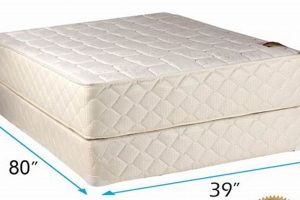
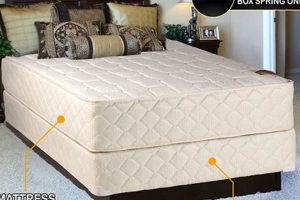
This bedding foundation paired with a sleep surface forms a complete support system for individuals seeking comfortable rest. The base, typically a rigid structure containing springs or wooden slats, elevates the sleep surface and absorbs impact. This two-piece ensemble distributes weight evenly, preventing premature sagging and contributing to the overall longevity of the sleep system. As an example, a traditional innerspring combined with its matching foundation creates a responsive and durable sleeping arrangement.
The benefits of this combined approach extend beyond mere comfort. It enhances spinal alignment by providing consistent support. Elevation facilitates airflow, mitigating moisture buildup and promoting a more hygienic sleeping environment. Historically, these foundations were primarily spring-based, evolving from simple bed frames to sophisticated shock absorbers. The result is improved sleep quality and prolonged useful life of both components.
The selection process requires careful consideration of individual needs and preferences. Factors such as sleeping position, body weight, and desired firmness level influence the optimal choice. Further discussion will explore specific types, materials, and care instructions to ensure a suitable and lasting investment in restorative rest.
Tips for Selecting a Bedding Ensemble
Choosing a proper foundation and sleep surface is a crucial decision impacting sleep quality and overall well-being. The following guidelines provide a framework for selecting a compatible set.
Tip 1: Assess Support Needs: Evaluate individual weight and preferred sleeping position. Heavier individuals or those who sleep on their stomachs may require a firmer foundation for adequate support. Innerspring models often benefit from a more robust base.
Tip 2: Consider Height: Bed height affects ease of entry and exit. Older individuals or those with mobility limitations should prioritize a height that minimizes strain. Measure existing furniture to ensure a harmonious room aesthetic.
Tip 3: Verify Compatibility: Not all foundations are suitable for every sleep surface. Memory foam and latex models may require a solid, non-spring foundation for optimal performance and warranty compliance. Refer to manufacturer specifications.
Tip 4: Inspect Construction Quality: Examine the foundation’s frame for sturdiness and durability. Look for reinforced corners and high-quality materials. A well-constructed foundation extends the life of the overall sleep system.
Tip 5: Evaluate Noise Levels: Spring-based foundations can sometimes produce noise. Test the foundation by applying pressure to various points. Excessive squeaking or creaking indicates potential issues.
Tip 6: Consider Foundation Type: Explore alternatives to traditional spring foundations, such as platform beds or adjustable bases. These options offer different support characteristics and functionality.
Tip 7: Protect with a Mattress Protector: Always use a quality mattress protector to shield the sleep surface from spills, stains, and allergens. This extends the lifespan of the unit and maintains warranty validity.
Careful consideration of these factors will result in a selection that promotes comfortable, restorative sleep and maximizes the lifespan of the bedding investment.
The following sections will delve into specific types of bedding ensembles and explore proper care and maintenance techniques.
1. Support
The level of support provided by a “box spring and mattress set” is paramount in achieving restful sleep and maintaining spinal health. The interplay between the foundation and the sleep surface directly impacts the distribution of body weight and the reduction of pressure points. Inadequate support can lead to discomfort, pain, and disrupted sleep patterns.
- Foundation Rigidity and Weight Distribution
The foundation’s rigidity dictates its ability to evenly distribute the weight of the sleeper and the mattress. A sagging or weak foundation compromises support, causing the mattress to conform unevenly and creating pressure points. Traditional spring foundations, platform bases, and adjustable bases each offer distinct levels of rigidity and weight distribution capabilities.
- Mattress Construction and Spinal Alignment
The internal construction of the mattress, including coil type, foam density, and layering, contributes to its capacity to support the spine in its natural alignment. A mattress that is too soft allows the spine to curve excessively, while one that is too firm can create pressure points along the shoulders and hips. The appropriate mattress firmness level is dependent on individual sleeping position and body weight.
- Edge Support and Usable Sleep Surface
Edge support refers to the reinforcement along the perimeter of the mattress, preventing sagging and providing a stable surface for sitting or sleeping near the edge. Weak edge support reduces the usable sleep surface and can lead to a feeling of instability. Adequate edge support is particularly important for couples who share a bed.
- Longevity of Support System
The durability of both the foundation and the mattress directly impacts the long-term effectiveness of the support system. High-quality materials and construction techniques contribute to the overall lifespan of the set and its ability to maintain its supportive properties over time. Replacing a worn or sagging foundation is crucial to preserving the support offered by the mattress.
The synergistic relationship between the foundation and the mattress determines the overall support characteristics of a “box spring and mattress set.” Selecting a compatible pairing that considers individual needs and preferences is essential for optimizing sleep quality and minimizing the risk of musculoskeletal discomfort. Ignoring the role of either component can lead to compromised support and a reduced lifespan for the entire sleep system.
2. Comfort

The subjective experience of comfort is a primary determinant in the selection of a “box spring and mattress set”. While support addresses the biomechanical aspects of sleep, comfort encompasses the tactile and thermal properties contributing to a sense of relaxation and restfulness.
- Surface Feel and Material Composition
The outermost layers of the mattress directly influence the initial sensation of comfort. Materials such as quilted covers, memory foam, latex, or natural fibers each possess distinct tactile qualities. For example, a plush memory foam layer contours to the body, providing pressure relief, while a tightly woven cotton cover offers breathability and a cooler sleep surface. The material composition significantly impacts the perceived comfort level.
- Temperature Regulation and Breathability
Maintaining a stable and comfortable sleeping temperature is critical for uninterrupted sleep. Materials that promote airflow, such as open-cell foam or breathable fabrics, dissipate heat and moisture, preventing overheating. In contrast, dense, non-breathable materials can trap heat, leading to discomfort and restlessness. The breathability of both the mattress and the foundation contributes to temperature regulation.
- Motion Isolation and Partner Disturbance
For individuals sharing a bed, motion isolation is a key aspect of comfort. A mattress with effective motion isolation minimizes the transfer of movement from one side to the other, reducing disturbances caused by a partner’s tossing and turning. Pocketed coil systems and dense foam layers excel at absorbing motion, contributing to a more restful sleep experience for both individuals. The stability of the foundation also plays a role in minimizing motion transfer.
- Pressure Relief and Contouring
The ability of a mattress to contour to the body’s natural curves and relieve pressure points is essential for comfort. Pressure points, typically located at the shoulders, hips, and knees, can cause discomfort and disrupt circulation. Materials such as memory foam and latex excel at conforming to the body, distributing weight evenly and reducing pressure. The support provided by the foundation ensures that the mattress maintains its shape and continues to provide adequate pressure relief over time.
These interconnected elements shape the overall comfort profile of a “box spring and mattress set.” Individual preferences for firmness, temperature, and motion isolation vary considerably. Therefore, a thorough assessment of these factors is necessary to select a bedding combination that maximizes individual comfort and promotes restful sleep. The integration of support and comfort determines the overall satisfaction with a sleep solution.
3. Durability
The durability of a “box spring and mattress set” significantly impacts its long-term value and overall cost-effectiveness. The capacity of the ensemble to withstand prolonged use without substantial degradation in support or comfort directly determines its lifespan. Premature wear and tear necessitate earlier replacement, increasing the overall expense and potentially compromising sleep quality. The selection of durable materials and robust construction techniques in both components is, therefore, a critical consideration.
The foundation’s construction materials and design influence its ability to withstand weight and pressure over time. Wooden frames should be constructed from kiln-dried hardwoods, resistant to warping and cracking. Steel components, if present, should be rust-resistant and adequately gauge-rated to prevent bending or collapse. Similarly, the mattress’s internal components, such as coil type, foam density, and fabric quality, dictate its resistance to sagging, compression, and wear. For example, a mattress employing high-density memory foam is generally more resistant to body impressions than one utilizing lower-density alternatives. Furthermore, proper maintenance, including regular rotation and the use of a mattress protector, can extend the lifespan of both the mattress and its foundation, mitigating the effects of daily use and environmental factors.
In conclusion, the durability of a “box spring and mattress set” is not merely a matter of material quality; it is a comprehensive measure of the ensemble’s capacity to maintain its structural integrity and functional performance over an extended period. Investing in a durable set represents a long-term value proposition, minimizing replacement costs and ensuring consistent sleep quality. Understanding the factors contributing to durability empowers informed decision-making and contributes to a more sustainable consumption pattern by reducing the frequency of bedding disposal.
4. Elevation

Elevation, in the context of a “box spring and mattress set,” refers to the height at which the sleep surface is positioned above the floor. This dimension is not merely an aesthetic consideration but bears significant implications for accessibility, comfort, and the overall sleeping environment.
- Accessibility and Ease of Entry/Exit
The elevation of the set directly impacts the ease with which individuals can enter and exit the bed. A height that is too low can strain the back and knees, particularly for those with mobility limitations. Conversely, an excessive height may require an awkward climb. The ideal elevation facilitates a smooth transition between standing and lying positions, minimizing physical stress. The consideration becomes increasingly important with age or specific physical conditions.
- Airflow and Ventilation
Elevation promotes airflow beneath the sleep surface, reducing moisture buildup and discouraging the growth of mold and dust mites. Proximity to the floor increases the risk of accumulating dust and allergens. Elevating the mattress provides a buffer zone, improving ventilation and creating a healthier sleeping environment. This is especially pertinent in humid climates or for individuals with respiratory sensitivities.
- Storage Space Underneath
The height afforded by a “box spring and mattress set” can create valuable storage space beneath the bed. This is particularly advantageous in smaller living spaces where maximizing storage capacity is essential. Utilizing the area beneath the bed for storing items such as linens, seasonal clothing, or other belongings can contribute to a more organized and clutter-free environment. Available clearance under the bed is directly determined by the foundation’s height.
- Aesthetic Considerations and Room Proportion
The elevation of the set influences the visual proportions of the room. A bed that is too low may appear dwarfed in a larger room, while an excessively high bed can overwhelm a smaller space. Choosing an elevation that complements the room’s dimensions and existing furniture contributes to a more aesthetically pleasing and balanced environment. Visual harmony impacts the overall perception of comfort and relaxation within the bedroom.
Each of these facets underscores the importance of considering elevation when selecting a “box spring and mattress set”. The optimal height is a function of individual needs, physical limitations, and the characteristics of the surrounding environment. Careful attention to elevation ensures not only comfort and accessibility but also contributes to a healthier and more aesthetically pleasing sleep space. Failure to consider elevation appropriately compromises these aspects, diminishing the overall benefits of the bedding investment.
5. Compatibility

The term “compatibility,” when applied to a “box spring and mattress set,” refers to the functional and structural harmony between the foundation and the sleep surface. A mismatch can negate the benefits of either component, leading to compromised support, reduced comfort, and premature wear. The foundation’s design must align with the mattress type to ensure proper weight distribution and prevent damage. For instance, a memory foam mattress, which relies on a solid surface for support, can sag prematurely if placed on a traditional spring foundation with wide gaps. Similarly, a foundation lacking sufficient rigidity can undermine the support characteristics of a firm innerspring mattress. The lack of compatibility manifests as uneven wear, sagging, or discomfort, reducing the lifespan of the entire set. Choosing a compatible pairing is, therefore, not merely a matter of convenience but a critical factor in maximizing the investment in a sleep system.
Practical application of this understanding involves careful consideration of mattress type and manufacturer recommendations. Modern mattresses often specify the appropriate foundation type, taking into account factors such as coil density, foam composition, and weight capacity. Failure to adhere to these recommendations can void warranties, highlighting the financial implications of incompatibility. For example, many hybrid mattresses, which combine innerspring coils with foam layers, require a platform base or a foundation with closely spaced slats to prevent sagging and ensure even weight distribution. Ignoring this requirement can lead to premature wear and reduced comfort, necessitating earlier replacement of the mattress. Retailers and manufacturers provide compatibility guides to assist consumers in making informed choices, and consulting these resources is a prudent step in selecting a harmonious “box spring and mattress set.”
In summary, compatibility is an indispensable component of a functional and durable “box spring and mattress set.” A mismatch between the foundation and the mattress can negate the intended benefits of each, leading to compromised support, reduced comfort, and premature wear. Understanding the specific requirements of different mattress types and adhering to manufacturer recommendations are crucial steps in ensuring compatibility. The challenge lies in navigating the diverse range of options available and making informed choices based on individual needs and budget constraints. Prioritizing compatibility ensures a more sustainable and cost-effective sleep solution in the long term.
6. Size
The size of a “box spring and mattress set” is a fundamental consideration, impacting not only physical comfort but also bedroom functionality and spatial harmony. The dimensions of the ensemble must align with both the user’s physical needs and the room’s constraints to ensure optimal utility and aesthetic integration.
- Occupancy and Individual Space Requirements
The number of occupants dictates the minimum size requirement. A single sleeper may find a twin or full-size adequate, while couples generally require a queen or king-size to ensure sufficient personal space and minimize sleep disturbance. Insufficient space can lead to discomfort, restricted movement, and compromised sleep quality. For example, a couple attempting to share a full-size may experience restricted movement and increased sleep disturbances, affecting the overall well-being of both individuals.
- Bedroom Dimensions and Spatial Limitations
The physical size of the bedroom directly limits the maximum feasible size of the “box spring and mattress set”. A king-size, while providing ample sleeping space, may overwhelm a small room, restricting movement and creating a cramped environment. Prior to purchase, measuring the room and accounting for other furniture is essential to ensure adequate space for circulation and functionality. A queen-size in a smaller bedroom may be a more practical choice, balancing sleeping space with overall room usability.
- Body Size and Physical Proportions
Individual height and body size influence the optimal bed length and width. Taller individuals require longer mattresses to prevent feet from hanging off the edge, while wider mattresses provide additional space for side sleeping or those who tend to move during sleep. Failing to account for physical proportions can lead to discomfort and restricted movement, negatively impacting sleep quality. A taller person sleeping on a standard-length mattress may experience discomfort due to inadequate leg support.
- Foundation Height and Overall Footprint
The foundation’s height, when combined with the mattress thickness, contributes to the overall height and visual footprint of the set. A high-profile foundation, while potentially providing additional storage space, may overwhelm a smaller room or be difficult for individuals with mobility limitations to access. Conversely, a low-profile foundation may be more suitable for smaller spaces or individuals preferring a lower bed height. The combined height and footprint should be carefully considered in relation to the bedroom’s dimensions and the user’s physical needs.
The “size” of a “box spring and mattress set” transcends mere dimensions; it embodies the interplay between user needs, spatial limitations, and aesthetic considerations. A well-chosen size promotes comfort, functionality, and harmonious integration within the bedroom environment, contributing to improved sleep quality and overall well-being. Ignoring these factors can lead to compromised comfort, restricted movement, and a diminished sleeping experience.
7. Cost

The cost associated with a “box spring and mattress set” is a significant consideration for consumers, encompassing not only the initial purchase price but also long-term expenses related to maintenance, lifespan, and potential health impacts. Understanding the factors influencing cost is crucial for making an informed decision and maximizing value.
- Initial Purchase Price and Material Composition
The initial cost of a “box spring and mattress set” is heavily influenced by the materials used in its construction. Mattresses incorporating high-density memory foam, natural latex, or individually wrapped coils command a premium price compared to those utilizing lower-density foams or traditional innerspring systems. Similarly, foundations constructed with solid hardwoods and reinforced steel frames are more expensive than those made with particleboard or lightweight metal. Consumers should evaluate the correlation between material quality and expected lifespan to determine the long-term value proposition. A seemingly inexpensive set may prove more costly in the long run due to premature wear and the need for frequent replacements.
- Lifespan and Replacement Frequency
The durability of a “box spring and mattress set” directly impacts its long-term cost. A set with a short lifespan necessitates more frequent replacements, increasing the overall expense. Factors such as material quality, construction techniques, and proper maintenance influence the lifespan. Investing in a higher-quality set with a longer warranty period may be a more cost-effective strategy despite the higher initial investment. A well-maintained set can last seven to ten years, while a poorly constructed or neglected set may require replacement within three to five years.
- Health Implications and Related Expenses
An inadequate “box spring and mattress set” can contribute to health issues such as back pain, allergies, and sleep disturbances, leading to indirect costs associated with medical treatment and lost productivity. A supportive and hypoallergenic set, while potentially more expensive upfront, can mitigate these health risks and reduce related expenses. For example, a mattress with poor spinal support may exacerbate existing back problems, requiring costly physical therapy or medication. Similarly, a mattress harboring dust mites can trigger allergies, necessitating ongoing medical treatment and medication.
- Warranty Coverage and Repair Costs
Warranty coverage provides a safeguard against manufacturing defects and premature wear, potentially mitigating repair or replacement costs. A comprehensive warranty demonstrates the manufacturer’s confidence in the product’s durability and protects the consumer against unforeseen expenses. Consumers should carefully review the terms and conditions of the warranty, paying attention to the covered components, the duration of coverage, and any exclusions. A set with a limited warranty may expose the consumer to significant repair costs in the event of a manufacturing defect or premature failure.
These factors highlight the multifaceted nature of cost in relation to a “box spring and mattress set”. The initial purchase price is but one component of the overall expense. Lifespan, health implications, and warranty coverage are equally important considerations. By carefully evaluating these factors, consumers can make informed decisions that maximize value and minimize long-term costs associated with this essential household purchase.
Frequently Asked Questions
The following addresses common inquiries regarding the selection, maintenance, and functionality of box spring and mattress sets. This information aims to provide clarity and promote informed decision-making.
Question 1: What is the primary function of a box spring in a box spring and mattress set?
The box spring serves as a supportive foundation for the mattress, absorbing shock and distributing weight evenly. This prevents premature sagging and extends the mattress’s lifespan. It also elevates the mattress, facilitating easier access and promoting airflow.
Question 2: Are all box springs compatible with all mattresses?
No. Certain mattress types, such as memory foam or latex, perform optimally on a solid, non-spring foundation or platform bed. Using an incompatible foundation can void the mattress warranty and compromise support.
Question 3: How frequently should a box spring and mattress set be replaced?
The lifespan of a box spring and mattress set varies based on usage, material quality, and maintenance. As a general guideline, a replacement is recommended every seven to ten years. Sagging, visible damage, or a significant decline in comfort indicate the need for replacement.
Question 4: Can a damaged box spring be repaired?
Minor damage, such as loose fabric or protruding staples, can often be repaired. However, structural damage, such as broken springs or a warped frame, typically necessitates replacement. Attempting to repair significant structural damage can compromise the foundation’s integrity and jeopardize the mattress’s support.
Question 5: Does the size of the box spring need to match the size of the mattress exactly?
Yes. The box spring must precisely match the mattress’s dimensions to ensure proper support and prevent overhang, which can lead to premature wear and tear. Mismatched sizes compromise the integrity of the entire sleep system.
Question 6: Are there alternatives to a traditional box spring?
Yes. Platform beds, adjustable bases, and solid foundations offer alternatives to traditional box springs. These options provide varying levels of support and functionality, and the choice depends on individual preferences and the specific requirements of the mattress.
In conclusion, the proper selection and maintenance of a box spring and mattress set is essential for optimizing sleep quality and ensuring long-term value. Understanding the functionality, compatibility, and replacement guidelines promotes informed consumer choices.
Further information regarding specific mattress types and care recommendations will be discussed in the following section.
Conclusion
This exploration of the “box spring and mattress set” has underscored its crucial role in facilitating restorative sleep. From understanding the interplay between support, comfort, durability, elevation, compatibility, size, and cost, it becomes clear that the selection of this ensemble is a multifaceted decision. Prioritizing individual needs and carefully evaluating the characteristics of each component are essential for optimizing sleep quality and maximizing the investment.
The continued pursuit of innovation in materials and design will undoubtedly lead to further advancements in sleep technology. A commitment to informed decision-making, grounded in a comprehensive understanding of these factors, ensures that individuals can make choices that promote both physical well-being and long-term value. The importance of the “box spring and mattress set” in achieving a restful and healthy life cannot be overstated.
![Upgrade Your Sleep: Twin Mattress & Box Spring Set - [Year] | Organic & Natural Mattress Buyer’s Guide: Non-Toxic Sleep Solutions](https://mattressworldpa.com/wp-content/uploads/2025/07/th-3528-300x200.jpg "Upgrade Your Sleep: Twin Mattress & Box Spring Set - [Year] Organic & Natural Mattress Buyer’s Guide: Non-Toxic Sleep Solutions")