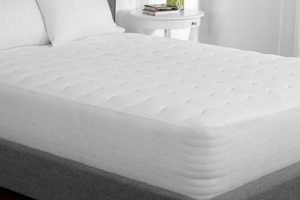
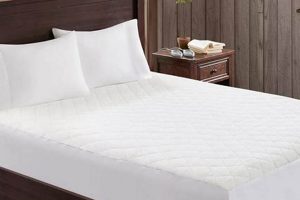
A convoluted foam sheet designed to fit the dimensions of a standard full-size bed, this product is typically placed atop a mattress to enhance comfort and provide pressure relief. Its distinctive surface resembles an egg carton, hence its common name. These pads are generally constructed from polyurethane or memory foam.
The primary purpose of this bedding accessory is to improve sleep quality by distributing body weight more evenly, thereby reducing pressure points that can cause discomfort and restless sleep. Individuals experiencing back pain, arthritis, or other conditions that make sleeping on a standard mattress difficult may find these pads beneficial. They have been used for decades as an affordable solution for mattress comfort enhancement, particularly in healthcare settings and for temporary bedding arrangements.
Understanding the nuances of foam densities, construction materials, and appropriate usage is crucial when selecting such an item. Subsequent discussion will delve into these specific aspects to provide a comprehensive guide for potential purchasers.
Selection and Maintenance Guidance
The following recommendations offer insights into choosing and preserving this specific bedding accessory, ensuring optimal performance and longevity.
Tip 1: Density Assessment: Examine the foam density. Higher densities generally offer greater support and durability. Consider a minimum density of 3 pounds per cubic foot for polyurethane foam, or 4 pounds per cubic foot for memory foam, to ensure adequate pressure relief and resistance to compression over time.
Tip 2: Material Consideration: Distinguish between polyurethane and memory foam variants. Polyurethane provides basic cushioning and is more economical, while memory foam conforms to the body’s shape, offering enhanced support. Individuals with specific pressure point sensitivities may benefit more from memory foam options.
Tip 3: Size Verification: Confirm the precise dimensions of the mattress before purchase. These pads are specifically designed for full-sized mattresses, typically measuring 54 inches wide and 75 inches long. Ill-fitting products can compromise support and increase wear.
Tip 4: Cleaning Protocols: Implement regular cleaning to maintain hygiene and prevent the accumulation of allergens. Most models should be spot-cleaned with a mild detergent and water, avoiding harsh chemicals or excessive moisture that could damage the foam structure.
Tip 5: Ventilation Practices: Allow the item to air out periodically. Removing bedding and exposing the item to fresh air can help dissipate moisture and prevent the growth of mold or mildew, extending its lifespan.
Tip 6: Rotation Schedules: Rotate the item regularly, ideally every three to six months. This practice helps distribute wear evenly and prevents localized compression, maintaining consistent support across the entire surface.
Implementing these strategies will optimize comfort, prolong usability, and safeguard the cleanliness of this supplementary bedding component.
The subsequent section addresses common concerns and frequently asked questions related to its application and maintenance.
1. Size specifications

The dimensions of a foam pad intended for placement atop a mattress are critical to its effectiveness and overall user satisfaction. These specifications dictate how well the pad conforms to the underlying support surface, directly influencing comfort and pressure distribution.
- Full-Size Bed Compatibility
The designated dimensions for a “full” size mattress are approximately 54 inches in width and 75 inches in length. An overlay designed for this size must adhere to these dimensions to ensure proper coverage and prevent overhang or gaps that could compromise support and comfort. Deviation from these measurements diminishes the effectiveness of the product.
- Thickness Considerations
While length and width are primary concerns, thickness also plays a crucial role. Thickness typically ranges from 1 to 3 inches. A thinner option might offer minimal pressure relief, while an overly thick pad can create an unstable sleeping surface or render fitted sheets incompatible. The ideal thickness is a balance of comfort and practicality.
- Tolerance Levels
Manufacturing tolerances should be considered. A slight variation in dimensions is acceptable, but excessive deviations can lead to fitment issues. Reputable manufacturers adhere to strict quality control measures to minimize discrepancies. Consumers should be aware of the stated dimensions and inquire about tolerance levels prior to purchase.
- Impact on Bedding
The overall height of the mattress plus the added pad influences the type of bedding required. Deeper fitted sheets may be necessary to accommodate the increased thickness. Failure to account for this can result in sheets that slip off the mattress, disrupting sleep and requiring frequent adjustments.
Therefore, ensuring precise dimensional alignment between the full-size mattress and the corresponding pad is paramount for optimizing comfort, support, and overall functionality. Attention to these specifications, including length, width, and thickness, mitigates potential compatibility issues and enhances the user experience.
2. Material composition

The properties and performance characteristics of a convoluted foam sheet, commonly known for its application atop full-size mattresses, are directly dependent on its material composition. The selection of materials, typically polyurethane or memory foam, dictates factors such as durability, pressure relief, and thermal regulation. For instance, a high-density polyurethane foam offers adequate support at a lower cost, making it a prevalent choice for budget-conscious consumers. Conversely, memory foam, a viscoelastic polymer, conforms to the body’s contours, providing enhanced pressure distribution and reducing discomfort for individuals with specific orthopedic needs. This material choice directly influences the product’s ability to alleviate pressure points and promote restful sleep. Inadequate material selection renders the design ineffective.
Real-world examples illustrate the impact of material. Hospital settings often utilize polyurethane versions due to their ease of cleaning and lower cost, prioritizing hygiene and affordability. In contrast, higher-end models frequently employ gel-infused memory foam to mitigate heat retention, addressing a common complaint associated with traditional memory foam. The infusion of gel particles enhances breathability and wicks away moisture, preventing overheating during sleep. Additionally, the material’s density directly affects the product’s lifespan. Low-density options are prone to compression
and degradation, reducing their effectiveness over time. Therefore, understanding the material properties is critical for selecting a product that meets specific needs and expectations.
In summation, the relationship between the material used and the functionality of this particular mattress accessory is inextricable. Material choices have significant effects on comfort, support, durability, and thermal regulation. A thorough understanding of these relationships enables informed purchasing decisions, ensuring that the selected product effectively enhances sleep quality and provides long-term value. However, challenges remain in balancing cost considerations with the desire for higher-quality materials, presenting consumers with a trade-off between affordability and enhanced performance.
3. Pressure relief

The convoluted surface of a mattress overlay is fundamentally linked to the concept of pressure relief. The peaks and valleys of the design create an uneven surface, distributing body weight across a larger area compared to a flat surface. This redistribution reduces concentrated pressure on specific points, such as the hips, shoulders, and back, commonly associated with discomfort and disrupted sleep. Without effective pressure redistribution, prolonged pressure on these areas can impede circulation, leading to numbness, tingling, and increased tossing and turning throughout the night.
Consider, for example, an individual experiencing chronic back pain. A standard mattress may not provide adequate contouring or pressure relief, exacerbating their discomfort. The addition of a convoluted foam overlay alters the sleeping surface, conforming to the body’s shape and minimizing pressure on the spine. This reduction in pressure allows for improved blood flow and reduced inflammation, leading to a more restful sleep experience. Furthermore, variations in density and material composition, such as memory foam, further enhance pressure relief capabilities. Memory foam’s viscoelastic properties enable it to mold to the body’s shape, providing customized support and pressure distribution. In healthcare settings, these overlays are frequently employed to prevent bedsores in patients with limited mobility, demonstrating their practical significance in mitigating pressure-related complications.
In conclusion, the design directly facilitates pressure relief through its unique surface topography. By redistributing body weight and conforming to individual contours, it minimizes concentrated pressure points, promotes circulation, and contributes to a more comfortable and restorative sleep. While material composition and density influence the degree of pressure relief, the fundamental principle remains consistent: the convoluted surface enhances pressure distribution, making it a valuable tool for individuals seeking to alleviate discomfort and improve sleep quality. However, challenges persist in objectively quantifying pressure relief and matching individuals with the appropriate overlay based on their specific needs. Further research is needed to refine pressure mapping techniques and develop personalized recommendations for optimizing sleep comfort.
4. Air circulation

Effective thermal regulation during sleep is significantly influenced by air circulation within bedding materials. The design of a convoluted foam mattress overlay directly impacts airflow, thereby affecting sleep comfort.
- Convoluted Surface Area
The peaks and valleys characteristic of the design create channels that facilitate air movement beneath the sleeper. This increased surface area allows for greater heat dissipation compared to a flat, solid foam surface. A greater surface area means more potential for heat to escape, contributing to a cooler sleeping environment.
- Material Permeability
The type of foam used affects air permeability. Open-cell foam structures, commonly found in lower-density options, allow for greater airflow than closed-cell foams. However, increased permeability may also reduce the foam’s structural integrity and longevity. Therefore, the trade-off between permeability and durability must be considered.
- Moisture Wicking
Improved air circulation aids in the evaporation of moisture, reducing humidity within the sleeping environment. This is particularly relevant for individuals who experience night sweats or live in humid climates. Enhanced moisture wicking contributes to a drier and more comfortable sleep surface.
- Heat Dissipation
The design promotes convective heat transfer by allowing warm air near the body to rise and be replaced by cooler air. This process aids in maintaining a consistent and comfortable temperature throughout the night. Impediments to airflow, such as thick bedding or impermeable mattress covers, can negate the benefits of this design.
The aforementioned facets underscore the importance of air circulation in optimizing sleep comfort when utilizing a convoluted foam mattress overlay. The design’s inherent properties, coupled with material characteristics, directly impact heat dissipation, moisture wicking, and overall thermal regulation. Compromising air circulation can negate the intended benefits of the mattress pad, resulting in discomfort and disrupted sleep. Further research is needed to quantify the relationship between airflow rates, material properties, and subjective sleep quality.
5. Density options

The firmness and support characteristics of a convoluted foam bedding accessory are fundamentally linked to the density of the material used in its construction. Density, measured in pounds per cubic foot (lbs/ft), directly influences the compression resistance, durability, and overall comfort provided by the product. Variation in this parameter allows for the customization of support levels to suit individual needs and preferences.
- Low-Density Foam
Typically ranging from 1.0 to 2.0 lbs/ft, low-density foam offers minimal support and is primarily intended for cushioning. While cost-effective, these options are prone to rapid compression and may not provide adequate pressure relief for individuals with back pain or other orthopedic concerns. These are often found in budget-friendly options designed for occasional use or short-term bedding solutions. For example, a dorm room setting may utilize this to add short term cushion.
- Medium-Density Foam
With a density range of 2.5 to 3.5 lbs/ft, medium-density foam provides a balance of comfort and support. It offers improved durability compared to low-density options and is suitable for individuals seeking moderate pressure relief. Many commercially available models in the mid-price range utilize this density, offering a compromise between cost and performance. It is a common selection for guest rooms where different people might be using the item.
- High-Density Foam
Characterized by a density of 4.0 lbs/ft or higher, high-density foam offers superior support and longevity. These options are more resistant to compression and provide enhanced pressure relief, making them suitable for individuals with significant orthope
dic needs or those seeking long-term durability. Products employing high-density foam are typically more expensive, but their extended lifespan and improved performance may justify the investment. In healthcare settings, it is used to prevent and alleviate bedsores on patients. - Impact on Convolutions
The density of the foam directly affects the resilience and effectiveness of the convolutions. Higher densities maintain their shape and support better under pressure, while lower densities may flatten over time, reducing their ability to promote airflow and distribute weight evenly. Therefore, the design and density must be considered in conjunction to ensure optimal performance.
In summary, the density of the foam is a critical factor determining the performance and longevity of this product. Ranging from low to high, density options allow consumers to select products that align with their individual needs, budgets, and desired levels of support and durability. Ignoring density considerations can result in dissatisfaction with the product’s performance and premature degradation of the material.
6. Cost effectiveness

The economic value proposition inherent in a convoluted foam mattress overlay is a significant factor influencing its widespread adoption. Its relatively low cost compared to complete mattress replacements or more advanced sleep solutions positions it as an accessible option for enhancing comfort and support.
- Initial Purchase Price
The initial investment required for a convoluted foam overlay is substantially less than that of a new mattress. This affordability makes it an attractive solution for individuals on a budget or those seeking a temporary comfort enhancement. The upfront cost can range from a few tens of dollars to around a hundred, depending on material, density, and size. This is in stark contrast to new mattresses that may cost several hundreds to thousands of dollars.
- Extended Mattress Lifespan
By providing an additional layer of support and absorbing some of the daily wear and tear, a convoluted foam overlay can potentially extend the lifespan of the underlying mattress. This delays the need for costly mattress replacement, contributing to long-term savings. The overlay bears the brunt of compression and friction, protecting the mattress core from premature degradation.
- Improved Sleep Quality and Health
Enhanced sleep quality resulting from increased comfort and pressure relief can lead to improved overall health and productivity. This translates to reduced healthcare costs and increased work efficiency, indirectly contributing to economic benefits. Restorative sleep reduces reliance on daytime stimulants and minimizes absenteeism due to sleep-related health issues.
- Versatility and Portability
The portable nature of a convoluted foam overlay allows it to be easily transported and used in various settings, such as guest rooms, dormitories, or while traveling. This versatility maximizes its utility and contributes to its cost-effectiveness. It allows for a consistent sleep surface regardless of location, negating the need for separate bedding solutions.
The multifaceted economic advantages associated with convoluted foam mattress overlays, including their low initial cost, potential to extend mattress lifespan, positive impact on sleep quality, and versatility, collectively underscore their overall cost-effectiveness. These factors make them a pragmatic choice for individuals seeking to improve their sleep environment without incurring significant financial burden. However, it is imperative to balance cost considerations with quality and durability to ensure long-term value.
Frequently Asked Questions
The following section addresses common inquiries regarding the selection, use, and maintenance of convoluted foam mattress overlays designed for full-sized beds. These answers aim to provide clarity and assist in making informed purchasing decisions.
Question 1: How does the design of the overlay contribute to improved sleep quality?
The peaks and valleys of the convoluted surface distribute body weight more evenly, reducing pressure points that can cause discomfort and restlessness. This design also promotes air circulation, which helps regulate temperature and minimize heat buildup during sleep.
Question 2: What are the primary differences between polyurethane and memory foam overlays?
Polyurethane foam offers basic cushioning and is generally more affordable. Memory foam conforms to the body’s shape, providing enhanced support and pressure relief. Memory foam may also retain more heat than polyurethane, though gel-infused options can mitigate this issue.
Question 3: How frequently should the overlay be cleaned, and what cleaning methods are recommended?
The overlay should be cleaned every few months or as needed. Spot cleaning with a mild detergent and water is generally recommended. Avoid harsh chemicals or excessive moisture, which can damage the foam. Allow the overlay to air dry completely before replacing bedding.
Question 4: How does the density of the foam impact the performance of the mattress overlay?
Higher-density foam provides greater support and durability. Lower-density foam is less resistant to compression and may not offer adequate pressure relief over time. Individuals seeking long-term comfort should prioritize overlays with higher density ratings.
Question 5: Is the overlay suitable for individuals with allergies or sensitivities?
Some overlays are treated with hypoallergenic materials or antimicrobial agents to minimize the risk of allergic reactions. Individuals with known sensitivities should carefully review product specifications and select overlays with appropriate certifications or treatments.
Question 6: Can the use of a mattress overlay compensate for a worn or sagging mattress?
While an overlay can improve comfort and provide some support, it is not a substitute for a new mattress. If the underlying mattress is significantly worn or sagging, an overlay may only provide temporary relief. In such cases, replacing the mattress is generally recommended.
In summary, careful consideration of design, material, density, and maintenance practices is essential for maximizing the benefits and longevity of a convoluted foam mattress overlay for full-sized beds.
The subsequent section explores user testimonials and case studies related to the use of these mattress overlays.
Conclusion
The preceding analysis has elucidated various facets of the convoluted foam mattress overlay, commonly identified as the “egg crate mattress pad full.” Key aspects examined encompass design features, material properties, density options, and economic considerations, demonstrating the multifaceted nature of this seemingly simple bedding accessory. Understanding these nuances is critical for informed consumer decision-making and optimizing sleep comfort.
The significance of a properly selected and maintained “egg crate mattress pad full” should not be underestimated. Its impact extends beyond mere cushioning, influencing sleep quality, overall health, and even long-term economic outcomes. Continued exploration of material science and ergonomic design promises further refinements in this area, potentially leading to even more effective and affordable solutions for improv
ing sleep environments. The consumer is advised to diligently assess individual needs and product specifications before making a purchase, ensuring alignment with specific requirements and expectations.