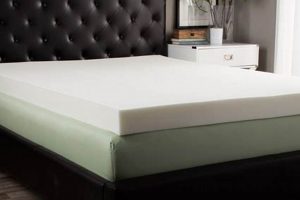
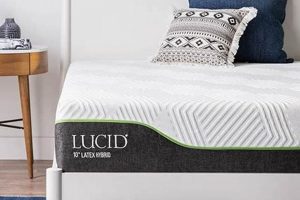
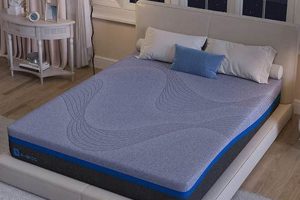
A comfort layer designed to enhance the sleeping surface, this product typically consists of viscoelastic foam three inches in thickness. It is placed atop an existing mattress to modify its feel. For instance, an individual with a firm mattress might add this layer to achieve a softer, more conforming sleep experience.
The primary benefit of this type of product is improved sleep quality through enhanced pressure relief and spinal alignment. The foam conforms to the body’s contours, distributing weight more evenly and reducing stress on pressure points like hips and shoulders. This can lead to reduced tossing and turning during the night. Such mattress enhancements have become increasingly popular since the development of memory foam technology.
The subsequent sections will delve into the specific advantages offered, factors to consider when selecting one, and guidance on proper care and maintenance. This will assist in making an informed decision on whether this type of product is suitable for individual needs and preferences.
Guidance on Utilizing a Three Inch Memory Foam Mattress Topper
This section presents several key considerations for maximizing the benefits and longevity of a three-inch memory foam enhancement for mattresses.
Tip 1: Select Appropriate Density: Memory foam density significantly impacts firmness and support. Higher-density options generally provide more substantial support and durability, while lower-density options offer a softer feel. The choice depends on individual preference and body weight.
Tip 2: Allow for Off-Gassing: New memory foam often exhibits a distinct odor due to volatile organic compounds (VOCs) released during manufacturing. Unpack the product and allow it to air out in a well-ventilated room for 24-48 hours before use to minimize the smell.
Tip 3: Utilize a Protective Cover: A mattress encasement or fitted sheet protects the foam from spills, stains, and dust mites. This also contributes to a more hygienic sleep environment and prolongs the life of the product.
Tip 4: Rotate Periodically: To ensure even wear and prevent body impressions, rotate the product 180 degrees every few months. This distributes the weight and pressure across the surface, mitigating localized compression.
Tip 5: Clean Carefully: Avoid harsh chemicals and excessive moisture when cleaning. Spot clean stains with a mild detergent and lukewarm water. Air dry thoroughly, avoiding direct sunlight, which can degrade the foam.
Tip 6: Ensure Proper Support: The performance relies on a stable and supportive underlying mattress. If the existing mattress is severely sagging or damaged, the effectiveness of the product will be compromised.
These guidelines promote optimal performance and extend the lifespan of a three-inch memory foam addition to a mattress. Consideration of these factors contributes to a more comfortable and supportive sleep experience.
The concluding section will summarize the critical aspects covered in this article.
1. Pressure Relief
The effectiveness of a three-inch memory foam addition to mattresses in providing pressure relief stems from its inherent viscoelastic properties. Upon contact, the foam deforms and conforms to the contours of the body, distributing weight across a larger surface area. This redistribution reduces concentrated pressure on specific points, such as the hips, shoulders, and knees, thereby alleviating discomfort. For example, an individual experiencing chronic back pain may find that a topper of this kind reduces pressure on the spinal column, leading to a decrease in pain and improved sleep quality.
The degree of pressure relief is directly proportional to the foam’s density and thickness. A three-inch depth offers a significant advantage over thinner options, allowing for greater conformity and cushioning. A practical demonstration of this is seen in the treatment of bedsores; individuals confined to bed for extended periods are often placed on memory foam surfaces to minimize pressure and prevent skin breakdown. The conforming action of the foam reduces strain on capillary blood flow reducing the risk of ischemic damage to tissue.
In summary, pressure relief is a fundamental benefit derived from using a three-inch memory foam addition to a mattress. By conforming to the body’s shape and redistributing weight, it alleviates concentrated pressure on sensitive areas, potentially leading to decreased pain, improved circulation, and enhanced sleep. The understanding of this connection is crucial for consumers seeking targeted solutions to improve their sleeping surface and overall well-being.
2. Density Variations
Density, measured in pounds per cubic foot (lbs/ft), is a critical determinant of the firmness, support, and durability of a three-inch memory foam addition to a mattress. Higher density signifies a greater quantity of material packed into the same volume. Consequently, a higher-density product will generally feel firmer and provide greater support, while also exhibiting enhanced resistance to compression and deformation over time. The selection of an appropriate density directly influences the suitability of the product for individual needs. For example, an individual with a higher body mass or those who prefer a firmer sleeping surface may benefit from a higher-density option, ensuring adequate support and preventing premature sagging. Conversely, a lighter individual or those seeking a softer, more plush feel may opt for a lower-density version.
The effect of density is evident in the product’s performance regarding pressure relief and spinal alignment. While all memory foam conforms to the body, higher-density options distribute weight more evenly, minimizing pressure points and promoting proper spinal posture, particularly beneficial for back and side sleepers. However, higher density also translates to increased heat retention. Manufacturers often incorporate cooling technologies, such as gel infusions or open-cell structures, to mitigate this effect. The interplay between density, support, pressure relief, and temperature regulation necessitates a careful consideration of these factors when selecting a product of this nature.
Understanding density variations is crucial for making an informed purchasing decision. It impacts not only the initial comfort level but also the long-term performance and lifespan of the product. Ignoring this parameter may result in selecting an inappropriate option, leading to discomfort, inadequate support, and premature degradation. Therefore, consumers should prioritize density information and correlate it with their individual needs and preferences to maximize the benefits derived from a three-inch memory foam addition to their existing mattress.
3. Heat Dissipation
Heat dissipation is a significant consideration when evaluating the suitability of a three-inch memory foam mattress addition. Memory foam, by its nature, tends to retain heat more than traditional innerspring mattresses due to its dense structure, which restricts airflow. This can lead to discomfort and disrupted sleep, particularly for individuals who tend to sleep hot. Addressing this issue requires an understanding of the factors influencing heat accumulation and the strategies employed to mitigate it.
- Material Composition and Airflow
The density and cell structure of the memory foam directly impact its breathability. Closed-cell structures trap heat, while open-cell designs promote airflow and reduce heat retention. Some manufacturers incorporate channels or perforations into the foam to further enhance ventilation. For instance, a topper with an open-cell design and ventilation channels will likely dissipate heat more effectively than a denser, closed-cell counterpart.
- Gel Infusion and Phase Change Materials
Gel-infused memory foam is designed to absorb and dissipate heat. The gel particles draw heat away from the body, providing a cooling effect. Phase change materials (PCMs) go a step further by absorbing heat as they transition from a solid to a liquid state, effectively regulating temperature. These technologies are commonly used in higher-end products to improve thermal comfort. An example of this is a topper incorporating gel beads and PCMs to maintain a consistent temperature range throughout the night.
- Cover Materials and Breathability
The material used for the topper’s cover plays a crucial role in heat dissipation. Breathable fabrics such as cotton, bamboo, or specialized performance materials allow for better airflow and moisture wicking, preventing heat from being trapped against the body. A cover made of synthetic materials with a tight weave can hinder airflow and exacerbate heat retention. For example, a topper with a breathable cotton cover will likely feel cooler than one with a polyester cover.
- Environmental Factors and Bedding
External factors such as room temperature, humidity, and the type of bedding used can also influence heat dissipation. A well-ventilated room with a controlled temperature promotes better heat transfer. Using breathable sheets and blankets made of natural fibers further enhances the cooling effect. Conversely, a poorly ventilated room with heavy, synthetic bedding will contribute to heat buildup. An individual sleeping in a cool room with cotton sheets will likely experience less heat retention than someone in a warm room with polyester bedding.
The effectiveness of heat dissipation in a three-inch memory foam mattress addition is a complex interplay of material composition, design features, and environmental factors. Understanding these elements allows consumers to make informed choices and select a product that minimizes heat retention and promotes a comfortable sleep environment. Proper selection considering the above considerations can avoid discomfort and promote more restful sleep during warmer months or for those prone to night sweats.
4. Support Structure

The inherent effectiveness of a three-inch memory foam layer rests significantly upon the support provided by the underlying mattress and foundation. Without adequate structural integrity beneath it, the conforming properties of the memory foam may be compromised, leading to uneven weight distribution and diminished pressure relief. The relationship between the topper and its support structure is therefore critical to the overall performance and longevity of the sleep system.
- Firmness Compatibility
The firmness of the underlying mattress should complement the density of the memory foam layer. A significantly soft mattress will allow the topper to sink excessively, potentially negating its supportive qualities and creating a hammock effect. Conversely, an overly firm mattress may diminish the topper’s conforming abilities, reducing pressure relief. Matching the firmness levels optimizes the synergistic effect of both components.
- Foundation Integrity
The foundation, whether a traditional box spring or a platform bed, must provide a stable and level surface. A sagging or damaged foundation will cause uneven weight distribution across the mattress and topper, leading to premature wear and tear and compromised support. A robust foundation ensures consistent support across the entire sleep surface.
- Edge Support Considerations
Edge support is particularly important when using a three-inch memory foam layer. Lack of adequate edge support in the underlying mattress will cause the topper to compress excessively along the edges, making it difficult to get in and out of bed and potentially reducing the usable sleep surface area. Reinforcing the edges of the mattress or selecting a mattress with enhanced edge support mitigates this issue.
- Weight Distribution and Sagging Prevention
The support structure directly impacts the overall weight distribution across the sleep surface. An inadequate foundation or a mattress with compromised internal support will lead to localized sagging, reducing the effectiveness of the memory foam in providing pressure relief and promoting proper spinal alignment. A well-designed support structure ensures even weight distribution, preventing premature sagging and extending the lifespan of both the mattress and the topper.
The interconnectedness of support structure and the function of a three-inch memory foam addition highlights the necessity of evaluating the entire sleep system as a cohesive unit. A seemingly minor deficiency in the support structure can negate the potential benefits of the topper. Consequently, proper assessment and maintenance of the underlying mattress and foundation are essential for maximizing comfort, support, and longevity.
5. Motion Isolation
Motion isolation, the dampening of movement transfer across a sleeping surface, is a significant benefit often associated with a three-inch memory foam addition to mattresses. Its relevance is particularly pronounced for couples or individuals sharing a bed, as it minimizes disturbances caused by one partner’s movements.
- Viscoelastic Damping
Memory foam’s inherent viscoelastic properties enable it to absorb energy from motion rather than transmit it across the surface. This damping effect stems from the foam’s ability to deform slowly under stress and return to its original shape gradually. For example, if one person gets out of bed, the disturbance is largely contained to that area, minimizing the feeling of movement for the other person.
- Thickness Contribution
The three-inch thickness provides a substantial buffer that further diminishes motion transfer. Thicker layers of memory foam inherently offer greater motion isolation compared to thinner alternatives. This added depth allows for more significant absorption of kinetic energy, resulting in less disturbance to the sleeping partner.
- Density and Isolation
Density plays a pivotal role in motion isolation. Higher-density memory foam tends to provide better motion isolation than lower-density options. The increased material mass absorbs and dissipates energy more effectively, reducing the propagation of movement across the sleeping surface.
- Integration with Support Layers
The effectiveness of motion isolation is also influenced by the underlying mattress’s construction. A supportive base mattress, particularly one with individually encased coils or a dense foam core, further contributes to minimizing motion transfer. The combined effect of the topper and the mattress works to dampen disturbances effectively.
The integration of viscoelastic damping, adequate thickness, appropriate density, and supportive base layers coalesce to provide enhanced motion isolation with a three-inch memory foam layer. This attribute proves beneficial by improving sleep quality for those sharing a bed, as disturbances from movement are significantly reduced.
6. Durability Factors

The long-term utility of any sleep surface enhancement is intrinsically linked to its durability. For a three-inch memory foam addition to mattresses, several key factors determine its resistance to wear, deformation, and overall lifespan, directly influencing its value proposition.
- Foam Density and Resilience
Density, measured in pounds per cubic foot (lbs/ft), is a primary indicator of durability. Higher density foams generally exhibit greater resistance to compression and deformation over time. Resilience, the ability of the foam to recover its original shape after compression, is also crucial. High-density foams with good resilience are less prone to permanent body impressions and sagging, extending the useful life of the product. For instance, a topper with a density of 4 lbs/ft will likely outlast one with a density of 2 lbs/ft under similar usage conditions.
- Manufacturing Processes and Material Quality
The manufacturing processes employed in the creation of the foam significantly impact its durability. Poorly manufactured foam may contain inconsistencies in density or structural weaknesses that lead to premature degradation. Similarly, the quality of the raw materials used in the foam’s composition is critical. Lower-grade materials may be more susceptible to breakdown due to oxidation, UV exposure, or repeated compression. A topper made with CertiPUR-US certified foam, for example, indicates adherence to standards regarding content, emissions, and durability.
- Usage Patterns and Weight Load
The frequency and intensity of use, as well as the weight load applied to the topper, directly influence its lifespan. Toppers subjected to daily use and higher weight loads will naturally degrade more quickly than those used less frequently or by lighter individuals. Rotating the topper periodically can help distribute wear and prevent localized compression, extending its lifespan. For instance, a topper used by a single individual may last longer than the same topper used by a couple.
- Care and Maintenance Practices
Proper care and maintenance play a vital role in preserving the durability of a memory foam topper. Exposure to moisture, harsh chemicals, or direct sunlight can accelerate the breakdown of the foam. Regular cleaning according to manufacturer instructions, using a protective cover, and avoiding excessive bending or folding can help prolong its lifespan. Neglecting these practices can lead to premature degradation and a reduced lifespan for the product.
Understanding and considering these durability factors is paramount when selecting a three-inch memory foam enhancement. By assessing foam density, manufacturing quality, anticipated usage, and adhering to proper care practices, consumers can maximize the lifespan and overall value of their purchase, ensuring long-term comfort and support.
7. Conformity Level

The conformity level exhibited by a three-inch memory foam mattress addition directly dictates its pressure-relieving capabilities and impact on spinal alignment. Conformity, in this context, refers to the degree to which the material molds to the contours of the body when subjected to pressure. A higher conformity level implies a more precise and nuanced adaptation to the individual’s shape, distributing weight across a greater surface area. Conversely, a lower conformity level results in less contouring, potentially leading to concentrated pressure points. The effectiveness of the product in mitigating discomfort and promoting restful sleep hinges on achieving an optimal level of conformity.
The relationship between conformity level and the inherent properties of the memory foam is significant. Density, as previously established, plays a crucial role. Lower-density foams generally exhibit higher conformity, providing a softer, more enveloping feel. However, this increased conformity may be accompanied by reduced support, particularly for individuals with higher body weights. Higher-density foams, while offering greater support, may provide a lower degree of conformity, potentially limiting their pressure-relieving capabilities. The ideal balance between support and conformity is contingent on individual needs and preferences. For instance, an individual suffering from arthritis might prioritize a high conformity level to minimize pressure on joints, while an individual with scoliosis might require a greater degree of support to maintain proper spinal alignment, thus a moderate conformity level.
In summary, conformity level is a pivotal attribute dictating the functionality of a three-inch memory foam addition. The extent to which it conforms to the body determines its ability to alleviate pressure, promote spinal alignment, and enhance sleep quality. The practical significance of understanding this lies in enabling consumers to make informed decisions based on their specific needs and physical conditions, maximizing the benefits derived from the product. Challenges in achieving the perfect balance of support and conformity remain, necessitating continuous innovation in material science and design to cater to the diverse requirements of the sleeping population.
Frequently Asked Questions
This section addresses common inquiries and concerns regarding three-inch memory foam enhancements for mattresses. The following questions aim to provide clarity and informed guidance.
Question 1: How does a three inch memory foam mattress topper improve sleep quality?
This product redistributes weight and reduces pressure points. This minimizes tossing and turning which improves spinal alignment which creates a restful sleeping experience.
Question 2: What is the appropriate density for a three inch memory foam mattress topper?
Density preferences are unique. Individuals seeking firmer support should consider higher-density options. Those preferring softer feel should explore lower-density alternatives.
Question 3: How does temperature affect the effectiveness of a three inch memory foam mattress topper?
Some memory foam retains heat. Options infused with cooling gel or designed with open-cell structures mitigate heat retention, promoting more restful sleep.
Question 4: What is the optimal thickness for a memory foam mattress topper?
While individual needs vary, a three-inch depth offers a substantial compromise between significant comfort and support. A three-inch thickness offer excellent body contouring
Question 5: How often should a three inch memory foam mattress topper be replaced?
The longevity of the mattress topper depends on usage, care, and material quality. Signs of sagging, loss of support, or persistent odors indicate the need for replacement.
Question 6: How can a three inch memory foam mattress topper be cleaned and maintained?
Spot clean the topper with a mild detergent and water. Ensure thorough drying, and avoid direct sunlight exposure. Use a mattress protector to prevent stains and damage.
The answers provided offer insights into fundamental aspects of this product. Further research and consideration of individual needs are encouraged.
The subsequent section will summarize the key considerations highlighted in this article.
In Summary
The preceding analysis has explored the properties, benefits, and considerations surrounding this product. The assessment encompassed pressure relief, density variations, heat dissipation, support structures, motion isolation, durability factors, and conformity levels. Understanding these aspects is critical for consumers aiming to enhance their sleep environment.
The selection and implementation of such a product requires careful consideration of individual needs and existing sleep systems. Informed choices contribute to improved sleep quality and long-term satisfaction. Ongoing research and development will likely lead to further advancements in materials and design, optimizing this product’s role in promoting restorative rest.