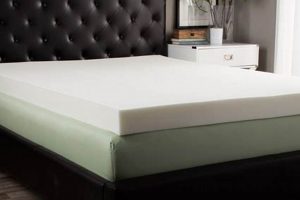
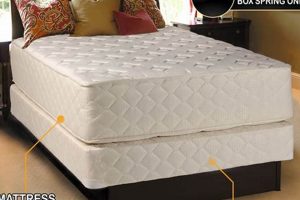
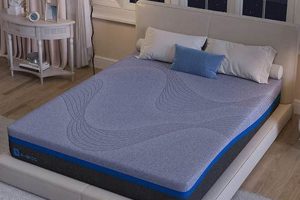
The dimensions of a standard full mattress, also known as a double mattress, are typically 54 inches wide by 75 inches long. These measurements represent the sleeping surface area available on this particular bed size. Knowing these precise figures is critical for selecting appropriately sized bedding, ensuring a comfortable fit within a bedroom space, and facilitating the correct application of fitted sheets and mattress protectors.
Understanding the specific area provided by this mattress size is beneficial for space planning and maximizing room functionality. This dimension offers more sleeping space than a twin but less than a queen, making it a practical choice for individuals or couples with limited room size. Historically, the designation of bed sizes has evolved to meet changing lifestyle needs and housing trends, with the full size serving as a versatile option for a variety of occupants and bedroom dimensions.
A comprehensive examination of mattress types requires consideration of the physical space they occupy. The subsequent discussion will address the considerations for room suitability, the types of individuals who might benefit from this specific mattress size, and how to choose bedding and accessories that complement these measurements for optimal comfort and aesthetic appeal.
Practical Considerations for Selecting Bedding Based on Full Mattress Dimensions
Selecting the appropriate bedding for a full mattress requires careful attention to its specific dimensions. The subsequent tips offer practical guidance to ensure optimal fit, comfort, and longevity of bedding items.
Tip 1: Measure the Mattress Accurately: While the nominal dimensions of a full mattress are 54 inches wide by 75 inches long, variations may occur. Accurate measurement ensures the best possible fit for sheets and mattress protectors.
Tip 2: Choose Fitted Sheets with Adequate Pocket Depth: The pocket depth of fitted sheets should accommodate the thickness of the mattress. Deeper mattresses, especially those with toppers, require sheets with corresponding pocket depths to prevent slipping.
Tip 3: Opt for Generously Sized Flat Sheets: A flat sheet that is adequately sized allows for sufficient overhang and tucking, enhancing comfort and preventing the sheet from pulling free during sleep.
Tip 4: Select Bedspreads or Comforters with Appropriate Dimensions: When choosing a bedspread or comforter, ensure the dimensions provide sufficient coverage. Measure the distance from the top of the mattress to the floor on both sides and the end of the bed to determine the appropriate size.
Tip 5: Consider Mattress Protectors with Precise Fit: A properly fitted mattress protector is essential for preventing stains and damage. Opt for a protector specifically designed for full mattresses to avoid bunching or shifting.
Tip 6: Pay Attention to Pillowcase Sizes: While standard pillowcases are often suitable for full mattresses, consider the overall aesthetic and choose pillowcases that complement the bed size and bedding style.
Understanding the precise dimensions of a full mattress and selecting bedding that accurately matches these measurements is crucial for maximizing comfort, protection, and the overall aesthetic appeal of the bed.
The following sections will delve into specific bedding materials and designs that are well-suited for use with full mattresses, offering further guidance for achieving optimal sleep quality and bedroom decor.
1. Width

The statement “Width: Fifty-four inches” is a fundamental component in defining the overall size parameters of a full-size mattress. It dictates the lateral expanse available for sleeping and directly influences comfort, suitability for different body types, and room placement considerations.
- Sleeper Accommodation
The fifty-four-inch width is crucial for determining the mattress’s capacity to comfortably accommodate one or two sleepers. While suitable for a single adult, it may provide limited space for two adults, particularly those who prefer more personal sleeping area. This dimension impacts sleep quality, as constricted space can lead to disturbances and discomfort.
- Room Size Compatibility
This width is a key factor when assessing whether a full-size mattress will fit appropriately within a given bedroom. A fifty-four-inch width requires sufficient clearance on either side to allow for movement and prevent overcrowding. Careful measurement and planning are essential to ensure the mattress integrates seamlessly into the room’s overall layout and design.
- Bedding Selection
The specific width influences the selection of appropriate bedding. Fitted sheets, flat sheets, comforters, and bedspreads must be sized correctly to ensure a proper fit. Understanding the fifty-four-inch width allows consumers to choose bedding that neither stretches excessively nor hangs improperly, maintaining both functionality and aesthetic appeal.
- Comparative Analysis
The fifty-four-inch width can be compared to that of other mattress sizes, such as twin (approximately 38 inches) and queen (approximately 60 inches), to highlight the relative advantages and disadvantages of a full-size mattress. This comparison aids in making informed decisions based on individual needs, available space, and budgetary constraints.
In summary, the width of fifty-four inches is an integral dimension contributing to the overall size and functionality of a full-size mattress. It impacts the sleeping experience, room layout, and the selection of complementary bedding. Understanding this dimension is critical for making informed decisions regarding mattress selection and room design.
2. Length

The dimension of “Length: Seventy-five inches” constitutes a critical component defining the overall “size of a full size mattress in inches”. This measurement directly influences the mattress’s suitability for accommodating individuals of varying heights and impacts the allocation of bedroom space.
- Sleeper Height Accommodation
The seventy-five-inch length determines the maximum height of an individual who can comfortably sleep on the mattress without their feet extending over the edge. This dimension is most suitable for individuals under approximately 5’10” (178 cm). Those exceeding this height may experience compromised sleep quality due to restricted legroom. Selecting a mattress with adequate length is paramount for ensuring proper spinal alignment and overall comfort.
- Bedroom Space Considerations
The stated length directly affects the planning of bedroom layouts. The mattress requires a minimum of seventy-five inches of unobstructed floor space. Insufficient space can lead to overcrowding and hinder movement within the room. Proper consideration of this dimension ensures the efficient utilization of available space and facilitates a comfortable living environment.
- Bedding Compatibility and Selection
The seventy-five-inch length necessitates the selection of appropriately sized bedding, including fitted sheets, flat sheets, and mattress protectors. Ill-fitting bedding can lead to discomfort, premature wear, and reduced functionality. Manufacturers typically design bedding with standardized dimensions to correspond with mattress sizes, thereby simplifying the selection process. However, verifying measurements remains essential to ensure a secure and comfortable fit.
- Comparative Analysis with Other Sizes
The seventy-five-inch length distinguishes the full-size mattress from other mattress sizes, such as twin (typically 75 inches) and queen (typically 80 inches). While the length is identical to that of a standard twin, the significant difference in width distinguishes the two sizes. Conversely, the queen mattress offers an additional five inches in length, potentially providing greater comfort for taller individuals. These comparisons highlight the trade-offs associated with each mattress size and inform the selection process based on individual needs.
The consideration of the seventy-five-inch length is paramount when evaluating the suitability of a full-size mattress. This dimension directly impacts sleeper comfort, room layout, and the selection of appropriate bedding. A thorough understanding of this measurement ensures informed decision-making and optimal sleep quality.
3. Area

The calculation of a full-size mattress area, resulting in 4050 square inches, provides a quantitative measure of the available sleeping surface. This figure serves as a crucial metric for comparative analysis, space planning, and determining suitability for individual sleepers or couples.
- Quantifying Sleeping Space
The “Area: 4050 square inches” directly translates to the total area available for a sleeper or sleepers. This value allows for objective comparison against other mattress sizes. For instance, a queen mattress, with a larger surface area, provides demonstrably more space. This quantification is essential when considering personal space preferences and potential sleep disturbances caused by shared sleeping arrangements.
- Informing Room Layout and Design
The area figure aids in effective space planning. Designers and homeowners can use this value to determine the optimal placement of the mattress within a bedroom, ensuring adequate clearance for movement and other furniture. This prevents overcrowding and maximizes the functional utility of the space. For example, knowing the area allows for calculating the remaining floor space available after the mattress is positioned.
- Determining Suitability for Occupancy
The calculated area informs decisions regarding the number and size of occupants best suited for a full-size mattress. While adequate for a single adult, the 4050 square inches may prove insufficient for two adults, particularly those accustomed to more personal space. This limitation can affect sleep quality and overall comfort. Considering individual body sizes and sleep preferences in relation to this area is crucial for selecting the appropriate mattress size.
- Facilitating Bedding Selection
While not directly dictating bedding sizes (which are based on length and width), the area indirectly impacts bedding selection. Understanding the overall size of the mattress assists in visualizing the bedding drape and coverage. A larger area may necessitate deeper pockets on fitted sheets or larger comforters to achieve the desired aesthetic and functional fit. It provides a holistic view of the mattress’s overall dimensions, enhancing the bedding selection process.
These facets highlight the significance of the 4050 square inches area in understanding the overall “size of a full size mattress in inches”. It enables quantitative comparisons, informs space planning, guides occupancy decisions, and contributes to a more informed bedding selection process, collectively enhancing sleep comfort and maximizing room functionality. The area figure complements the length and width dimensions, providing a complete understanding of the mattress’s physical properties.
4. Space optimization

Space optimization, in the context of bedroom design, is intrinsically linked to the physical dimensions of the chosen mattress. The “size of a full size mattress in inches” directly dictates the floor area occupied and influences the selection and arrangement of other furniture elements within the room.
- Efficient Use of Smaller Bedrooms
The dimensions of a full-size mattress, specifically 54 inches wide and 75 inches long, offer a balance between sleeping space and floor space conservation. In smaller bedrooms, a full mattress provides sufficient room for a single adult or a couple while leaving adequate space for essential furniture items such as dressers, nightstands, and desks. The choice of a full mattress over a larger size, such as a queen or king, allows for more flexible room layouts and prevents overcrowding.
- Strategic Furniture Placement
The dimensions of a full mattress directly impact the placement of other furniture within the bedroom. Careful consideration of the mattress’s size allows for strategic arrangement of complementary furniture to maximize functionality and create a comfortable flow of movement. For example, knowing the exact dimensions allows for precise placement of nightstands on either side of the bed, ensuring they are within easy reach while minimizing wasted space. Precise measurements are essential for selecting furniture pieces that complement the mattress size without overwhelming the room.
- Vertical Space Utilization
Optimizing space is not limited to the floor area occupied by the mattress; it also extends to vertical space utilization. The height of the mattress, combined with the choice of bed frame, influences the accessibility of under-bed storage. Selecting a bed frame that provides ample clearance beneath the mattress allows for the storage of items such as seasonal clothing, linens, or luggage, thereby freeing up closet space and maximizing the overall storage capacity of the room. Understanding the combined height of the mattress and frame is crucial for selecting appropriate storage containers that fit comfortably beneath the bed.
- Impact on Room Aesthetics
The size of the mattress influences the overall aesthetic appeal of the room. A full mattress, when appropriately scaled to the room’s dimensions, creates a balanced and harmonious visual environment. Selecting a mattress size that is proportionate to the room size prevents the space from feeling cramped or overwhelmed. The choice of bedding and accessories can further enhance the room’s aesthetic appeal, complementing the mattress size and creating a cohesive and inviting atmosphere.
In summary, the optimization of bedroom space is directly dependent on the precise dimensions of the mattress. The “size of a full size mattress in inches” dictates furniture placement, influences vertical space utilization, and contributes to the overall aesthetic appeal of the room. Careful consideration of these factors ensures the efficient use of available space and the creation of a functional and comfortable living environment.
5. Bedding compatibility

The dimensions of a full-size mattress, as defined by its width (54 inches) and length (75 inches), are intrinsically linked to bedding compatibility. Incompatible bedding not only compromises comfort but also accelerates wear and tear on both the mattress and the bedding itself. A sheet set designed for a twin mattress, for example, will be demonstrably too small to properly fit a full-size mattress, resulting in inadequate coverage and potential slippage during use. Conversely, bedding intended for a queen-size mattress will be excessively large, leading to bunching and a lack of a secure fit.
The accurate selection of bedding sizes is therefore paramount. Fitted sheets must possess a pocket depth sufficient to accommodate the mattress’s thickness; insufficient depth results in the sheet detaching from the corners. Flat sheets and comforters should provide adequate overhang to ensure both aesthetic appeal and functional warmth. Real-world scenarios illustrate the impact of mismatched bedding: a fitted sheet too small will consistently slip off, disrupting sleep and requiring frequent readjustment, while an oversized comforter can overwhelm the bed and potentially drag on the floor, creating a hazard. The practical significance of this understanding lies in the optimization of both comfort and longevity of bedding investments.
In summary, bedding compatibility is a critical consideration when assessing the overall value and functionality of a full-size mattress. Precise knowledge of the mattress’s dimensions is essential for selecting appropriately sized bedding. The lack of suitable bedding significantly detracts from the user experience and can lead to premature wear. Addressing bedding compatibility ensures optimal comfort, prolongs the lifespan of both the mattress and bedding, and contributes to a more aesthetically pleasing and functional bedroom environment.
Frequently Asked Questions
This section addresses common inquiries regarding the precise measurements and practical applications of full-size mattresses.
Question 1: What are the standard dimensions of a full-size mattress in inches?
The standard dimensions of a full-size mattress are 54 inches in width and 75 inches in length.
Question 2: Is a full-size mattress suitable for two adults?
A full-size mattress can accommodate two adults, although the space may be limited. This size is generally more comfortable for single sleepers or couples who prefer close proximity during sleep.
Question 3: How does a full-size mattress compare to a queen-size mattress in terms of dimensions?
A full-size mattress is narrower and shorter than a queen-size mattress. A queen typically measures 60 inches wide and 80 inches long, offering significantly more sleeping space.
Question 4: What size bedroom is recommended for a full-size mattress?
A minimum room size of 10 feet by 10 feet is generally recommended to comfortably accommodate a full-size mattress along with other essential furniture items.
Question 5: What size bedding is required for a full-size mattress?
Bedding specifically labeled as “full” or “double” size is required. These sets are designed to fit the standard 54-inch by 75-inch dimensions.
Question 6: Are there variations in the dimensions of full-size mattresses?
While the standard dimensions are 54 inches by 75 inches, slight variations may occur depending on the manufacturer. It is advisable to measure the specific mattress before purchasing bedding.
Understanding the dimensions of a full-size mattress is essential for making informed decisions regarding bedroom layout, bedding selection, and overall comfort. The provided information serves to clarify common inquiries and guide consumers in their purchasing choices.
The subsequent section will explore the different types of mattresses available, considering factors such as material, construction, and support systems.
Size of a Full Size Mattress in Inches
The preceding discussion has comprehensively outlined the precise dimensions of a full size mattress in inches, emphasizing their critical role in bedroom planning, bedding selection, and overall sleep comfort. The dimensions of 54 inches by 75 inches dictate the mattress’s suitability for individual sleepers, influence furniture arrangements within a room, and determine the appropriate size of sheets, comforters, and mattress protectors. Accurate awareness of these dimensions ensures informed purchasing decisions and facilitates the creation of a functional and aesthetically pleasing sleep environment.
Therefore, a thorough understanding of a full size mattress’s dimensions is not merely a matter of convenience, but a fundamental prerequisite for optimizing sleep quality and maximizing the utility of bedroom space. Prospective mattress purchasers are encouraged to carefully consider these dimensions in relation to their individual needs and spatial constraints. The selection of a mattress represents a significant investment, and a sound understanding of its physical properties ensures a lasting and beneficial addition to the home.