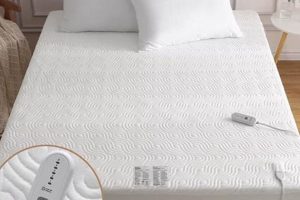
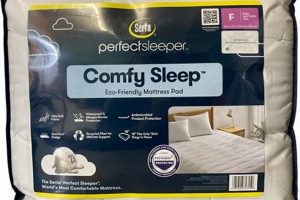
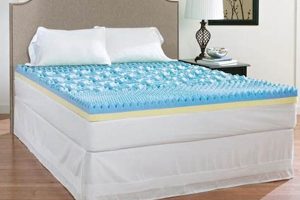
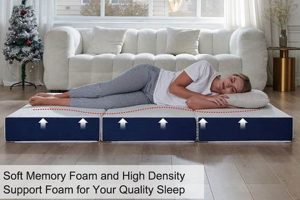
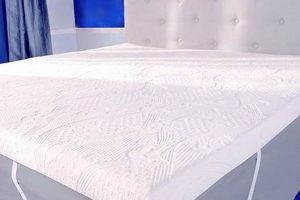
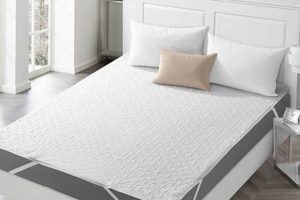
This product is a specialized bedding accessory designed to provide warmth to a standard double bed. It integrates heating elements within a padded layer, placed atop the mattress and beneath the fitted sheet, allowing for customizable temperature regulation during sleep. The “full size” designation indicates compatibility with a mattress measuring approximately 54 inches wide and 75 inches long.
The significance of this item lies in its ability to enhance sleep comfort, particularly in colder climates or for individuals with specific health conditions that benefit from consistent warmth. The controlled thermal environment can alleviate muscle tension, improve circulation, and foster a deeper, more restful sleep experience. Historically, such devices represent an advancement in sleep technology, moving from simple warming techniques to electrically-powered, adjustable systems.
The subsequent sections will delve into the various aspects of these warming devices, including their construction materials, safety features, temperature control mechanisms, and maintenance requirements. A comparison of different models and a discussion of potential health considerations will also be addressed.
Optimizing the Use of a Heated Mattress Pad (Full Size)
To ensure optimal performance and longevity of a warming mattress accessory designed for a standard double bed, consider the following guidelines. These tips focus on maximizing benefits and minimizing potential issues associated with its use.
Tip 1: Placement Considerations: Ensure the warming pad is positioned correctly beneath the fitted sheet and above the mattress protector. Incorrect placement can impede heat distribution and potentially damage the heating elements.
Tip 2: Temperature Regulation: Initiate use at the lowest temperature setting and gradually increase as needed. Prolonged exposure to high temperatures can lead to overheating and discomfort.
Tip 3: Cord Management: Position the power cord to avoid strain, kinks, or potential tripping hazards. Regularly inspect the cord for signs of damage and discontinue use if any are detected.
Tip 4: Cleaning Protocols: Adhere strictly to the manufacturer’s cleaning instructions. Most units are not machine washable and require spot cleaning with a damp cloth. Ensure the pad is completely dry before resuming use.
Tip 5: Storage Best Practices: When not in use, disconnect the unit and store it in a cool, dry place. Avoid folding the pad tightly, as this can damage the internal wiring. Rolling it loosely is often recommended.
Tip 6: Compatibility Verification: Confirm that the electric mattress warmer is compatible with the type of mattress in use (e.g., memory foam, innerspring). Certain materials may react adversely to the emitted heat.
Tip 7: Regular Inspections: Periodically inspect the warming pad for any signs of wear and tear, such as frayed fabric, exposed wiring, or uneven heating. Replace the unit if any issues are identified.
Implementing these recommendations will contribute to a safer, more comfortable, and longer-lasting experience. These practices mitigate risks associated with electrically-heated bedding accessories and enhance their therapeutic benefits.
The concluding section will summarize the key aspects of warming mattress pads, reiterating their advantages and potential drawbacks, providing a comprehensive overview for informed decision-making.
1. Temperature Control
Temperature control is a fundamental feature of a warming double-bed accessory, directly impacting user comfort and safety. The ability to regulate the heat output of the device allows for personalized thermal environments, catering to individual preferences and varying ambient temperatures.
- Thermostat Accuracy
Thermostat accuracy refers to the precision with which the control system maintains the selected temperature. Inconsistent readings or significant deviations from the setpoint can lead to discomfort, either through overheating or insufficient warmth. Higher-quality units often incorporate more sophisticated temperature sensors and control algorithms to minimize such fluctuations. For example, a thermostat calibrated to 1-degree Fahrenheit accuracy provides a more stable and predictable warming experience.
- Heating Zone Customization
Heating zone customization involves the ability to independently control the temperature in different sections of the electric mattress warmer, such as the upper and lower body regions. This feature allows users to address specific thermal needs, accommodating variations in individual body temperature or preferences. For instance, individuals who experience colder feet may appreciate the option to increase heat output in the lower zone while maintaining a lower temperature in the upper zone.
- Overheat Protection Mechanisms
Overheat protection mechanisms are safety features designed to automatically shut off the warming double bed device if it exceeds a predetermined temperature threshold. These mechanisms typically employ thermal fuses or sensors that detect abnormally high temperatures and interrupt the power supply, preventing potential burns or fire hazards. A common example is a thermal fuse that permanently disables the heating element if a temperature of 150 degrees Fahrenheit is reached, preventing further operation until the unit is replaced or repaired.
- Control Interface Design
The control interface design directly influences the ease of use and intuitiveness of the temperature adjustment process. A well-designed interface should provide clear and easily accessible controls, allowing users to quickly and accurately select their desired temperature setting. Features such as illuminated displays, tactile buttons, or remote control functionality can enhance the user experience. An interface that uses clear numerical temperature readouts, instead of arbitrary heat settings, offers more precise control.
The interplay of these elements defines the overall effectiveness of temperature control in warming double bed accessories. Investing in units with precise thermostats, customizable heating zones, robust overheat protection, and intuitive interfaces contributes to a more comfortable, safer, and ultimately more satisfying sleep experience.
2. Material Composition
The constituent materials of a heated mattress pad (full size) directly influence its performance, safety, and lifespan. The selection of fabrics, heating elements, and insulation layers dictates the pad’s ability to distribute heat effectively, withstand repeated use, and minimize potential hazards. For instance, a pad constructed with low-quality polyester may exhibit uneven heating, reduced durability, and increased s
usceptibility to melting or combustion compared to a pad utilizing durable, heat-resistant cotton or a blend of synthetic fibers designed for thermal applications. The importance of material composition lies in its direct correlation to the overall user experience and safety profile of the warming pad.
The heating elements themselves present another critical facet of material composition. Inexpensive pads often employ thin, poorly insulated wires that are prone to breakage and uneven heat distribution. Conversely, higher-quality pads may utilize carbon fiber heating elements or thicker, more robust wiring encased in a protective, flame-retardant sheath. Consider, for example, a scenario where a pad with substandard wiring experiences a short circuit, potentially leading to a fire. The presence of a flame-retardant material surrounding the heating element would significantly mitigate the risk of ignition, highlighting the practical significance of carefully selecting materials with inherent safety characteristics. Furthermore, the type of insulation used within the pad influences heat retention and energy efficiency. Better insulation reduces heat loss, allowing the pad to maintain a consistent temperature while consuming less energy.
In summary, the material composition of a full-size warming mattress pad is not merely a matter of cost or aesthetics but a determinant of safety, performance, and longevity. Challenges arise in balancing cost-effectiveness with the need for durable, heat-resistant, and safe materials. A thorough understanding of the properties and performance characteristics of different materials is essential for both manufacturers and consumers in ensuring the reliable and safe operation of these heated bedding accessories.
3. Safety Mechanisms

The integration of safety mechanisms within a “heated mattress pad full size” is not merely a desirable feature but a critical necessity. The electrical nature of these devices, combined with their prolonged use in close proximity to individuals during sleep, necessitates multiple layers of protection against potential hazards. Failures in these safety measures can lead to consequences ranging from minor burns to electrical fires, emphasizing the paramount importance of robust engineering and rigorous testing. For example, the absence of an automatic shut-off feature in the event of overheating can result in prolonged exposure to dangerously high temperatures, causing skin irritation or, in severe cases, burns. Similarly, inadequate insulation of the heating wires poses a risk of electrical shock if the wiring becomes damaged or frayed.
Effective safety mechanisms in a warming mattress pad designed for a full-size bed commonly include overheat protection, which automatically shuts off the pad if it exceeds a predetermined temperature threshold. This often involves the use of thermal fuses or sensors that monitor the pad’s temperature and interrupt the power supply if overheating is detected. Another crucial safety feature is low-voltage operation, which minimizes the risk of electric shock by reducing the voltage flowing through the heating wires. Flame-retardant materials used in the construction of the pad also play a vital role in preventing fires by slowing down or preventing the spread of flames in the event of a malfunction. Furthermore, stringent quality control during manufacturing, including thorough testing of electrical components and wiring, is essential for ensuring the reliability and effectiveness of these safety measures.
The practical significance of understanding the connection between safety mechanisms and a “heated mattress pad full size” extends beyond mere awareness. It empowers consumers to make informed purchasing decisions, selecting products with proven safety records and certifications from reputable testing organizations. Furthermore, it underscores the importance of adhering to the manufacturer’s instructions for proper use and maintenance, including regular inspection of the pad and cord for signs of damage. While the convenience and comfort offered by these warming devices are undeniable, prioritizing safety through a comprehensive understanding of the incorporated safety mechanisms is paramount for mitigating potential risks and ensuring a safe and restful sleep environment.
4. Energy Efficiency

Energy efficiency is a critical consideration in the design and utilization of a “heated mattress pad full size”. The operational costs and environmental impact associated with these devices are directly influenced by their energy consumption. Optimizing energy efficiency not only reduces user expenses but also aligns with broader sustainability goals.
- Wattage Rating and Power Consumption
The wattage rating indicates the maximum power a “heated mattress pad full size” can draw. Lower wattage ratings generally translate to reduced energy consumption. Monitoring the pad’s actual power consumption during operation, often expressed in kilowatt-hours (kWh), provides a precise measure of its energy usage over time. For instance, a 75-watt pad used for 8 hours per night will consume significantly less energy than a 150-watt pad over the course of a month.
- Heating Element Design and Insulation
The design of the heating elements and the quality of insulation materials directly impact energy efficiency. Efficient heating element designs distribute heat evenly, minimizing the need for high-power settings. Effective insulation reduces heat loss, allowing the pad to maintain a consistent temperature with less energy input. A pad with poorly insulated heating elements may require higher power settings to achieve the same level of warmth as a well-insulated pad, resulting in increased energy consumption.
- Timer and Automatic Shut-Off Features
Timer and automatic shut-off features contribute significantly to energy efficiency by preventing the pad from operating unnecessarily. Timers allow users to set a specific duration for the pad to remain active, while automatic shut-off features automatically turn off the pad after a predetermined period, typically several hours. These features prevent the pad from running continuously throughout the night, reducing energy waste. For example, a user who falls asleep shortly after turning on the pad benefits from an automatic shut-off feature that prevents the pad from running for the entire night.
- Temperature Control Precision
Precise temperature control enhances energy efficiency by allowing users to maintain their desired warmth level without overshooting the target temperature. Pads with accurate temperature sensors and responsive control systems minimize temperature fluctuations, preventing unnecessary energy expenditure. In contrast, pads with imprecise temperature control may cycle frequently between on and off states, resulting in fluctuating temperatures and increased energy consumption.
The interconnectedness of wattage, heating element design, automated features, and temperature precision directly determine the energy efficiency profile of a “heated mattress pad full size.” Consumers should evaluate these factors to minimize energy usage and associated costs, while manufacturers should prioritize designs that optimize energy performance.
5. Size Compatibility

Size compatibility represents a fundamental determinant of a “heated mattress pad full size” utility and effectiveness. A mattress pad of incorrect dimensions will demonstrably fail to provide uniform heating, compromise safety, and ultimately diminish user satisfaction. The designation “full size” dictates precise dimensional requirements for optimal performance. Deviation from these specifications creates a cascade of negative effects. For instance, a pad designed for a queen-sized mattress will exhibit excess material, potentially causing bunching, uneven heat distribution, and increasing the risk of overheating in concentrated areas. Conversely, a pad intended for a twin-sized bed will leave substantial portions of the full-sized mattress unheated, negating the intended therapeutic benefits.
Real-world examples underscore the practical significance of size compatibility. A hospital seeking to provide therapeutic warmth to patients on standard full-sized beds must procure pads specifically designed for that dimension. Mismatched sizes would not only fail to provide consistent warmth but could also pose a safety hazard, particularly for patients with sensory impairments. Similarly, a consumer purchasing a “heated mattress pad full size” for home use expects a snug, secure fit that evenly distributes heat across the entire mattress surface. The presence of gaps or overlaps due to incorrect sizing would detract from the overall comfort and functionality of the product. The precision of size compatibility is not merely an aesthetic consideration; it directly influences the pad’s ability to function as intended, delivering consistent and safe heating.
In conclusion, size compatibility is an indispensable attribute of a “heated mattress pad full size”. Its importance stems from its direct impact on heating performance, safety, and user satisfaction. Challenges arise from variations in mattress dimensions across different manufacturers. The strict adherence to standardized sizing conventions and clear labeling are crucial for mitigating these challenges and ensuring that consumers select the appropriate “heated mattress pad full size” for their needs. Ultimately, the successful integration of size compatibility contributes to the overall effectiveness and therapeutic value of this heated bedding accessory.
6. Maintenance Requirements

The longevity and safety of a “heated mattress pad full size” are inextricably linked to adherence to specific maintenance requirements. These requirements encompass cleaning protocols, storage guidelines, and routine inspections, all of which directly influence the product’s performance and lifespan. The omission of proper maintenance can precipitate premature failure of the heating elements, degradation of the fabric, and increased risk of electrical hazards. The effect of neglecting these requirements is a tangible reduction in the lifespan of the warming pad and a potential compromise of user safety. For example, repeated exposure to moisture without proper drying can corrode the internal wiring, leading to short circuits and rendering the pad unusable. The importance of maintenance routines is, therefore, not merely a matter of prolonging the product’s lifespan but also a critical element in ensuring its continued safe operation.
Practical application of these maintenance requirements involves several key steps. Cleaning should be performed in accordance with the manufacturer’s instructions, typically involving spot cleaning with a damp cloth and mild detergent. Immersing the pad in water or machine washing it can damage the internal components and void the warranty. Storage should be in a cool, dry place, avoiding tight folding or compression that can damage the heating elements. Routine inspections should focus on the power cord, control unit, and fabric surface, looking for signs of wear, fraying, or damage. Addressing these issues promptly can prevent more serious problems from developing. A common scenario is the detection of a frayed power cord during inspection; prompt replacement of the cord can avert a potential fire hazard. Similarly, addressing minor stains or spills quickly can prevent them from setting in and potentially damaging the fabric.
In summary, maintenance requirements are an integral component of owning and operating a “heated mattress pad full size.” These requirements directly influence the pad’s safety, performance, and longevity. While the specific tasks may vary depending on the model and manufacturer, the underlying principle remains constant: diligent adherence to maintenance protocols is essential for maximizing the value and minimizing the risks associated with this warming bedding accessory. Challenges arise from consumer negligence or lack of awareness regarding proper maintenance procedures. Overcoming these challenges requires clear and accessible instructions from manufacturers and a heightened awareness among consumers of the critical role maintenance plays in ensuring a safe and comfortable sleep environment.
Frequently Asked Questions
This section addresses common inquiries and misconceptions regarding the use and care of warming mattress pads designed for standard double beds. The information provided aims to clarify concerns and ensure safe and effective operation.
Question 1: What is the expected lifespan of a warming mattress accessory designed for a standard double bed?
The lifespan varies depending on usage frequency, construction quality, and adherence to maintenance guidelines. Generally, a high-quality unit, properly maintained, can last between three and five years.
Question 2: Is it safe to use a heated mattress pad in conjunction with a memory foam mattress?
Compatibility depends on the specific memory foam mattress and the mattress pad’s heat output. Consult both the mattress and the pad’s manufacturer guidelines. Excessive heat can potentially damage some memory foam materials.
Question 3: What safety certifications should be considered when purchasing this warming pad?
Look for certifications from recognized testing organizations such as UL (Underwriters Laboratories) or ETL (Edison Testing Laboratories). These certifications indicate that the pad has been tested and meets established safety standards.
Question 4: How often should the pad be cleaned, and what is the recommended cleaning procedure?
Cleaning frequency depends on usage and environmental factors. Spot cleaning with a damp cloth and mild detergent is generally recommended. Consult the manufacturer’s instructions for specific cleaning protocols and avoid immersion in water.
Question 5: What are the potential health risks associated with prolonged use of a electric mattress warmer?
Prolonged exposure to heat can potentially cause skin irritation, dehydration, or exacerbate certain medical conditions. Individuals with circulatory problems or nerve damage should consult a physician before use.
Question 6: Can this pad be used with an adjustable bed frame?
Compatibility with adjustable bed frames depends on the design and flexibility of the electric mattress warmer. Verify that the pad is specifically designed for use with adjustable beds and that the cords and heating elements are not strained during adjustments.
The preceding questions and answers highlight crucial considerations regarding the practical application of these devices. Addressing these concerns contributes to a safer and more inf
ormed user experience.
The concluding section will summarize the key aspects of electric mattress warmers, reiterating their advantages and potential drawbacks, providing a comprehensive overview for informed decision-making.
Conclusion
This exploration of the “heated mattress pad full size” has underscored the device’s complexity beyond its simple function of providing warmth. Critical aspects such as material composition, safety mechanisms, energy efficiency, size compatibility, and maintenance requirements demand careful consideration. The product’s potential to enhance comfort and provide therapeutic benefits is undeniable, but these advantages must be weighed against potential risks if safety protocols are not strictly observed.
The decision to acquire and utilize a “heated mattress pad full size” should be predicated on a thorough understanding of its operational parameters and safety features. Responsible purchasing, diligent maintenance, and adherence to manufacturer guidelines are essential for maximizing its benefits and mitigating potential hazards. Continued advancements in materials science and safety technologies will likely further enhance the performance and safety of these devices, yet user awareness remains the ultimate safeguard.