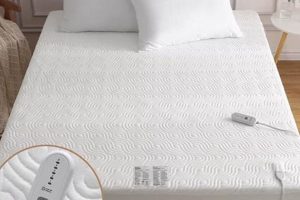
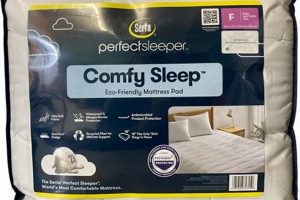
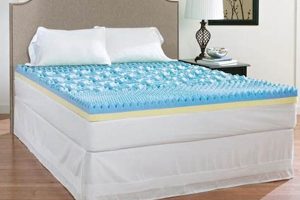
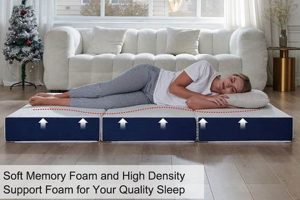
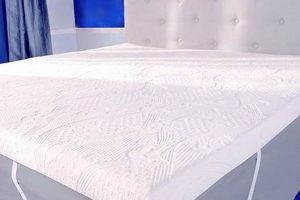
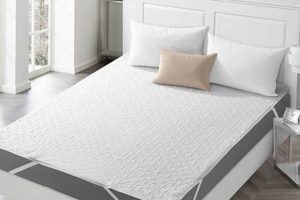
A temperature-controlled overlay designed for placement on top of a mattress, offers supplemental warmth to the user. These products typically utilize electric resistance heating elements woven within fabric layers to generate heat. The temperature is adjustable via a control unit, allowing customization of the warmth level. They are commonly used during colder months to enhance sleep comfort and provide relief for individuals experiencing discomfort from cold temperatures.
The use of such devices can contribute to improved sleep quality by creating a more comfortable sleep environment. The added warmth can alleviate muscle tension and promote relaxation, potentially easing aches and pains. Historically, methods of warming beds involved hot water bottles or warmed bricks, which were cumbersome and retained heat for a limited duration. Modern electric versions offer consistent and controlled heating throughout the night, or for a pre-set duration, adding a layer of safety and convenience.
The following sections will explore the various features to consider when evaluating these products, including safety mechanisms, material composition, controller functionalities, and user reviews, to aid in the selection of an appropriate model. Understanding these factors is essential for making an informed purchase decision.
Guidance on Selecting a Temperature-Regulated Mattress Topper
The following provides practical advice to consider prior to acquiring a temperature-regulated mattress topper. These suggestions aim to ensure the purchase aligns with individual needs and preferences, prioritizing safety and long-term value.
Tip 1: Prioritize Safety Certifications: Ensure the selected product possesses certification from a recognized testing laboratory, such as UL or ETL. These certifications indicate the device has undergone rigorous testing to meet established safety standards regarding electrical components and fire resistance.
Tip 2: Evaluate Material Composition: Consider the material of the topper itself. Natural fibers, such as cotton, may offer better breathability and comfort compared to synthetic materials. Evaluate the presence of any flame retardant chemicals and understand their potential implications.
Tip 3: Assess Controller Functionality: Examine the features of the control unit. Independent zone control, allowing different temperature settings for different areas of the bed, can be beneficial for couples. Programmable timers offer automated shut-off functionality, contributing to energy efficiency and safety.
Tip 4: Review Warranty and Return Policies: Before purchasing, carefully review the manufacturer’s warranty and return policies. A longer warranty period often indicates greater confidence in product durability. Understanding the return policy is crucial in case the product does not meet expectations.
Tip 5: Consider Power Consumption: Investigate the power consumption of the device, especially if it will be used frequently. Look for models with energy-saving features. Calculate the estimated energy cost based on usage patterns and local electricity rates.
Tip 6: Examine Wire Placement and Density: The placement and density of the heating wires significantly impact heat distribution. A higher wire density generally provides more even and consistent warmth across the surface of the topper. Avoid models with uneven or noticeably sparse wire configurations.
Tip 7: Read User Reviews and Ratings: Consult user reviews from multiple sources to gain insight into real-world experiences with the product. Pay attention to comments regarding heating performance, durability, and customer service.
Selecting an appropriate temperature-regulated mattress topper necessitates careful consideration of safety features, material properties, control capabilities, and user feedback. By addressing these elements, a well-informed purchase decision is more likely.
The next section will address frequently asked questions regarding the care, maintenance, and safe operation of temperature-regulated mattress toppers.
1. Temperature Consistency

Temperature consistency is a critical attribute in determining the effectiveness and user satisfaction of a warming mattress overlay. The presence of uneven heating, characterized by pronounced hot or cold spots, diminishes the intended benefit of a uniform warmth. This inconsistency can disrupt sleep, causing discomfort and necessitating frequent adjustment of settings. Consequently, the ability of a mattress pad to maintain a stable and evenly distributed heat is paramount to its overall performance and perceived value.
Variations in temperature can arise from several factors, including the density and placement of heating elements, the quality of insulation within the pad, and the accuracy of the control unit. Models with sparsely distributed or poorly insulated heating elements are more prone to uneven heating. In contrast, products featuring densely packed, high-quality heating wires and effective insulation layers exhibit superior temperature consistency. This translates to a more comfortable and restful sleep experience. For example, consider two mattress pads: one with thin, widely spaced wires that create hot spots, and another with thicker, closely spaced wires providing a gentle, consistent warmth across the entire surface. The latter is demonstrably superior due to its ability to maintain a stable temperature throughout the night.
Ultimately, achieving and maintaining consistent temperature is not merely a matter of comfort; it is a key indicator of product quality and design. Models recognized as top-tier offerings generally prioritize this aspect through advanced heating technology and rigorous testing procedures. A focus on even heat distribution is not simply a feature, but an essential requirement for a mattress pad to effectively deliver its primary function: providing a comfortable and consistently warm sleeping environment. Addressing temperature consistency represents a significant step in ensuring overall product quality and user satisfaction.
2. Safety Certifications

Safety certifications represent a cornerstone in evaluating the merit of temperature-controlled mattress overlays. These endorsements, conferred by recognized testing bodies, indicate adherence to stringent electrical safety standards, mitigating risks such as overheating, fire hazards, and electrical shocks. The presence of certifications like UL (Underwriters Laboratories) or ETL (Intertek) serves as tangible evidence of independent verification, offering assurance that the product has undergone rigorous testing to meet predefined safety criteria. This aspect is not merely a desirable feature; it is a critical requirement for safeguarding users from potential harm.
The impact of safety certifications extends beyond baseline protection. Certifie
d products are subject to ongoing monitoring and periodic re-evaluation to ensure continued compliance with evolving safety protocols. In the absence of such certifications, the internal components and construction of the mattress pad remain unverified, potentially harboring substandard wiring, inadequate insulation, or poorly designed control mechanisms. Consider, for instance, a non-certified product experiencing a short circuit due to faulty wiring. The absence of safety measures, verified by a recognized certification, increases the probability of fire ignition and subsequent harm. Conversely, a certified product is designed with safeguards, such as automatic shut-off mechanisms and flame-retardant materials, significantly reducing the risk of such occurrences.
In summary, the presence of valid safety certifications is paramount in the selection of a temperature-controlled mattress overlay. These certifications not only validate adherence to established safety standards but also provide a measure of assurance regarding the product’s design, construction, and potential hazards. Prioritizing certified models translates to a proactive approach towards user safety and a mitigation of potential risks associated with electrically heated bedding. Ignoring this critical factor introduces undue vulnerability to preventable accidents.
3. Material durability
The longevity of a warming mattress overlay is intrinsically linked to the durability of its constituent materials. Material degradation, stemming from repeated use, laundering, and exposure to body heat, directly impacts the product’s functional lifespan. A mattress pad constructed from inferior or insufficiently robust materials is prone to premature wear, including fabric fraying, seam splitting, and internal component failure. The selection of durable materials, therefore, constitutes a fundamental aspect in determining the overall value and performance of a warming mattress overlay. For instance, a pad employing low-grade polyester may exhibit pilling and loss of structural integrity after a limited number of wash cycles, rendering it unusable, whereas a pad crafted from tightly woven, high-denier cotton or a durable synthetic blend will demonstrate greater resistance to wear and tear. Such resilience translates to prolonged usability and reduced replacement frequency.
Furthermore, material durability extends beyond the surface fabric to encompass the heating elements and internal wiring. The cyclical expansion and contraction caused by repeated heating and cooling can place significant stress on these components. Substandard wiring, susceptible to fracturing or insulation breakdown, poses a safety hazard and contributes to premature product failure. A mattress pad utilizing high-gauge, insulated wiring and robust heating elements is better equipped to withstand these stresses, ensuring continued functionality and minimizing the risk of electrical malfunctions. The choice of materials thus dictates not only the physical appearance and comfort of the pad but also its inherent safety and operational reliability.
In summary, material durability is a critical determinant of a warming mattress overlay’s long-term performance and cost-effectiveness. The use of resilient fabrics, robust wiring, and high-quality heating elements directly correlates with increased product lifespan, enhanced safety, and sustained user satisfaction. Compromising on material quality invariably leads to premature degradation, heightened safety risks, and diminished overall value. Prioritizing material durability represents a prudent investment in the product’s longevity and reliable performance.
4. Control precision

Control precision, in the context of a temperature-regulated mattress topper, refers to the degree of accuracy and granularity with which a user can adjust the heating intensity. This attribute is not merely a convenience; it directly influences the user’s ability to establish and maintain a personalized thermal environment conducive to restful sleep. The correlation between control precision and the overall effectiveness of a warming mattress overlay is significant, as it enables the user to fine-tune the temperature to meet individual preferences and adapt to fluctuations in ambient room temperature or personal physiological needs. Insufficient control precision, characterized by large temperature increments or imprecise settings, can result in either inadequate warmth or excessive heat, both of which detract from sleep quality and overall comfort.
The practical significance of control precision becomes evident in various real-world scenarios. For instance, individuals with varying temperature sensitivities can benefit from granular control, allowing them to select the precise level of warmth that suits their specific needs. Couples sharing a bed can utilize dual-zone control systems with precise temperature settings to accommodate differing thermal preferences. Furthermore, control precision is essential for individuals experiencing medical conditions that necessitate precise temperature regulation for symptom management. A mattress pad offering incremental temperature adjustments allows these users to maintain a comfortable and therapeutic sleep environment. Without precise control, the mattress pad becomes a less effective tool for managing temperature-sensitive conditions. An example includes a system providing degree-by-degree adjustment increments, from 70F to 90F. Another system with Low, Med, High setting is far less precise.
In summary, control precision constitutes a critical determinant of the functional efficacy and user satisfaction associated with a temperature-regulated mattress topper. A higher degree of control allows for greater personalization, improved comfort, and enhanced therapeutic benefits. Prioritizing control precision during product selection represents a prudent decision, ensuring the mattress pad effectively addresses individual thermal needs and contributes to improved sleep quality. The absence of precise control mechanisms undermines the potential benefits of a warming mattress overlay, limiting its adaptability and overall utility.
5. Energy efficiency
Energy efficiency represents a vital attribute within the context of temperature-regulating mattress overlays. The operational costs associated with electrically heated bedding can accumulate significantly over time, particularly with frequent or prolonged use. Therefore, a focus on energy efficiency is crucial for minimizing both financial burden and environmental impact. A less efficient model consumes more electricity to achieve and maintain the desired temperature, resulting in higher utility bills and increased carbon footprint. In contrast, an energy-efficient mattress pad utilizes advanced heating technology and insulation techniques to minimize energy consumption while delivering comparable levels of warmth. This focus on efficiency extends to the design of the control unit, where programmable timers and automatic shut-off features can further reduce energy waste. For example, consider two mattress pads: one without any energy-saving features, operating continuously at a fixed temperature, and another equipped with a programmable timer and adjustable temperature settings, allowing for automated shu
t-off during periods of inactivity. The latter represents a demonstrably more energy-efficient option.
The efficiency of a temperature-regulating mattress overlay is often directly correlated with the quality of its internal components and construction. Models incorporating densely packed, insulated heating wires and precision temperature sensors tend to exhibit superior energy efficiency. These components enable the pad to achieve and maintain the desired temperature with minimal energy input, preventing excessive heat loss and ensuring consistent performance. Conversely, mattress pads with poorly insulated or sparsely distributed heating elements require more energy to compensate for heat loss, leading to increased power consumption and reduced efficiency. Furthermore, models with poorly calibrated temperature sensors may overshoot or undershoot the target temperature, resulting in energy waste as the system continuously adjusts to compensate for the inaccurate readings. The quality of components is directly related to operating expense.
In summary, energy efficiency constitutes a crucial consideration in the selection of a temperature-regulating mattress overlay. A focus on energy-efficient models not only reduces operating costs but also contributes to environmental sustainability. Prioritizing models with advanced heating technology, efficient insulation, and intelligent control features represents a responsible approach to energy consumption and ensures long-term cost savings. Ignoring energy efficiency in the selection process results in unnecessary financial burden and increased environmental impact. This factor merits careful consideration for discerning buyers.
Frequently Asked Questions
The subsequent section addresses common inquiries concerning the selection, operation, and maintenance of temperature-regulated mattress overlays, providing informative responses to facilitate informed decision-making.
Question 1: What safety certifications should be sought when acquiring a heated mattress pad?
Reputable certifications, such as UL (Underwriters Laboratories) or ETL (Intertek), indicate that the product has undergone rigorous testing to meet established electrical safety standards. Verification of these certifications is essential to mitigate potential hazards.
Question 2: How does wire density affect the performance of a mattress warming pad?
Higher wire density generally promotes more even and consistent heat distribution across the surface of the pad, minimizing the occurrence of cold spots and enhancing overall comfort.
Question 3: What are the potential benefits of independent zone control in a dual-user bed warmer?
Independent zone control allows each user to customize the temperature settings on their respective side of the bed, accommodating differing thermal preferences and promoting individualized comfort.
Question 4: How should a mattress warmer be cleaned to maintain hygiene and functionality?
Consult the manufacturer’s instructions for specific cleaning recommendations. Generally, disconnecting the control unit and spot cleaning with a mild detergent is advisable. Avoid submerging the pad in water or using harsh chemicals.
Question 5: What factors contribute to the energy efficiency of a warming mattress pad?
Energy efficiency is influenced by the quality of insulation, the type of heating elements, and the presence of features such as programmable timers and automatic shut-off mechanisms.
Question 6: What is the typical lifespan of a temperature-regulated mattress topper?
The lifespan can vary depending on factors such as material quality, usage frequency, and adherence to maintenance guidelines. A well-maintained, high-quality mattress pad can typically last for several years.
These FAQs offer a foundational understanding of crucial aspects related to temperature-regulated mattress overlays, enabling prospective buyers to make well-informed choices. Prioritizing safety, performance, and maintenance contributes to long-term satisfaction.
The subsequent section will explore real-world user reviews and experiences with various temperature-regulated mattress overlay models, providing practical insights into product performance and reliability.
Concluding Assessment
The preceding analysis has examined the critical attributes of a temperature-regulated mattress overlay, commonly referred to as the best heated mattress pad, encompassing safety, material durability, control precision, and energy efficiency. These factors collectively determine product effectiveness and long-term value. A comprehensive understanding of these characteristics facilitates informed purchasing decisions and ensures user satisfaction.
The selection of a best heated mattress pad warrants careful consideration, prioritizing certified safety, durable materials, precise temperature control, and efficient energy consumption. Continued advancements in heating technology and material science are expected to further enhance the performance and longevity of these products, solidifying their role in promoting sleep comfort and well-being.