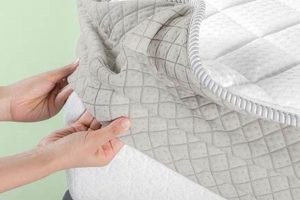
A temperature-controlled bedding accessory, integrated with wireless internet connectivity, provides personalized warmth regulation through a mobile application or smart home system. These devices offer individual heating zones and scheduled operation.
This technology improves sleep comfort and energy conservation. Users can preheat their beds remotely, reducing the need to maintain high thermostat settings throughout the night. The ability to customize temperature settings caters to diverse thermal preferences and potentially alleviates discomfort associated with certain medical conditions. Initially considered a luxury, such features are increasingly valued for enhanced sleep quality and efficient energy usage.
The following sections will detail the technological specifications, user considerations, safety standards, and market availability related to these advanced bedding solutions.
Optimizing Use
The following guidelines provide practical advice for maximizing comfort, safety, and longevity when utilizing temperature-controlled bedding with wireless connectivity.
Tip 1: Placement Considerations: Ensure the heated layer is positioned correctly between the mattress and any additional bedding to allow for efficient heat transfer. Avoid obstructing the heating element with dense or insulating materials.
Tip 2: Initial Setup and Configuration: Adhere strictly to the manufacturer’s instructions for initial setup, including establishing a secure network connection and configuring user preferences within the associated mobile application.
Tip 3: Scheduled Heating: Leverage the scheduling feature to preheat the bed before sleep, optimizing energy consumption and ensuring a comfortable sleeping environment without constant operation.
Tip 4: Temperature Calibration: Monitor and adjust temperature settings gradually to achieve the desired level of warmth. Avoid excessively high temperatures, which may cause discomfort or pose a safety risk.
Tip 5: Safety Inspection: Regularly inspect the heating element, power cord, and control unit for any signs of damage, such as fraying, exposed wires, or overheating. Discontinue use immediately if any issues are detected.
Tip 6: Cleaning and Maintenance: Follow the manufacturer’s recommendations for cleaning. Most units require disconnection from the power source and spot cleaning only. Submersion in water can cause damage and electrical hazards.
Tip 7: Smart Home Integration: If applicable, explore integration options with existing smart home ecosystems for voice control and automated temperature adjustments based on pre-defined routines.
Tip 8: Firmware Updates: Periodically check for and install firmware updates provided by the manufacturer to ensure optimal performance, security enhancements, and access to the latest features.
Adhering to these guidelines promotes safe, efficient, and comfortable use. Prioritizing proper setup, regular maintenance, and careful temperature management ensures long-term satisfaction.
The final section will offer a comprehensive summary and address potential frequently asked questions.
1. Connectivity
Connectivity represents a fundamental aspect of temperature-controlled bedding, facilitating remote control and automation of warming functions. Integration with wireless networks enables users to manage settings and schedules via mobile applications or smart home platforms, transcending the limitations of traditional manual controls.
- Remote Management
Wireless connectivity allows users to adjust temperature settings from any location with internet access. This facilitates preheating the bed before arrival or modifying settings remotely to optimize comfort throughout the night. Mobile applications provide an intuitive interface for managing these adjustments.
- Smart Home Integration
Many models are compatible with established smart home ecosystems, enabling voice control through digital assistants and integration with automated routines. For example, bed warming can be triggered in conjunction with other smart home devices to create a customized sleep environment.
- Scheduling and Automation
Connectivity enables the creation of detailed heating schedules, automating the warming process based on individual sleep patterns. This not only enhances convenience but also optimizes energy consumption by preventing unnecessary operation during unoccupied periods.
- Data Collection and Analysis
Advanced models may incorporate data collection capabilities, tracking usage patterns and providing insights into sleep quality. This data can be used to refine temperature settings and optimize the sleep environment for individual needs. However, data privacy and security should be considered.
The integration of wireless technology significantly enhances the functionality, convenience, and energy efficiency. However, evaluating the reliability and security of the wireless connection is crucial to prevent disruptions in operation and ensure user privacy.
2. Temperature Control
Temperature control is a core feature, distinguishing this modern bedding accessory from conventional heating pads. It provides precise, adjustable warmth catering to individual preferences and environmental conditions, significantly impacting comfort and sleep quality.
- Precision Adjustability
Fine-grained control over temperature settings allows users to tailor the warmth to their specific needs. This precision is essential for accommodating varying sensitivities to temperature and adapting to seasonal changes. Examples include setting slightly different temperatures for different parts of the body or gradually decreasing the temperature throughout the night to facilitate natural sleep cycles.
- Zoned Heating
The ability to independently control temperatures in different areas of the bedding enhances personalized comfort. Couples can adjust their respective sides to individual preferences. This is particularly beneficial for individuals with varying circulatory conditions or those who share a bed but prefer significantly different levels of warmth.
- Programmable Schedules
Temperature control systems integrated with scheduling features enable users to program specific temperature profiles for different times of the night or week. These schedules can automatically adjust the warmth based on sleep patterns, preheating the bed before bedtime and gradually reducing the temperature during sleep to prevent overheating. This also contributes to energy efficiency.
- Feedback Mechanisms
Advanced systems incorporate feedback mechani
sms that monitor the bedding’s temperature and adjust the heating element accordingly. This maintains consistent warmth and prevents fluctuations that could disrupt sleep. Sensors measure the surface temperature and relay this information to the control unit, which dynamically modulates the power output.
The effectiveness of this bedding solution hinges on the precision and adaptability of temperature control. These factors contribute directly to sleep quality and comfort, providing a personalized and responsive sleep experience. It also reduces energy consumption compared to heating an entire room.
3. Safety Features
Integrated safety mechanisms are paramount in temperature-controlled bedding, particularly when utilizing mains electricity in close proximity to individuals during sleep. These features mitigate risks of overheating, electrical faults, and potential fire hazards, ensuring safe operation.
- Overheat Protection
Overheat protection systems utilize temperature sensors to monitor the heating element. If the temperature exceeds a predetermined safe threshold, the system automatically shuts off the power supply. This prevents the risk of burns and potential fire hazards. Implementation often involves redundant sensors and independent shutdown circuitry for increased reliability.
- Low Voltage Operation
Many advanced models employ a low voltage DC power supply to minimize electrical shock risks. A transformer converts standard AC voltage to a safer DC voltage, typically below 24 volts. This reduces the potential for severe injury in case of a fault. The lower voltage also minimizes electromagnetic field (EMF) exposure.
- Automatic Shutoff Timers
Automatic shutoff timers are incorporated to limit the duration of continuous operation. These timers typically range from several hours to a full night. Should the user fall asleep without manually turning off the device, the timer ensures it will automatically power down, preventing prolonged heating and potential overheating scenarios. These timers are often user-adjustable.
- Waterproof Heating Element
Protection from moisture damage to its electric components prevents from electrocution or electrical hazards. Heating element has a waterproof layer which protects the electric components when it gets in contact with liquid.
The integration of these safety measures is critical to mitigating inherent risks associated with electrical bedding. Adherence to established safety standards and certifications further validates the reliability and effectiveness of these features. The implementation of multiple layers of safety, including overheat protection, low voltage operation, and automatic shutoff, significantly enhances the overall safety profile of such devices.
4. Material Quality

The selection of materials directly influences the performance, comfort, and safety of a temperature-controlled bedding system. Material composition dictates heat distribution, breathability, and durability, impacting the overall user experience. For example, a pad constructed from low-quality synthetic materials may exhibit uneven heat distribution, potentially creating hot spots and cold zones, diminishing comfort. Conversely, premium materials such as natural cotton or microfiber can promote more uniform heating and increased breathability, reducing the likelihood of overheating and promoting restful sleep.
The impact of material quality extends beyond comfort to encompass safety considerations. Flame-retardant materials are essential to minimizing fire risks, particularly given the presence of electrical components. Durable fabrics and construction methods ensure longevity, preventing premature wear and tear that could expose heating elements or compromise the electrical insulation. The use of materials certified to be free from harmful chemicals, such as phthalates and formaldehyde, minimizes potential health risks associated with prolonged skin contact.
Therefore, the material composition of a temperature-controlled bedding device is not merely an aesthetic or superficial consideration but a critical determinant of performance, safety, and durability. Understanding the properties of different materials and their implications for heat distribution, breathability, safety, and longevity is essential for making informed purchasing decisions. Lower-quality materials may lead to discomfort, reduced lifespan, and potential safety hazards, negating the benefits of temperature control. Prioritizing material quality ensures a safe, comfortable, and long-lasting investment.
5. Power Consumption

Power consumption represents a critical performance parameter for wirelessly controlled heated bedding. This aspect directly impacts operational costs and environmental sustainability. Heated mattress pads, even those with intelligent controls, draw electrical power to generate warmth. The amount of power consumed is influenced by factors such as the heating element’s wattage, desired temperature setting, duration of use, and insulation properties of the mattress pad and surrounding bedding. Higher wattage and sustained high-temperature operation inherently increase power consumption. For example, a pad consistently used on its maximum heat setting for eight hours each night will incur a significantly higher electricity bill compared to one used at a lower setting or for shorter durations.
Understanding power consumption enables users to make informed decisions regarding usage patterns. Many modern units incorporate energy-saving features such as adjustable timers and zoned heating, which allow users to target warmth to specific areas and limit the duration of operation. Some units also feature power monitoring capabilities, providing data on energy usage. This data can be used to adjust settings and schedules to minimize power consumption without sacrificing comfort. Furthermore, the energy efficiency of the heating element itself plays a crucial role. Advanced heating elements, often incorporating carbon fiber or other high-efficiency materials, can provide equivalent warmth at a lower power draw compared to older or less efficient designs.
In summary, power consumption is an unavoidable consequence of operating wirelessly controlled heated bedding, but it is also a manageable factor. Understanding the variables influencing energy usage, coupled with strategic utilization of energy-saving features and informed selection of energy-efficient models, allows consumers to minimize the operational costs and environmental impact. Awareness of power consumption promotes responsible and sustainable use of this technology.
6. Zone Heating

Zone heating, as implemented in wirelessly controlled temperature bedding, provides distinct, independently adjustable heating zones. This capability addresses individual thermal preferences within a shared sleeping space or the desire for differential warmth across the bo
dy. A primary causal factor driving the adoption of zone heating is the frequent discrepancy in thermal comfort levels between bed partners. The effect is personalized temperature management, mitigating conflict and improving sleep quality for both individuals. This functionality underscores the significance of zone heating as a core component of advanced heated bedding. For example, one individual may prefer a higher temperature setting due to circulatory issues, while the other may require a cooler environment to prevent overheating.
The practical applications of zone heating extend beyond simple comfort customization. In cases of localized pain or injury, targeted heat application can provide therapeutic relief, promoting muscle relaxation and reducing discomfort. Athletes, for instance, may use zone heating to soothe specific muscle groups after intense training. Furthermore, advanced systems integrate with sleep tracking technology, automatically adjusting zone temperatures based on detected sleep stages. This automation maximizes comfort and potentially optimizes sleep cycles by responding to the body’s natural temperature fluctuations. Practical systems enable individual pre-heat settings that are scheduled for personal preference.
In summary, zone heating enhances user experience by offering personalized control of the sleeping environment. Zone heating represents a significant advancement over traditional, uniformly heated bedding. Zone heating addresses diverse thermal needs and therapeutic applications by providing independently controlled temperature zones. The ability to customize heat settings provides an answer to thermal needs. These are solved in an easy user interface.
7. Sleep Scheduling

Sleep scheduling, in the context of temperature-controlled bedding accessories with wireless connectivity, refers to the programmatic automation of heating cycles to coincide with individual sleep patterns. Its integration enhances convenience and contributes to improved sleep hygiene.
- Preheating Functionality
Sleep scheduling allows users to preheat the bed prior to bedtime, establishing a warm and comfortable sleeping environment upon entering the bed. The programmed start time and target temperature are determined by user preference. This eliminates the need to manually activate the warming function and ensures the bed is at the desired temperature at the point of sleep initiation. This function can be automated by using a schedule that takes into account different days of the week, like weekdays vs weekends.
- Temperature Modulation During Sleep
Advanced sleep scheduling systems enable modulation of temperature throughout the sleep cycle. Users can program the system to gradually decrease the temperature as they sleep, mimicking the natural drop in body temperature that occurs during sleep. This feature can promote deeper and more restful sleep by maintaining a comfortable thermal environment that aligns with the body’s circadian rhythms. This can be easily managed through a user-friendly application.
- Automated Shutoff
Sleep scheduling includes automated shutoff timers that deactivate the heating function after a predetermined period. This prevents overheating and promotes energy efficiency. Users can customize the shutoff time to suit their individual needs and preferences. This can be automatically done when the user is normally asleep or when the room temperature is ideal.
- Integration with Sleep Tracking Technology
Certain systems integrate with sleep tracking technology, enabling automated adjustments to temperature settings based on detected sleep stages. For example, the system might automatically reduce the temperature during deep sleep stages to prevent overheating and promote restorative rest. This integration leverages data on sleep patterns to optimize the thermal environment. It is a smart way to make use of the available data.
The ability to program and automate heating cycles in synchronization with individual sleep patterns enhances the utility and convenience of temperature-controlled bedding. These elements contribute to energy-efficient operation and enhanced sleep quality by ensuring a consistently comfortable thermal environment aligned with the body’s natural sleep rhythms. These features promote effective temperature regulation.
Frequently Asked Questions About Wifi Heated Mattress Pads
The following questions address common inquiries concerning the operation, safety, and functionality of wirelessly controlled temperature bedding systems.
Question 1: What is the expected lifespan of a wirelessly controlled heated mattress pad?
The lifespan is contingent upon usage patterns, material quality, and adherence to manufacturer maintenance guidelines. Premium models, properly maintained, may last 5-7 years. Signs of wear such as uneven heating or frayed wiring indicate the need for replacement.
Question 2: What safety certifications should be considered when purchasing a wifi-enabled heated mattress pad?
Look for products certified by recognized testing laboratories, such as UL or ETL. These certifications indicate compliance with established safety standards for electrical products. Certifications related to low EMF emissions are also desirable.
Question 3: How is the wifi connectivity secured to prevent unauthorized access?
Manufacturers employ encryption protocols, such as WPA2, to secure wireless communication. Users should ensure their home network is also password-protected to prevent unauthorized access to the device and its settings. Regularly updating the device firmware is also recommended to patch security vulnerabilities.
Question 4: What cleaning procedures are recommended?
Most heated mattress pads are not machine washable. Spot cleaning with a damp cloth and mild detergent is generally recommended. Prior to cleaning, disconnect the device from the power source. Refer to the manufacturer’s instructions for specific cleaning recommendations.
Question 5: Can this bedding be used with memory foam mattresses?
Yes, but users should ensure the mattress pad is compatible with the specific type of mattress. Some memory foam mattresses are sensitive to heat. Monitor the mattress regularly for any signs of degradation.
Question 6: What measures should be taken to prevent electromagnetic field (EMF) exposure?
Select products advertised as having low EMF emissions. The distance from the heating element also reduces exposure. Consider preheating the bed and turning it off before entering it to minimize prolonged exposure.
Careful consideration of these factors will contribute to a safer and more informed usage experience.
The concluding section summarizes the core concepts.
Conclusion
This exploration has elucidated the features, benefits, and considerations surrounding wifi heated mattress pads. Connectivity, temperature control, safety mechanisms, material quality, power consumption, zone heating, and sleep scheduling are critical elements. Understanding these aspects facilitates informed purchasing decisions and optimal utilization.
The ongoing refinement of this technology promises further advancements in sleep comfort and energy efficiency. Continued adherence to safety standards and development of sustainable materials will shape the future of temperature-controlled bedding. Future consumers should priori
tize safety certifications and assess individual comfort and health requirements before integrating this bedding into their sleep environment.
![Best RV Short Queen Mattress Pad [Comfort+] | Organic & Natural Mattress Buyer’s Guide: Non-Toxic Sleep Solutions](https://mattressworldpa.com/wp-content/uploads/2025/07/th-4887-300x200.jpg "Best RV Short Queen Mattress Pad [Comfort+] Organic & Natural Mattress Buyer’s Guide: Non-Toxic Sleep Solutions")