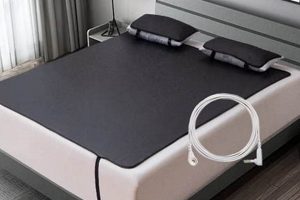
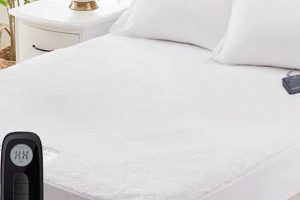
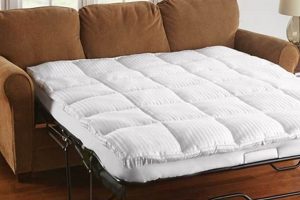
An electrically heated layer designed to be placed atop a mattress provides consistent and adjustable warmth for the user. This device typically incorporates heating elements woven into fabric, allowing for customizable temperature settings and timed operation. For example, a model might feature dual controls, enabling independent temperature adjustments for each side of the bed.
The utilization of such a device offers advantages, including enhanced sleep quality for individuals sensitive to cold temperatures. It can also contribute to reduced energy consumption by allowing for lower thermostat settings within the home. Historically, rudimentary forms of bed warming involved hot water bottles or heated bricks; however, modern electric versions offer a more convenient and controllable solution.
Understanding the key features, types, and safety considerations is essential when evaluating available options. A thorough examination of material composition, control mechanisms, and safety certifications will aid in selecting an appropriate product. Furthermore, considering factors such as size, ease of cleaning, and warranty coverage is crucial for making an informed purchasing decision.
Selection and Maintenance Guidance
Optimizing the selection and prolonging the lifespan of this product necessitates careful consideration of several factors. The following guidelines provide essential information for informed decision-making and responsible usage.
Tip 1: Prioritize Safety Certifications: Ensure the device carries certifications from recognized safety organizations, such as UL or ETL. These certifications indicate adherence to established safety standards and reduce the risk of electrical hazards.
Tip 2: Assess Material Quality: Examine the fabric composition of the warming surface. Materials should be hypoallergenic, breathable, and durable to withstand regular use and cleaning. Cotton or blended fabrics are generally preferable.
Tip 3: Evaluate Control Features: Determine the desired level of temperature control. Dual-zone controls are beneficial for couples with differing temperature preferences. Automatic shut-off timers contribute to safety and energy conservation.
Tip 4: Verify Compatibility with Bedding: Confirm the product’s dimensions are compatible with the mattress size and depth. Improper fit can compromise performance and longevity.
Tip 5: Adhere to Cleaning Instructions: Follow the manufacturer’s cleaning recommendations meticulously. Improper cleaning can damage the internal heating elements and void the warranty. Typically, detaching the control unit and spot cleaning are recommended.
Tip 6: Inspect for Damage Regularly: Periodically examine the surface for signs of wear, fraying, or exposed wires. Discontinue use immediately if any damage is detected to prevent potential electrical hazards.
Tip 7: Store Properly When Not in Use: When not in use, disconnect the control unit and store the device in a cool, dry place, away from direct sunlight and moisture. Avoid folding or creasing the product excessively to prevent damage to the heating elements.
Implementing these guidelines ensures a safe, comfortable, and long-lasting experience. Proper selection and maintenance extend the product’s useful life and maximize its benefits.
The subsequent sections will address common issues and troubleshooting techniques associated with these devices.
1. Temperature Control

Temperature control is a primary determinant of the efficacy and user satisfaction associated with a heated mattress layer. The ability to precisely regulate the heat output directly influences the individual’s sleep experience. A system offering inadequate temperature gradation or inconsistent heating will fail to provide the personalized comfort expected of a premium product. For example, a device lacking distinct low, medium, and high settings may offer only marginal warmth or generate excessive heat, leading to discomfort and disrupted sleep patterns. Conversely, a system with incremental temperature adjustments allows for fine-tuning to match individual thermal preferences and ambient room conditions.
Furthermore, the sophistication of temperature control mechanisms extends beyond simple heat level selection. Advanced models incorporate features such as pre-heating functions, which warm the bed prior to occupancy, and automatic temperature adjustments based on environmental sensors. The presence of dual-zone control is particularly significant for couples, enabling independent temperature regulation on each side of the bed. In the absence of individual control, compromises must be made, potentially sacrificing one partner’s comfort for the other’s. Such a scenario underscores the practical importance of nuanced temperature management in achieving a superior user experience.
In summary, precise and adaptable temperature control is an indispensable characteristic of a high-quality heated mattress layer. The capacity to personalize warmth settings, coupled with advanced features like dual-zone functionality, directly impacts user comfort and sleep quality. The challenges lie in developing systems that are both responsive and energy-efficient, while also ensuring safety and reliability. This attribute, therefore, is central to fulfilling the core function of providing personalized warmth and enhancing the overall sleep environment.
2. Safety Features

The integration of safety features is paramount in the context of electrically heated bedding devices. A direct correlation exists between the presence of robust safety mechanisms and the overall desirability and utility of the product category. The absence of adequate safety protocols presents potential risks of overheating, electrical shock, and, in extreme cases, fire hazards. Consequently, the inclusion of multiple, redundant safety features is not merely a marketing attribute but a fundamental necessity for responsible design and manufacturing.
Automatic shut-off mechanisms serve as a primary example of a critical safety component. These systems typically rely on timers or temperature sensors to deactivate the heating element after a predetermined period or upon reaching a specific temperature threshold. This functionality mitigates the risk of prolonged overheating, particularly in situations where the user might fall asleep or inadvertently leave the device activated. A common scenario involves the user pre-heating the bed and failing to manually switch off the device before retiring for the night. In the absence of an automatic shut-off, the prolonged heat exposure could lead to discomfort, skin irritation, or, in rare instances, pose a fire risk. Furthermore, overheat protection systems typically involve the use of thermal fuses which will break the circuit permanently in the event of a temperature spike.
In summation, safe
ty features are an indispensable element for a device in this product category. The existence of these features is directly related to the user’s trust in the product’s reliability and the mitigation of potential hazards associated with electrical heating devices. These safeguards are fundamental to meeting established safety standards and promoting responsible consumer use.
3. Material Quality
Material quality is a central determinant of the performance, safety, and longevity of any heated bedding product. The textiles employed in the construction directly impact heat distribution, user comfort, and resistance to wear and tear. Substandard materials may lead to uneven heating, skin irritation, and premature failure of the device. For example, a pad constructed with low-grade polyester may exhibit hot spots, lack breathability, and degrade rapidly with repeated use. Conversely, higher-quality materials, such as cotton or bamboo blends, provide more uniform warmth, are gentler on the skin, and demonstrate greater durability.
The composition of the warming element covering is equally crucial. This material should be heat-resistant, flame-retardant, and capable of withstanding repeated bending and flexing without compromising the integrity of the internal wiring. Inferior materials may crack or fray, exposing the heating elements and creating a safety hazard. Manufacturers prioritizing material quality typically utilize reinforced fabrics and employ stringent testing procedures to ensure compliance with safety standards. A real-world example involves a company that voluntarily recalled a line of heated mattress pads due to concerns about the insulation around the heating wires degrading over time, emphasizing the critical link between material selection and product safety.
In summary, material quality is an indispensable attribute. The selection of appropriate fabrics and components is directly linked to the device’s performance, safety, and lifespan. Consumers are advised to prioritize products made from durable, heat-resistant, and hypoallergenic materials to maximize both comfort and long-term value. The challenges lie in balancing cost considerations with the imperative of ensuring safety and reliability, a balance that reputable manufacturers address through rigorous testing and quality control measures.
4. Size Compatibility

Optimal performance and safety of an electrically heated mattress overlay hinge significantly on proper dimensional correspondence with the underlying mattress. A mismatch in size can compromise heat distribution, create hazardous conditions, and reduce product lifespan.
- Coverage Area Uniformity
A correctly sized warming surface ensures even heat distribution across the bed. An undersized product will leave portions of the mattress unheated, creating inconsistent comfort levels. Conversely, an oversized unit may extend beyond the mattress edges, posing a risk of overheating or damage to surrounding bedding.
- Secure Fit and Anchor Systems
Dimensional accuracy facilitates secure attachment to the mattress. Overlays that are too large or too small are prone to shifting, bunching, or dislodging during use. This movement can create discomfort, disrupt sleep, and potentially damage the heating elements or anchoring mechanisms.
- Control Unit Placement and Accessibility
Appropriate sizing accounts for the positioning of the control unit. An ill-fitting overlay may obstruct access to the controls or create excessive strain on the connecting wires. This situation increases the risk of damage to the control unit or wiring, potentially leading to malfunction or electrical hazards.
- Safety Compliance
Size compatibility is a factor that is crucial to adhere by to the safety standards and regulations. Certain certifications and standards are built off particular sizes of mattress in respect to the warming pad.
In conclusion, achieving dimensional concordance between the mattress and the warming device is paramount for ensuring effective heat distribution, secure fitment, safe operation, and prolonged product lifespan. Careful attention to size specifications is therefore a fundamental aspect of selecting and utilizing any electric mattress warmer.
5. Energy Efficiency

Energy efficiency represents a critical consideration in the evaluation of any electrically heated mattress pad. Reduced energy consumption translates to lower operating costs for the consumer and a diminished environmental impact. The design and functionality of a mattress pad directly influence its energy requirements and overall efficiency.
- Wattage Consumption and Heat Output
The wattage rating of a heated mattress pad indicates its power consumption. A lower wattage rating generally implies greater energy efficiency, assuming comparable heat output. Some models employ advanced heating element designs that maximize heat transfer while minimizing energy usage. For example, a pad utilizing carbon fiber heating elements may achieve similar warmth levels to a traditional wire-based system but with lower power draw. A consumer can directly compare the energy usage by examining the product specifications provided by the manufacturer. Higher efficiency will result in lower energy bills.
- Zoned Heating Capabilities
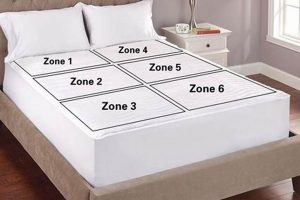
Mattress pads with zoned heating functionality allow users to heat specific areas of the bed independently. This feature enables individuals to warm only the sections of the bed they occupy, reducing overall energy consumption. For instance, a single sleeper might choose to heat only one side of the bed, avoiding unnecessary energy expenditure on the unoccupied side. This targeted heating represents a significant improvement in energy efficiency compared to systems that uniformly heat the entire surface. Zoned heating saves money by heating only what you need.
- Timer and Automatic Shut-Off Features
The integration of timers and automatic shut-off mechanisms contributes to energy conservation. Timers allow users to pre-set the duration of operation, ensuring that the pad is not left running unnecessarily. Automatic shut-off features deactivate the heating element after a predetermined period, preventing energy waste if the user falls asleep or forgets to turn off the device. For example, a pad with a 10-hour automatic shut-off will cease operation after that duration, regardless of user input, thereby limiting energy consumption. It also provides a safety buffer to avoid overheating.
- Insulation and Heat Retention
The materials used in the construction of the mattress pad influence its ability to retain heat. Pads with superior insulation require less energy to maintain a consistent temperature. For example, a pad incorporating a layer of fleece or quilted fabric will typically exhibit better heat retention than a thinner, less insulated model. Improved insulation reduces heat loss, allowing the heating element to cycle on and off less frequently, resulting in lower overall energy consumption. Efficient insulation improves both the energy and the
user experience.
Ultimately, the energy efficiency is a multifaceted attribute determined by various design and functional characteristics. Consumers seeking to minimize energy consumption should prioritize models with low wattage ratings, zoned heating, timer functions, and effective insulation. A comprehensive assessment of these factors will facilitate the selection of an energy-efficient heated mattress pad that delivers both comfort and cost savings.
6. Washability

Washability constitutes a crucial element in the evaluation of a heated mattress pad. The capacity to effectively clean the device directly affects its hygiene, longevity, and overall suitability for regular use. A mattress pad lacking washability features poses significant hygiene concerns, as it accumulates body oils, sweat, and dust mites over time. The inability to remove these contaminants can lead to allergic reactions, skin irritations, and a general degradation of the sleep environment. Consequently, washability is inextricably linked to the overall value proposition of a high-quality mattress pad.
The presence of machine-washable components simplifies maintenance and extends the lifespan. Mattress pads designed with removable control units and durable, machine-safe materials allow for convenient cleaning without compromising the integrity of the heating elements. For example, a mattress pad constructed with a quilted cotton top and fully detachable controls can be easily laundered, ensuring the removal of allergens and the preservation of fabric quality. In contrast, a pad that requires spot cleaning only is more susceptible to long-term staining and a buildup of contaminants. It necessitates meticulous manual cleaning procedures, which may not be practical for all users. Proper washing and maintaining cleanliness has a direct effect on the longevity of the warming pad.
In conclusion, washability is a non-negotiable attribute. Selection criteria should prioritize models featuring machine-washable fabrics and easily detachable components. Addressing challenges related to maintaining a clean mattress pad is key to prolonging its life. Ignoring this aspect can lead to hygiene problems and reduce its effectiveness. The ability to effectively clean a heated mattress pad is fundamental to ensuring a healthy and comfortable sleep environment.
Frequently Asked Questions
The following addresses common inquiries regarding the selection, use, and maintenance of electrically heated mattress overlays. These questions aim to provide clarity and enhance understanding of this product category.
Question 1: How does one determine the appropriate size?
Size selection should mirror mattress dimensions. A queen mattress requires a queen-sized pad. Overhang or undersized fitment can compromise safety and heating uniformity.
Question 2: What safety certifications are essential?
Products bearing certifications from recognized testing laboratories, such as UL or ETL, indicate adherence to established safety standards. Absence of such certification raises potential hazard concerns.
Question 3: How often should the device be cleaned?
Cleaning frequency depends on usage. Heavily used items may require monthly laundering, while sparsely used items can be cleaned less frequently. Always adhere to the manufacturers instructions.
Question 4: Can the pad be used with memory foam mattresses?
Compatibility with memory foam is generally acceptable; however, consult the mattress and pad manufacturer’s guidelines. Excessive heat may compromise the structural integrity of certain memory foam formulations.
Question 5: What is the typical lifespan of a pad?
Lifespan varies depending on usage frequency and maintenance practices. A well-maintained unit can last several years. Inspect regularly for signs of wear, such as frayed wires or uneven heating.
Question 6: How can one minimize energy consumption?
Employing timer functions and utilizing lower heat settings reduces energy usage. Disconnecting the pad when not in use prevents phantom energy draw.
In summary, informed selection and diligent maintenance are pivotal for maximizing the benefits and extending the lifespan of electrically heated mattress overlays. Awareness of these factors contributes to a safe and comfortable sleep environment.
The ensuing discussion will delve into troubleshooting common issues and identifying potential hazards associated with these devices.
In Conclusion
This analysis has explored the multifaceted aspects of the best warming mattress pad, emphasizing the importance of safety certifications, material quality, temperature control, size compatibility, energy efficiency, and washability. Selection of a suitable device requires careful consideration of these factors to ensure optimal performance, user comfort, and longevity. Adherence to proper maintenance practices is crucial for preserving both functionality and safety.
Continued innovation in materials and technology promises to enhance the efficacy and safety of electrically heated bedding. Consumers are encouraged to prioritize products that demonstrably meet or exceed established safety standards and exhibit a commitment to sustainable manufacturing practices. Future advancements may focus on improved temperature regulation, enhanced energy efficiency, and integration of smart home technology for seamless control and personalized comfort.