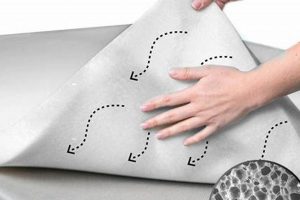
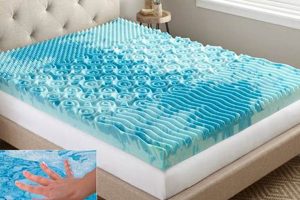
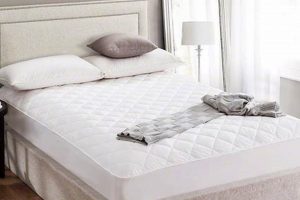
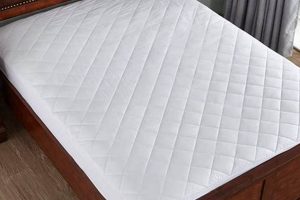
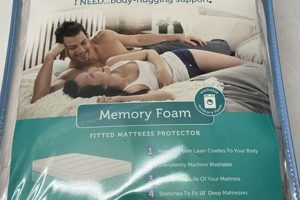
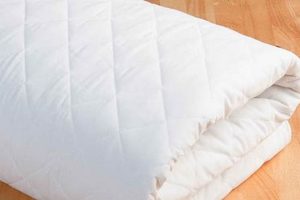
These devices are designed to secure an additional layer of padding to a bed. Typically, these consist of elastic straps, corner bands, or fitted sheet-style encasements. For example, elastic straps with clips attach to the corners of the mattress and the pad, preventing slippage.
Their primary benefit is preventing a mattress pad from shifting during sleep, enhancing comfort and maintaining a consistent sleeping surface. Historically, makeshift methods like safety pins were used, but modern solutions offer improved ease of use and effectiveness, contributing to better sleep quality and overall bed hygiene.
The following sections will delve into various types of these securing mechanisms, their specific features, and factors to consider when selecting the most appropriate option for individual needs and mattress types. Different materials and their impact on the bed are also considered.
Securing Bedding
This section outlines essential guidelines for effectively utilizing bedding securing mechanisms to optimize comfort and longevity.
Tip 1: Assess Mattress and Pad Dimensions: Prior to purchase, accurately measure both the mattress and the mattress pad. This ensures compatibility and prevents issues such as straps being too short or the encasement being too loose.
Tip 2: Prioritize Material Quality: Opt for durable materials like heavy-duty elastic or reinforced stitching. These materials withstand repeated use and laundering, extending the lifespan of the securing mechanism.
Tip 3: Consider Adjustability: Select designs offering adjustable straps or tension settings. This adaptability accommodates varying mattress thicknesses and pad profiles, optimizing the fit and preventing over-tightening.
Tip 4: Evaluate Fastening Mechanisms: Examine the type of fasteners used, such as clips or bands. Ensure these are robust enough to maintain a secure hold throughout the night, minimizing slippage and bunching.
Tip 5: Follow Laundering Instructions: Adhere to the manufacturer’s cleaning recommendations. Improper laundering can degrade the elastic or fastening components, compromising their effectiveness.
Tip 6: Regularly Inspect for Wear and Tear: Periodically check for signs of wear, such as frayed elastic, loose stitching, or damaged clips. Prompt replacement of worn components maintains optimal performance.
Tip 7: Ensure Proper Installation: Carefully attach the securing mechanism according to the provided instructions. Incorrect installation can lead to uneven tension and reduced effectiveness.
Adhering to these practical guidelines ensures optimal functionality and longevity, contributing to improved sleep quality and comfort. These simple steps can lead to a notable improvement in sleep quality.
In conclusion, careful selection and proper usage of bedding securing mechanisms are vital for a comfortable and well-maintained sleep environment. The subsequent section will discuss advanced features and innovative solutions.
1. Securement Strength

Securement strength, in the context of mattress pad holders, refers to the capacity of these devices to maintain a consistent and secure attachment of the mattress pad to the underlying mattress. The relationship is direct: inadequate securement strength leads to pad slippage, bunching, and ultimately, a compromised sleeping surface. Conversely, robust securement minimizes these issues, contributing to enhanced comfort and undisturbed sleep.
The importance of securement strength is evident in the design and selection of materials used in mattress pad holders. Higher-quality elastic, reinforced stitching, and durable clip mechanisms directly correlate with increased securement strength. For instance, holders utilizing corner bands with high-tension elastic typically outperform those relying on simple, low-strength straps. This directly impacts the user experience, as a consistently secure pad reduces the need for nightly readjustments.
Understanding the practical significance of securement strength allows for informed purchasing decisions. When selecting a mattress pad holder, evaluating the material quality, design features, and user reviews pertaining to its ability to maintain a secure hold is crucial. Ultimately, adequate securement strength translates to a more restful and undisturbed sleep experience, while a deficiency in this area can lead to frustration and diminished sleep quality. Therefore, it is a primary consideration in the functionality and overall value of these products.
2. Material Durability

Material durability is a central attribute influencing the lifespan and functional effectiveness of mattress pad holders. The selection of robust materials directly impacts the holder’s ability to withstand repeated use, laundering, and the sustained tension required for securing bedding.
- Elasticity Retention
The elastic component, often crucial for maintaining tension and securing the mattress pad, must resist degradation over time. Natural rubber and synthetic blends exhibit varying degrees of elasticity retention under stress. Inadequate elasticity leads to loosening and reduced functionality, necessitating frequent replacements. For example, a holder using low-grade elastic may stretch out and fail within a year, compared to a high-quality variant lasting several years with consistent performance.
- Fastener Integrity
Clips, buckles, and other fasteners are integral to the holder’s ability to maintain a secure grip. Metallic fasteners must resist corrosion, while plastic components must withstand repeated clamping and unclamping without fracturing. A compromised fastener renders the entire holder ineffective. Consider a plastic clip failing due to brittleness, releasing the pad and negating the holder’s purpose.
- Stitching Strength
The stitching connecting various components of the holder is a critical point of failure if compromised. Reinforced stitching, utilizing durable thread and a tight stitch density, enhances the overall structural integrity. Poorly executed stitching can unravel under tension, leading to detachment and functional failure. For instance, frayed stitching at the point where the elastic connects to the corner strap can result in complete separation, rendering the holder unusable.
- Fabric Resistance
The fabric used, if any, in the construction of the mattress pad holder, must resist abrasion and tearing. Contact with the mattress and bedding can cause wear over time. High-density weaves and durable synthetic fibers offer greater resistance to these stresses. Thin, loosely woven fabrics are more susceptible to damage and eventual failure. A holder constructed with lightweight fabric may tear at the stress points, particularly around the fasteners, significantly shorteni
ng its lifespan.
The interconnectedness of these facets underscores the importance of material durability. Investing in holders constructed from robust materials translates to long-term cost savings by minimizing the need for frequent replacements. Furthermore, enhanced durability ensures consistent performance, contributing to a more comfortable and undisturbed sleep experience.
3. Adjustability Range
The adjustability range in mattress pad holders is a critical design parameter that directly influences their compatibility and effectiveness across various mattress and pad dimensions. A restricted adjustability range leads to application limitations, potentially rendering the holder unusable with certain bedding configurations. For instance, a holder designed for mattresses of standard thickness may prove inadequate for pillow-top or extra-deep mattresses. This incompatibility can result in compromised securement, leading to pad slippage and reduced user comfort.
Holders with a wider adjustability range offer increased versatility, accommodating a broader spectrum of mattress and pad sizes. Mechanisms such as adjustable straps, elastic bands with variable tension, or expandable corner pockets provide the flexibility necessary to achieve a snug and secure fit. This adaptability is particularly beneficial in households with varying mattress types or when transitioning between different bedding arrangements. A holder featuring adjustable straps, for example, can be adapted to accommodate both a thin memory foam pad and a thicker quilted topper, maximizing its utility.
Conversely, the absence of sufficient adjustability necessitates meticulous measurement and selection, increasing the risk of purchasing an incompatible product. Inadequate adjustability can also lead to premature wear and tear, as the holder is stretched or compressed beyond its design limits in an attempt to achieve a secure fit. Therefore, a greater adjustability range improves the holder’s overall value proposition by enhancing its compatibility, longevity, and ease of use. Recognizing this connection enables informed purchasing decisions, optimizing the user experience and minimizing the potential for dissatisfaction.
4. Ease of Application

The concept of ease of application is intrinsically linked to the user experience and practical utility of mattress pad holders. A complex or cumbersome installation process directly diminishes the desirability and effectiveness of these devices. If the application requires excessive time, physical exertion, or specialized skills, users may be less inclined to utilize the holders consistently, negating their intended benefits. This is exemplified by systems employing intricate strap arrangements or requiring the lifting of heavy mattresses, which may prove impractical for individuals with mobility limitations or time constraints.
Conversely, designs prioritizing ease of application, such as those featuring simple clip-on mechanisms or fitted sheet-style encasements, encourage frequent and proper usage. These user-friendly designs reduce the barrier to entry, ensuring that the mattress pad remains securely in place, thereby maximizing comfort and hygiene. For instance, a holder that can be installed in a matter of seconds, without requiring the movement of the entire mattress, is more likely to be adopted as a regular component of the bedding routine. Ease of use also contributes to the longevity of the product, as reduced strain during application minimizes the risk of damage to the holder itself.
Ultimately, ease of application translates directly to the practical value and overall satisfaction derived from mattress pad holders. Manufacturers prioritizing this aspect often incorporate intuitive designs, clear instructions, and durable components, fostering a positive user experience. The challenge lies in balancing secure functionality with simplified installation, ensuring that these devices effectively maintain bedding integrity without imposing undue burden on the user. Neglecting this vital connection can result in a product that, despite its theoretical benefits, remains underutilized or entirely abandoned.
5. Mattress Protection
Mattress protection, in the context of mattress pad holders, is a multifaceted concern that extends beyond simple surface cleanliness. Mattress pad holders play a crucial role in maintaining the integrity and longevity of the underlying mattress, acting as a barrier against various forms of degradation.
- Barrier Against Stains and Spills
Mattresses are susceptible to permanent staining from liquids, bodily fluids, and other contaminants. A securely fastened mattress pad, held in place by a reliable holder, provides a primary defense against these incidents. For example, a child’s spilled drink can be contained by the pad, preventing seepage into the mattress core, which is difficult to clean and can harbor bacteria.
- Mitigation of Wear and Tear
Constant friction and pressure from bedding and occupants contribute to gradual wear and tear on the mattress surface. A mattress pad, properly secured by holders, absorbs much of this abrasion, extending the mattress’s lifespan. A loose pad, however, can bunch and create localized pressure points, accelerating wear in specific areas.
- Allergen Control
Mattresses can accumulate dust mites, pet dander, and other allergens over time, exacerbating respiratory issues. A mattress pad, coupled with effective holders, provides a removable and washable layer that reduces allergen build-up within the mattress itself. A pad that shifts or detaches compromises this barrier, allowing allergens to penetrate the mattress.
- Prevention of Odor Retention
Mattresses can retain odors from spills, sweat, and other sources, becoming unpleasant over time. A mattress pad serves as a sacrificial layer, absorbing these odors and preventing them from permeating the mattress core. Mattress pad holders ensure that the pad remains in place, providing consistent odor control. A dislodged or improperly secured pad fails to protect the mattress fully, leading to odor retention.
These facets highlight the integral connection between mattress pad holders and comprehensive mattress protection. The effectiveness of the pad in safeguarding the mattress is directly contingent upon the security and stability provided by the holder. A well-secured pad acts as a proactive measure, preserving the mattress’s condition, hygiene, and overall value.
Frequently Asked Questions
This section addresses common inquiries concerning mechanisms designed to secure mattress pads, providing clarity on their functionality and application.
Question 1: What constitutes a mattress pad holder?
A mattress pad holder is a device designed to secure a mattress pad to a mattress, preventing slippage and maintaining a consistent sleeping surface. Common configurations include elastic straps, corner bands, and fitted sheet-style encasements.
Question 2: What are the primary benefits of utilizing these securing devices? p>
The primary benefit is the prevention of mattress pad movement during sleep, enhancing comfort and promoting better sleep quality. Additional benefits include improved bed hygiene and extended mattress lifespan.
Question 3: What factors should be considered when selecting an appropriate option?
Key factors include mattress and pad dimensions, material quality, adjustability range, and the type of fastening mechanism. Prioritizing durable materials and adjustable designs is advisable.
Question 4: How does material durability impact the long-term performance of these holders?
Material durability directly affects the lifespan and functional effectiveness. High-quality elastic, reinforced stitching, and corrosion-resistant fasteners are crucial for withstanding repeated use and laundering.
Question 5: Can these devices accommodate varying mattress thicknesses and pad profiles?
Options with adjustable straps or tension settings can accommodate a range of mattress thicknesses and pad profiles, ensuring a secure and customized fit. Adjustability enhances versatility and prevents over-tightening.
Question 6: How frequently should these securing mechanisms be inspected and maintained?
Regular inspection for wear and tear, such as frayed elastic or damaged clips, is recommended. Adhering to the manufacturer’s laundering instructions is essential for maintaining optimal performance.
In summary, selecting a suitable and durable option enhances sleep comfort and contributes to the longevity of both the mattress pad and the underlying mattress.
The subsequent section will explore advanced features and innovative solutions within the realm of these bedding accessories.
Conclusion
The preceding analysis has detailed the characteristics, benefits, and critical considerations surrounding mattress pad holders. From securement strength to material durability and ease of application, the factors impacting their effectiveness have been thoroughly examined. Understanding these elements is paramount for making informed purchasing decisions and optimizing the sleep environment.
The proper selection and consistent use of mattress pad holders represent a proactive investment in sleep quality and mattress longevity. Continued innovation in materials and design suggests an ongoing evolution in this category, warranting continued awareness and discernment. The implications for comfort, hygiene, and overall bedding system integrity underscore the significant role these seemingly simple devices play.