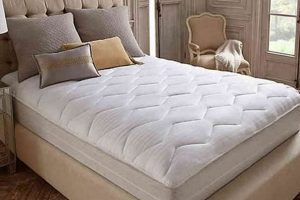
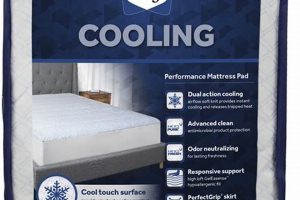
The efficacy of temperature-regulating overlays designed for mattresses is a subject of increasing interest. These products aim to mitigate heat retention during sleep, potentially improving comfort levels. Functionality is based on a variety of mechanisms, including specialized materials that promote airflow or absorb and dissipate heat.
Maintaining an optimal sleep environment is crucial for restorative rest. Overheating can disrupt sleep cycles and contribute to discomfort. Historically, individuals have sought methods to regulate sleeping temperature, from natural fiber bedding to rudimentary ventilation techniques. Modern temperature-regulating mattress overlays offer a more sophisticated approach to address this concern. Potential benefits include improved sleep quality, reduced night sweats, and enhanced overall comfort.
This analysis will delve into the different types of temperature-regulating mattress overlays available, the technologies they employ, and the factors that influence their performance. The intention is to provide a comprehensive understanding of their functionality and to assess the evidence supporting their claimed benefits.
Maximizing the Effectiveness of Temperature-Regulating Mattress Overlays
To optimize the benefits of temperature-regulating mattress overlays, consider the following guidelines. These recommendations address selection, usage, and maintenance for enhanced performance and longevity.
Tip 1: Material Selection: Prioritize materials known for breathability and thermal conductivity, such as natural fibers (e.g., cotton, bamboo) or advanced synthetic fabrics designed for moisture-wicking.
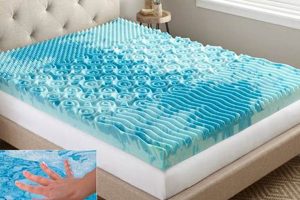
Tip 2: Consider Internal Construction: Overlays with internal channels or convoluted foam structures enhance airflow, facilitating heat dissipation and reducing heat buildup.
Tip 3: Layer Bedding Appropriately: Avoid using thick, non-breathable sheets or blankets that can negate the effects of the temperature-regulating overlay. Opt for lightweight, breathable bedding made from natural fibers.
Tip 4: Regulate Room Temperature: Maintaining a cool room temperature (ideally between 60-67F) further complements the function of the overlay, reducing the overall thermal load.
Tip 5: Proper Maintenance: Follow the manufacturer’s instructions for cleaning and care. Regular cleaning prevents the accumulation of dust and body oils, which can impede airflow and reduce effectiveness.
Tip 6: Consider Personal Physiology: Individual metabolic rates and body temperatures vary. A temperature-regulating overlay that works well for one person may not provide the same level of comfort for another. Trial and error may be necessary.
Tip 7: Evaluate Mattress Type: The type of mattress beneath the overlay can influence its performance. Mattresses that already retain heat (e.g., some memory foam models) may limit the effectiveness of the overlay.
Adhering to these guidelines can significantly improve the performance and longevity of temperature-regulating mattress overlays, contributing to a more comfortable and restful sleep experience. Properly selecting and maintaining these products can translate to noticeable improvements in sleep quality.
The following sections will address specific types of temperature-regulating mattress overlays and their corresponding technological innovations.
1. Material

The material composition of a cooling mattress pad is a primary determinant of its effectiveness. The type of material dictates its thermal conductivity, breathability, and moisture-wicking capabilities, all of which directly influence heat retention or dissipation. For example, mattress pads constructed from high-density memory foam, while offering pressure relief, tend to retain heat due to their closed-cell structure. This contrasts sharply with pads made from natural latex or open-cell memory foam, which exhibit superior airflow and reduced heat buildup. Consequently, the choice of material significantly impacts the degree to which a cooling mattress pad can mitigate overheating during sleep.
The selection of appropriate materials extends beyond the primary fill. The cover fabric plays a crucial role in managing moisture and promoting airflow. Fabrics like bamboo rayon, Tencel, and cotton are known for their breathability and moisture-wicking properties, allowing sweat to evaporate and preventing the buildup of humidity near the body. Conversely, synthetic fabrics such as polyester, unless specifically engineered for breathability, can trap heat and moisture, diminishing the cooling effect of the pad. A real-world example is observed in customer reviews: pads with natural fiber covers consistently receive higher ratings for cooling performance compared to those with synthetic covers, all other factors being equal.
In summary, the effectiveness of a cooling mattress pad is intrinsically linked to its material composition. Selecting pads made from breathable, thermally conductive, and moisture-wicking materials is essential for achieving a noticeable reduction in sleep-related heat. While other factors like design and construction contribute, the material foundation sets the upper limit on the pad’s cooling potential. The challenge lies in balancing the cooling properties of different materials with other desired attributes, such as comfort, durability, and cost. Understanding these material properties helps in making informed decisions that enhance sleep comfort.
2. Airflow

Airflow is a critical determinant in the functionality of temperature-regulating mattress overlays. The ability of a mattress pad to dissipate heat is directly proportional to the amount of air that can circulate through its internal structure. Restricted airflow results in heat retention, negating the intended cooling effect. This principle is observable in the comparative performance of different pad designs. For instance, solid-core memory foam pads, lacking internal ventilation channels, typically demonstrate poorer cooling performance compared to pads with convoluted foam or open-cell construction. The latter designs facilitate air movement, allowing heat generated by the body to escape, rather than accumulating within the sleeping surface. Effectively, the less airflow, the less that cooling mattress pads work.
The design of a mattress pad can significantly enhance airflow. Pads incorporating features such as channeled construction, perforated foam layers, or spacer fabrics create pathways for air to circulate. These designs promote convective heat transfer, whereby warm air near the body is replaced by cooler air, leading to a reduction in surface temperature. An example of this can be seen in mattress pads that utilize a three-dimensional spacer fabric, creating an air gap between the sleeper and the mattress. This air gap enables continuous airflow, preventing the buildup of moisture and heat. Moreover, the choice
of materials contributes to airflow; breathable fabrics like cotton or bamboo allow air to permeate the pad, further enhancing its cooling capabilities.
In conclusion, airflow represents a fundamental component of effective temperature regulation in mattress overlays. Pads with enhanced airflow capabilities consistently outperform those with limited ventilation, demonstrating a direct correlation between airflow and cooling performance. Understanding this relationship is crucial for consumers seeking to mitigate sleep-related overheating. Selecting pads with design features and materials that promote air circulation maximizes the potential for effective temperature regulation and improved sleep comfort. The interplay between design, material, and airflow mechanics defines the functionality of the product.
3. Thickness

The thickness of a temperature-regulating mattress pad influences its performance through several mechanisms. A thicker pad offers a greater volume of material for heat absorption, potentially buffering temperature fluctuations. However, increased thickness, particularly when combined with dense, non-breathable materials, can also impede airflow, counteracting any potential cooling benefits. Consequently, the optimal thickness for a cooling mattress pad is contingent upon the materials used and the overall design.
The relationship between thickness and performance can be illustrated with practical examples. A thin mattress pad made of moisture-wicking fabric may provide adequate cooling for individuals who experience mild overheating, effectively dissipating heat without adding excessive bulk. Conversely, a thicker pad incorporating phase-change materials could be more suitable for individuals with significant night sweats, providing a larger thermal mass to absorb and dissipate heat over a longer period. However, a thick memory foam pad lacking ventilation could exacerbate overheating, regardless of its thickness, illustrating the importance of material composition.
In summary, the effectiveness of a cooling mattress pad is not solely determined by its thickness. While increased thickness may provide greater heat absorption capacity, it must be balanced with considerations of airflow and material composition. The ideal thickness varies depending on individual needs and the specific properties of the pad, meaning the selection process is nuanced. Thickness can be a critical factor of “do cooling mattress pads work” when combined with other design elements that promote heat dissipation.
4. Technology

The effectiveness of temperature-regulating mattress pads is inextricably linked to the underlying technology employed. Several technological approaches are utilized to achieve a cooling effect, each with varying degrees of success and suitability for different user needs. Understanding these technologies is essential for evaluating whether a particular mattress pad will deliver the desired cooling benefits. The integration of advanced technologies in mattress pad design directly impacts the degree to which these products can mitigate heat retention and promote a cooler sleep environment. Failure to incorporate appropriate technology renders the product ineffective.
One prevalent technology involves the use of phase-change materials (PCMs). PCMs are substances that absorb and release heat as they transition between solid and liquid states at specific temperatures. In mattress pads, PCMs are integrated into the fabric or foam, absorbing excess body heat when the sleeper is warm and releasing it when the sleeper is cooler. This dynamic thermal regulation helps maintain a consistent and comfortable sleeping temperature. Another approach leverages advanced fabric technologies designed to enhance breathability and moisture-wicking. These fabrics utilize specialized weaves or chemical treatments to promote airflow and facilitate the evaporation of sweat, reducing humidity and preventing the build-up of heat. For instance, some mattress pads incorporate copper-infused fabrics, which are claimed to possess antimicrobial properties and enhance thermal conductivity, further contributing to a cooler sleep surface. Examples can be seen in various brands of mattress pads claiming cooling technologies. The impact of technology is not merely superficial; it fundamentally determines the cooling capacity of the pad.
In conclusion, the success of temperature-regulating mattress pads hinges on the effective implementation of cooling technologies. Whether it is through the incorporation of PCMs, advanced fabrics, or innovative design features, technology plays a crucial role in mitigating heat retention and promoting a more comfortable sleep environment. The selection of a mattress pad should, therefore, be guided by a thorough understanding of the underlying technology and its suitability for individual needs. The challenges in this area involve balancing cost-effectiveness with technological sophistication and ensuring that the chosen technology aligns with the sleeper’s specific requirements. As technology continues to evolve, future advancements promise to further enhance the effectiveness of temperature-regulating mattress pads and improve sleep quality.
5. Maintenance
The effectiveness of a cooling mattress pad is not solely determined by its initial design and materials. Consistent maintenance is critical for sustaining its functionality over time, ensuring that its cooling properties remain optimal. Neglecting proper upkeep can diminish the pad’s ability to regulate temperature and lead to a less comfortable sleep environment. Therefore, a direct correlation exists between maintenance practices and the continued efficacy of these pads.
- Regular Cleaning
Accumulated body oils, sweat, and dust can clog the pores of the mattress pad, impeding airflow and reducing its breathability. Regular cleaning, according to the manufacturer’s instructions, is essential for removing these contaminants. Failure to clean the pad periodically can result in diminished cooling performance and a less hygienic sleep surface. Depending on the type of material, cleaning guidelines can vary.
- Proper Drying Techniques
After cleaning, proper drying is paramount to prevent the growth of mold and mildew within the mattress pad. Air-drying is generally recommended, but when using a machine dryer, a low-heat setting should be employed to avoid damaging the pad’s fibers or altering its structure. Improper drying can lead to structural damage and degradation of the cooling materials, reducing their effectiveness.
- Avoiding Harsh Chemicals
The use of harsh chemicals or abrasive cleaners can damage the materials used in cooling mattress pads, compromising their cooling properties and shortening their lifespan. Opting for mild detergents and avoiding bleach or strong solvents is crucial for maintaining the integrity of the pad. The residue from harsh chemicals can also irritate the skin and disrupt sleep.
- Consistent Inspection and Care
Regularly inspecting the mattress pad for signs of wear and tear, such as tears or compressions, can help identify potential issues before they significantly impact performance. Addressing minor damage promptly can extend th
e pad’s lifespan and prevent further degradation of its cooling capabilities. The durability of the cooling components is dependent on careful handling.
The longevity and performance of cooling mattress pads depend significantly on the diligence with which they are maintained. By adhering to recommended cleaning and care practices, individuals can ensure that these pads continue to deliver their intended cooling benefits over an extended period. Conversely, neglecting maintenance can negate the initial advantages of the pad, rendering it less effective in regulating temperature and ultimately compromising sleep quality. Therefore, consistent upkeep forms an integral part of the overall effectiveness of a cooling mattress pad.
6. Underlying Mattress
The impact of the underlying mattress on the effectiveness of temperature-regulating mattress pads is significant. The mattress serves as the foundation upon which the pad rests, influencing heat retention and airflow. A mattress that inherently traps heat can impede the cooling capabilities of even the most advanced pad, creating a counterproductive thermal environment. For example, a memory foam mattress, known for its conforming properties but also its tendency to retain heat, may limit the effectiveness of a cooling pad designed to dissipate heat. Conversely, a mattress with good airflow, such as an innerspring or hybrid model with breathable materials, can complement the cooling action of the pad, enhancing overall temperature regulation.
The interaction between the mattress and pad is crucial for achieving the desired thermal comfort. A dense, non-breathable mattress can act as a barrier, preventing heat from escaping and trapping it between the sleeper and the pad. In such cases, the cooling pad may only provide a localized cooling effect, without addressing the underlying heat buildup. The type of materials used in the mattress construction, such as the foam density and cover fabric, significantly impact this interaction. Mattresses with open-cell foam or natural fiber covers promote airflow, facilitating heat dissipation and allowing the cooling pad to function more effectively. The selection of both the mattress and pad should, therefore, be considered holistically to maximize cooling performance.
In summary, the choice of the underlying mattress profoundly affects the performance of temperature-regulating mattress pads. Selecting a mattress that promotes airflow and minimizes heat retention is essential for realizing the full benefits of a cooling pad. Ignoring this interplay can lead to suboptimal results, regardless of the pad’s inherent cooling capabilities. Therefore, the underlying mattress should be considered as an integral component of the overall sleep system when seeking effective temperature regulation.
7. Room Temperature
Room temperature is a crucial factor influencing the perceived and actual effectiveness of cooling mattress pads. A cooling mattress pad’s ability to regulate temperature relies on heat dissipation. If the surrounding environment is warm, the pad’s capacity to transfer heat away from the body is diminished. Consequently, a higher room temperature can negate the benefits of even the most advanced cooling technologies integrated within a mattress pad. The ambient air acts as a heat sink, and when that sink is already saturated, heat transfer becomes less efficient. This interaction represents a fundamental limitation on the pad’s cooling potential. Real-life examples of this phenomenon are readily observed: Individuals using cooling pads in non-air-conditioned environments often report minimal improvement in sleep comfort compared to those using the same pads in climate-controlled rooms. The understanding and control of room temperature, therefore, are essential components of maximizing the benefit derived from such pads.
The practical significance of understanding the relationship between room temperature and cooling mattress pad efficacy extends to product selection and usage habits. Consumers intending to use cooling mattress pads should first assess their typical sleep environment. If consistently exposed to elevated room temperatures, a more robust cooling solution, such as active cooling systems, may be necessary. Alternatively, optimizing room temperature through air conditioning or improved ventilation becomes a prerequisite for achieving the desired cooling effect from the pad. Furthermore, usage habits, such as selecting lightweight, breathable bedding materials, can further enhance heat dissipation in conjunction with a cooled room. The integration of room temperature control into a comprehensive sleep hygiene strategy is critical for optimal results.
In summary, room temperature exerts a significant influence on the performance of cooling mattress pads. Although advanced technologies can enhance heat dissipation, the ambient environment presents a fundamental limitation. Achieving the intended cooling effect requires either controlling room temperature or selecting alternative cooling solutions appropriate for warmer environments. The challenge lies in recognizing the interplay between the pad’s capabilities and the surrounding environment and in adapting sleep strategies accordingly. Recognizing the limitations and practical applications associated with temperature regulation during sleep represents a key insight into creating a more effective and satisfying rest.
Frequently Asked Questions
The following addresses common inquiries regarding the functionality and effectiveness of temperature-regulating mattress overlays, providing objective information to facilitate informed decision-making.
Question 1: Do cooling mattress pads actually work for everyone?
The effectiveness of these pads is contingent on various factors, including individual physiology, room temperature, and the type of mattress used in conjunction with the pad. Results may vary.
Question 2: What are the primary materials used in effective cooling mattress pads?
Materials such as natural latex, open-cell memory foam, bamboo rayon, and advanced synthetic fabrics engineered for moisture-wicking are commonly found in pads designed for cooling purposes.
Question 3: How does airflow influence the performance of a cooling mattress pad?
Airflow is essential for dissipating heat. Pads with channeled construction, perforated foam, or spacer fabrics facilitate air circulation, enhancing heat transfer away from the body.
Question 4: Can the underlying mattress negate the benefits of a cooling mattress pad?
Yes. A mattress that retains heat, such as a high-density memory foam model without adequate ventilation, can impede the pad’s ability to regulate temperature effectively.
Question 5: Is maintenance important for cooling mattress pads?
Regular cleaning and proper drying are critical for preventing the accumulation of dust, oils, and sweat, which can diminish the pad’s breathability and cooling properties.
Question 6: Are there specific temperature ranges that optimize cooling pad effectiveness?
Maintaining a room temperature between 60-67F (15-19C) typically enhances the performance of these pads, creating a more favorable thermal environment for heat dissipation.
The efficacy of temperature-regulating m
attress overlays hinges on a confluence of factors, and individual experiences may differ. Consulting manufacturer specifications and understanding the principles of heat transfer can aid in informed purchasing decisions.
The following sections will delve deeper into technological innovations and future trends in the domain of temperature regulation in sleep environments.
Do Cooling Mattress Pads Work
The preceding analysis has explored the multifaceted question of whether temperature-regulating mattress overlays provide effective cooling. Key points include the significance of material selection, airflow, design, maintenance, and environmental factors such as room temperature. The type of underlying mattress also influences the efficacy of these products. The degree to which they deliver on their promise is contingent upon the careful consideration and optimization of these interacting variables. No single solution exists for all individuals; results are subject to personal physiology and environmental conditions.
Ultimately, the decision to utilize cooling mattress pads involves a cost-benefit analysis that weighs individual needs, existing sleep conditions, and the potential for improved thermal comfort. Technological advancements continue to refine these products; future innovations may offer more personalized and effective solutions for temperature regulation during sleep. Further research is needed to quantify the long-term health benefits associated with consistent temperature management in sleep environments.