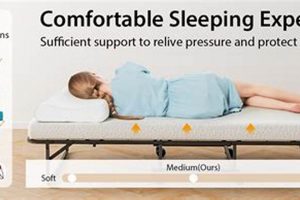
A portable, inflatable sleeping surface designed for single occupancy. These products offer a convenient solution for temporary bedding needs, such as accommodating guests or providing a comfortable resting place while traveling. They are typically constructed from durable PVC material and inflated using an integrated or external pump.
Their utility stems from their compact storage and ease of setup, making them ideal for situations where space is limited. The capacity to quickly create an extra bed enhances flexibility in home arrangements. Historically, similar concepts have evolved from simple camping mats to more sophisticated, air-filled mattresses aimed at improving sleep quality away from permanent beds.
The following sections will elaborate on the features, applications, considerations for selection, and maintenance of these inflatable sleeping solutions, providing a detailed overview for potential consumers.
Essential Usage and Maintenance Guidelines
Optimizing the lifespan and performance of these sleeping solutions requires adherence to specific guidelines for inflation, deflation, storage, and damage prevention. Consistent application of these practices ensures user comfort and reduces the likelihood of premature wear.
Tip 1: Select an Appropriate Location: Before inflation, clear the intended area of sharp objects or abrasive surfaces. This preventative measure minimizes the risk of punctures and subsequent air leaks.
Tip 2: Regulate Inflation Pressure: Avoid over-inflation. The material is designed to expand to a certain degree; exceeding this limit can compromise its structural integrity and lead to seam failure. Refer to the manufacturer’s specifications for optimal pressure levels.
Tip 3: Utilize Protective Bedding: Employ a fitted sheet or mattress protector. This layer shields the surface from dirt, spills, and friction, thereby prolonging its cleanliness and durability.
Tip 4: Exercise Caution Around Sharp Objects: Refrain from placing sharp objects, such as keys or jewelry, on the inflated surface. Accidental contact can easily cause punctures, rendering it unusable.
Tip 5: Implement Proper Deflation Techniques: Follow the manufacturer’s instructions for deflation. Forced deflation or improper folding can damage internal components and compromise its ability to hold air in the future.
Tip 6: Ensure Thorough Drying Before Storage: Prior to packing away, confirm that the surface is completely dry. Moisture retention can foster mildew growth, leading to unpleasant odors and material degradation.
Tip 7: Store in a Cool, Dry Place: When not in use, store it in a cool, dry environment away from direct sunlight and extreme temperatures. These conditions can negatively affect the PVC material.
By conscientiously implementing these steps, users can maximize the value and longevity of their purchase, ensuring reliable and comfortable temporary bedding when needed.
The subsequent sections will delve into common issues, troubleshooting techniques, and warranty information, providing a comprehensive resource for owners.
1. Portability
Portability constitutes a core advantage inherent in the design of inflatable sleeping surfaces. The characteristic compressibility of these mattresses, when deflated, directly dictates their ease of transport and storage. A reduced packed size and minimal weight translate to enhanced mobility, making them suitable for applications where space constraints are paramount. The correlation between decreased dimensions and enhanced mobility directly impacts the product’s utility in travel, camping, or temporary accommodation settings.
The implementation of lightweight yet durable materials, such as PVC, reinforces portability without compromising structural integrity. For instance, an individual relocating frequently can readily transport this type of mattress between residences without the logistical complexities associated with traditional beds. Similarly, campers benefit from the reduced bulk when packing for outdoor excursions, preserving valuable space for other essential equipment. The cause of the choice for such a product, is its lightweight, which creates a positive effect to the consumer.
In conclusion, portability is not merely a peripheral feature, but a defining attribute that significantly amplifies the practical value. By understanding the interplay between compressibility, material selection, and intended use, consumers can appreciate the strategic importance of portability when selecting temporary bedding solutions. Overlooking this element can negate the inherent benefits these items are designed to provide.
2. Inflation Speed

Inflation speed represents a crucial performance metric directly affecting user satisfaction with an inflatable sleeping surface. The time required to achieve full inflation dictates the immediate usability of the product upon arrival at a destination or during unexpected accommodation needs. Faster inflation translates to reduced setup time, increasing convenience and minimizing potential disruptions. Conversely, protracted inflation can lead to user frustration and inconvenience, particularly in situations where immediate rest is required. The choice of pump mechanismintegrated electric, external electric, or manualexerts a significant influence on inflation speed, reflecting design trade-offs between portability, cost, and performance. Example: a traveling salesman may needs fast set up so they can go straight to sleep.
The significance of inflation speed extends beyond mere convenience; it also impacts the perceived value of the product. A user evaluating similar inflatable mattresses may prioritize models boasting demonstrably faster inflation times, especially if frequent use is anticipated. In real-world scenarios, this can be a decisive factor. Consider a family arriving late at a campsite; a mattress that inflates rapidly provides immediate sleeping arrangements, allowing them to focus on other essential tasks. A slower inflation process could delay rest and negatively impact the overall camping experience. A twin size typically inflates faster than a queen or king, for obvious reasons.
In summary, inflation speed is a critical attribute with tangible implications for usability and user satisfaction. By understanding the relationship between pump mechanism, mattress size, and expected inflation time, consumers can make informed decisions that align with their specific needs and priorities. Failure to consider this aspect may result in a mismatch between product performance and real-world requirements, leading to a diminished overall experience.
3. Storage Footprint
The storage footprint is a defining characteristic that dictates the practicality of an inflatable sleeping surface. When deflated, this type of mattress is designed to occupy minimal space, a crucial advantage in environments where area is limited. The inherent compressibility of the material enables users to reduce the mattress to a fraction of its inflated size, facilitating storage in closets, luggage compartments, or beneath furniture. The correlation between a smaller storage footprint and enhanced convenience is particularly relevant for individuals residing in apartments, frequently traveling, or requiring temporary bedding solutions in constrained spaces. A smaller storage footprint, such as the Intex twin blow-up mattress provides, is the direct effect from its portability. The cause is how the portability affects the storage footprint when the mattress is not in use.
The practical implications of a reduced storage footprint extend beyond simple space-saving. For instance, a family preparing for a camping trip can benefit significantly from the compact storage offered by such a mattress. By minimizing the amount of space dedicated to bedding, they can allocate resources to other essential camping equipment. Similarly, homeowners accommodating occasional guests can store the mattress unobtrusively until needed, avoiding the permanent occupation of space associated with traditional beds. When these mattresses are not in use they are often stored in a duffel bag in a garage, closet, attic or basement.
In summary, the storage footprint is not merely a dimension; it is a defining factor that influences the usability and practicality of an inflatable sleeping surface. By prioritizing models with minimal storage footprints, consumers can maximize space efficiency and enhance convenience. Neglecting this consideration may lead to logistical challenges and limit the product’s utility in various real-world scenarios. A failure to comprehend the inverse relationship between size and compressibility may negate the intended benefit of inflatable bedding solutions.
4. Material Durability
Material durability represents a critical factor in evaluating the overall performance and longevity of an inflatable sleeping surface, directly impacting its resistance to punctures, abrasions, and air leakage. The selection of materials and construction methods significantly affects its ability to withstand repeated use and varying environmental conditions, ultimately determining its lifespan and user satisfaction.
- PVC Composition and Thickness
The primary material used in most inflatable mattresses is PVC (polyvinyl chloride). The specific formulation of the PVC, including the presence of plasticizers and stabilizers, influences its flexibility, tear resistance, and susceptibility to degradation from UV exposure. A thicker PVC layer generally provides greater puncture resistance, but can also increase the overall weight and stiffness. Real-world examples include variations in PVC thickness ranging from 0.3mm in entry-level models to over 0.5mm in heavy-duty versions, directly affecting their ability to withstand sharp objects or rough surfaces.
- Seam Construction and Reinforcement
The method of joining the PVC panels, or seams, is crucial in preventing air leaks. Welded seams, typically created using radio frequency (RF) welding, offer superior strength and airtightness compared to glued or stitched seams. Reinforcements along the seams, such as additional layers of PVC or fabric tape, further enhance durability and prevent separation under stress. The absence of proper seam reinforcement is often a primary cause of premature failure, especially along high-stress areas like the edges and corners.
- Internal Structure and Baffling
The internal structure, often consisting of a series of interconnected air chambers or baffles, contributes significantly to the overall stability and support of the mattress. These structures distribute weight evenly and prevent excessive bulging or sagging. More complex baffling designs, such as I-beam or coil-beam constructions, enhance durability and prevent deformation over time. A poorly designed internal structure can lead to uneven weight distribution and localized stress, increasing the risk of material fatigue and eventual failure.
- Resistance to Environmental Factors
Exposure to environmental factors such as sunlight, temperature extremes, and humidity can accelerate the degradation of PVC. UV radiation can cause discoloration, cracking, and loss of flexibility, while extreme temperatures can affect its structural integrity. Inflatable mattresses intended for outdoor use should be treated with UV inhibitors and constructed from materials that are more resistant to temperature fluctuations. Improper storage, particularly in damp environments, can promote mildew growth and further compromise the material’s lifespan.
These facets of material durability directly correlate to the overall value and usability of the inflatable sleeping surface. A seemingly inexpensive product constructed from low-quality materials may offer short-term cost savings but ultimately result in higher replacement costs and reduced user satisfaction. Conversely, a mattress made from durable, high-quality materials will provide a longer lifespan, greater resistance to damage, and a more comfortable and reliable sleeping experience.
5. Comfort Level

The comfort level of an inflatable sleeping surface significantly influences user satisfaction and overall sleep quality. Factors contributing to comfort, such as surface texture, support, and temperature regulation, warrant careful consideration, especially when evaluating a specific product.
- Surface Material and Texture
The material composition of the surface directly impacts tactile comfort. Flocked surfaces, often found on these mattresses, provide a soft, velvety feel that reduces friction and minimizes the need for additional bedding. In contrast, bare PVC surfaces can feel cold and less comfortable against the skin, necessitating the use of sheets or mattress protectors. The choice of surface material, therefore, influences perceived comfort and the need for supplementary accessories.
- Internal Support Structure
The internal structure, consisting of air chambers and baffles, determines the evenness of weight distribution and the level of support provided. I-beam or coil-beam constructions offer superior support compared to simpler, single-chamber designs, preventing sagging and ensuring a more stable sleeping surface. A well-designed internal structure contributes to spinal alignment and reduces the likelihood of pressure points, enhancing overall comfort.
- Inflation Pressure Adjustment
The ability to adjust the inflation pressure allows users to customize the firmness level according to their preferences. Lower inflation pressures result in a softer, more plush feel, while higher pressures provide a firmer, more supportive surface. This adjustability is particularly valuable for individuals with specific sleeping needs or preferences, enabling them to fine-tune the mattress to achieve optimal comfort.
- Temperature Regulation
The breathability of the surface material and the internal airflow withi
n the mattress affect temperature regulation. PVC is generally less breathable than natural materials, potentially leading to heat buildup and discomfort, especially in warm climates. Some designs incorporate ventilation channels or perforated surfaces to improve airflow and reduce heat retention. The effectiveness of temperature regulation influences sleep quality, particularly for individuals sensitive to temperature changes.
The comfort level is a multifaceted attribute. Consumers should assess these elements in relation to their individual preferences and needs. Surface texture, internal support, adjustability, and temperature regulation contribute significantly to the sleeping experience and should inform the selection process.
6. Weight Capacity
Weight capacity represents a critical specification that dictates the maximum load an inflatable sleeping surface can safely support. Understanding this parameter is essential for preventing structural damage and ensuring user safety when employing an Intex twin blow up mattress. Exceeding the stated weight limit can lead to material stress, seam failure, and potential deflation, rendering the mattress unusable and potentially causing injury.
- Manufacturer Specifications and Testing
Manufacturers establish weight capacity limits through rigorous testing protocols designed to simulate real-world usage conditions. These tests evaluate the mattress’s ability to withstand sustained pressure and dynamic loads without compromising structural integrity. Exceeding these specified limits voids the warranty and increases the risk of product failure. For instance, an Intex twin model may have a stated capacity of 300 lbs; consistent overloading can result in weakened seams and eventual rupture.
- Impact of Uneven Weight Distribution
Uneven weight distribution can exacerbate stress on specific areas of the mattress, even if the total weight remains within the stated limit. Concentrated pressure points, such as sitting on the edge or placing heavy objects on a small surface area, can strain the material beyond its capacity. A user who sits on the edge of the mattress to get dressed will be more prone to cause damage to that edge compared to someone who lays straight on the mattress.
- Influence of User Body Type and Sleeping Habits
User body type and sleeping habits impact the stress exerted on the mattress. Individuals with higher body mass exert greater pressure across the surface. Restless sleepers, who frequently change positions or toss and turn, create dynamic loads that can accelerate wear and tear. For example, a user who sits upright on the mattress for extended periods will place more stress than one who primarily sleeps in a supine position.
- Relationship to Mattress Longevity and Durability
Adhering to the specified weight capacity directly contributes to the mattress’s longevity and overall durability. Consistent overloading compromises the material’s structural integrity, leading to premature failure and reducing the product’s lifespan. Respecting the weight limit ensures that the mattress performs as intended and provides a reliable sleeping surface over an extended period. In summary, following the specification is the best choice for longevity and durability.
In conclusion, the stated weight capacity of an Intex twin blow up mattress is not merely a guideline; it is a critical parameter that impacts safety, performance, and longevity. Users must carefully consider their individual weight and sleeping habits to ensure they select a model with an appropriate capacity to prevent damage and ensure a safe and comfortable sleeping experience. The weight limits should also take into consideration any added weight such as pets or children that may be sleeping with the occupant.
7. Pump Integration

Pump integration, whether internal or external, is a defining characteristic influencing the usability and convenience of the subject mattress. The presence of an integrated pump streamlines the inflation process, eliminating the need for separate inflation devices and power sources. This feature simplifies setup, particularly in situations where access to external power is limited or nonexistent. Conversely, external pumps offer flexibility, allowing users to select from various power sources (AC, DC, manual) and potentially achieving faster inflation rates.
Integrated pumps typically operate via an AC power source, requiring proximity to an electrical outlet. This configuration presents a limitation in outdoor settings or when camping. However, it offers ease of use within a home environment. External pumps, on the other hand, can be powered by car adapters, batteries, or manual mechanisms, expanding the range of potential inflation locations. For instance, a camper may prefer a battery-operated or foot pump for remote locations, while a homeowner might opt for an integrated AC pump for its simplicity. The location of the pump itself directly impacts how easy the product is to inflate.
Ultimately, the choice between integrated and external pump systems depends on the user’s anticipated usage scenarios and preferences. Integrated pumps prioritize convenience and ease of use within accessible environments, while external pumps prioritize versatility and adaptability in diverse settings. An understanding of these tradeoffs is crucial for selecting a mattress that aligns with specific needs and logistical constraints. Selecting one over the other can impact the use of the mattress.
Frequently Asked Questions
This section addresses common inquiries concerning the features, usage, and maintenance of the specified inflatable sleeping surface.
Question 1: What is the recommended procedure for cleaning an Intex twin blow up mattress?
The mattress surface should be cleaned with a mild soap solution and a soft cloth. Abrasive cleaners or harsh chemicals may damage the PVC material. Ensure the mattress is completely dry before storing.
Question 2: How should one properly store this when not in use?
The mattress should be fully deflated, cleaned, and thoroughly dried prior to storage. It is recommended to store it in a cool, dry place away from direct sunlight and extreme temperatures to prevent material degradation. A storage bag is advisable to protect it from dust and physical damage.
Question 3: What is the typical lifespan?
The lifespan varies depending on usage frequency, care, and storage conditions. With proper maintenance and adherence to weight limits, it can last for several years. Frequent use, improper storage, or exceeding weight limits will shorten its lifespan.
Question 4: Can minor punctures be repaired?
Yes, minor punctures can typically be repaired using a PVC repair patch kit. Follow the instructions included with the repair kit. Larger tears or seam failures may not be easily repairable.
Question 5: What is the maximum weight capacity?
The maximum weight capacity varies depending on the specific model. Refer to the manufacturer’s specifications for the stated weight limit. Exceeding this limit can lead to structural damage and potential deflation.
Question 6: How long does it generally take to in
flate?
Inflation time depends on the pump type (integrated or external) and its power. Integrated pumps typically inflate the mattress in 3-5 minutes. External pumps may vary depending on their specifications.
These frequently asked questions are not exhaustive; however, they cover the most prevalent concerns. Always consult the manufacturer’s documentation for specific instructions related to the individual model.
The following section will provide troubleshooting advice for common problems encountered with inflatable mattresses.
In Conclusion
The exploration of the intex twin blow up mattress has illuminated its utility as a temporary and portable bedding solution. Key aspects such as portability, inflation speed, material durability, comfort level, weight capacity, and pump integration significantly influence the product’s suitability for diverse applications, ranging from accommodating guests to providing comfortable sleeping arrangements during travel. Understanding these attributes enables informed purchasing decisions aligned with specific needs and priorities.
Given its inherent advantages of convenience and affordability, this particular model of inflatable mattress is likely to remain a relevant option for individuals seeking adaptable bedding solutions. Potential consumers are encouraged to thoroughly assess their requirements and carefully consider the discussed features to maximize satisfaction and ensure the product’s longevity. The continuing evolution of materials and design suggests ongoing improvements in durability, comfort, and ease of use, solidifying its role in the temporary bedding market.
![Best BJ's Twin Mattress [Deals & Reviews] | Organic & Natural Mattress Buyer’s Guide: Non-Toxic Sleep Solutions](https://mattressworldpa.com/wp-content/uploads/2025/07/th-5259-300x200.jpg "Best BJ's Twin Mattress [Deals & Reviews] Organic & Natural Mattress Buyer’s Guide: Non-Toxic Sleep Solutions")
![Best Tuft & Needle Twin Mattress: [Year] Review & Guide | Organic & Natural Mattress Buyer’s Guide: Non-Toxic Sleep Solutions](https://mattressworldpa.com/wp-content/uploads/2025/07/th-5258-300x200.jpg "Best Tuft & Needle Twin Mattress: [Year] Review & Guide Organic & Natural Mattress Buyer’s Guide: Non-Toxic Sleep Solutions")
![Best Twin Mattress Base [Guide & Reviews] | Organic & Natural Mattress Buyer’s Guide: Non-Toxic Sleep Solutions](https://mattressworldpa.com/wp-content/uploads/2025/07/th-5256-300x200.jpg "Best Twin Mattress Base [Guide & Reviews] Organic & Natural Mattress Buyer’s Guide: Non-Toxic Sleep Solutions")
![Best Twin Loft Bed With Mattress [Deals] for Small Rooms! | Organic & Natural Mattress Buyer’s Guide: Non-Toxic Sleep Solutions](https://mattressworldpa.com/wp-content/uploads/2025/07/th-5255-300x200.jpg "Best Twin Loft Bed With Mattress [Deals] for Small Rooms! Organic & Natural Mattress Buyer’s Guide: Non-Toxic Sleep Solutions")