![Best Bunk Bed Twin Mattress: Safe & Comfy [Guide]](data:image/svg+xml;base64,PHN2ZyB4bWxucz0iaHR0cDovL3d3dy53My5vcmcvMjAwMC9zdmciIHdpZHRoPSI0NzQiIGhlaWdodD0iOTIiIHZpZXdCb3g9IjAgMCA0NzQgOTIiPjxyZWN0IHdpZHRoPSIxMDAlIiBoZWlnaHQ9IjEwMCUiIHN0eWxlPSJmaWxsOiNjZmQ0ZGI7ZmlsbC1vcGFjaXR5OiAwLjE7Ii8+PC9zdmc+ "Best Bunk Bed Twin Mattress: Safe & Comfy [Guide] Organic & Natural Mattress Buyer’s Guide: Non-Toxic Sleep Solutions")
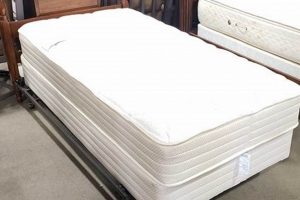
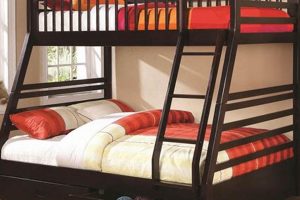
A mattress designed for a bed frame where one bed is stacked atop another, typically sized to fit a single occupant. These mattresses are engineered to meet specific dimensions, ensuring compatibility with the upper and lower bunks. These are commonly used in children’s rooms, dormitories, and other spaces where maximizing floor area is essential.
This type of sleep surface is particularly important for space-saving solutions. Selecting a quality product contributes significantly to a comfortable and supportive sleep experience, crucial for rest and overall well-being. Historically, such bed configurations have evolved from practical necessities in crowded living spaces to modern, stylish furniture options.
Considerations for these mattresses include thickness, material composition (foam, innerspring, or hybrid), and firmness level to ensure the user’s comfort and safety. Evaluating the intended occupant’s weight and sleeping preferences is paramount when choosing the appropriate option. Further exploration into the features and selection criteria will provide a comprehensive understanding.
Essential Considerations for Bunk Bed Mattresses
Selecting the correct mattress for a bunk bed is paramount for safety, comfort, and longevity of the sleep system. Careful consideration of several key factors will ensure the best possible choice.
Tip 1: Measure the Frame Accurately: Prior to purchase, precisely measure the interior dimensions of the bunk bed frame. This ensures the mattress fits snugly, preventing slippage and potential injury. Consult the manufacturers specifications for optimal mattress size.
Tip 2: Prioritize Mattress Thickness: Bunk beds often have height restrictions, especially for the upper bunk. Choose a mattress that leaves sufficient clearance between the top of the mattress and the guardrail to comply with safety standards. Typically, a mattress thickness of 6-8 inches is advisable.
Tip 3: Evaluate Material Composition: The material influences comfort, support, and durability. Options include innerspring, foam (memory foam, latex), and hybrid models. Consider the sleepers weight, sleeping position, and any allergies when selecting a material. Higher density foams generally offer better support and longevity.
Tip 4: Focus on Firmness Level: The ideal firmness depends on individual preferences and sleeping habits. Side sleepers often prefer a softer mattress for pressure relief, while back and stomach sleepers typically require a firmer surface for spinal alignment. Test different firmness levels if possible.
Tip 5: Consider Weight Capacity: Bunk beds have weight limits. Ensure the chosen mattress and the individual sleeper’s weight do not exceed the bed frames maximum load capacity. Exceeding this limit can compromise the structural integrity of the bed.
Tip 6: Check for Certifications: Look for certifications such as CertiPUR-US or OEKO-TEX. These certifications indicate that the mattress has been tested for harmful substances and meets certain safety and environmental standards.
Tip 7: Review Safety Standards: Verify that the mattress complies with relevant safety standards, such as those set by the Consumer Product Safety Commission (CPSC). Compliance ensures the mattress has undergone testing for flammability and other safety hazards.
Adhering to these considerations facilitates a safe and comfortable sleep environment, ensuring the long-term utility of the bunk bed setup.
Further investigation into available options and specific product features will assist in making an informed purchasing decision.
1. Dimensions

The dimensions of a “bunk bed twin mattress” are intrinsically linked to safety and functionality. Precise measurements are not merely suggestions but essential parameters dictated by standardized bed frame sizes and safety regulations. An incorrectly sized mattress creates hazards. If too large, it may not fit within the frame, causing instability. If too small, gaps emerge, posing entrapment risks, particularly for children. Therefore, adherence to standard dimensions (typically 38 inches wide by 75 inches long) is paramount. Deviation from these dimensions can lead to instability of the setup and potential injury.
Consider a scenario where a non-standard mattress is used. A mattress exceeding the specified width could compromise the guardrail height on the upper bunk, increasing the risk of falls. Conversely, a mattress with insufficient length could create a gap between the mattress and the headboard or footboard, potentially trapping limbs. These examples underscore the critical importance of dimensional accuracy. Beyond the length and width, mattress thickness also dictates if it is in fact safe to use with the guard rail or safety measures installed on the bunk bed, as the standard is to have a certain amount of guard rail exposed, that the mattress can not block if compressed.
In summary, dimensional conformity ensures proper fit, maximizes safety, and supports the overall intended function. Challenges arise when users attempt to use repurposed mattresses not explicitly designed for bunk beds or when relying on inaccurate measurements. Ensuring the mattress complies with standard specifications directly contributes to a safer and more reliable sleep environment. This requirement underscores the significance of carefully verifying dimensions before purchasing.
2. Material Composition

The material composition of a mattress designed for a bunk bed is integral to its safety, durability, and the occupant’s sleep experience. The specific materials selected directly influence weight, support, flammability resistance, and comfort characteristics. Innerspring mattresses, for instance, offer familiar support but may be heavier and less conforming than foam alternatives. Conversely, memory foam distributes weight evenly and provides pressure relief but can retain heat. Latex, a natural alternative, offers both support and breathability.
The choice of material has several practical implications. Consider the upper bunk; a lighter mattress reduces the strain during bed-making and lowers the overall weight load on the frame. Foam mattresses, typically lighter, may be preferred. Flammability is a primary safety concern; mattresses must meet specific standards. Materials are treated to resist ignition or include fire-retardant barriers. In environments such as dormitories, where bunk beds are prevalent, compliance with these regulations is rigorously enforced. The long-term durability of these materials is also a significant factor. A low-quality mattress will break down quickly, leading to discomfort and increased replacement costs. The material’s density affects longevity and support.
Ultimately, the optimal material composition depends on the user’s specific needs and priorities. While innerspring mattresses may be cost-effective, foam
or hybrid models offer a combination of comfort, support, and reduced weight. Understanding the properties of different materials enables informed purchasing decisions, aligning comfort with safety and budgetary constraints. Compromises in material quality invariably lead to reduced performance and longevity, highlighting the significance of careful material selection.
3. Thickness Limitations

Thickness limitations are a defining characteristic of mattresses intended for bunk bed use. These limitations are not arbitrary; they are dictated by safety regulations and the structural design of the beds themselves. Adherence to prescribed thickness parameters is essential for minimizing risks and ensuring proper functionality.
- Guardrail Height Compliance
The primary driver of thickness limitations is the requirement to maintain adequate guardrail height on the upper bunk. Safety standards mandate a minimum distance between the top of the mattress and the upper edge of the guardrail. A mattress exceeding the recommended thickness reduces this distance, compromising the effectiveness of the guardrail and increasing the risk of falls. For example, a bunk bed with a 5-inch guardrail requires a mattress that, when compressed, leaves sufficient height to prevent a child from rolling over the edge. If an 8-inch mattress is used, the effective guardrail height is severely diminished, creating a hazardous condition.
- Ladder Accessibility
Mattress thickness also influences accessibility to the upper bunk ladder. An overly thick mattress can obstruct access to the ladder rungs, making climbing difficult and potentially leading to accidents. In scenarios where the top of the mattress is near to or obstructs the first step of the ladder, a child must exert additional effort to mount the ladder, increasing the risk of slips and falls. Ensuring that the mattress allows for easy and unobstructed ladder access is crucial for safe usage.
- Weight Distribution and Support
While thickness contributes to perceived comfort, excessive thickness can negatively impact weight distribution. A thicker, heavier mattress places increased stress on the bunk bed frame, potentially exceeding its load-bearing capacity. Over time, this stress can lead to structural weakening and instability. Conversely, a mattress that is too thin may not provide adequate support, particularly for heavier individuals. Selecting a mattress that is both appropriately thick and adequately supportive is a balance that must be carefully considered.
- Confinement Space on Upper Bunk
The thickness of the mattress takes up precious confinement space on the upper bunk, a factor particularly relevant in rooms with low ceilings. A thicker mattress reduces headroom, creating a cramped and potentially claustrophobic environment. This can affect comfort and may make sitting up in bed difficult. When selecting a mattress, the available vertical space should be considered alongside safety and support to ensure a comfortable and functional sleep environment.
These facets collectively underscore the critical importance of adhering to thickness limitations when selecting a “bunk bed twin mattress”. Failure to do so can compromise safety, impede accessibility, and negatively impact the overall structural integrity of the bed. Prioritizing compliance with specified thickness parameters is an essential step in creating a secure and functional bunk bed system.
4. Support & Firmness

The selection of a bunk bed mattress necessitates careful consideration of support and firmness, as these properties directly influence spinal alignment, sleep quality, and overall user comfort. The limited space and specific safety requirements of bunk beds further amplify the importance of these factors.
- Spinal Alignment and Posture
The primary function of mattress support is to maintain proper spinal alignment during sleep. Insufficient support leads to spinal curvature, resulting in back pain, stiffness, and discomfort. The firmness level, conversely, dictates how the mattress conforms to the body’s natural contours. A too-soft mattress allows excessive sinking, while an excessively firm mattress fails to alleviate pressure points. For example, a growing child using a bunk bed mattress requires adequate support to foster healthy spinal development; therefore, a medium-firm mattress is often recommended to balance support and comfort.
- Weight Distribution and Pressure Relief
Effective firmness facilitates uniform weight distribution, minimizing pressure points that can disrupt sleep and cause discomfort. On a bunk bed, where movement is often restricted due to space limitations, pressure relief becomes even more critical. Inadequate pressure relief results in tossing and turning, leading to fragmented sleep. For instance, a memory foam mattress, known for its contouring properties, provides effective pressure relief for side sleepers, while a firmer innerspring mattress may be more suitable for back sleepers needing additional support.
- Material Composition and Construction
The support and firmness of a mattress are determined by its material composition and construction. Innerspring mattresses rely on coil systems for support, with varying coil counts and gauges influencing firmness. Foam mattresses, made from materials like memory foam or latex, offer varying degrees of support and contouring. Hybrid mattresses combine innerspring and foam layers to achieve a balance of support and comfort. A hybrid mattress might offer the support of coils with the pressure relief of memory foam, potentially addressing diverse user needs in a bunk bed context.
- Long-Term Durability and Sagging Prevention
The long-term durability of a bunk bed mattress is directly related to its support and firmness characteristics. A well-constructed mattress retains its shape and support over time, preventing sagging and ensuring continued comfort. Sagging not only compromises spinal alignment but also reduces the usable surface area of the mattress, particularly important in the constrained space of a bunk bed. Selecting a mattress with high-density materials and robust construction contributes to increased longevity and consistent performance.
In conclusion, the support and firmness attributes of a bunk bed mattress are inextricably linked to its comfort, safety, and longevity. Careful consideration of these factors, along with the user’s specific needs and preferences, is essential for selecting a mattress that promotes restful sleep and minimizes potential health risks in the unique environment of a bunk bed.
5. Safety Standards

Adherence to safety standards is paramount in the design and selection of a mattress intended for bunk bed use. The confined space, elevated sleeping position, and potential for falls necessitate stringent safety protocols to mitigate risks.
- Flammability Regulations
Mattresses must meet specific flammability standards, such as those outlined in 1
6 CFR Part 1633, to minimize fire hazards. These regulations mandate that mattresses resist ignition from open flames, reducing the potential for rapid fire spread in the event of an accident. Bunk bed mattresses, often used in close proximity to other flammable materials in bedrooms or dormitories, require strict adherence to these standards. Failure to comply can lead to severe fire-related injuries. - Guardrail Height Requirements
Safety guidelines stipulate minimum guardrail height requirements for the upper bunk to prevent falls. The mattress thickness directly impacts the effective height of the guardrail; a thicker mattress reduces the available guardrail height. Standards mandate that the distance between the top of the mattress and the top of the guardrail must be sufficient to prevent a child from rolling over the edge. Non-compliance with these height requirements can significantly increase the risk of falls from the upper bunk.
- Entrapment Hazards
Safety standards address potential entrapment hazards between the mattress and the bunk bed frame. Gaps between the mattress and the frame must be minimized to prevent limbs or other body parts from becoming trapped. These standards aim to protect occupants, particularly children, from injuries associated with entrapment. Manufacturers must ensure that mattress dimensions are compatible with standard bunk bed frames to eliminate these hazardous gaps.
- Weight Capacity Limitations
Bunk beds, and by extension their mattresses, have specific weight capacity limitations. Exceeding these limits can compromise the structural integrity of the bed, increasing the risk of collapse. Safety standards require manufacturers to clearly indicate the maximum weight capacity for both the upper and lower bunks. Selecting a mattress that, combined with the weight of the user, remains within these limits is crucial for preventing structural failures and associated injuries.
These facets underscore the critical role of safety standards in the selection of a mattress for a bunk bed. Compliance with flammability regulations, guardrail height requirements, entrapment hazard mitigation, and weight capacity limitations directly contributes to a safer sleep environment. Prioritizing adherence to these standards is essential for minimizing potential risks and ensuring the well-being of bunk bed occupants.
Frequently Asked Questions
The following addresses common inquiries regarding mattresses designed for use in bunk bed configurations, focusing on safety, suitability, and selection criteria.
Question 1: Are specific mattress types prohibited for bunk bed use?
Yes, mattresses exceeding the manufacturer’s recommended thickness or weight are generally discouraged. Overly thick mattresses can compromise guardrail height, increasing the risk of falls. Excess weight can strain the bed frame, potentially leading to structural failure. Refer to the bunk bed manufacturer’s specifications for approved mattress types.
Question 2: How does mattress firmness impact the safety of a bunk bed occupant?
Mattress firmness should provide adequate support to prevent excessive sinking, which can hinder movement, especially on the upper bunk. A medium-firm mattress typically offers a balance of comfort and support, facilitating safe transitions and minimizing entrapment hazards.
Question 3: What certifications should be considered when purchasing a bunk bed mattress?
Certifications such as CertiPUR-US indicate that the mattress has been tested for harmful substances and meets specific safety and environmental standards. These certifications provide assurance regarding the mattress’s material composition and potential health impacts.
Question 4: Does mattress warranty coverage differ for bunk bed applications?
Standard mattress warranties generally apply to bunk bed usage, provided the mattress is used in accordance with the manufacturer’s guidelines. However, warranties may be voided if the mattress is subjected to excessive weight or misuse. Review warranty terms carefully.
Question 5: How frequently should a bunk bed mattress be replaced?
The lifespan of a bunk bed mattress depends on factors such as usage, material quality, and maintenance. Generally, a mattress should be replaced every 7-10 years or sooner if signs of wear, sagging, or reduced support are evident. Regular inspection is advised.
Question 6: Are there specific cleaning protocols for bunk bed mattresses?
Bunk bed mattresses should be cleaned regularly to maintain hygiene and prolong their lifespan. Vacuuming, spot cleaning, and the use of mattress protectors are recommended. Avoid excessive moisture, which can promote mold growth. Follow the manufacturer’s instructions for specific cleaning procedures.
Adherence to these guidelines promotes the safe and effective utilization of mattresses within bunk bed systems. Prioritizing safety and proper maintenance extends the useful life of the mattress and ensures a comfortable sleep environment.
The next section will delve into best practices for mattress maintenance and care.
Conclusion
The preceding exploration of the “bunk bed twin mattress” reveals its inherent complexities beyond a mere sleeping surface. Dimensions, material composition, thickness restrictions, and safety standards interweave to dictate the suitability of a mattress for its intended application. Each element bears considerable weight, influencing not only comfort but, more critically, the safety and well-being of the occupant. Understanding these nuances is not optional, but a prerequisite for informed selection.
Recognizing the critical interplay between these attributes empowers responsible decision-making. Future advancements in materials and design may yield enhanced options, but the core principles of safety and suitability remain paramount. The investment in a well-chosen mattress represents a tangible commitment to user safety and optimized space utilization, solidifying its enduring significance in constrained living environments.

![Best Lucid Twin Mattress [Deals] for Small Spaces | Organic & Natural Mattress Buyer’s Guide: Non-Toxic Sleep Solutions](https://mattressworldpa.com/wp-content/uploads/2025/07/th-5274-300x200.jpg "Best Lucid Twin Mattress [Deals] for Small Spaces Organic & Natural Mattress Buyer’s Guide: Non-Toxic Sleep Solutions")