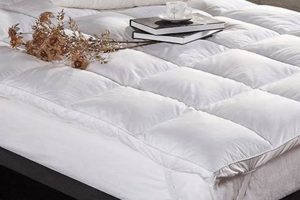
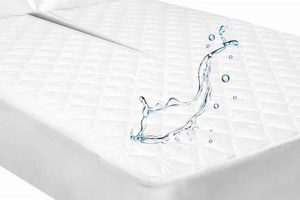
A plush layer designed to enhance the comfort of a sleeping surface, it typically consists of a fabric casing filled with feathers, providing additional cushioning and warmth. As an example, placing this item on an existing innerspring construction can significantly alter the perceived firmness and texture of the bed.
The appeal of such bedding enhancements lies in their ability to improve sleep quality through increased pressure relief and temperature regulation. Historically, similar items were prevalent in colder climates, offering insulation and a softer sleeping environment. The advantage stems from the natural properties of the filling, conforming to body contours and trapping air for warmth.
The subsequent sections will delve into the specific materials used in their construction, explore maintenance guidelines, and examine potential alternatives for individuals with allergies or specific comfort preferences. A comparison of different fill types and casing materials will also be presented, enabling informed consumer decisions.
Guidance for Optimal Use
The following points outline best practices for maximizing the lifespan and benefits of a feather-filled sleeping surface enhancement.
Tip 1: Regular fluffing is crucial. Disrupting the fill aggregation restores loft and ensures even weight distribution, preventing localized flattening and promoting consistent comfort.
Tip 2: Use a protective cover. Enclosing the unit within a tightly woven protector safeguards against spills, stains, and dust mite accumulation, extending the product’s hygienic lifespan.
Tip 3: Rotate periodically. Shifting the orientation distributes wear and tear, mitigating compression in frequently occupied areas and contributing to uniform degradation over time.
Tip 4: Address spills promptly. Immediate cleaning of liquid accidents prevents permanent staining and discourages bacterial growth within the fill material, maintaining sanitation.
Tip 5: Employ professional cleaning services when necessary. While spot cleaning may suffice for minor incidents, a reputable dry cleaner specializing in down and feather care can provide thorough, restorative maintenance.
Tip 6: Assess suitability for individuals with allergies. While generally hypoallergenic, those with feather sensitivities should carefully consider alternative options, such as synthetic down alternatives, to avoid allergic reactions.
Tip 7: Verify compatibility with existing bedding. The dimensions and weight of the unit should be considered in relation to existing sheets and mattress support systems to ensure a secure and comfortable fit.
Adhering to these recommendations helps preserve the structural integrity, cleanliness, and comfort provided. Proactive care significantly extends its usable lifespan, optimizing the initial investment.
The subsequent section will explore common issues encountered during use and provide troubleshooting advice for mitigating potential problems.
1. Fill Power

Fill power serves as a critical metric in assessing the quality and performance of feather-filled sleeping surface enhancements. It directly influences several aspects, including loft, insulation, and overall comfort.
- Definition and Measurement
Fill power quantifies the volume, in cubic inches, that one ounce of down or feathers occupies. A higher fill power indicates that the filling is composed of larger, more resilient plumes, capable of trapping more air and providing superior loft. For instance, a topper with 600 fill power will exhibit greater loft and insulation compared to one with 400 fill power, assuming similar weight.
- Impact on Insulation and Warmth
The ability of a feather-filled product to insulate is directly proportional to its fill power. Higher fill power materials create more air pockets, which act as barriers to heat transfer. This results in a warmer sleeping environment, particularly beneficial in colder climates or for individuals sensitive to temperature fluctuations. Conversely, lower fill power may be more suitable for warmer conditions due to its reduced insulation capabilities.
- Influence on Support and Comfort
Fill power contributes to the perceived softness and support provided. Higher fill power leads to greater loft and cushioning, offering enhanced pressure relief and a more plush sleeping experience. The filling adapts to body contours more effectively, distributing weight evenly and minimizing pressure points. Lower fill power, while potentially firmer, may not provide the same level of conforming support.
- Longevity and Durability
Fill power is indicative of the resilience and long-term performance. Higher fill power materials tend to retain their loft and insulating properties longer than lower fill power alternatives. This translates to a more durable product that resists compression and maintains its initial comfort level over an extended period. Lower fill power fillings are more susceptible to flattening and may require more frequent replacement.
The interplay between fill power, casing material, and construction techniques ultimately determines the overall performance and lifespan of a feather-filled sleeping surface enhancement. Therefore, careful consideration of fill power is essential when selecting a product that aligns with individual comfort preferences and budgetary constraints. Prioritizing higher fill power typically translates to a more comfortable, durable, and insulating sleep surface.
2. Casing Material

The casing material of a feather-filled sleeping surface enhancement significantly dictates its performance and longevity. It directly impacts breathability, durability, and the prevention of feather leakage. A tightly woven fabric, such as cotton percale or down-proof cotton, is typically employed to encase the feathers. The weave density is critical; a lower density weave allows feathers to escape, reducing loft and potentially causing discomfort. Conversely, an excessively dense weave may restrict airflow, leading to heat retention and reduced comfort. An example of inadequate casing would be using a loosely woven muslin, resulting in rapid feather escape and diminished product lifespan. A practical illustration of appropriate casing involves a high thread count, down-proof cotton, which effectively contains the filling while allowing for adequate ventilation.
Furthermore, the type of material impacts maintenance requirements. Natural fibers, such as cotton, offer superior breathability and comfort but may be more susceptible to staining and require more careful cleaning. Synthetic materials, like polyester blends, offer greater stain resistance and durability but may compromise breathability. The constructi
on of the casing also plays a role. Baffle box construction, where the casing is divided into individual compartments, prevents shifting of the feathers and ensures even distribution. This design enhances comfort and prevents clumping, a common issue with cheaper, non-baffled designs. The choice of casing material must, therefore, balance breathability, durability, and maintenance considerations to optimize the overall performance.
In summary, the casing material is an indispensable component influencing the quality and user experience. Selecting a casing with appropriate weave density, fiber composition, and construction is crucial for maximizing comfort, minimizing feather leakage, and ensuring longevity. Compromising on casing quality can lead to premature degradation, reduced comfort, and increased maintenance demands, ultimately negating the intended benefits of the sleeping surface enhancement. The casing represents a critical interface between the feather fill and the user, requiring careful consideration during product selection.
3. Baffle Construction
Baffle construction within a feather-filled sleeping surface enhancement represents a critical design element impacting its structural integrity and performance. The term “baffle” refers to internal fabric walls or partitions sewn within the casing to create individual compartments. These compartments serve to contain the filling material, preventing it from shifting or clumping, and ensuring an even distribution of support and insulation across the entire surface. Without baffle construction, the feathers would migrate to one area, creating uneven loft and compromising comfort. For instance, a standard queen-size topper without baffles may exhibit concentrated filling in the center, leaving the edges underfilled and unsupported.
The implementation of baffle box construction significantly enhances the longevity and consistent performance of the topper. This design mitigates the formation of cold spots or areas of concentrated pressure, leading to a more uniform and comfortable sleep environment. Moreover, variations in baffle design exist, each offering specific advantages. For example, a gusseted baffle adds height to the compartments, allowing for greater loft and fuller distribution of the filling. A real-world illustration involves comparing two identical feather-filled toppers, one with and one without baffle construction; the former will maintain its shape and loft far longer, providing superior and consistent comfort.
In conclusion, baffle construction constitutes an essential feature in a high-quality feather-filled sleeping surface enhancement. Its presence directly correlates with improved comfort, uniform support, and extended product lifespan. The absence of baffles often leads to uneven filling distribution, diminished loft, and a compromised sleep experience. Therefore, careful assessment of baffle construction is crucial when evaluating the suitability of such a topper for long-term use and comfort.
4. Allergen Potential

Allergen potential represents a significant consideration for individuals contemplating the acquisition of a feather-filled sleeping surface enhancement. While often perceived as luxurious, such products may pose challenges for individuals with sensitivities to feathers or dust mites, necessitating careful evaluation.
- Feather Allergies
True feather allergies, though less common than dust mite allergies, do exist. The allergic reaction is typically triggered by proteins found within the feathers themselves. Individuals with known avian allergies should exercise caution when considering feather-filled bedding. Symptoms may include respiratory distress, skin irritation, or allergic rhinitis. A controlled exposure or allergy testing may be warranted to determine individual sensitivity.
- Dust Mite Proliferation
The porous nature of feathers and the fabric casing of the product creates an ideal environment for dust mite colonization. These microscopic organisms thrive in warm, humid environments and feed on shed skin cells. Their waste products are potent allergens. Regular cleaning and the use of hypoallergenic covers are essential to mitigate dust mite proliferation. Neglecting these measures can exacerbate allergic symptoms in sensitive individuals.
- Quality of Feather Processing
The method by which feathers are processed significantly impacts allergenicity. Thorough cleaning and sterilization processes are crucial for removing dust, debris, and potential allergens from the feathers. Reputable manufacturers employ rigorous cleaning protocols to minimize the risk of allergic reactions. Purchasing products from certified sources that adhere to established cleaning standards is advisable.
- Mitigation Strategies
Several strategies can reduce allergen exposure from feather-filled bedding. Enclosing the topper in a hypoallergenic, dust-mite-proof cover creates a barrier between the user and potential allergens. Regular washing of bedding in hot water (at least 130F or 54.4C) effectively kills dust mites. Frequent vacuuming of the sleeping area further reduces allergen levels. Air purifiers with HEPA filters can also capture airborne allergens, contributing to a healthier sleep environment.
In summation, while offering enhanced comfort, feather-filled sleeping surface enhancements require careful consideration of allergen potential. Individuals with known allergies or sensitivities should implement proactive measures to minimize allergen exposure. Alternative materials, such as synthetic down, may represent a more suitable option for individuals with significant allergy concerns.
5. Maintenance Needs

The longevity and comfort derived from a feather-filled sleeping surface enhancement are directly contingent upon adherence to appropriate maintenance practices. The inherent properties of feathers, specifically their susceptibility to compression, moisture absorption, and dust mite infestation, necessitate consistent and deliberate care. Failure to implement adequate maintenance routines invariably results in a diminished loft, reduced insulation, and a compromised sleep environment. For instance, consistent neglect of fluffing allows the feathers to compact, creating uneven support and pressure points, thus negating the intended benefit of enhanced comfort. Similarly, the absence of regular cleaning promotes dust mite proliferation, potentially exacerbating allergies and contributing to unsanitary conditions. The causal relationship between diligent maintenance and sustained performance is therefore undeniable, highlighting the practical importance of understanding and implementing appropriate care protocols.
Furthermore, the type of maintenance required varies depending on the construction and materials employed in the topper. A topper with a tightly woven, down-proof casing necessitates less frequent cleaning but demands careful handling to avoid damaging the fabric. Conversely, a less robust casing may require more frequent cleaning to prevent feather escape, but must be handled with greater care to avoid tearing. Specific cleaning methods, such as profession
al dry cleaning or gentle spot cleaning, must be tailored to the specific fill and casing materials. Ignoring these nuances can lead to irreversible damage and premature degradation of the product. The selection of appropriate cleaning agents and techniques constitutes a crucial aspect of maintenance, ensuring both effective cleaning and preservation of the topper’s integrity.
In summary, the ongoing maintenance demands associated with feather-filled sleeping surface enhancements represent an integral aspect of their overall value proposition. While the initial purchase price may be attractive, the long-term cost, both in terms of time and resources, associated with proper care must be factored into the decision-making process. Recognizing the specific maintenance needs, implementing appropriate cleaning protocols, and proactively addressing potential issues will maximize the lifespan and comfort derived from the product. Failure to acknowledge and address these maintenance demands will invariably result in a diminished sleep experience and a reduced return on investment.
6. Thickness/Loft

Thickness, often used interchangeably with loft, serves as a key determinant of the perceived comfort and support offered by a feather-filled sleeping surface enhancement. It directly influences the level of cushioning, pressure relief, and overall sleep experience provided by the item. Understanding the nuances of this attribute is crucial for informed consumer decision-making.
- Impact on Pressure Relief
Increased thickness generally corresponds to enhanced pressure relief. A thicker topper allows for greater immersion, distributing body weight over a larger surface area and minimizing concentrated pressure points. For instance, a four-inch-thick topper will typically provide superior pressure relief compared to a two-inch-thick model, particularly for individuals with joint pain or pressure sensitivity. The degree of pressure relief is a primary driver of comfort.
- Influence on Support and Spinal Alignment
While thickness contributes to comfort, it must be balanced with adequate support to maintain proper spinal alignment. An excessively thick topper may lead to a “hammocking” effect, where the body sinks too deeply, causing misalignment and potential back pain. Conversely, insufficient thickness may fail to provide adequate cushioning, negating the intended benefits. A properly chosen topper will provide a balance between cushioning and support.
- Effect on Bed Height and Sheet Fit
The addition of a feather-filled topper increases the overall height of the bed, potentially necessitating the purchase of deeper-pocketed sheets. Failure to accommodate this increased height can result in ill-fitting sheets that constantly slip off the mattress, leading to frustration and discomfort. Consumers must consider the compatibility of the topper with existing bedding.
- Correlation with Feather Fill and Density
Thickness is directly related to the quantity and quality of feather fill. A thicker topper requires a greater volume of filling material, which can influence its overall weight and cost. Higher-quality fillings, characterized by greater fill power, will provide more loft and support with a given thickness compared to lower-quality fillings. The interplay between thickness, fill power, and fill density determines the overall performance characteristics.
The selection of an appropriate thickness, therefore, requires careful consideration of individual preferences, body weight, sleeping position, and existing mattress characteristics. A thicker topper is not inherently superior; rather, the optimal thickness depends on the specific needs and goals of the user. Balancing thickness with support, considering bedding compatibility, and evaluating the quality of the filling material are essential for achieving a comfortable and restorative sleep experience.
7. Cost/Longevity
The intersection of cost and longevity represents a crucial consideration in the acquisition of a feather-filled sleeping surface enhancement. Evaluating the initial investment alongside the anticipated lifespan provides a comprehensive understanding of the product’s long-term value and economic viability.
- Initial Purchase Price vs. Long-Term Value
A higher initial purchase price often correlates with superior materials and construction techniques, potentially translating to enhanced durability and extended lifespan. Conversely, a lower initial price may reflect compromises in material quality or manufacturing processes, leading to premature degradation and the need for earlier replacement. The assessment necessitates a comparison of upfront cost against anticipated years of service.
- Material Quality and Its Impact on Durability
The quality of the feathers and the casing material significantly influences the product’s longevity. Higher fill power feathers resist compression and maintain loft for a longer duration, while a tightly woven, durable casing prevents feather leakage and minimizes wear and tear. Inferior materials exhibit reduced resilience and are more susceptible to damage, shortening the overall lifespan.
- Maintenance Requirements and Associated Costs
Proper maintenance, including regular cleaning and fluffing, is essential for maximizing the lifespan of a feather-filled topper. However, these maintenance activities incur both time and expense. Professional cleaning services, while effective, represent an ongoing cost. Neglecting maintenance accelerates degradation, leading to the need for earlier replacement, effectively increasing the long-term cost of ownership.
- Warranty Coverage and Its Implications
Warranty coverage provides a degree of protection against manufacturing defects or premature failure. A longer warranty period indicates greater confidence on the part of the manufacturer in the product’s durability. However, warranty terms often exclude damage resulting from improper use or inadequate maintenance. Understanding the scope and limitations of the warranty is crucial for assessing its value and making informed purchasing decisions.
In summation, the cost-longevity relationship of a feather-filled sleeping surface enhancement is multifaceted. A thorough evaluation encompasses the initial purchase price, material quality, maintenance requirements, and warranty coverage. Prioritizing durability and proper care maximizes the return on investment, ensuring a comfortable and cost-effective sleep solution over the long term. Neglecting this comprehensive analysis may result in a less economical and ultimately unsatisfactory purchase.
Frequently Asked Questions About Feather Bed Mattress Toppers
The following section addresses common inquiries and misconceptions regarding feather-filled sleeping surface enhancements, providing factual information to aid in informed decision-making.
Question 1: Is a feather bed mattress topper suitable for individuals with allergies?
While often perceived as luxurious, feather-filled bedding may pose challenges for allergy sufferers. Both feather allergies (to proteins within the feathers) and dust mite sensitivities (which thrive in feather bedding) are potential concerns. Thorough cleaning, hypoallerg
enic covers, and proper maintenance can mitigate, but not eliminate, these risks. Synthetic down alternatives are often recommended for individuals with known sensitivities.
Question 2: How does fill power impact the performance of a feather bed mattress topper?
Fill power, measured in cubic inches per ounce, indicates the quality and loft of the feathers. A higher fill power signifies greater loft, insulation, and durability. Toppers with higher fill power will generally provide more cushioning and retain their shape longer than those with lower fill power. It is a critical factor in determining overall comfort and longevity.
Question 3: What is the purpose of baffle box construction in a feather bed mattress topper?
Baffle box construction refers to internal fabric walls that create individual compartments within the topper. This design prevents the feathers from shifting and clumping, ensuring even distribution and consistent support across the entire sleeping surface. Toppers without baffle box construction are prone to uneven fill distribution and reduced comfort.
Question 4: How frequently should a feather bed mattress topper be cleaned?
The frequency of cleaning depends on usage and individual circumstances. Generally, professional dry cleaning every one to two years is recommended. However, spot cleaning should be performed promptly to address spills or stains. Regular fluffing is crucial for maintaining loft and preventing compression, regardless of cleaning frequency.
Question 5: What type of casing material is best for a feather bed mattress topper?
Tightly woven, down-proof cotton is generally considered the ideal casing material. This material effectively prevents feather leakage while allowing for adequate breathability. Synthetic materials, while more durable, may compromise breathability. The weave density, measured in thread count, is a key indicator of the casing’s ability to contain the feathers.
Question 6: How can the lifespan of a feather bed mattress topper be maximized?
Maximizing the lifespan involves several key practices. Regular fluffing, using a protective cover, rotating the topper periodically, addressing spills promptly, and employing professional cleaning services when necessary are all crucial. Adherence to these practices will preserve structural integrity, cleanliness, and comfort, optimizing the initial investment.
In summary, careful consideration of material quality, construction techniques, maintenance requirements, and potential allergen issues is essential when selecting and utilizing a feather-filled sleeping surface enhancement. A well-informed approach ensures a more comfortable and long-lasting sleep experience.
The subsequent section will explore alternative bedding options for individuals seeking similar comfort benefits without the potential drawbacks associated with feather fill.
Conclusion
This exploration of feather bed mattress topper has underscored its multifaceted nature. The combination of fill power, casing material, and construction methods dictates its performance. While the item offers potential benefits regarding comfort and pressure relief, considerations pertaining to allergens, maintenance, and cost necessitate careful evaluation. Ultimately, informed consumers weigh these factors against individual needs.
The ongoing evolution of bedding technology suggests future advancements in both natural and synthetic alternatives. A continued focus on hypoallergenic materials, sustainable sourcing, and enhanced durability will likely shape the future landscape. Individuals are encouraged to remain informed and assess options aligning with their specific requirements, thereby optimizing their sleep environment.