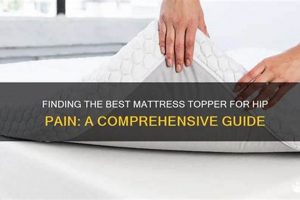
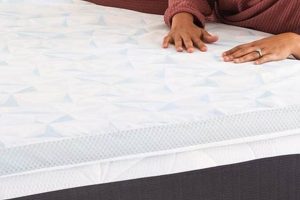
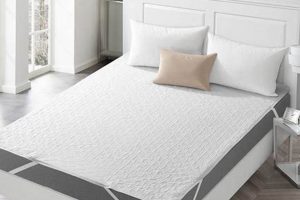
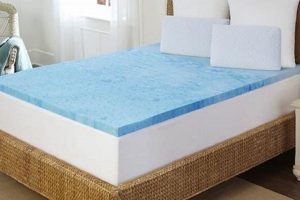
This bedding accessory, designed to enhance sleep surfaces, is a queen-sized overlay infused with a cooling substance. Typically constructed from memory foam, it aims to provide improved comfort and temperature regulation for individuals using a standard queen-sized bed. For example, a person experiencing discomfort from a firm mattress might add this to soften the sleep surface.
The appeal of this particular bed enhancement lies in its potential to alleviate pressure points, promote spinal alignment, and mitigate overheating during sleep. Its historical relevance is tied to the evolution of sleep technology, addressing the common issues of mattress discomfort and temperature control that have long been concerns for consumers. These additions can extend the life of an existing mattress and offer a cost-effective alternative to purchasing a brand-new sleep system.
The subsequent sections will delve into specific aspects such as material composition, density variations, cooling technologies, and considerations for selecting the optimal design based on individual sleep preferences and budgetary constraints. Analysis of warranty information and care instructions are also vital to long-term utilization.
Considerations for Selecting a Cooling Queen Bed Overlay
The following provides insights into selecting an appropriate queen-sized bed overlay designed for thermal regulation and comfort enhancement.
Tip 1: Prioritize Density: Higher density materials, typically measured in pounds per cubic foot (lbs/ft), offer enhanced support and durability. A minimum density of 3 lbs/ft is generally recommended for adequate support. For example, individuals seeking greater support should consider overlays with densities of 4 lbs/ft or higher.
Tip 2: Evaluate Gel Infusion Method: Different methods of gel infusion affect cooling performance. Distributed gel particles or a gel swirl offer more consistent temperature regulation compared to a single gel layer. A product featuring evenly dispersed gel beads is preferable to one with a concentrated gel pad.
Tip 3: Assess Cover Material: The material covering the overlay significantly impacts breathability and moisture-wicking. Look for covers made from breathable fabrics such as bamboo, Tencel, or cotton blends. Avoid synthetic materials that may trap heat. A cover crafted from bamboo rayon offers superior breathability compared to a standard polyester blend.
Tip 4: Consider Thickness: Overlay thickness influences both comfort and overall bed height. Thicknesses typically range from 2 to 4 inches. A thicker overlay (e.g., 4 inches) provides more cushioning, while a thinner one (e.g., 2 inches) offers a more subtle adjustment. If bed height is a concern, a thinner option may be more suitable.
Tip 5: Review Warranty and Return Policy: A comprehensive warranty and a generous return policy provide recourse in case of dissatisfaction or manufacturing defects. Prioritize products with warranties exceeding one year and return policies allowing for a trial period. Verify the specifics of the warranty, including coverage for sagging or loss of support.
Tip 6: Account for Body Weight and Sleep Position: Individual body weight and preferred sleep position influence the optimal density and thickness. Heavier individuals or side sleepers may benefit from higher density and greater thickness for adequate support and pressure relief. Lighter individuals or stomach sleepers may find a lower density and thinner profile more comfortable.
Tip 7: Check for Certifications: Certifications like CertiPUR-US ensure that the foam has been tested for harmful substances and volatile organic compounds (VOCs). A product bearing the CertiPUR-US seal indicates it meets stringent emission standards.
Selecting the appropriate bed overlay requires careful consideration of density, gel infusion method, cover material, thickness, warranty terms, individual sleep needs, and relevant certifications. This approach will maximize the likelihood of achieving enhanced comfort and improved sleep quality.
The subsequent sections will discuss maintenance procedures and cleaning recommendations to prolong the life of the chosen bed overlay.
1. Cooling technology effectiveness
The effectiveness of cooling technologies directly influences the performance and user satisfaction associated with a queen-sized bed overlay. A primary function of these overlays is temperature regulation, mitigating heat retention that can disrupt sleep. Inadequate cooling can negate the potential benefits of the product, leading to discomfort and reduced sleep quality. For instance, an overlay utilizing a poorly implemented gel infusion may fail to effectively dissipate body heat, resulting in a sleep environment indistinguishable from a standard memory foam surface. Therefore, evaluating cooling technology effectiveness is critical when considering the purchase of a queen-sized bed overlay.
Various methods exist for incorporating cooling properties, including gel infusions, phase-change materials, and ventilated designs. Gel-infused overlays aim to absorb and dissipate heat, while phase-change materials actively regulate temperature by absorbing or releasing heat as needed. Ventilated designs promote airflow, facilitating heat dissipation. Real-world examples demonstrate that overlays with advanced phase-change materials often provide superior temperature regulation compared to those relying solely on basic gel infusions. Understanding the specific cooling mechanisms employed and their demonstrated efficacy is essential for informed decision-making. The practical significance lies in the ability to select a product that genuinely addresses temperature-related sleep disturbances.
In summary, the effectiveness of cooling technologies constitutes a fundamental aspect of queen-sized bed overlays. Variations in implementation and material science directly impact the user experience. Challenges remain in objectively quantifying cooling performance, necessitating reliance on verifiable data and consumer reviews. A thorough understanding of these factors, combined with realistic expectations, is necessary to make informed choices and realize the intended benefits of these bedding enhancements. Further research into material science and thermal regulation may yield future innovations and improvements.
2. Density and support
Density and support are intrinsically linked within the context of a queen-sized bedding enhancement. Density, typically measured in pounds per cubic foot (lbs/ft), directly influences the support characteristics and overall performance of the overlay. Insufficient density compromises structural integrity, while excessive density may result in an unyielding and uncomfortable sleep surface. The optimal balance between density and support is, therefore, c
rucial for achieving desired comfort and pressure relief.
- Core Material Density
The density of the primary material, frequently memory foam, determines its ability to contour to the body and provide localized support. Higher density foams (e.g., 4 lbs/ft or greater) exhibit greater resistance to compression, offering superior support for heavier individuals or those requiring firmer support. Conversely, lower density foams may be more suitable for lighter individuals or those preferring a softer sleep surface. The material’s ability to retain its shape and resist sagging over time is also contingent upon its density. Overlays constructed with low-density foams are more susceptible to premature degradation and loss of support.
- Weight Distribution
An overlay’s density plays a critical role in distributing body weight evenly across the sleep surface. Inadequate density can lead to concentrated pressure points, particularly in the shoulders, hips, and knees. This uneven weight distribution can disrupt sleep and exacerbate existing musculoskeletal conditions. A high-density overlay, on the other hand, effectively disperses weight, minimizing pressure points and promoting spinal alignment. The even distribution of weight contributes to reduced tossing and turning, leading to more restful sleep.
- Edge Support
The density of the material used along the perimeter of the overlay significantly impacts edge support. Insufficient edge support can create a sensation of rolling off the bed and limit the usable sleep surface. Higher density materials around the edges provide a stable and supportive perimeter, allowing sleepers to fully utilize the available space. Adequate edge support is particularly beneficial for individuals who share a bed, maximizing the usable area and preventing discomfort caused by compression near the edges.
- Long-Term Durability
Density is a primary determinant of an overlay’s long-term durability. High-density materials resist compression and deformation over time, maintaining their support characteristics for an extended period. Low-density materials are more prone to compression and breakdown, resulting in a loss of support and diminished comfort. The initial cost savings associated with low-density overlays may be offset by their shorter lifespan and reduced performance. Investing in a high-density overlay can provide greater long-term value and sustained support.
The interplay between density and support is a fundamental consideration when evaluating a queen-sized bed overlay. The material’s density directly impacts its ability to contour to the body, distribute weight evenly, provide adequate edge support, and maintain its structural integrity over time. Selecting an overlay with an appropriate density for individual needs and preferences is crucial for achieving optimal comfort, pressure relief, and long-term satisfaction. Understanding the connection between density and support allows consumers to make informed decisions and maximize the benefits of this bedding enhancement.
3. Material composition
The material composition of a queen-sized bed overlay directly influences its performance characteristics and longevity. The selection of materials dictates aspects such as temperature regulation, support, durability, and overall comfort. For instance, an overlay constructed primarily from low-density polyurethane foam will exhibit different properties compared to one made with high-density viscoelastic memory foam infused with gel particles. The former may provide minimal support and inadequate temperature regulation, while the latter is engineered to offer enhanced pressure relief and cooling capabilities. The practical implication of understanding material composition resides in the ability to differentiate between superficially similar products and make informed purchasing decisions.
The specific type of foam employed constitutes a primary factor. Memory foam, known for its contouring properties, is commonly utilized, but variations in density and formulation exist. Gel infusions, often marketed as cooling agents, rely on the thermal conductivity of the infused substance to dissipate heat. However, the effectiveness of these infusions is contingent upon the concentration and distribution of the gel particles, as well as the breathability of the surrounding foam. For example, an overlay with a thick, non-breathable cover may negate the benefits of an otherwise effective gel infusion. Furthermore, the presence of certifications such as CertiPUR-US ensures that the foam has been tested for harmful substances, contributing to a healthier sleep environment. A comprehensive understanding of material composition, therefore, allows individuals to assess the potential risks and benefits associated with various overlay options.
In summary, the material composition is a critical determinant of the queen-sized bed overlay’s quality and performance. Variations in foam density, gel infusion techniques, and cover materials directly impact factors such as support, temperature regulation, and durability. By scrutinizing the materials used in construction, consumers can make informed choices aligned with their specific needs and preferences. While the marketing claims surrounding specific materials can be persuasive, a thorough understanding of material properties and certifications empowers individuals to assess the true value and potential drawbacks of different products. The challenge lies in navigating the complex array of material options and interpreting marketing claims with a critical eye, a task that requires informed awareness and careful consideration.
4. Size and fit

The dimensions of a bed overlay are crucial to its proper function and user satisfaction. In the context of a queen-sized bedding enhancement, accurate sizing is paramount. An overlay that is too small will leave portions of the mattress exposed, negating its intended benefits. Conversely, an overlay that is too large will overhang the edges, creating instability and potential safety hazards. The term “queen” signifies specific, standardized mattress dimensions; adherence to these dimensions in the overlays design is, therefore, non-negotiable. As an example, if the overlay is even an inch shorter than the standard queen mattress length (typically 80 inches), areas near the head or foot of the bed will lack the added comfort and support intended by the overlays design. This discrepancy can lead to uneven sleep surfaces and pressure points, thus defeating the purpose of the accessory.
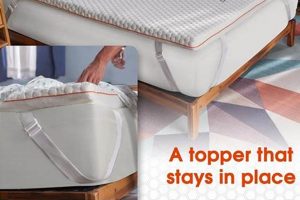
The fit is not solely a matter of length and width, but also thickness and how well the overlay conforms to the existing mattress. Overlays typically range from 2 to 4 inches in thickness. A thicker overlay will significantly alter the overall height of the bed, which may affect access for individuals with mobility limitations, or disrupt aesthetic considerations within the bedroom. A proper fit also entails secure placement; many overlays incorporate elastic straps or non-slip surfaces to prevent shifting during use. Movement of the overlay during sleep can lead to bunching, uneven weight distribution, and compromised spinal alignment. Failure to account for these elements can result in an unsatisfactory sleep experience, negating the investment in the enhancement.
In summary, ensuring accurate size and a secure fit are essential when selecting a qu
een-sized bed overlay. Deviations from standard queen dimensions, or a failure to adequately secure the overlay to the mattress, will diminish its effectiveness and compromise user satisfaction. The challenge lies in accurately measuring the existing mattress and verifying the overlays dimensions prior to purchase. The practical significance of this understanding is a direct correlation between proper sizing and the realization of intended benefits, namely improved comfort, enhanced support, and a more restful sleep environment.
5. Durability and lifespan

The inherent connection between durability, lifespan, and a queen-sized bed overlay dictates its long-term value proposition. The overlays longevity is directly determined by the quality of materials employed and the construction techniques implemented. Low-density foam or substandard gel infusions, for example, result in premature degradation, manifesting as sagging, loss of support, and diminished cooling effectiveness. Conversely, high-density materials coupled with robust construction methods extend the product’s usable life, providing consistent performance over a prolonged period. The practical significance of understanding this connection is that it informs purchasing decisions. An overlay marketed at a lower price point but constructed from inferior materials may require more frequent replacement, ultimately exceeding the total cost of a more durable, albeit initially more expensive, alternative.
Consider the common scenario where a consumer purchases a purportedly cooling bed overlay only to discover, within a year, that the gel infusion has dissipated, and the foam has compressed, rendering it ineffective. This outcome exemplifies the consequences of prioritizing cost over material quality and construction. To mitigate this risk, consumers should scrutinize product specifications, warranty information, and independent reviews. A longer warranty, typically exceeding one year, often indicates greater confidence from the manufacturer regarding the product’s durability. Further, reviews can provide anecdotal evidence regarding real-world performance and longevity. For example, consistent reports of sagging or premature cooling loss should raise concerns, regardless of the manufacturers claims.
In summary, durability and lifespan are fundamental attributes to consider when evaluating a queen-sized bed overlay. While initial cost may be a primary consideration, a focus on material quality and construction practices will yield greater long-term value. Understanding the cause-and-effect relationship between these factors empowers consumers to make informed decisions, maximizing the return on investment and ensuring sustained comfort. The challenge lies in discerning verifiable claims from marketing hyperbole, requiring diligent research and a critical evaluation of product specifications and user feedback.
Frequently Asked Questions
The following addresses common inquiries regarding queen-sized gel-infused mattress toppers, offering detailed and objective information.
Question 1: What is the typical lifespan of a queen gel mattress topper?
The lifespan varies depending on material quality and usage, but a range of three to five years is common for well-maintained products. Higher-density foam and durable construction contribute to extended lifespan.
Question 2: How does a queen gel mattress topper improve sleep quality?
It can enhance comfort by distributing weight evenly, alleviating pressure points, and promoting spinal alignment. Gel infusions aid in temperature regulation, reducing overheating and improving sleep climate.
Question 3: Are all queen gel mattress toppers hypoallergenic?
Not all are inherently hypoallergenic. However, many are made with hypoallergenic materials or can be paired with hypoallergenic mattress protectors to mitigate allergen concerns.
Question 4: What is the ideal thickness for a queen gel mattress topper?
Thickness preferences depend on individual needs. Two to three inches is generally suitable for moderate comfort enhancement, while four inches offers more substantial cushioning and support.
Question 5: Can a queen gel mattress topper fix a sagging mattress?
It can provide temporary relief from minor sagging, but it is not a permanent solution for a severely damaged mattress. Significant sagging may necessitate mattress replacement.
Question 6: How should a queen gel mattress topper be cleaned?
Cleaning instructions vary depending on the topper’s materials. Spot cleaning with mild detergent and water is often recommended. Avoid harsh chemicals or submerging the topper in water.
These answers offer a concise overview of commonly asked questions. Thorough consideration of individual sleep preferences and product specifications is essential for informed decision-making.
The subsequent section will provide insights into comparative analysis of different brands.
Conclusion
The preceding analysis of the mattress gel topper queen underscores its multifaceted nature. Selection requires careful assessment of material composition, density, cooling technology, size, and durability to align with individual sleep requirements. These elements synergistically determine the product’s capacity to deliver on its core promises: enhanced comfort, support, and temperature regulation for queen-sized mattresses.
The effective utilization of this bedding accessory represents a commitment to optimizing sleep quality. Continued innovation in materials science and manufacturing processes holds the potential for further advancements in this product category. A discerning approach to product evaluation remains crucial for maximizing the benefits derived from a mattress gel topper queen.
![Best Mattress Topper for Bad Back Pain Relief [Guide] | Organic & Natural Mattress Buyer’s Guide: Non-Toxic Sleep Solutions](https://mattressworldpa.com/wp-content/uploads/2025/07/th-6087-300x200.jpg "Best Mattress Topper for Bad Back Pain Relief [Guide] Organic & Natural Mattress Buyer’s Guide: Non-Toxic Sleep Solutions")