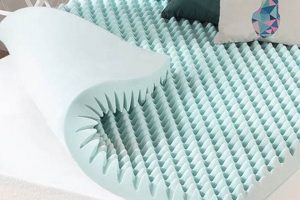
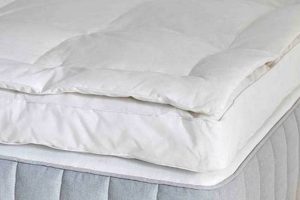
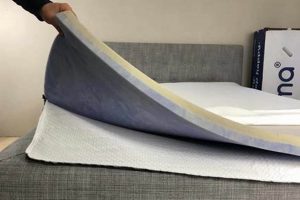
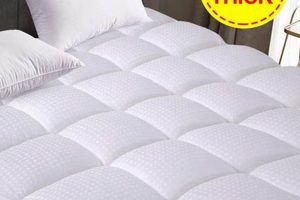
A mattress topper provides an additional layer of material placed atop a mattress to enhance comfort, support, or protection. This layer can be composed of various materials, including memory foam, latex, or down alternatives, each offering a unique feel and set of characteristics. For instance, a memory foam topper contours to the body, alleviating pressure points, while a latex topper provides a more responsive and supportive surface.
The advantages of using such a product are multifaceted. They can improve the overall sleep experience by modifying the firmness level of an existing mattress, extending its lifespan by reducing wear and tear, and offering a more hygienic sleep surface. Historically, additions to mattresses have been used to adapt the sleeping surface to individual needs and preferences, evolving from simple padding to technologically advanced materials designed for specific sleep-related issues.
The subsequent sections will delve into the specific ways these products contribute to improved sleep quality, explore the different types available, provide guidance on selecting the right one, and offer advice on their maintenance and care. Understanding these factors is crucial to making an informed decision about whether integrating one into a sleep setup is appropriate.
Maximizing Mattress Topper Effectiveness
The following tips offer guidance on selecting and utilizing a mattress topper to optimize sleep quality and mattress longevity.
Tip 1: Evaluate Existing Mattress Condition: Before purchasing a mattress topper, assess the underlying mattress. A topper can enhance comfort and support, but it cannot rectify significant structural issues within the mattress itself.
Tip 2: Select Material Based on Needs: Different materials offer distinct properties. Memory foam provides contouring and pressure relief, while latex offers breathability and responsiveness. Consider individual sleep preferences and needs when selecting a material.
Tip 3: Consider Topper Thickness: The thickness of the topper influences its impact on mattress feel. A thicker topper will provide a more noticeable change in firmness and support.
Tip 4: Verify Topper Dimensions: Ensure the topper matches the dimensions of the mattress to prevent overhang or gaps. This ensures optimal comfort and performance.
Tip 5: Utilize a Mattress Protector: A mattress protector safeguards both the mattress and the topper from spills, stains, and dust mites. This prolongs the lifespan of both products and maintains a hygienic sleep environment.
Tip 6: Rotate the Topper Regularly: Rotating the topper every few months helps to distribute wear evenly, preventing sagging or compression in specific areas.
Tip 7: Follow Cleaning Instructions: Adhere to the manufacturer’s cleaning instructions for the chosen topper material. Improper cleaning can damage the topper and diminish its performance.
Implementing these guidelines can maximize the benefits of a mattress topper, resulting in improved sleep quality and extended mattress life.
The concluding section will summarize the core elements discussed and provide final considerations for those contemplating a mattress topper purchase.
1. Enhanced Comfort

The enhancement of comfort is a primary driver for the adoption of mattress toppers, serving as a critical component within the broader spectrum of benefits these products offer. The cause-and-effect relationship is direct: a mattress topper modifies the surface feel of the underlying mattress, thereby influencing the sleeper’s comfort level. Individuals seeking a softer sleeping surface, for example, might select a memory foam topper to contour to their body, alleviating pressure points that contribute to discomfort. Conversely, those requiring firmer support might opt for a latex or wool topper to increase the density and stability of the sleep surface.
The importance of enhanced comfort as a component of these advantages extends beyond mere subjective preference. Improved comfort can directly impact sleep quality, reducing tossing and turning, and promoting deeper, more restorative sleep cycles. For instance, an individual experiencing back pain due to an unsupportive mattress may find significant relief with a topper that provides targeted spinal alignment. This alleviation of discomfort directly contributes to better sleep architecture and reduced daytime fatigue. The practical significance lies in the widespread accessibility of these solutions and their relative affordability compared to replacing an entire mattress.
In summary, enhanced comfort is not simply an ancillary advantage but a fundamental reason for utilizing a mattress topper. It directly influences sleep quality, alleviates physical discomfort, and provides a customizable solution to individual sleep needs. While material selection and thickness are key considerations, the ultimate goal remains consistent: to optimize the sleep environment for improved rest and overall well-being. The challenge lies in accurately assessing individual needs and selecting a topper that effectively addresses those specific requirements.
2. Improved Support
Improved support represents a significant contribution to the overall advantages realized through the use of mattress toppers. The cause-and-effect relationship is demonstrably linked to spinal alignment and pressure distribution. A mattress topper, particularly one constructed from materials such as latex or high-density memory foam, can modify the existing support characteristics of a mattress. This alteration, in turn, can alleviate pressure points and promote a more neutral spinal posture during sleep, reducing the likelihood of back pain and discomfort.
The importance of improved support as a component of mattress topper value is underscored by its direct impact on musculoskeletal health and sleep quality. For example, individuals experiencing lower back pain may benefit from a topper that provides targeted lumbar support, preventing the spine from sagging excessively during sleep. This, in turn, reduces strain on the spinal muscles and ligaments, contributing to a more restful and restorative sleep cycle. A practical illustration involves an athlete recovering from strenuous training; a supportive topper can aid in muscle recovery by facilitating proper spinal alignment and reducing nocturnal discomfort. The selection of appropriate thickness and density is paramount to achieving the desired support level. Furthermore, understanding the underlying mattress’s structural integrity is crucial, as a topper cannot compensate for a significantly damaged or worn-out mattress.
In conclusion, improved support is a key facet of mattress topper effectiveness. It influences spinal alignment, pressure distribution, and ultimately, sleep quality. Challenges remain in accurately assessing individual su
pport needs and selecting materials that appropriately address those requirements. The understanding of the link between improved support and the broader range of advantages informs a more discerning purchase decision, potentially leading to enhanced sleep and improved musculoskeletal well-being.
3. Pressure Relief
Pressure relief is a fundamental component of the advantages attributed to mattress toppers. It directly addresses the reduction of concentrated force on specific areas of the body during sleep, influencing comfort and musculoskeletal health.
- Conforming Materials and Weight Distribution
Certain materials, notably memory foam, exhibit viscoelastic properties that allow them to conform to the body’s contours. This conforming action redistributes weight across a broader surface area, mitigating pressure on bony prominences such as hips, shoulders, and knees. For example, an individual experiencing hip pain due to prolonged pressure on a firm mattress may find relief from a memory foam topper that cradles the hips, reducing localized stress.
- Impact on Circulation
Sustained pressure on specific body parts can impede blood circulation. A mattress topper designed for pressure relief can alleviate this restriction, promoting improved circulation throughout the night. Individuals with circulatory issues or those who sleep in static positions for extended periods may particularly benefit. Reduced pressure allows for more efficient blood flow to muscles and tissues, aiding in recovery and minimizing discomfort.
- Spinal Alignment and Muscular Relaxation
Proper spinal alignment is intrinsically linked to pressure relief. When the spine is properly supported, muscular tension decreases. A mattress topper can contribute to spinal alignment by filling gaps between the body and the mattress surface, preventing unnatural curvature and reducing pressure on spinal discs and surrounding muscles. This facilitates muscular relaxation, which is essential for restorative sleep.
- Alleviation of Pain Conditions
Pressure relief is a key factor in managing pain associated with various medical conditions. Individuals with arthritis, fibromyalgia, or sciatica may experience heightened sensitivity to pressure. A pressure-relieving mattress topper can minimize discomfort by reducing stress on affected areas, leading to improved sleep quality and reduced pain levels. The choice of topper material and thickness should be tailored to the specific needs of the individual and the nature of their pain condition.
The combined effect of conforming materials, improved circulation, spinal alignment, and pain alleviation underscores the significance of pressure relief as a central benefit of mattress toppers. These elements work synergistically to create a more comfortable and supportive sleep environment, addressing a broad spectrum of individual needs and contributing to improved overall well-being.
4. Extended mattress life
Extending the lifespan of a mattress is a noteworthy advantage stemming from the utilization of mattress toppers. This benefit directly impacts the cost-effectiveness of sleep solutions and represents a significant consideration for consumers seeking to preserve their investment.
- Protection from Wear and Tear
A mattress topper serves as a protective barrier against daily wear and tear. Body weight, friction from movement during sleep, and the absorption of moisture contribute to the gradual degradation of a mattress. By absorbing these forces, the topper minimizes their impact on the underlying mattress. For instance, a spill occurring on a bed is more likely to be contained by the topper, preventing potential damage to the mattress core. The material composition and thickness of the topper directly influence its protective capabilities.
- Reduced Direct Contact with Body Oils and Sweat
Over time, body oils and sweat can penetrate a mattress, leading to discoloration, odor, and the breakdown of internal materials. A mattress topper, especially one with a waterproof or water-resistant cover, significantly reduces the direct contact between the body and the mattress. This mitigation helps maintain the mattress’s cleanliness and structural integrity. The effectiveness of this protection relies on the topper’s permeability and the frequency of laundering the topper or its cover.
- Minimization of Indentations and Sagging
Consistent pressure applied to the same areas of a mattress can result in indentations and sagging, diminishing its support and comfort. A mattress topper distributes weight more evenly, alleviating concentrated pressure points and minimizing the likelihood of these issues. The type of material used in the topper plays a crucial role; materials with higher densities tend to offer superior weight distribution and resistance to compression. Regular rotation of the topper can further mitigate the formation of permanent indentations.
- Delaying the Need for Mattress Replacement
By mitigating wear and tear, reducing direct contact with contaminants, and minimizing indentations, a mattress topper effectively delays the need for a complete mattress replacement. This postponement represents a tangible economic benefit. While a mattress topper requires periodic replacement, its cost is typically significantly lower than that of a new mattress. The extended lifespan of the mattress translates to reduced long-term expenditure on sleep-related products.
The protective functions of a mattress topper collectively contribute to its ability to extend mattress life. This extension not only represents a cost savings but also supports sustainable consumption practices by prolonging the usability of existing products. Choosing a durable, high-quality topper can maximize these benefits, contributing to both a comfortable sleep environment and responsible resource management.
5. Temperature regulation
Temperature regulation significantly influences sleep quality, and certain mattress toppers can contribute to maintaining a comfortable sleep temperature. The materials used in a mattress topper directly affect its ability to regulate temperature. Memory foam, while offering pressure relief, can sometimes retain heat. Conversely, materials such as latex, wool, or those incorporating cooling gel infusions are designed to dissipate heat and promote airflow. The selection of a temperature-regulating topper addresses issues such as night sweats or discomfort caused by overheating, thereby enhancing the sleep environment. The effectiveness of a topper in regulating temperature is dependent on its material composition, thickness, and the overall breathability of the sleep system, including bedding and mattress construction. Failure to manage sleep temperature can lead to disrupted sleep patterns and diminished rest.
The practical application of temperature-regulating mattress toppers extends to various scenarios. Individuals residing in warmer climates or those prone to overheating during sleep may find sign
ificant relief from toppers made with breathable materials. For example, a wool topper wicks away moisture and regulates temperature, creating a more consistent sleep surface throughout the night. Conversely, in colder climates, a thicker topper might offer enhanced insulation, retaining heat and providing a warmer sleep environment. Furthermore, specific medical conditions or hormonal changes can impact body temperature regulation, making a temperature-regulating topper a valuable tool in managing sleep comfort. The proper maintenance, including regular cleaning and airing out the topper, is crucial for sustaining its temperature-regulating properties over time.
In summary, temperature regulation is a critical aspect of sleep quality, and mattress toppers can play a significant role in managing sleep temperature. Material selection is paramount in achieving the desired temperature regulation effect. Understanding the interaction between the topper material and the individual’s specific needs, environment, and underlying mattress is essential for maximizing the benefits of temperature regulation. While advancements in materials science continue to enhance the effectiveness of these products, challenges remain in creating a universally effective solution for all individuals and environments.
6. Cost-effectiveness

The relationship between cost-effectiveness and mattress topper benefits is fundamentally rooted in the principle of value maximization. Purchasing a mattress topper, when viewed through an economic lens, represents an investment aimed at achieving specific returns, primarily in the form of improved sleep quality and extended mattress lifespan. The cost-effectiveness of this investment is determined by comparing the expenditure on the topper against the tangible benefits it provides over its lifespan. A key factor is the alternative cost the expense of replacing an entire mattress versus the comparatively lower cost of a topper. For instance, a high-quality mattress can cost several thousand dollars, while a premium topper might cost several hundred. If the topper successfully extends the life of the mattress by even a few years, the cost savings become significant. Furthermore, the economic value also includes the potential reduction in healthcare costs associated with improved sleep and reduced musculoskeletal discomfort.
The assessment of cost-effectiveness also requires consideration of the topper’s durability and performance over time. A less expensive topper constructed from low-quality materials might degrade quickly, negating its initial cost advantage. Conversely, a more durable topper, though initially more expensive, can offer superior long-term value. Real-world examples illustrate this point: a memory foam topper prone to sagging within a year represents a poor investment, while a latex topper that maintains its support and comfort for five years provides a higher return on investment. The evaluation should also incorporate indirect cost savings, such as reduced energy consumption due to better temperature regulation during sleep. The selection of an appropriate topper involves careful consideration of its material properties, expected lifespan, and potential impact on sleep quality, all contributing to its overall cost-effectiveness.
In conclusion, the cost-effectiveness of mattress toppers is a multifaceted consideration that extends beyond the initial purchase price. It encompasses the extended lifespan of the mattress, improved sleep quality, potential healthcare cost savings, and the durability of the topper itself. Challenges remain in accurately predicting the long-term performance and benefits of specific topper models, but a thorough evaluation based on material properties, user reviews, and potential healthcare implications can inform a more economically sound decision. Ultimately, the value of a mattress topper is realized when its benefits outweigh its costs, contributing to both improved sleep and responsible financial management.
7. Hygienic sleep surface
Maintaining a hygienic sleep environment is a crucial aspect of overall health, and mattress toppers can significantly contribute to this objective. By providing a removable and often washable layer atop the mattress, they offer a practical means of mitigating allergen exposure and preventing the accumulation of contaminants.
- Barrier Against Allergens
Mattress toppers act as a barrier against dust mites, pet dander, and other allergens that commonly accumulate within mattresses. These allergens can trigger allergic reactions and respiratory issues, disrupting sleep quality. A topper, particularly one encased in a hypoallergenic cover, reduces the exposure to these irritants. For example, individuals with asthma may experience fewer nocturnal symptoms due to the reduced allergen load. The topper’s removability facilitates regular cleaning, further minimizing allergen buildup.
- Moisture and Spill Protection
The absorption of moisture, whether from sweat, spills, or humidity, creates a breeding ground for bacteria and mold within a mattress. Mattress toppers, especially those with waterproof or water-resistant properties, protect the underlying mattress from these fluids. This protection inhibits microbial growth and prevents the development of unpleasant odors. Regularly cleaning or replacing the topper helps maintain a dry and hygienic sleep surface.
- Ease of Cleaning and Maintenance
Unlike mattresses, which are difficult to clean thoroughly, mattress toppers are designed for relatively easy maintenance. Many toppers feature removable covers that can be laundered, and the topper itself can often be spot-cleaned or aired out. This ease of cleaning ensures that the sleep surface remains hygienic and free from contaminants. The frequency of cleaning depends on factors such as the material of the topper and the level of usage, but regular maintenance is essential for maintaining a healthy sleep environment.
- Replacement and Renewal
Over time, any sleep surface, including a mattress topper, will accumulate wear and tear and potentially become less hygienic. The relatively low cost of replacing a mattress topper compared to replacing an entire mattress makes it a practical solution for maintaining a clean and healthy sleep environment. Periodic replacement ensures that the sleep surface remains fresh and free from contaminants that can compromise sleep quality and overall health.
In summary, the contribution of mattress toppers to a hygienic sleep surface is multifaceted, encompassing allergen reduction, moisture protection, ease of cleaning, and the option for periodic replacement. These factors collectively enhance the quality of the sleep environment and contribute to the overall benefits associated with their use, thereby promoting both physical health and improved sleep patterns.
Frequently Asked Questions
The following addresses common inquiries regarding the use and advantages of mattress toppers, providing detailed responses based on factual information and established industry knowledge.
Question 1: To what extent does a mattress topper genuinely improve sleep quality?
Mattress toppers modify the sleep surface, influencing comfort, support, and temperature regulation. The degree of improvement varies based on the individual’s needs and the topper’s c
haracteristics. A properly selected topper can alleviate pressure points, promote spinal alignment, and regulate temperature, leading to improved sleep depth and reduced sleep disturbances. However, it cannot rectify underlying medical conditions or address fundamental mattress defects.
Question 2: Can a mattress topper correct a sagging or excessively firm mattress?
A mattress topper can partially compensate for minor sagging or firmness issues. A thick, supportive topper can add a layer of cushioning to a firm mattress, while a denser topper may provide additional support to a slightly sagging mattress. However, it is not a substitute for replacing a severely damaged or worn-out mattress. Significant structural issues require mattress replacement for optimal sleep quality.
Question 3: What are the key differences between memory foam, latex, and down alternative mattress toppers?
Memory foam conforms closely to the body, offering pressure relief but potentially trapping heat. Latex provides a responsive, supportive surface with good breathability. Down alternative offers a soft, plush feel but may lack the support of memory foam or latex. The ideal material depends on individual preferences and specific needs, such as pressure relief, support, or temperature regulation.
Question 4: How often should a mattress topper be replaced?
The lifespan of a mattress topper varies based on material, usage, and maintenance. Generally, a high-quality topper can last between three to five years. Signs of wear and tear, such as sagging, flattening, or persistent odors, indicate the need for replacement. Regular cleaning and proper maintenance can extend the topper’s lifespan.
Question 5: Are mattress toppers suitable for individuals with allergies?
Certain mattress toppers are specifically designed for individuals with allergies. Hypoallergenic materials, such as latex or tightly woven microfiber, can minimize exposure to dust mites and other allergens. Look for toppers with certifications indicating their hypoallergenic properties. Regular cleaning and the use of a mattress protector further reduce allergen accumulation.
Question 6: What factors should be considered when selecting a mattress topper thickness?
Topper thickness influences its impact on the sleep surface. Thicker toppers generally provide more significant changes in firmness and support. Individuals seeking substantial pressure relief or a dramatic change in mattress feel may prefer a thicker topper. Conversely, those seeking minor adjustments may opt for a thinner option. The thickness should also be considered in relation to the depth of the mattress and fitted sheet compatibility.
In summary, mattress toppers offer a versatile means of enhancing sleep comfort and extending mattress life. However, careful consideration of individual needs and product characteristics is essential for maximizing their benefits.
The subsequent section will provide a concise overview of the key takeaways regarding the benefits of these toppers.
Conclusion
The preceding analysis has systematically explored the multifaceted advantages of mattress toppers. These advantages encompass enhanced comfort, improved support, pressure relief, extended mattress life, temperature regulation, cost-effectiveness, and the maintenance of a hygienic sleep surface. Each of these elements contributes to a more conducive sleep environment, impacting overall well-being and long-term economic considerations. The degree to which these products fulfill their intended purpose hinges on careful evaluation of individual needs, material selection, and adherence to proper maintenance protocols.
The decision to incorporate a mattress topper into a sleep system warrants informed consideration. While these products offer a range of potential enhancements, they are not a panacea for underlying sleep disorders or severely compromised mattresses. Their effective utilization requires a clear understanding of their limitations and a commitment to responsible product stewardship. The judicious application of this knowledge can lead to meaningful improvements in sleep quality and the longevity of existing sleep investments.
![Best King Size Mattress Topper [Guide & Review] | Organic & Natural Mattress Buyer’s Guide: Non-Toxic Sleep Solutions](https://mattressworldpa.com/wp-content/uploads/2025/07/th-6136-300x200.jpg "Best King Size Mattress Topper [Guide & Review] Organic & Natural Mattress Buyer’s Guide: Non-Toxic Sleep Solutions")