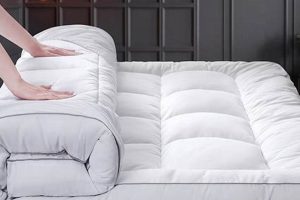
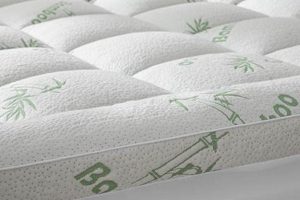
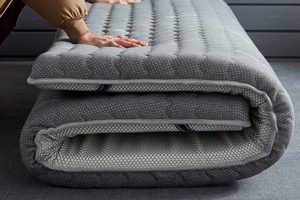
A bedding accessory designed to enhance sleep comfort, it is a layer placed atop a mattress, filled with the plumage of ducks or geese. These products serve to modify the firmness and feel of an existing mattress. For instance, a firm mattress can be softened by the addition of this type of product, creating a plusher sleep surface.
The incorporation of such a layer can yield multiple benefits. It may contribute to pressure relief, conforming to the body’s contours and alleviating stress on joints. Historically, the use of feather-filled bedding dates back centuries, providing insulation and comfort. Modern versions offer a blend of traditional comfort with contemporary manufacturing techniques, offering increased breathability and hygiene.
The following sections will delve into the specific characteristics, advantages, and maintenance considerations associated with selecting and utilizing a product of this type. These sections will explore construction types, fill power ratings, care instructions, and potential drawbacks to enable informed consumer choices.
Tips for Selecting a Quality Down Mattress Topper
Choosing the optimal bedding enhancement requires careful consideration of several factors. The following tips provide guidance in selecting a suitable product to ensure optimal comfort and longevity.
Tip 1: Consider Fill Power: Fill power indicates the loft and insulation ability. A higher fill power suggests better quality and a more resilient product, providing greater support and longevity.
Tip 2: Evaluate Construction Method: Baffle box construction prevents shifting of the fill, ensuring even distribution and preventing cold spots. A sewn-through construction may result in less loft and potential fill clumping.
Tip 3: Assess Fabric Quality: A tightly woven cotton fabric, preferably with a high thread count, prevents feather leakage and enhances durability. Synthetic fabrics may compromise breathability.
Tip 4: Check for Down Certification: Certifications such as Responsible Down Standard (RDS) ensure ethical sourcing and humane treatment of animals. Opting for certified products supports responsible manufacturing practices.
Tip 5: Consider Mattress Depth: Ensure the chosen product’s pocket depth accommodates the existing mattress. Incorrect sizing can lead to slippage and diminished comfort.
Tip 6: Read Reviews and Ratings: Researching consumer reviews provides insights into real-world performance, durability, and potential drawbacks. Multiple sources should be consulted to form a balanced perspective.
By carefully evaluating fill power, construction, fabric, certification, and mattress compatibility, one can ensure the selection of a high-quality option that meets individual needs and preferences.
With proper selection complete, the next step will be addressing appropriate maintenance and care to prolong the lifespan and optimize the performance of the chosen down bedding enhancement.
1. Fill Power Rating

Fill power rating is a crucial specification influencing the performance and overall quality. It directly quantifies the loft and insulation capacity of the down fill, dictating the degree of comfort and support the topper provides.
- Loft and Volume
Fill power measures the volume, in cubic inches, occupied by one ounce of down. A higher rating signifies a greater volume, indicating that the down is more capable of trapping air. This trapped air provides insulation, keeping the sleeper warm in cooler conditions and cooler in warmer conditions by wicking away moisture. A lower fill power will result in less loft, less insulation, and reduced overall comfort.
- Durability and Resilience
Down with a high fill power exhibits enhanced resilience, meaning it is better able to retain its original shape and loft after compression. This is significant because a mattress topper experiences constant pressure from the sleeper’s body. A higher fill power ensures the topper maintains its support and comfort level over an extended period, resisting flattening and clumping. Lower fill power results in quicker degradation of support.
- Weight-to-Warmth Ratio
A higher fill power allows for a lighter overall product while maintaining the same level of warmth and insulation. This is advantageous in a bedding context, as it contributes to a less bulky and more comfortable sleep environment. It ensures adequate warmth without adding unnecessary weight, enhancing the sleeper’s experience. In contrast, toppers with lower fill power will need more down to achieve equivalent warmth, resulting in a heavier and potentially less comfortable product.
- Price Point
Fill power substantially affects the cost. Harvesting down that can reach a high fill power is more complicated. This translates into a considerable difference in product cost. Its essential to balance the desire for higher fill power with budgetary constraints, evaluating the trade-offs between superior performance and affordability when selecting. Lower fill power products offer a more economical choice, albeit with potential compromises in longevity and performance.
The fill power rating is therefore a key indicator. A thorough understanding of its relationship to loft, resilience, weight, and price enables consumers to make informed decisions. This allows them to select a product that aligns with individual comfort preferences, budgetary constraints, and expectations for long-term performance.
2. Baffle Box Design

Baffle box design, integral to a product using plumage, refers to a specific construction technique employing fabric walls, or baffles, to create individual compartments within the topper. These compartments serve to contain and evenly distribute the fill material. The absence of this design often results in fill shifting, leading to uneven support and the formation of cold spots. This design is not merely aesthetic; it directly impacts the performance and longevity of the bedding accessory.
A common issue observed in toppers lacking baffle box construction is the migration of down to the edges, leaving the central sleeping area sparsely filled. This concentration of fill at the perimeter diminishes support and creates temperature inconsistencies across the sleep surface. With baffle box design, each compartment retains its allocated fill, ensuring consistent loft and uniform warmth distribution. For instance, a queen-size option with a well-executed baffle box design will provide consistent support across the entire surface, accommodating two sleepers without compromising individual comfort.
The implementation of this construction extends the lifespan of a down-filled product. By preventing clumping and uneven wear, the baffle box design maintains the integrity of the fill
over time, preserving the initial comfort and support characteristics. While products lacking this feature may initially offer a lower price point, the long-term benefits of baffle box construction, including consistent comfort, even temperature regulation, and extended product life, represent a significant value proposition for consumers seeking a durable and high-performing sleep surface enhancement.
3. Ethical Sourcing Standard
The Ethical Sourcing Standard, particularly as it relates to the plumage used within a mattress topper, addresses the humane treatment of waterfowl from which the down is derived. Without adherence to these standards, down production can involve practices considered unethical, such as live plucking or force-feeding. Down acquired through such methods raises concerns regarding animal welfare and the overall sustainability of the supply chain. The presence of an Ethical Sourcing Standard ensures that farms are audited and certified, guaranteeing that down is obtained without causing unnecessary harm or distress to the animals. For example, the Responsible Down Standard (RDS) provides a widely recognized framework for verifying the ethical sourcing of down, tracking the material from farm to finished product.
The implementation of these standards has a direct impact on the quality and integrity of the plumage used. Farms committed to ethical practices often invest in better animal husbandry, resulting in healthier birds and higher quality plumage. Consumers who prioritize ethical considerations actively seek out products carrying certifications like RDS, influencing manufacturers to adopt and maintain ethical sourcing practices. This consumer demand has led to a gradual shift in the industry, encouraging more farms to undergo certification processes and embrace humane treatment methods. The alternative to this, uncertified down, may be cheaper. However, it carries the risk of supporting practices detrimental to animal welfare and potentially of lower quality.
In conclusion, Ethical Sourcing Standards are not merely symbolic; they represent a tangible commitment to animal welfare and responsible production within the down industry. The choice to prioritize ethically sourced bedding directly supports farms that adhere to humane practices, fosters a more sustainable supply chain, and ultimately contributes to a product that aligns with values of compassion and responsibility. While challenges remain in ensuring complete traceability and eliminating unethical practices entirely, the increasing adoption of these standards represents a significant step towards a more ethical and sustainable down industry.
4. Material Breathability

Material breathability, in the context of a down mattress topper, refers to the fabric’s ability to allow air and moisture vapor to pass through it. This property directly influences the sleeper’s comfort by regulating temperature and preventing the buildup of humidity within the bedding. A topper with poor breathability traps heat and moisture, leading to discomfort and potentially disrupting sleep. Conversely, a breathable topper facilitates airflow, dissipating heat and wicking away perspiration, maintaining a more comfortable and consistent sleep temperature. The choice of fabric, such as tightly woven cotton or specialized synthetic blends, significantly determines this breathability. For instance, a high-thread-count cotton casing allows for effective airflow while preventing down leakage, whereas a less breathable synthetic casing might compromise temperature regulation despite offering other benefits like enhanced durability.
The impact of material breathability extends beyond mere comfort. Excessive moisture buildup within the topper can create a breeding ground for dust mites and other allergens, exacerbating respiratory issues and sensitivities. A breathable material mitigates this risk by promoting ventilation and preventing the accumulation of moisture. Furthermore, breathability contributes to the longevity of the topper itself. Trapped moisture can degrade down fill over time, reducing its loft and insulating properties. A breathable casing helps to keep the down dry and fluffy, preserving its performance and extending the lifespan. Consider a scenario where two identical down toppers are used, one with a breathable cotton casing and the other with a non-breathable synthetic casing; over time, the cotton-cased topper will likely maintain its loft and comfort for longer due to its superior ventilation properties.
In summary, material breathability is an essential attribute of a down mattress topper, impacting comfort, hygiene, and longevity. The selection of a breathable casing material is crucial for ensuring a comfortable and healthy sleep environment. Prioritizing this aspect enables consumers to fully realize the benefits of a down mattress topper, maximizing sleep quality and extending the product’s useful life. Overlooking breathability can negate the advantages otherwise offered by the down fill itself, leading to a less satisfactory sleep experience and premature degradation of the bedding accessory.
5. Maintenance Requirements

The longevity and performance of a down mattress topper are directly correlated with adherence to specific maintenance requirements. Neglecting these requirements can result in a diminished lifespan, reduced loft, and potential hygiene concerns, thereby negating the initial investment in enhanced sleep comfort. The fill within these toppers, while providing cushioning and insulation, is susceptible to compression and the accumulation of moisture and body oils, necessitating regular care. Failure to address these issues can lead to clumping of the down, fostering an environment conducive to dust mites and allergens. The frequency and method of cleaning, as well as proper storage techniques, are therefore crucial factors in preserving the integrity and functionality of the product.
Proper maintenance protocols include regular fluffing to redistribute the down and prevent compaction. Periodic spot cleaning is necessary to address spills or stains, avoiding harsh chemicals that can damage the fill. Professional cleaning, typically recommended every one to two years, offers a more thorough approach, removing accumulated dirt and allergens without compromising the down’s natural properties. Furthermore, the use of a protective mattress pad or encasement can minimize soiling and wear, extending the time between professional cleanings. For instance, a topper that is consistently covered and regularly fluffed will likely retain its loft and cleanliness for a significantly longer period than one that is left unprotected and unmaintained.
Understanding and implementing appropriate maintenance requirements is not merely a matter of convenience; it is an essential component of responsible ownership. While the initial cost of a down mattress topper may be substantial, the investment can be justified by its potential for long-term comfort and improved sleep quality. However, realizing this potential hinges on a commitment to consistent and diligent care. The challenges associated with maintaining these toppers, such as the time and expense involved in professional cleaning, are outwei
ghed by the benefits of preserving its quality and extending its useful life. In conclusion, proactive maintenance is integral to optimizing the value and enjoyment derived from a down mattress topper, ensuring a consistently comfortable and hygienic sleep environment.
Frequently Asked Questions Regarding Down Mattress Toppers
The following section addresses common inquiries concerning the selection, use, and care of bedding enhancements filled with avian plumage. These questions seek to provide clarity on aspects pertinent to consumer understanding and product performance.
Question 1: What is the anticipated lifespan?
The longevity is contingent upon usage patterns and adherence to recommended maintenance procedures. With appropriate care, a high-quality product may provide enhanced comfort for several years. However, factors such as body weight, sleeping habits, and cleaning frequency will influence its durability.
Question 2: How does fill power influence sleep comfort?
A higher fill power denotes greater loft and insulating capacity. Products with elevated fill power ratings tend to provide superior cushioning and temperature regulation, resulting in improved sleep quality. However, individual comfort preferences may vary, and some sleepers may prefer a lower fill power for a less pronounced cushioning effect.
Question 3: What are the implications of improper cleaning?
Incorrect cleaning methods can damage the fill, leading to clumping and diminished loft. Harsh chemicals and excessive heat can strip the natural oils from the down, compromising its insulating properties. Following manufacturer-recommended cleaning instructions is crucial to preserving the integrity and performance of the topper.
Question 4: How can ethical sourcing be verified?
Ethical sourcing certifications, such as the Responsible Down Standard (RDS), provide assurance that the plumage has been obtained without causing unnecessary harm to waterfowl. These certifications involve independent audits of farms and supply chains to ensure compliance with humane treatment standards. Consumers can look for these certifications when selecting a topper.
Question 5: What is the significance of baffle box construction?
Baffle box construction prevents the shifting of fill, ensuring even distribution and preventing cold spots. This design enhances comfort and promotes uniform temperature regulation across the entire sleep surface. Products lacking baffle box construction are more prone to uneven wear and diminished support.
Question 6: Are there alternatives for individuals with allergies?
While down is generally considered hypoallergenic, some individuals may experience sensitivities. Alternatives such as synthetic down or feather alternatives offer similar cushioning properties without the potential for allergic reactions. Selecting a hypoallergenic topper and using a protective encasement can further minimize the risk of allergic responses.
These frequently asked questions offer a foundational understanding. Prospective purchasers should consider their needs and product specifications.
The subsequent section provides a comparative overview of products available in the current market.
Concluding Remarks on Down Mattress Toppers
This exploration has elucidated the multifaceted characteristics, benefits, and maintenance considerations associated with a down mattress topper. Understanding fill power, construction methods like baffle box design, ethical sourcing standards, material breathability, and proper maintenance is crucial for maximizing the lifespan and performance of this bedding accessory. Ethical considerations, particularly concerning animal welfare, also warrant careful attention during the purchasing process.
The selection of a down mattress topper represents a significant investment in sleep quality and comfort. Consumers are encouraged to thoroughly evaluate their individual needs and preferences, compare available product options, and prioritize responsible sourcing practices to ensure a worthwhile and sustainable purchase. Informed decision-making will ultimately lead to enhanced sleep and long-term satisfaction.
![Best King Mattress Topper Nearby: [Comfort Boost!] | Organic & Natural Mattress Buyer’s Guide: Non-Toxic Sleep Solutions](https://mattressworldpa.com/wp-content/uploads/2025/07/th-6131-300x200.jpg "Best King Mattress Topper Nearby: [Comfort Boost!] Organic & Natural Mattress Buyer’s Guide: Non-Toxic Sleep Solutions")