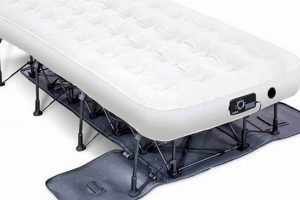
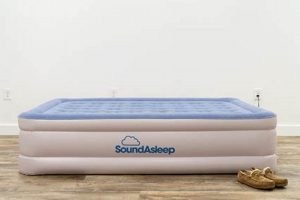
An inflatable sleeping surface designed for use within the cargo area of a sport utility vehicle (SUV) constitutes a specialized bedding solution. Typically constructed from durable, puncture-resistant materials such as PVC or reinforced nylon, these mattresses are shaped to conform to the interior dimensions of various SUV models, often accommodating the wheel well contours and providing a relatively flat sleeping platform when the rear seats are folded down.
This equipment provides convenience and cost savings for vehicle-based camping and road trips. Instead of relying on traditional tents or lodging, individuals can utilize the interior space of their vehicle for comfortable sleep. Historically, travelers have sought ways to optimize space and comfort during journeys; this type of mattress represents a modern adaptation of that enduring need. Benefits include protection from the elements, enhanced security, and a readily available sleeping space wherever the vehicle is parked.
The following discussion will delve into the types of these sleeping arrangements available, considerations for selecting the optimal model, factors affecting comfort and durability, and practical tips for inflation, deflation, and maintenance, enabling informed purchasing decisions and maximizing the utility of the product.
Essential Usage Considerations
Optimal utilization of an inflatable sleeping surface for SUVs requires careful attention to several key aspects. Prioritizing these factors will ensure comfortable rest and extend the product’s lifespan.
Tip 1: Measure Vehicle Interior Dimensions: Accurately measure the cargo area of the SUV with the rear seats folded down. These measurements should be compared to the specified dimensions of any potential purchase to ensure proper fit and minimize gaps or overhang.
Tip 2: Inflate According to Instructions: Overinflation can stress seams and lead to premature failure. Adhere strictly to the manufacturers recommended inflation pressure, typically specified in PSI, using the supplied pump or a compatible alternative with a pressure gauge.
Tip 3: Use a Protective Layer: Place a thin blanket or fitted sheet atop the surface. This will protect the material from abrasion caused by clothing or movement during sleep, as well as absorb moisture.
Tip 4: Employ a Portable Air Pump: A 12V DC air pump designed for automotive use is a valuable accessory. It facilitates rapid inflation and deflation, and provides on-the-go adjustment of firmness.
Tip 5: Avoid Sharp Objects: Thoroughly inspect the area before inflation to remove any sharp objects that could puncture the material. Exercise caution when placing items around the inflated surface.
Tip 6: Deflate and Store Properly: When not in use, completely deflate the surface and fold it neatly according to the manufacturers instructions. Store it in a cool, dry place away from direct sunlight to prevent material degradation.
Tip 7: Consider Temperature Fluctuations: Ambient temperature can affect air pressure. Monitor the firmness, particularly in extreme heat or cold, and adjust accordingly by adding or releasing air as needed.
Adherence to these guidelines will not only enhance the sleeping experience, but also safeguard the investment in this type of bedding.
The subsequent sections will address product comparisons, maintenance procedures, and troubleshooting common issues, further assisting in informed decision-making and prolonged product use.
1. Vehicle Compatibility

Vehicle compatibility represents a foundational consideration when selecting an inflatable sleeping surface intended for use within a sport utility vehicle. The specific internal dimensions and contours of SUVs vary significantly across different makes, models, and model years. Consequently, a mattress designed for one vehicle may be entirely unsuitable for another. A mismatch in size or shape can lead to several detrimental effects: reduced usable sleeping space, uneven weight distribution, increased risk of punctures due to contact with protruding vehicle components, and compromised overall comfort. As an example, a mattress tailored for a large SUV, such as a Chevrolet Suburban, would likely be excessively large and ill-fitting within a compact SUV like a Honda CR-V, resulting in wasted space and instability. Conversely, a mattress intended for a smaller SUV would leave substantial gaps in a larger vehicle, rendering it less effective for comfortable sleep.
Manufacturers often provide specific vehicle compatibility charts or dimension specifications to assist consumers in making informed choices. These resources typically list compatible vehicle models or provide detailed measurements of the mattress to allow users to compare them with their vehicle’s interior cargo area dimensions. Furthermore, specialized designs addressing specific vehicle features, such as accommodating wheel well protrusions, are often incorporated to maximize usable space and ensure a more stable and comfortable sleeping surface. The absence of careful consideration of vehicle compatibility can lead to dissatisfaction, compromised safety, and ultimately, a failure to achieve the desired level of comfort and convenience that this product category aims to provide.
In summary, vehicle compatibility is not merely a matter of convenience, but a crucial factor influencing the functionality, safety, and overall satisfaction derived from an inflatable sleeping surface designed for SUVs. Accurate measurement and careful comparison of product specifications with vehicle dimensions are essential steps in selecting an appropriate model. Failure to prioritize this aspect can result in significant compromises to the product’s effectiveness and usability, negating the intended benefits of mobile sleeping arrangements.
2. Inflation/Deflation Mechanisms

The inflation and deflation mechanisms constitute a critical component of inflatable sleeping surfaces for sport utility vehicles. These mechanisms directly influence the convenience, speed, and overall usability of the product. A poorly designed or malfunctioning mechanism can negate the benefits of portability and ease of storage that these mattresses aim to provide. For example, a mattress relying on a slow, manual inflation pump renders setup cumbersome and time-consuming, particularly in inclement weather conditions or remote locations. Conversely, a rapid inflation system, such as an integrated electric pump or a high-volume valve compatible with external pumps, significantly enhances the user experience. The effectiveness of deflation is equally important; a mechanism that allows for quick and complete air expulsion facilitates compact storage and reduces the physical effort required to pack the mattress.
Practical applications of advanced inflation/deflation technologies in these mat
tresses are evident in various designs. Some models incorporate dual-action pumps that inflate and deflate the mattress with equal efficiency. Others utilize one-way valves to prevent air leakage during inflation and allow for controlled deflation. Premium mattresses may feature integrated electric pumps powered by the vehicle’s 12V DC outlet, providing hands-free inflation and deflation at the push of a button. These mechanisms not only streamline the setup process but also enhance the longevity of the mattress by minimizing stress on the seams and materials during inflation and deflation cycles. The selection of an appropriate inflation/deflation mechanism should therefore be guided by the anticipated usage scenarios and the user’s physical capabilities. For instance, individuals with mobility limitations might benefit from an electric pump system, while those prioritizing portability and minimal weight may prefer a manual pump or a mattress with a high-volume valve.
In conclusion, the inflation and deflation mechanisms are integral to the functionality and user satisfaction associated with inflatable sleeping surfaces for SUVs. The choice of mechanism significantly impacts the convenience, speed, and ease of use, as well as the long-term durability of the product. Careful consideration of available options, based on individual needs and usage patterns, is essential to maximizing the benefits of this mobile sleeping solution and avoiding the frustration associated with inefficient or unreliable inflation/deflation systems.
3. Material Durability

Material durability is a paramount consideration in the context of inflatable sleeping surfaces designed for sport utility vehicles. The inherent operating environment introduces significant stressors that necessitate robust material selection. These stressors encompass exposure to variable temperatures, abrasion from vehicle interiors, potential punctures from sharp objects, and repetitive stress from inflation and deflation cycles. Failure to address these challenges through appropriate material selection compromises the product’s longevity and effectiveness.
- Tensile Strength and Tear Resistance
The tensile strength and tear resistance of the material directly correlate with its ability to withstand stretching and prevent propagation of tears in the event of a puncture. Materials with low tensile strength are prone to seam failures under pressure, while inadequate tear resistance results in rapid degradation following even minor damage. For example, a mattress constructed from thin, unreinforced PVC is far more susceptible to failure than one utilizing a multi-layer composite of high-denier nylon and reinforced PVC, particularly when subjected to the uneven weight distribution common in vehicle interiors.
- Puncture Resistance
The ability to resist punctures from sharp objects present within the vehicle interior or encountered during storage is crucial. Reinforced materials, often incorporating multiple layers or specialized coatings, offer enhanced puncture resistance. Materials like TPU (Thermoplastic Polyurethane) exhibit superior puncture resistance compared to standard PVC, thereby mitigating the risk of sudden deflation and ensuring continued usability in less-than-ideal conditions. A demonstration would be the inclusion of a puncture-resistant layer, preventing a sharp object from piercing through and causing deflation.
- Abrasion Resistance
Constant contact with vehicle upholstery and cargo can cause abrasion, gradually weakening the material and leading to leaks. Materials with a high abrasion resistance, such as those with a textured surface or a protective coating, are better equipped to withstand this wear and tear. An example is mattress with a flocked top surface will offer comfort, but be less durable than a smooth, coated surface designed for rugged use.
- Temperature Stability
SUVs are often subjected to extreme temperature fluctuations, particularly during camping or road trips. Materials must maintain their integrity across a wide temperature range to prevent cracking or deformation. Some materials become brittle in cold temperatures or excessively pliable in heat, compromising their structural integrity and air retention capabilities. Materials like certain grades of PVC will harden and crack in cold weather, while those with a higher elasticity will offer some improved pliability.
These facets of material durability collectively determine the performance and lifespan of an inflatable sleeping surface within the challenging environment of an SUV. Prioritizing materials with high tensile strength, puncture resistance, abrasion resistance, and temperature stability is essential for maximizing product longevity and ensuring a reliable and comfortable sleeping experience.
4. Storage Efficiency

Storage efficiency constitutes a critical design parameter for inflatable sleeping surfaces intended for sport utility vehicles. The limited cargo space inherent in SUVs necessitates that these mattresses, when deflated and not in use, occupy a minimal volume. Inadequate storage efficiency directly impacts the vehicle’s usable space for other essential cargo, such as camping equipment, luggage, or provisions, and can compromise the overall practicality of utilizing the mattress. For example, a bulky, poorly folding mattress may consume a significant portion of the available cargo area, effectively negating the space-saving benefits of using an SUV for camping or road trips.
Achieving optimal storage efficiency requires careful consideration of material thickness, folding design, and included storage accessories. Thinner materials, while potentially compromising durability, contribute to a smaller packed volume. Innovative folding techniques, such as accordion-style or multi-panel designs, enable the mattress to compress into a compact package. The inclusion of a dedicated storage bag or compression straps further enhances storage efficiency by facilitating secure and space-saving packing. Furthermore, the ease with which the mattress can be deflated and folded directly impacts storage efficiency; a mattress that is difficult to deflate completely or fold neatly occupies more space than one designed for streamlined packing. Imagine a deflated mattress that can only be folded once or twice compared to one with multiple folds; the overall volume difference is substantial.
In summary, storage efficiency is intrinsically linked to the practicality and utility of inflatable SUV mattresses. Design features that prioritize compact storage directly enhance the user experience by maximizing available cargo space and facilitating convenient transport. Consumers should carefully evaluate the packed dimensions and included storage accessories when selecting a mattress to ensure it meets their specific needs and vehicle constraints. The effectiveness of this aspect is measured by the amount of space gained in comparison to a more basic or traditional sleeping set up.
5. Comfort Considerations

Comfort, a subjective yet crucial element, substantially influences the overall satisfaction derived from an inflatable sleeping su
rface designed for sport utility vehicles. Factors impacting the sleeping experience include surface texture, firmness adjustability, thermal properties, and support distribution. Neglecting these considerations can result in compromised sleep quality, negating the intended convenience and cost-effectiveness of using this sleeping arrangement.
- Surface Texture and Material
The tactile feel of the mattress surface significantly affects comfort. Materials range from smooth PVC to flocked fabrics. A flocked surface, typically nylon fibers adhered to the PVC, offers a softer and warmer feel compared to bare PVC, reducing the sensation of sleeping on a cold, plastic surface. However, flocked surfaces may be more susceptible to staining and require more meticulous cleaning. The choice of surface material should align with individual preferences and anticipated usage conditions. Those more prone to spills may prefer PVC, valuing its durability.
- Firmness Adjustability
Individual preferences for mattress firmness vary considerably. Some users prefer a firm sleeping surface for optimal back support, while others prefer a softer, more yielding feel. Adjustable air chambers, often controlled by integrated pumps or valves, allow users to customize the mattress firmness to their specific needs. This adjustability is particularly valuable when accommodating multiple users with differing preferences or adjusting for varying body weights. Lacking firmness adjustability requires compromises. One person may sleep uncomfortably to accommodate another.
- Thermal Properties and Insulation
The insulating properties of the mattress material influence thermal comfort, particularly in varying ambient temperatures. PVC, while durable, offers minimal insulation, potentially leading to heat loss in cold weather. Mattresses with thicker materials or integrated insulation layers provide enhanced thermal retention, improving comfort in cooler environments. The use of blankets or sleeping bags can augment the insulating properties of the mattress, mitigating the impact of temperature fluctuations. However, a thicker mattress may be too much if it is already a warm sleeping environment.
- Support Distribution and Contouring
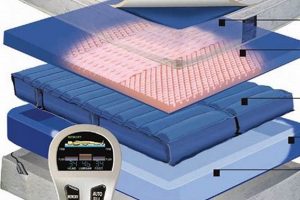
The internal structure of the mattress affects weight distribution and body contouring. Baffle construction, wherein internal vertical supports distribute air pressure evenly, provides a more stable and supportive sleeping surface compared to simple air chambers. Contoured designs, tailored to fit the body’s natural curves, further enhance comfort by reducing pressure points. Inadequate support distribution can lead to localized pressure and discomfort, particularly for individuals with pre-existing back pain. A mattress with several support points will allow for a better night’s rest.
Comfort considerations are integral to the selection and utilization of inflatable SUV mattresses. The interplay of surface texture, firmness, thermal properties, and support distribution directly impacts the quality of sleep and overall satisfaction. A careful assessment of these factors, aligned with individual needs and preferences, is essential to maximizing the benefits of this mobile sleeping solution.
6. Portability

Portability represents a key advantage of inflatable sleeping surfaces designed for sport utility vehicles. The capacity to transport and deploy a comfortable sleeping arrangement with minimal effort enhances the utility of vehicular travel and outdoor activities. The consideration of portability extends beyond simple weight and dimensions, encompassing factors affecting ease of handling, transport, and setup.
- Packed Size and Weight
The deflated dimensions and overall weight directly influence the ease with which the mattress can be transported and stored within the vehicle. A compact and lightweight mattress minimizes the burden on cargo space and reduces physical strain during handling. For example, a mattress that packs down to the size of a duffel bag is inherently more portable than one requiring a dedicated storage container. The density of the material, construction, and inclusion of accessories all contribute to this consideration.
- Included Carry Bag and Straps
The presence of a well-designed carry bag or integrated straps significantly enhances portability by facilitating secure and organized packing. A durable carry bag protects the mattress from damage during transport and provides convenient handles for carrying. Compression straps further reduce the packed volume, optimizing storage space. The absence of these accessories necessitates improvisational packing methods, potentially increasing the risk of damage and compromising storage efficiency.
- Inflation and Deflation Time
The time required to inflate and deflate the mattress directly impacts its portability in real-world scenarios. A mattress that can be rapidly inflated and deflated allows for quick setup and takedown, minimizing downtime during travel and camping. Efficient inflation/deflation mechanisms, such as integrated electric pumps or high-volume valves, are essential for maximizing the benefits of portability. A lengthy inflation process limits the spontaneity of use, hindering the intended advantages of this specific bedding application.
- Durability During Transport
The mattress’s resistance to damage during transport is a crucial aspect of portability. Materials must withstand abrasion, punctures, and compression without compromising structural integrity. Reinforced construction and protective coatings enhance durability, ensuring the mattress remains usable after repeated packing, unpacking, and transportation cycles. Compromised durability leads to premature wear, increasing costs and decreasing overall user satisfaction, thereby diminishing long-term value and the perception of convenience.
These facets collectively define the portability of inflatable SUV mattresses. The interplay of packed size, included accessories, inflation/deflation efficiency, and transport durability directly impacts the ease of use and practical value of these sleeping solutions. A well-designed and constructed mattress maximizes portability, enhancing the overall utility and enjoyment of vehicular travel and outdoor adventures.
Frequently Asked Questions
The following questions address common inquiries regarding inflatable sleeping surfaces designed for sport utility vehicles, providing clarification on key aspects and functionalities.
Question 1: What is the typical lifespan of an inflatable SUV mattress?
The lifespan varies considerably based on material quality, usage frequency, and maintenance practices. Higher-denier materials and reinforced seams contribute to extended longevity. Proper storage and avoidance of sharp objects significantly impact durability. Under optimal conditions, a well-maintained mattress may last several years.
Question 2: Are these mattresses compatible with all SUV models?
Compatibility is not universal. Interior dimensions of SUVs differ significantly. Careful measurement of the vehicle’s cargo area is essential. Manufacturers often provide compatibility charts or dimension specifications to guide selection. A mismatch can result in improper fit and compromised comfort.
Question 3: How is the firmness of the mattress adjusted?
Firmness adjustment mechanisms vary. Some mattresses feature integrated electric pu
mps with pressure control settings. Others utilize manual pumps and valves for incremental inflation. Adjusting firmness allows users to customize the sleeping surface to their individual preferences and weight.
Question 4: What is the best method for cleaning an inflatable SUV mattress?
Cleaning procedures depend on the material. For PVC surfaces, a damp cloth and mild detergent are typically sufficient. Flocked surfaces may require more delicate cleaning methods to avoid damaging the fibers. Always refer to the manufacturer’s instructions for specific cleaning recommendations.
Question 5: Can these mattresses be used outside of the vehicle?
While primarily designed for in-vehicle use, some mattresses can be used outside, provided the surface is clean and free of sharp objects. However, prolonged exposure to the elements can accelerate wear and tear. In general, use outside of the vehicle should be limited.
Question 6: What type of air pump is recommended for inflating these mattresses?
The recommended pump depends on the mattress design. Many mattresses include integrated electric pumps powered by the vehicle’s 12V DC outlet. Manual pumps are also viable options, particularly for portability. Ensure the pump is compatible with the mattress valve type to prevent air leakage.
These answers provide a foundation for understanding the key considerations associated with inflatable SUV mattresses, facilitating informed purchasing decisions and optimal utilization.
The subsequent discussion will address troubleshooting common issues and providing advanced usage tips, further enhancing the user experience and maximizing product value.
Conclusion
The preceding discussion has elucidated the critical facets of the air mattress for SUV category. Considerations ranging from vehicle compatibility and material durability to storage efficiency and comfort attributes have been examined. These elements collectively determine the suitability and long-term value of such products for individuals seeking vehicular sleeping solutions.
The informed selection and appropriate utilization of an air mattress for SUV can significantly enhance the convenience and comfort of travel and outdoor activities. Continued advancements in materials and design are anticipated to further refine these products, expanding their utility and appeal within the broader market for mobile sleeping arrangements. Prudent evaluation and adherence to recommended usage guidelines are essential for maximizing the benefits offered by this product category.