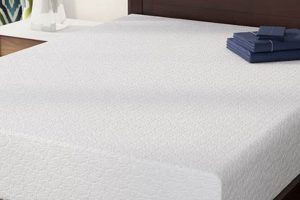
A standard in bedding technology often features a layered construction with a distinct comfort layer designed for the sleeping surface. This design characteristic directly impacts the mattress’s suitability for rotation and, particularly, flipping. The implications of this design on the mattress’s longevity and comfort are significant.
The design of a mattress, and its intended orientation, plays a crucial role in maintaining support and extending its lifespan. Regularly rotating certain types of mattresses can even out wear and prevent sagging. Historically, mattresses were more uniformly constructed, making flipping a common practice to prolong their use. However, modern designs require a different approach to maintenance.
This exploration will delve into the construction considerations that determine whether rotation or flipping is appropriate, the potential consequences of incorrect handling, and practical maintenance advice to ensure optimal performance and longevity. The information provided will aid in understanding how to properly care for this type of bedding.
Maintenance Strategies for Bedding
Proper care extends the lifespan and comfort of any mattress. Consider these guidelines to ensure optimal performance.
Tip 1: Understand the Construction: Before any attempt is made to invert a memory foam mattress, examine its design. Most models feature a specific comfort layer, typically made of memory foam, designed to be positioned on top. Flipping such a mattress will place the less comfortable support layers on the sleeping surface.
Tip 2: Prioritize Rotation Over Flipping: Given the layered design, regular rotation is often a more beneficial practice. Rotating the mattress end-to-end evens out wear and prevents the formation of body impressions in one area. This is especially crucial for individuals who consistently sleep in the same position.
Tip 3: Consult the Manufacturer’s Guidelines: Always refer to the manufacturer’s care instructions. These guidelines provide specific recommendations tailored to the mattress’s unique construction and materials, which may differ from general advice.
Tip 4: Assess for Single-Sided Design: Many modern mattresses are designed for single-sided use only. Attempting to flip such a mattress will not only compromise comfort but can also damage the support structure.
Tip 5: Use a Mattress Protector: A high-quality mattress protector safeguards against spills, stains, and dust mites. This prolongs the life of the mattress and maintains its hygiene. Select a breathable protector to avoid overheating.
Tip 6: Provide Adequate Support: Ensure the bed frame provides adequate support for the mattress. A sagging or unstable frame can accelerate wear and tear, regardless of mattress rotation or other care practices.
Maintaining a mattress through informed practices, such as rotation and protection, contributes significantly to its longevity and the quality of sleep. These strategies help preserve the original comfort and support characteristics.
The next section will address common misconceptions and troubleshooting issues that may arise during mattress maintenance.
1. Construction

The internal architecture significantly impacts the suitability of flipping. Modern designs often deviate from the symmetrical construction of traditional mattresses. Therefore, the physical arrangement of materials determines whether flipping is advisable or detrimental.
- Layered Composition
Many memory foam mattresses incorporate multiple distinct layers. A high-density base layer provides foundational support, while a memory foam comfort layer conforms to the body. Inverting such a mattress would place the firm base layer directly against the sleeper, compromising comfort and potentially causing discomfort or pressure points.
- Zoned Support Systems
Some mattresses feature zoned support systems, with varying densities of foam strategically placed to provide targeted support to different areas of the body, such as the lumbar region or shoulders. Flipping would misalign these zones, negating their intended ergonomic benefits and potentially exacerbating postural issues.
- One-Sided Design
Numerous memory foam mattresses are explicitly designed for one-sided use. These models have a non-slip base fabric on one side and a designated sleeping surface on the other. Flipping these mattresses would not only be uncomfortable but could also damage the structural integrity of the non-sleeping surface.
- Integrated Pillow Tops
Certain memory foam mattresses include an integrated pillow top or a specialized comfort layer that is permanently attached to the top surface. Flipping would render this feature unusable and dramatically alter the intended feel of the mattress.
The asymmetrical construction is a defining characteristic that influences whether flipping is appropriate. An understanding of its internal components is essential before any attempt to invert the mattress.
2. Designated Surface

The presence of a designated surface on a memory foam mattress directly correlates to the inadvisability of flipping it. A designated surface implies that one side of the mattress is engineered and intended for direct contact with the sleeper, while the opposite side lacks the necessary comfort layers or support structures to function as a suitable sleeping surface. This specialization represents a fundamental design element that invalidates the traditional practice of flipping. For instance, many memory foam mattresses incorporate a plush comfort layer on the top surface, paired with a firmer, more supportive base. Reversing the mattress would place the firmer base in direct contact with the sleeper, compromising comfort and potentially leading to disrupted sleep and physical discomfort.
Furthermore, the designated surface often incorporates features such as cooling technologies, specialized fabric weaves, or integrated pillow tops, all designed to enhance the sleeping experience. These features are specifically positioned on the intended sleeping surface and would be rendered ineffective if the mattress were flipped. In practical terms, attempting to sleep on the underside of a mattress with a designated surface is analogous to wearing shoes on the wrong feet – the intended functionality is lost, and discomfort is likely to result. Understanding this distinction is crucial for maximizing the lifespan and performance of the mattress and ensuring a comfortable and supportive sleep environment.
In conclusion, the presence of a designated surface serves as a primary indicator that a memory foam mattress should not be flipped. Ignoring this design characteristic can lead to reduced comfort, comprom
ised support, and potentially premature wear and tear. Therefore, adherence to the manufacturer’s guidelines regarding mattress orientation is essential for preserving both the integrity of the product and the quality of sleep it provides. Recognizing the designated surface as an integral component of the overall mattress design is key to optimizing its performance and longevity.
3. Support Layers

The presence and specific design of support layers are central determinants of whether a memory foam mattress should be flipped. These layers, typically composed of high-density foam or innerspring systems, provide the essential structural foundation for the mattress. The location and orientation of these support layers are calculated to provide stability and prevent sagging when the designated sleeping surface is in use. Flipping the mattress effectively places the support layer on top, negating its intended function. For example, a high-density foam base designed to distribute weight evenly beneath the comfort layers would, if flipped, provide a rigid and unyielding sleeping surface, counteracting the pressure-relieving properties of the memory foam. The practical significance lies in understanding that the support layers are not merely a component, but a structurally essential element designed to work in conjunction with the designated top surface.
Further complicating the matter, some mattresses employ zoned support systems, where the density and configuration of the support layers vary across different sections of the mattress to accommodate different body regions. Flipping a mattress with zoned support would disrupt this carefully calibrated system, potentially leading to uneven support and discomfort. The lumbar region, for instance, might receive insufficient support while the shoulder area receives excessive firmness, resulting in postural misalignment and potential back pain. This underscores the fact that support layers are not interchangeable; their placement is strategic and optimized for a specific orientation. In instances where the support layer is integrated with features like edge support systems designed to prevent the mattress from collapsing along its perimeter flipping can compromise the integrity of these features, accelerating wear and tear.
In conclusion, the structure and purpose of support layers are directly linked to whether a memory foam mattress can be flipped. Their design, material composition, and intended orientation are all factors that militate against flipping in most modern memory foam mattresses. Prioritizing the designed functionality of the support layers by adhering to the manufacturer’s guidelines regarding mattress orientation is critical for maximizing comfort, preserving structural integrity, and ensuring the mattress performs as intended throughout its lifespan. The key takeaway is that the support system is not merely a layer, but an engineering component that determines the overall effectiveness of the mattress.
4. Comfort Layers

Comfort layers within a mattress significantly dictate whether inversion is advisable. These layers, typically composed of materials such as memory foam, latex, or plush fibers, are engineered to provide pressure relief and cushioning to the sleeper. Their placement is deliberately atop the support core to create a comfortable sleep surface. Therefore, altering the mattress orientation by flipping effectively removes the intended comfort mechanism. The resultant sleeping surface would then consist of the firmer support layers, negating the benefits of the comfort components. An example would be a mattress with a gel-infused memory foam comfort layer designed to dissipate heat and conform to the bodys contours. If inverted, the sleeper would experience the less pliable support core, potentially leading to discomfort and a less restful sleep.
Further consideration involves the specific properties and arrangement of the comfort layers. Many mattresses feature multiple comfort layers with varying densities or materials, carefully arranged to optimize pressure relief and temperature regulation. Flipping the mattress disregards this carefully calibrated arrangement, potentially leading to uneven support and discomfort. For instance, a mattress with a plush layer of fiberfill followed by a layer of memory foam might provide a balanced combination of cushioning and support. However, inverting the mattress would place the fiberfill layer directly atop the support core, compressing it and reducing its effectiveness. The practical application of this understanding lies in recognizing that the comfort layers are integral to the overall design and should not be disturbed by flipping.
In summary, the presence, composition, and arrangement of comfort layers are key determinants in assessing whether a memory foam mattress should be flipped. Altering the intended orientation compromises the comfort and support characteristics engineered into the mattress design. Adherence to the manufacturer’s guidelines regarding mattress care is essential for maintaining the integrity of the comfort layers and ensuring optimal sleep quality. The proper functioning of comfort layers are essential to achieving optimal comfort during sleep.
5. Warranty Voidance
Warranty voidance represents a significant consideration when evaluating the appropriateness of inverting a foam mattress. Mattress warranties often contain specific stipulations regarding proper care and handling, and failure to adhere to these stipulations may invalidate the warranty coverage. The manufacturer’s perspective is that deviations from recommended practices can compromise the mattress’s structural integrity and performance, thereby absolving them of responsibility for subsequent issues.
- Designated Sleeping Surface
Most memory foam mattresses are designed with a specific sleeping surface in mind. The warranty may explicitly state that using the underside of the mattress constitutes misuse, leading to voidance. The manufacturers intention is for the consumer to use only the top part as per design and purpose. An example would be utilizing a mattress designed with a plush top layer. Sleeping on the bottom would not only be uncomfortable but would be a violation of the intended use, as this could damage the support structure that isnt intended for direct contact. The manufacturer will not warranty such damage.
- Support Structure Integrity
Warranties commonly protect against defects in materials or workmanship, but they do not cover damage resulting from improper use. Flipping a memory foam mattress, particularly one with zoned support or a layered construction, can compromise the internal support structure. If damage subsequently occurs, the warranty may be voided due to the user’s deviation from the manufacturer’s instructions. Therefore, any signs of misuse can automatically void the warranty.
- Rotation Recommendations vs. Flipping
Many manufacturers recommend regular rotation to promote even wear, but explicitly discourage flipping. The rationale is that rotation distributes weight more evenly across the designated sleeping surface, while flipping can place undue stress on components not designed for direct con
tact. A failure to follow rotation guidelines can lead to uneven wear. The warranty may become invalid if flipping is carried out despite rotation being the only recommendation. - Documentation and Proof of Care
In the event of a warranty claim, consumers may be required to provide documentation demonstrating that they have followed the manufacturer’s care instructions. This might include proof of regular rotation or the use of a suitable bed frame. If evidence suggests that the mattress was flipped against the manufacturer’s recommendations, the warranty claim may be denied. Therefore, it is essential to have documents that shows regular maintenance and care.
In conclusion, the relationship between warranty voidance and mattress orientation is direct and consequential. Before flipping a foam mattress, consumers should carefully review the warranty terms and adhere strictly to the manufacturer’s care instructions to preserve their coverage. Non-compliance will void the warranty. Prioritizing recommended maintenance practices protects both the mattress and the consumer’s investment.
6. Rotation Instead

Considering the design and construction of modern bedding, rotation is a more suitable maintenance practice than flipping. The asymmetrical arrangement of materials within most memory foam mattresses makes rotation a superior method for prolonging lifespan and maintaining comfort.
- Even Wear Distribution
Rotation promotes even distribution of wear across the sleeping surface. By rotating the mattress 180 degrees, the areas that typically bear the most weight, such as the hip and shoulder regions, are periodically shifted. This prevents localized sagging and helps maintain uniform support throughout the mattress. An example of this would be a person who sleeps on their side. This position puts uneven pressure on parts of the mattress, rotation helps even out that usage across the mattress over time.
- Preservation of Comfort Layers
Flipping a memory foam mattress with dedicated comfort layers can compromise the integrity of those layers. Rotation, on the other hand, preserves the intended arrangement of materials, ensuring that the comfort layers remain positioned on the sleeping surface. A practical example is a mattress with a gel-infused memory foam top layer designed for cooling. Rotation ensures that this cooling layer remains in contact with the sleeper.
- Maintenance of Zoned Support Systems
Many mattresses feature zoned support systems with varying densities of foam in different areas. Flipping would disrupt this carefully calibrated system, while rotation maintains the intended alignment. For example, a mattress with enhanced lumbar support would provide consistent support with regular rotation, whereas flipping would misalign this feature.
- Adherence to Manufacturer Guidelines
Mattress manufacturers typically recommend rotation as the preferred maintenance practice and explicitly discourage flipping. Following these guidelines helps preserve the warranty and ensures that the mattress performs as intended throughout its lifespan. Ignoring such guidelines can lead to warranty voidance. Therefore, understanding the manufacturer’s recommendation is essential.
In conclusion, rotation is a more appropriate maintenance strategy compared to flipping. It aligns with the construction characteristics, preserves comfort layers, and maintains zoned support systems. Moreover, adhering to manufacturer guidelines regarding mattress care contributes to a longer lifespan and sustained comfort.
Frequently Asked Questions
This section addresses common inquiries regarding the suitability of flipping a memory foam mattress, providing clarity on construction, maintenance, and warranty implications.
Question 1: Is it advisable to flip a memory foam mattress?
Generally, flipping this type of mattress is not recommended. Its design typically incorporates a dedicated support base and a comfort layer, which is intended to remain on top. Inverting such a mattress compromises its intended function and comfort.
Question 2: What is the alternative to flipping?
Rotation is the recommended alternative. Rotating the mattress end-to-end distributes wear more evenly and helps prolong its lifespan without disrupting the intended layer arrangement.
Question 3: Will flipping a memory foam mattress damage it?
Yes, flipping may damage the mattress, particularly if it has a zoned support system or a specific top layer. Inverting the mattress can misalign these features and potentially accelerate wear and tear.
Question 4: Can flipping a memory foam mattress void the warranty?
It is possible for flipping to void the warranty. Mattress warranties often specify adherence to recommended care practices, and flipping contrary to the manufacturer’s instructions constitutes misuse.
Question 5: Are all memory foam mattresses designed not to be flipped?
While most modern mattresses are designed for single-sided use, exceptions may exist. Consulting the manufacturer’s guidelines is essential to determine the specific recommendations for each model.
Question 6: What factors determine whether a memory foam mattress can be flipped?
The primary factors are the presence of a designated sleeping surface, the arrangement of support and comfort layers, and the manufacturer’s care instructions. The warranty should be checked as well to avoid voidance.
In summary, flipping is generally discouraged due to design and warranty implications. Rotation is a more appropriate maintenance strategy.
The subsequent discussion will present expert advice on mattress care and maintenance practices.
In Summary
The preceding exploration establishes that the advisability of inverting a memory foam mattress is largely contingent on its design characteristics. The presence of a dedicated sleeping surface, the internal arrangement of comfort and support layers, and the manufacturer’s explicit recommendations all serve as determinants. In most instances, flipping is not the appropriate maintenance strategy. Instead, rotation is generally recommended to promote even wear and prolong the lifespan of the bedding.
Considering the potential for damage and warranty voidance, consulting the manufacturer’s guidelines prior to undertaking any maintenance practice is essential. By adhering to these recommendations and prioritizing rotation over flipping, owners can ensure the sustained comfort and longevity of their mattress, securing both their investment and their sleep quality.
![Best Twin Memory Foam Mattress at Walmart: [Year] Guide | Organic & Natural Mattress Buyer’s Guide: Non-Toxic Sleep Solutions](https://mattressworldpa.com/wp-content/uploads/2025/07/th-4159-300x200.jpg "Best Twin Memory Foam Mattress at Walmart: [Year] Guide Organic & Natural Mattress Buyer’s Guide: Non-Toxic Sleep Solutions")
![Best Firm Memory Foam Mattress King [Guide] | Organic & Natural Mattress Buyer’s Guide: Non-Toxic Sleep Solutions](https://mattressworldpa.com/wp-content/uploads/2025/07/th-4158-300x200.jpg "Best Firm Memory Foam Mattress King [Guide] Organic & Natural Mattress Buyer’s Guide: Non-Toxic Sleep Solutions")