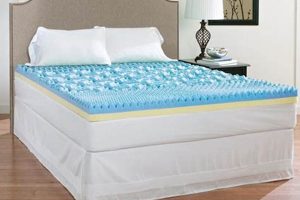
The lifespan of a viscoelastic foam mattress is a key consideration for consumers. This characteristic refers to the period during which the mattress maintains its intended support, comfort, and structural integrity. Several factors influence this duration, affecting the overall value proposition for the purchaser.
Understanding a mattress’s longevity is important for budgetary planning and ensuring consistent sleep quality. A longer-lasting mattress translates to reduced replacement costs and sustained orthopedic support. Historically, mattress materials dictated a shorter useful life. However, advancements in foam technology have altered these expectations, leading to longer-lasting and more durable products.
This article will explore the primary factors that affect the durability of these mattresses, including foam density, construction methods, and user maintenance. Examining these elements provides a comprehensive understanding of how long one can expect a memory foam mattress to remain a worthwhile investment.
Extending Mattress Lifespan
Optimizing mattress longevity requires proactive measures and informed decisions throughout its use. Adhering to the following guidelines can significantly extend its useful life and preserve its comfort and support characteristics.
Tip 1: Employ a Protective Mattress Cover: A high-quality mattress protector shields against spills, stains, and dust mites. This barrier prevents internal damage to the foam layers, mitigating premature degradation.
Tip 2: Utilize a Supportive Bed Frame: A properly designed bed frame provides adequate support, preventing sagging and uneven weight distribution. Center support beams are particularly crucial for larger mattresses.
Tip 3: Rotate the Mattress Regularly: Periodic rotation, ideally every three to six months, helps distribute wear and tear more evenly across the surface, preventing localized compression and indentations.
Tip 4: Maintain a Moderate Room Temperature: Extreme temperature fluctuations can impact foam resilience and structural integrity. A controlled environment minimizes potential damage.
Tip 5: Adhere to Manufacturer Guidelines: Specific cleaning and care instructions provided by the manufacturer should be strictly followed to avoid voiding warranties or causing irreparable harm.
Tip 6: Vacuum Regularly: Routine vacuuming removes surface dust and debris, preventing the buildup of allergens and maintaining a cleaner sleep environment. Utilize a soft brush attachment to avoid damaging the mattress surface.
Implementing these practices preserves mattress condition, optimizing its performance and delivering long-term value. Consistent adherence to these recommendations contributes to a more extended and comfortable sleep experience.
The subsequent section will address common indicators suggesting the need for mattress replacement, regardless of preventative measures taken.
1. Foam Density

Foam density serves as a primary determinant of mattress durability. It directly impacts the material’s resistance to compression and deformation over extended use. Higher density foams, measured in pounds per cubic foot (PCF), exhibit enhanced structural integrity, enabling them to withstand greater loads and repeated pressure without significant degradation. This characteristic translates to a longer usable lifespan compared to mattresses with lower density foams. A mattress experiencing rapid compression set, where the foam fails to fully recover after pressure is removed, often indicates inadequate density for the applied weight.
The practical significance of foam density lies in its influence on long-term support and comfort. A mattress that initially feels comfortable may quickly lose its supportive qualities if constructed with low-density foam. This degradation can manifest as sagging, indentations, and uneven sleep surfaces. In contrast, a higher density foam mattress maintains its shape and provides consistent support for a more extended period. As an example, consider two identical mattresses, one with 3 PCF foam and the other with 5 PCF foam. The 5 PCF mattress will likely exhibit greater resilience to body impressions and maintain its original comfort profile longer, making the initial cost difference a worthwhile investment for extended use.
While higher density generally indicates increased durability, it is crucial to consider other factors, such as foam type and construction methods. However, as a standalone metric, foam density provides a reliable indication of the expected lifespan. Investing in a mattress with appropriately high-density foam contributes to long-term cost savings and sustained sleep quality. Identifying mattresses with suitable foam density, and caring for them appropriately will contribute to ensuring a great long term investment.
2. Construction Quality

Construction quality significantly impacts mattress durability. It determines the degree to which the mattress withstands stresses from regular use, directly influencing the lifespan. Superior construction involves meticulous attention to detail in joining materials, layering different foam types, and reinforcing stress points. A well-constructed mattress distributes weight evenly, minimizing localized compression and preventing premature sagging. Inferior construction, conversely, can lead to uneven wear, structural instability, and a shortened lifespan. For instance, mattresses using weak adhesives between foam layers may experience delamination, compromising support and comfort.
The types of materials used and the precision of their assembly dictate overall resilience. Higher quality materials, such as durable ticking fabrics and resilient transition layers, contribute to a longer-lasting product. Precise stitching along seams prevents tearing and maintains structural integrity. Reinforcements in areas prone to wear, such as edges, prolong usability. As an example, edge support systems utilizing high-density foam or steel coils prevent edge collapse, allowing sleepers to utilize the entire mattress surface without discomfort or instability. Mattresses lacking such reinforcement often exhibit significant edge sagging, reducing usable space and accelerating overall deterioration.
In summary, construction quality functions as a critical factor influencing longevity. Investing in a mattress with demonstrated attention to detail in material selection and assembly processes yields a product capable of withstanding daily use demands, providing sustained support and comfort. Ignoring construction quality can lead to premature failure, necessitating earlier replacement and increased costs. Proper construction not only improves comfort but ensures lasting value, optimizing the initial investment.
3. User Weight

User weight exerts a significant influence on a memory foam mattress’s lifespan. The mass applied to the mattress surface generates compression and stress on the foam layers. Higher user weight increases the degree of compression, accelerating material fatigue and diminishing the mattress’s ability to return to its original shape. Consequently, mattresses supporting heavier individuals often exhibit a shorter usable life compared to those used by lighter individuals. This is particularly noticeable in mattresses constructed with lower-density foam or inadequate support structures. For example, a mattress designed for an average weight individual may develop significant sagging and body impressions within a shorter timeframe when consistently subjected to higher weight loads.
The relationship between user weight and mattress longevity is not solely linear; it intersects with other factors such as foam density and construction quality. A high-density memory foam mattress with reinforced support systems can better withstand the effects of higher user weight. However, even the most robust mattress will eventually succumb to the cumulative effects of sustained compression. Distributing weight across a larger surface area, through the use of larger mattress sizes, can mitigate localized stress and potentially extend lifespan. Furthermore, rotating or flipping the mattress, if applicable, can promote more even wear patterns, partially offsetting the impact of concentrated weight distribution.
In summation, user weight constitutes a critical factor influencing the anticipated lifespan. Selection of a mattress appropriate for the user’s weight category is crucial. Prioritizing higher-density foams and robust construction is recommended for heavier individuals to mitigate premature degradation. Consistent weight management practices and proper mattress maintenance can further optimize mattress lifespan, regardless of user weight. Recognizing and addressing this correlation enhances the likelihood of realizing the full value of the mattress investment.
4. Sleep Habits
Sleep habits significantly affect mattress durability. Consistent sleep patterns, sleeping positions, and even nocturnal movements contribute to localized stress and wear on the mattress surface. For example, individuals who consistently sleep in the same position, such as on their side, exert pressure on a concentrated area, potentially leading to premature indentation and reduced support in that specific region. Similarly, restless sleepers who frequently toss and turn throughout the night may generate greater friction and wear across the entire mattress surface compared to individuals who maintain a more stationary sleep posture. These repetitive actions gradually degrade the foam structure, shortening the overall lifespan.
The severity of the impact from sleep habits depends on the mattress’s composition and construction. A higher-density memory foam mattress or one with robust internal support structures demonstrates greater resistance to the effects of repetitive stress. However, even the most durable mattress will eventually succumb to the cumulative impact of consistent, localized pressure. Addressing these issues involves implementing strategies to distribute pressure and minimize wear. Regular mattress rotation, for example, alters the areas subjected to concentrated stress, promoting a more even wear pattern across the entire surface. Additionally, the use of mattress toppers can add an extra layer of protection, absorbing some of the initial impact and extending the mattress’s usable life. Consider the instance of a person weighing 200 pounds who sleeps exclusively on their right side. Without rotation, the right side of the mattress will show degradation faster than the left, even if the individual changes sleeping positions after noticing initial wear.
In summary, sleep habits represent a tangible factor influencing mattress lifespan. Understanding how individual sleep patterns affect mattress wear is crucial for adopting preventative measures and optimizing longevity. Implementing practices like regular rotation, utilizing supportive toppers, and selecting mattresses designed to accommodate specific sleep styles contributes to a more extended and comfortable sleep experience. In addition, being proactive when choosing new mattress can prevent future discomfort.
5. Maintenance Practices

Maintenance practices exert a demonstrable influence on the lifespan of a viscoelastic foam mattress. Adherence to recommended care protocols mitigates factors contributing to premature degradation, thereby extending the period of optimal performance. Conversely, neglect accelerates deterioration, diminishing support and comfort characteristics. Consistent maintenance addresses various threats, including dust mite infestations, moisture accumulation, and structural weakening. For example, regular vacuuming removes dust and allergens, preventing the buildup of debris that can compromise the foam’s integrity. Similarly, prompt stain removal prevents permanent damage and inhibits microbial growth, maintaining a healthier sleep environment and preserving the mattresss condition.
The type and frequency of maintenance routines directly correlate with mattress longevity. Consistent rotation, typically every three to six months, redistributes weight and minimizes localized compression, preventing indentations. Utilizing a high-quality mattress protector safeguards against spills, stains, and bodily fluids, preventing internal damage. A supportive bed frame distributes weight evenly, preventing sagging. As an illustration, a mattress subjected to regular rotation and protected by a waterproof cover in a temperature-controlled environment will likely outlast an identical mattress lacking these safeguards, even if both are constructed from similar materials. Neglecting these basic maintenance steps can effectively nullify the benefits of high-density foam and robust construction, rendering the initial investment less worthwhile.
In summation, maintenance practices function as a crucial variable in determining the duration of mattress usability. Proactive and consistent care directly impacts resistance to wear and tear. While material quality and construction methods establish a foundation for longevity, appropriate maintenance practices serve to reinforce and extend this baseline. Ignoring these practices, conversely, compromises the mattresss structural integrity and overall lifespan. In short, a viscoelastic foam mattress with a great maintenance will last you longer.
6. Environmental Conditions

Environmental conditions exert a considerable influence on the lifespan of memory foam mattresses. Factors such as humidity, temperature, and exposure to direct sunlight can significantly impact the integrity and durability of the foam materials. These external elements contribute to the degradation of the foam, affecting its ability to provide consistent support and comfort over time.
- Humidity Levels
Elevated humidity levels prom
ote moisture absorption within the foam structure. This moisture fosters the growth of mold and mildew, which degrade the foam fibers, weaken its support, and reduce the lifespan. Additionally, persistent dampness can compress the foam, diminishing its resilience and altering its original density. In coastal regions or areas with high annual rainfall, mitigating humidity becomes particularly critical. - Temperature Fluctuations
Extreme temperature variations can cause expansion and contraction of the foam, leading to structural stress and accelerated wear. Elevated temperatures may soften the foam, reducing its support capacity. Conversely, low temperatures can stiffen the foam, affecting its ability to conform to the body. Maintaining a stable temperature environment helps preserve the integrity and prolong the lifespan of the mattress.
- Direct Sunlight Exposure
Prolonged exposure to direct sunlight causes the breakdown of foam polymers, resulting in discoloration, embrittlement, and reduced elasticity. Ultraviolet (UV) radiation weakens the foam structure, diminishing its ability to rebound after compression. While mattresses are typically not placed directly in sunlight, indirect sunlight exposure through windows can still contribute to degradation over time. Using window coverings can mitigate the effects of UV radiation.
- Air Quality
Exposure to airborne pollutants and chemicals can accelerate the degradation of mattress materials. Volatile organic compounds (VOCs) from cleaning products, paints, or other household items can react with the foam, compromising its structural integrity and releasing potentially harmful substances. Utilizing air purifiers and minimizing exposure to VOC-emitting products helps maintain the air quality and extend the mattress lifespan. In addition, consider using a mattress protector to provide a barrier against pollutants.
The aggregate impact of these environmental conditions underscores the importance of controlling the sleep environment to optimize mattress longevity. Mitigating humidity, maintaining stable temperatures, minimizing sunlight exposure, and improving air quality contribute to preserving the structural integrity and extending the usable lifespan. Addressing these environmental factors becomes integral for maximizing the initial investment and guaranteeing a sustained comfort level. It’s important to understand and consider the specific environmental challenges when assessing mattresses longevity.
Frequently Asked Questions
The following questions address common concerns regarding memory foam mattress durability and expected service life.
Question 1: What is the typical lifespan of a memory foam mattress?
The average lifespan typically ranges from seven to ten years. This duration is contingent upon factors such as foam density, construction quality, user weight, and maintenance practices.
Question 2: How does foam density affect mattress longevity?
Higher density foams exhibit greater resistance to compression and deformation. Mattresses constructed with higher density foams generally provide a longer service life compared to those with lower density foams.
Question 3: Can mattress protectors extend mattress lifespan?
Yes. Mattress protectors safeguard against spills, stains, and dust mites. This protection prevents internal damage to the foam layers, mitigating premature degradation.
Question 4: How often should a memory foam mattress be rotated?
Regular rotation, ideally every three to six months, promotes even wear across the surface. This practice helps prevent localized compression and indentations.
Question 5: Does user weight impact mattress longevity?
Yes. Higher user weight increases the compression and stress on foam layers. Mattresses supporting heavier individuals often exhibit a shorter usable life.
Question 6: What are signs that a memory foam mattress needs replacement?
Indicators include visible sagging, persistent indentations, diminished support, increased discomfort, and the presence of allergens or odors that cannot be eliminated.
Understanding these key factors and implementing appropriate care practices can optimize mattress performance and extend its useful life.
The subsequent section will provide a comparative analysis of memory foam mattress lifespan relative to other mattress types.
Conclusion
The investigation into how long a memory foam mattress lasts reveals a multifaceted issue dependent on material quality, construction methods, user characteristics, and environmental conditions. Optimized longevity requires a holistic approach, considering foam density, support structure, maintenance practices, and environmental control. While seven to ten years represents a common timeframe, deviations occur based on individual circumstances and preventative measures implemented.
Ultimately, informed consumer decisions and consistent maintenance extend usable lifespan and maximize the initial investment. Diligence in mattress selection and care practices ensures continued comfort and support for an extended period. Recognizing the factors influencing durability empowers purchasers to make informed decisions, maximizing the value and prolonging a mattress’s effectiveness.
![Best Twin Memory Foam Mattress at Walmart: [Year] Guide | Organic & Natural Mattress Buyer’s Guide: Non-Toxic Sleep Solutions](https://mattressworldpa.com/wp-content/uploads/2025/07/th-4159-300x200.jpg "Best Twin Memory Foam Mattress at Walmart: [Year] Guide Organic & Natural Mattress Buyer’s Guide: Non-Toxic Sleep Solutions")
![Best Firm Memory Foam Mattress King [Guide] | Organic & Natural Mattress Buyer’s Guide: Non-Toxic Sleep Solutions](https://mattressworldpa.com/wp-content/uploads/2025/07/th-4158-300x200.jpg "Best Firm Memory Foam Mattress King [Guide] Organic & Natural Mattress Buyer’s Guide: Non-Toxic Sleep Solutions")
![Best Memory Foam Cot Mattress [Safe & Comfy!] | Organic & Natural Mattress Buyer’s Guide: Non-Toxic Sleep Solutions](https://mattressworldpa.com/wp-content/uploads/2025/07/th-4156-300x200.jpg "Best Memory Foam Cot Mattress [Safe & Comfy!] Organic & Natural Mattress Buyer’s Guide: Non-Toxic Sleep Solutions")