![RV King Mattress: Best Sizes & Comfort [Guide]](data:image/svg+xml;base64,PHN2ZyB4bWxucz0iaHR0cDovL3d3dy53My5vcmcvMjAwMC9zdmciIHdpZHRoPSI0NzQiIGhlaWdodD0iNzEiIHZpZXdCb3g9IjAgMCA0NzQgNzEiPjxyZWN0IHdpZHRoPSIxMDAlIiBoZWlnaHQ9IjEwMCUiIHN0eWxlPSJmaWxsOiNjZmQ0ZGI7ZmlsbC1vcGFjaXR5OiAwLjE7Ii8+PC9zdmc+ "RV King Mattress: Best Sizes & Comfort [Guide] Organic & Natural Mattress Buyer’s Guide: Non-Toxic Sleep Solutions")
A sleeping surface designed to fit recreational vehicles that approximates the dimensions of a standard king-size mattress. This adaptation often involves modified dimensions to accommodate the space constraints inherent in RV design, while still providing a larger sleeping area compared to other RV mattress sizes. An example would be a mattress measuring 72 inches wide by 80 inches long, intended for installation in the master bedroom of a larger RV.
The adoption of a larger sleeping surface in recreational vehicles caters to consumers who prioritize comfort and space during travel. This choice can significantly improve sleep quality, mirroring the experience of a residential sleeping environment. Historically, RV mattresses were often smaller and of lower quality, but increasing demand for enhanced amenities has led to the availability of more comfortable and appropriately sized options.
The subsequent sections will delve into the critical factors for selecting this type of mattress, including material considerations, size variations specific to RV models, and installation techniques to ensure proper fit and longevity. Durability, weight, and compatibility with various RV frame designs will also be examined.
Selection and Maintenance Tips for RV King Mattresses
The following guidelines provide essential information for selecting and maintaining a king-size mattress intended for use in a recreational vehicle. Adherence to these recommendations can maximize comfort, lifespan, and overall satisfaction.
Tip 1: Measure the Available Space Accurately: Precise measurements of the RV bedroom area are paramount. Account for any obstructions, such as wheel wells or built-in furniture, that may impinge upon the mattress footprint. Failure to do so can result in an improperly fitting and unusable mattress.
Tip 2: Prioritize Material Based on Climate: Consider the typical climate conditions in which the RV will be used. Memory foam retains heat and may be less suitable for hot environments. Latex or hybrid mattresses with enhanced airflow can offer improved temperature regulation.
Tip 3: Evaluate Mattress Weight: Excessive weight can negatively impact fuel efficiency and handling characteristics of the RV. Opt for lighter-weight materials, such as high-density foam or air mattresses specifically designed for RV use, without compromising support.
Tip 4: Assess Support Needs: Determine the level of support required based on individual sleeping preferences and physical needs. Firmer mattresses are generally recommended for individuals with back pain, while softer mattresses may be preferred by side sleepers.
Tip 5: Consider Mattress Thickness: Be mindful of the available headroom within the RV bedroom. A thicker mattress may reduce usable headroom and create a feeling of confinement. Choose a mattress thickness that provides adequate support without sacrificing comfort and space.
Tip 6: Protect the Mattress from Moisture: RVs are prone to condensation and humidity, which can lead to mold and mildew growth within the mattress. Utilize a waterproof mattress protector to safeguard against moisture damage and extend the mattress’s lifespan.
Tip 7: Rotate the Mattress Regularly: Periodic rotation of the mattress, typically every three to six months, can help to distribute wear evenly and prevent sagging or indentations. This is especially important for mattresses constructed from foam materials.
Selecting and maintaining a mattress appropriately is a crucial investment for comfort and well-being while traveling. Careful consideration of these tips will contribute to a restful and enjoyable experience.
The following sections will explore the benefits and drawbacks of different RV mattress types in greater detail.
1. Dimensional Constraints

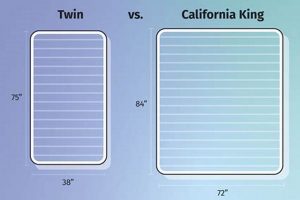
Dimensional constraints represent a critical factor in the selection and implementation of a king-size mattress for recreational vehicle applications. The internal dimensions of an RV bedroom, often dictated by the vehicle’s model and floor plan, impose limitations on the size of the mattress that can be accommodated. Disregarding these constraints results in installation difficulties, compromised functionality, and potential damage to the RV’s interior. For example, a standard king-size mattress, typically measuring 76 inches wide by 80 inches long, may not fit within an RV bedroom designed for a short king or RV king, requiring the selection of a specifically sized mattress.
The accurate measurement of the RV bed frame is paramount. Incompatibility between the mattress and frame dimensions not only leads to discomfort but also hinders proper weight distribution, potentially affecting the RV’s structural integrity. Moreover, overlooking obstructions such as wheel wells or cabinetry further exacerbates fitting issues. Manufacturers often offer modified king mattress sizes designed for RVs to address this issue, necessitating careful consideration of the exact dimensions before purchase. A real-world scenario might involve an individual purchasing a standard king mattress only to discover upon attempted installation that the RV bedroom is several inches shorter, rendering the mattress unusable without significant modification or return.
In summary, dimensional constraints represent a primary consideration when integrating a king-size mattress into an RV. Precise measurements, awareness of RV-specific mattress sizes, and careful consideration of potential obstructions are essential for a successful and functional installation. Failure to address these constraints can lead to significant inconvenience and unnecessary expense. The dimensional limitations intrinsic to RV design demand a tailored approach to mattress selection.
2. Material Composition

The material composition of a king mattress designed for recreational vehicles directly influences several critical performance characteristics. The choice of materials impacts weight, durability, comfort, and temperature regulation. Given the space and weight limitations often present in RVs, careful consideration must be given to the materials selected. For instance, a heavy innerspring mattress may exceed weight restrictions or prove unwieldy to maneuver within the limited confines of an RV bedroom. Conversely, a lightweight, low-density foam mattress may lack the necessary support for comfortable sleep, leading to back pain and diminished rest quality. The selection, therefore, necessitates a balance between weight considerations and support requirements.
Different materials offer varying degrees of breathability and heat retention. Memory foam, while conforming to the body and providing pressure relief, is known for retaining heat, which can be problematic in warm climates or poorly ventilated RVs. Latex, both natural and synthetic, offers greater breathability and cooler sleeping surfac
es. Hybrid mattresses, combining innerspring cores with foam layers, attempt to leverage the benefits of both material types. An example is the use of gel-infused memory foam, which attempts to mitigate heat retention issues while retaining the pressure-relieving properties of traditional memory foam. Durability is also affected by the material composition. Higher-density foams and well-constructed innerspring systems are more resistant to compression and sagging over time, extending the mattress’s lifespan, particularly under the rigors of travel.
In summary, the material composition is a pivotal determinant of a king mattress’s suitability for RV use. Careful evaluation of weight, comfort, temperature regulation, and durability is essential. The optimal choice balances these factors to provide a comfortable and supportive sleeping surface within the constraints of the RV environment. Understanding the properties of different materials empowers consumers to make informed decisions aligned with their individual needs and travel conditions, ultimately enhancing the quality of their RV experience. The interplay between material properties and RV-specific limitations is crucial for a successful outcome.
3. Weight Considerations

Weight considerations are of paramount importance when selecting a king mattress for recreational vehicle (RV) applications. The added mass directly impacts fuel efficiency, handling characteristics, and overall safety. A detailed examination of weight-related facets is, therefore, crucial.
- Fuel Efficiency Reduction
The addition of a heavy king mattress to an RV significantly increases the vehicle’s overall weight, demanding more energy to propel the vehicle. This leads to a demonstrable decrease in fuel efficiency, increasing operational costs over time. For example, a difference of 50 pounds in mattress weight can translate to a measurable reduction in miles per gallon, especially during long-distance travel or when traversing mountainous terrain. This effect is exacerbated by the cumulative impact of other onboard equipment and supplies.
- Handling and Stability Impacts
Increased weight, especially if concentrated in a specific area of the RV (such as the rear bedroom where a king mattress is often located), can adversely affect the vehicle’s handling and stability. This is particularly noticeable during cornering or in windy conditions, requiring greater driver input and potentially compromising safety. The effect is more pronounced in smaller or lighter RV models where the weight distribution is more sensitive to additional loads. A shift in the center of gravity can alter the vehicle’s response to steering inputs and increase the risk of instability.
- Axle Load Capacity Limits
Every RV is designed with specific axle load capacity limits, representing the maximum weight that each axle can safely bear. Exceeding these limits, even with an otherwise appropriate mattress size, can lead to mechanical failures, such as damaged axles, tires, or suspension components. This not only poses a safety risk but also necessitates costly repairs. The combined weight of the mattress, occupants, and other items stored within the RV must be carefully considered to ensure that axle load limits are not exceeded.
- Material Selection Trade-offs
The need to minimize weight often necessitates trade-offs in material selection. While certain materials, such as memory foam or high-density latex, may offer superior comfort and support, they also tend to be heavier. Consequently, RV owners may need to consider lighter-weight alternatives, such as air mattresses or lower-density foam options, even if they compromise somewhat on comfort. The selection process, therefore, involves a careful balancing act between weight reduction and desired sleep quality.
These interconnected facets underscore the critical role of weight considerations when choosing a king mattress for an RV. The selection process requires a holistic assessment of the vehicle’s capabilities, usage patterns, and the desired level of comfort, taking into account the trade-offs inherent in balancing weight and performance. A properly selected mattress will not only provide adequate rest but also contribute to the safe and efficient operation of the RV.
4. Support Characteristics

Support characteristics of a king mattress designed for recreational vehicle (RV) use constitute a critical factor influencing sleep quality and physical well-being. Proper support is essential for maintaining spinal alignment, distributing body weight evenly, and alleviating pressure points. The selection of a mattress with appropriate support characteristics is, therefore, paramount for ensuring restful sleep and minimizing discomfort during travel.
- Spinal Alignment Maintenance
Maintaining proper spinal alignment is fundamental to minimizing back pain and promoting healthy posture. A mattress with adequate support prevents excessive sagging or sinking, which can misalign the spine and exacerbate existing musculoskeletal conditions. RV king mattresses must provide consistent support across the entire surface, accommodating varying body weights and sleeping positions. Lack of adequate support can lead to chronic back pain, muscle stiffness, and compromised sleep quality.
- Weight Distribution Optimization
Effective weight distribution minimizes pressure points and promotes circulation. A mattress that conforms to the body’s contours without excessive compression ensures that body weight is distributed evenly across the sleeping surface. This reduces stress on joints and muscles, preventing discomfort and promoting restful sleep. Memory foam and latex mattresses are often chosen for their ability to distribute weight effectively. Uneven weight distribution can lead to localized pressure points, resulting in tossing and turning during sleep.
- Edge Support Considerations
Edge support is a crucial, yet often overlooked, support characteristic. Strong edge support prevents the mattress from collapsing or sagging along the perimeter, providing a stable sleeping surface and facilitating ease of entry and exit. RV king mattresses, often located in confined spaces, benefit significantly from robust edge support, maximizing the usable sleeping area and preventing a feeling of instability. Insufficient edge support can lead to a feeling of rolling off the mattress and reduce overall comfort.
- Firmness Level Selection
The selection of an appropriate firmness level is a subjective but critical aspect of support characteristics. Mattress firmness ranges from plush to extra-firm, with each level catering to different sleeping preferences and physical needs. Individuals with back pain may benefit from a firmer mattress that provides greater spinal support, while side sleepers may prefer a softer mattress that conforms to the body’s contours and alleviates pressure on the hips and shoulders. Matching the firmness level to individual needs is essential for optimizing comfort and minimizing discomfort.
These support characteristics collectively determine the suitability of a king mattress for RV use. Careful consideration of spinal alignment, weight distribution, edge support, and firmness level is essential for selecting a mattres
s that promotes restful sleep and minimizes discomfort during travel. Failing to adequately address these support-related factors can compromise sleep quality and negatively impact overall well-being while on the road. The interrelation of these elements underscores the necessity of a holistic approach to mattress selection within the RV environment.
5. Environmental Adaptability
Environmental adaptability constitutes a crucial performance parameter for a king mattress utilized in a recreational vehicle (RV). The internal environment of an RV is often subject to fluctuations in temperature and humidity that exceed those experienced in a typical residential setting. These variations can have a significant impact on the lifespan, comfort, and hygiene of the mattress. The selection of materials resistant to moisture, temperature extremes, and ultraviolet (UV) radiation is therefore a critical determinant of mattress suitability. Failure to consider these environmental factors can lead to premature degradation, mold and mildew growth, and compromised sleep quality. As an example, a memory foam mattress, while providing excellent comfort under stable conditions, may become excessively warm and uncomfortable in a hot, humid RV environment, or become stiff and unyielding in cold conditions. This highlights the necessity for selecting materials with inherent environmental resilience.
Specific material characteristics contribute to environmental adaptability. Breathable fabrics, such as natural latex or open-cell foams, facilitate air circulation, reducing moisture buildup and minimizing the risk of microbial growth. UV-resistant fabrics prevent fading and degradation caused by prolonged exposure to sunlight through RV windows. Waterproof mattress protectors offer a barrier against spills and condensation, further mitigating moisture-related damage. Practical application of this understanding is evident in the increasing availability of RV-specific mattresses designed with these features. These mattresses often incorporate moisture-wicking fabrics, antimicrobial treatments, and enhanced ventilation systems to address the unique challenges of the RV environment. The use of such features is often a key marketing point for mattresses targeted at the RV market.
In summary, environmental adaptability is an indispensable consideration when choosing a king mattress for an RV. The selection of materials resistant to temperature variations, humidity, and UV exposure is critical for ensuring longevity, comfort, and hygiene. The development and adoption of RV-specific mattress designs reflect the practical significance of this understanding. Addressing the challenges posed by the RV environment through careful material selection is essential for maximizing the value and performance of the mattress over its lifespan. Ignoring the implications of environmental factors results in compromised sleeping conditions and accelerated mattress degradation.
Frequently Asked Questions
The following section addresses common inquiries regarding the selection, installation, and maintenance of king-size mattresses intended for use in recreational vehicles. The information provided aims to clarify misconceptions and offer practical guidance.
Question 1: Are standard king-size mattresses suitable for all RVs?
Standard king-size mattresses (76 inches wide by 80 inches long) are often too large for many RV bedrooms. Specific RV king sizes or short king mattresses are frequently required to accommodate space constraints. Precise measurement of the available area is crucial before purchasing any mattress.
Question 2: What is the typical weight range of a king mattress designed for RV use?
The weight of a king mattress for RVs can vary significantly depending on the materials used. Lighter-weight options, such as foam or air mattresses, may weigh between 50-70 pounds, while heavier innerspring or hybrid models can exceed 100 pounds. Consideration of the RV’s weight capacity is essential.
Question 3: How can moisture damage to an RV king mattress be prevented?
Moisture damage is a common concern in RVs due to condensation and humidity. Utilizing a waterproof mattress protector is highly recommended. Additionally, ensuring adequate ventilation within the RV and regularly inspecting the mattress for signs of moisture buildup can help prevent mold and mildew growth.
Question 4: What level of firmness is generally recommended for an RV king mattress?
The optimal firmness level is subjective and depends on individual sleeping preferences and physical needs. However, a medium-firm mattress often strikes a balance between support and comfort, accommodating a variety of sleeping positions. Individuals with back pain may benefit from a firmer mattress.
Question 5: Are there specific mattress types that are better suited for RVs than others?
While individual preferences vary, latex and hybrid mattresses are often favored for RV use due to their breathability, durability, and support characteristics. Memory foam can be suitable but may retain heat, making it less ideal for warmer climates. Innerspring mattresses can be heavy and less durable in the context of RV travel.
Question 6: How often should an RV king mattress be rotated or flipped?
Regular rotation or flipping (if applicable) can help to extend the lifespan of an RV king mattress by promoting even wear. Rotating the mattress every 3-6 months is generally recommended. However, some mattresses are designed to be non-flippable; following the manufacturer’s instructions is crucial.
The information presented underscores the importance of careful consideration when selecting a sleeping surface. Thoughtful consideration of these elements will contribute to optimal comfort.
The subsequent section will examine case studies of specific RV king mattress installations and their observed performance characteristics.
King Mattress for RV
This exploration has underscored the complexities inherent in selecting a king mattress for RV applications. Dimensional constraints, material composition, weight considerations, support characteristics, and environmental adaptability represent critical factors. Failure to adequately address each facet can compromise comfort, longevity, and the overall performance of the mattress. A properly chosen sleeping surface constitutes a significant investment in the well-being of the RV traveler.
The decision-making process should prioritize a holistic assessment of individual needs and the specific demands of the RV environment. Continued research and technological advancements in mattress design promise to yield further improvements in comfort and durability. Rigorous adherence to the outlined guidelines will optimize the utility and lifespan of this essential component of the RV experience.
![Ultimate Tempur-Pedic King Size Mattress [Guide & Review] | Organic & Natural Mattress Buyer’s Guide: Non-Toxic Sleep Solutions](https://mattressworldpa.com/wp-content/uploads/2025/07/th-8395-300x200.jpg "Ultimate Tempur-Pedic King Size Mattress [Guide & Review] Organic & Natural Mattress Buyer’s Guide: Non-Toxic Sleep Solutions")