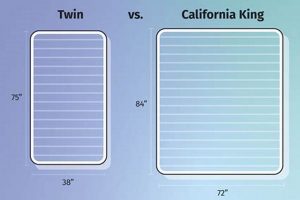
The standard dimensions of a king-size mattress are typically 76 inches in width and 80 inches in length. These measurements define the sleeping surface area available to occupants, offering ample space for individuals or couples. The generous surface area distinguishes this size from smaller options like a queen or full mattress.
The popularity of this mattress dimension stems from its ability to provide significant personal space, leading to improved sleep quality for some individuals. The expansive surface accommodates movement during sleep and reduces the likelihood of disturbing a partner. Historically, the introduction of larger mattresses addressed a growing demand for increased comfort and reduced sleep disturbance in shared sleeping arrangements.
Understanding these dimensions is crucial when selecting bedding, bedroom furniture, and considering the overall layout of a bedroom. Accurate measurements ensure a proper fit for sheets, comforters, and bed frames, contributing to both aesthetic appeal and practical functionality. The subsequent sections will delve into specific considerations related to choosing the right mattress and related accessories.
Considerations for King Size Mattress Dimensions
When evaluating a king-size mattress, understanding its specific dimensions is paramount for optimal sleep and bedroom functionality. The following tips provide essential guidance.
Tip 1: Measure Bedroom Space. Before purchasing, accurately measure the bedroom. Ensure sufficient space remains for movement and other furniture after accommodating the mattress and its frame. Avoid overcrowding, which can negatively impact the room’s usability.
Tip 2: Evaluate Existing Bed Frames. Verify compatibility with existing bed frames. King-size mattresses require appropriate support. Using an unsuitable frame can void warranties or cause premature wear.
Tip 3: Consider Partner’s Sleep Style. Evaluate sleep habits if sharing the bed. The expansive surface area of a king-size mattress minimizes sleep disturbance caused by partner movement, benefiting light sleepers.
Tip 4: Account for Bedding Costs. Factor in the cost of appropriately sized bedding. King-size sheets, comforters, and other accessories typically carry a higher price point than smaller sizes. Budget accordingly.
Tip 5: Assess Transportation and Delivery. Consider the logistical challenges of transporting and delivering a large mattress. Ensure doorways and hallways are wide enough to accommodate its dimensions. Professional delivery services are often recommended.
Tip 6: Check for Special King Size Variations. Be aware of less common king variations, such as the California king, which offers a different length and width proportion. Ensure compatibility with chosen accessories and frame.
These considerations facilitate informed decision-making, leading to a more comfortable and functional sleep environment. Prioritizing proper assessment and planning ensures a beneficial outcome.
The next section will address common misconceptions associated with king-size mattress selection and usage.
1. Standard Dimensions

The established standard dimensions are intrinsic to the very definition of what constitutes a king-size mattress. The prescribed width of 76 inches and length of 80 inches serve as the defining parameters. A deviation from these measurements renders the mattress something other than a standard king size. For example, a mattress measuring 72 inches by 78 inches, while large, would not be classified as a king, illustrating the vital role of these established dimensions. The term itself inherently implies adherence to a pre-defined set of measurements.
The adherence to these standard dimensions ensures consistency across manufacturers and retailers. Consumers can, with a reasonable degree of certainty, expect a king-size bed frame purchased from one vendor to accommodate a king-size mattress acquired from another. This standardization facilitates the seamless integration of bedding accessories such as fitted sheets and mattress protectors, eliminating compatibility concerns. Without a unified standard, consumers would face constant uncertainty and the potential for costly mismatches, greatly complicating the purchasing process.
In summary, the “length and width” of a king-size mattress and its accepted “standard dimensions” are inextricably linked. The dimensions are the standard. The prescribed measurements not only define the product category but also ensure interoperability and predictability within the market. While minor variations may occur due to manufacturing tolerances, substantial deviations undermine the fundamental definition of a king-size mattress. Understanding this connection is crucial for making informed purchasing decisions and maintaining compatibility across bedding components.
2. Bedroom Space

The dimensions of a bedroom directly influence the suitability and comfort derived from a king-size mattress. Careful consideration of available space is essential prior to purchase, ensuring both functionality and aesthetic harmony within the environment.
- Minimum Room Dimensions
A room must possess minimum dimensions to comfortably accommodate a king-size mattress and allow for adequate movement. While subjective, a general guideline suggests a minimum room size of 12 feet by 12 feet. Smaller rooms may feel cramped, impeding accessibility to other furniture and impacting the overall ambiance. The dimensions of the mattress and bed frame must be accounted for; additional space for walking and other bedroom furniture is crucial.
- Furniture Placement
The physical presence of a king-size mattress dictates furniture arrangement. Consideration must be given to placement of nightstands, dressers, and other furnishings to ensure ease of access and comfortable navigation. Obstructed pathways or cramped arrangements diminish the quality of the bedroom environment and detract from the benefits of a larger sleeping surface. Strategic planning mitigates these issues.
- Doorway and Hallway Access
Beyond the bedroom itself, the accessibility of doorways and hallways leading into the room is paramount. The mattress must be capable of being maneuvered through these spaces during delivery and installation. Failure to assess these access points can result in significant complications and necessitate alternative delivery solutions. Measuring these passages beforehand prevents logistical obstacles.
- Visual Balance and Proportions
Even if a room technically meets the minimum spatial requirements, the visual impact of a king-size mattress within the room must be considered. A disproportionately large bed in a smaller room can create a sense of
imbalance and overwhelm the space. Balancing the size of the bed with the overall proportions of the room enhances aesthetic appeal and promotes a sense of tranquility. Careful visual assessment is key.
In summation, the interplay between bedroom space and the physical dimensions of a king-size mattress extends beyond mere measurement. Practical considerations such as furniture placement and access routes are intertwined with subjective elements of visual harmony and proportionate design. Prioritizing these factors facilitates the creation of a bedroom environment that is both functional and aesthetically pleasing, enhancing the overall enjoyment of the sleeping space.
3. Bed Frame Compatibility

Bed frame compatibility is intrinsically linked to the specified dimensions of a king-size mattress. A properly sized bed frame serves as the foundational support, ensuring the mattress maintains its structural integrity and delivers the intended level of comfort. The established length and width of 76 inches by 80 inches dictate the internal dimensions a bed frame must possess to adequately accommodate the mattress. Discrepancies between these measurements can result in inadequate support, premature mattress wear, and potential safety hazards. For example, a bed frame that is too small will cause the mattress to overhang, leading to uneven weight distribution and accelerated degradation. Conversely, an excessively large frame can allow the mattress to shift, compromising stability and comfort. In both scenarios, the functional lifespan of the mattress is significantly reduced.
The selection of a compatible bed frame extends beyond mere dimensional considerations. The type of support system offered by the framewhether it be solid platform, slatted, or box springmust align with the mattress’s construction and manufacturer recommendations. Using an incompatible support system can void warranties and negatively impact the mattress’s performance. A slatted frame with excessively wide gaps, for instance, may not provide sufficient support for a memory foam mattress, resulting in sagging and discomfort over time. Furthermore, the bed frame’s design should allow for adequate ventilation to prevent moisture buildup within the mattress, which can contribute to mold growth and compromise hygiene.
In conclusion, understanding the critical connection between bed frame compatibility and the “king size mattress length and width” is paramount for ensuring longevity, comfort, and adherence to warranty stipulations. Mismatched dimensions or incompatible support systems can negate the benefits of a high-quality mattress, leading to dissatisfaction and premature replacement costs. Prioritizing proper frame selection, based on the manufacturer’s guidelines and the mattress’s specified dimensions, is an essential investment in achieving optimal sleep and extending the life of the bedding. This adherence ensures support of a specific king mattress and the mattress is in a standard dimensional range for king size products.
4. Sleeping Partner

The presence of a sleeping partner significantly influences the perceived benefits associated with a king-size mattress. The increased surface area afforded by its dimensions directly addresses concerns related to sleep disturbance, motion transfer, and personal space limitations often encountered when sharing a smaller mattress. A larger sleeping surface minimizes the likelihood of one partner’s movements disrupting the other’s sleep cycle. This is particularly relevant for individuals with differing sleep schedules or those prone to tossing and turning. The king-size mattress thereby functions as a mechanism for promoting more restful and undisturbed sleep for both occupants. For example, if one partner gets up earlier, the larger size allows them to exit the bed with less chance of disturbing the other.
Conversely, if a sleeping partner is not present, the inherent advantage of a king-size mattress’s dimensions may be less pronounced. While single sleepers can still benefit from the ample space, the primary justification for its larger size often lies in the accommodation of two individuals. The perceived value proposition shifts from mitigating shared-sleep disturbances to simply enjoying a greater degree of personal sleeping space. This might be particularly appealing to individuals who prefer to sprawl or those who co-sleep with pets. However, from an economic standpoint, the increased cost associated with a king-size mattress may not be fully justified for single sleepers unless these spatial preferences are prioritized. For instance, some single individuals sleep diagonally across the bed, so length of bed would be more important.
In conclusion, the relationship between a sleeping partner and the suitability of a king-size mattress is fundamentally intertwined. The mattress’s generous dimensions primarily cater to the needs of co-sleeping individuals, offering tangible benefits in terms of reduced sleep disruption and increased personal space. The absence of a sleeping partner does not negate the potential for individual comfort, but it does alter the value proposition, potentially making smaller mattress sizes a more practical and cost-effective option. Understanding this connection allows consumers to make more informed decisions aligned with their specific sleeping arrangements and priorities. The “king size mattress length and width” is most advantageous when considering the specific needs of the sleeping partner.
5. Bedding Costs

The dimensional attributes of a king-size mattress directly influence the expenses associated with acquiring appropriately sized bedding. These expenditures extend beyond the initial mattress purchase, representing a recurring financial consideration throughout the mattress’s lifespan.
- Sheet Sets
King-size sheet sets invariably command a higher price point than their counterparts designed for smaller mattresses. This cost differential is primarily attributable to the increased fabric requirements and the manufacturing complexities involved in producing larger dimensions. The selection of materials, thread count, and brand reputation further contribute to the overall expense. For example, a high-thread-count Egyptian cotton king-size sheet set can easily exceed the cost of a similar queen-size set by 30% or more.
- Comforters and Duvets
Matching comforters and duvet covers tailored to fit the expanded surface area also incur higher costs. The larger dimensions necessitate greater quantities of filling materials (down, feathers, or synthetic alternatives) and more extensive fabric usage. Intricate designs, embellishments, and premium materials amplify the price differential compared to smaller-sized bedding. The added weight may also impact cleaning costs. An oversized and overfilled comforter will have higher cleaning cost than smaller sizes.
- Mattress Protectors and Pads
Investing in a properly sized mattress protector or pad is essential for safeguarding the longevity and hygiene of a king-size mattress. These protective layers shield against spills, stains, and allergens, but their larger dimensions translate to increased costs. The choice of
materials (waterproof membranes, breathable fabrics) and the presence of specialized features (cooling technology, hypoallergenic properties) further influence the final price. The cost of replacing an unprotected mattress due to damage far outweighs the initial cost of protection. - Pillow Selection and Quantity
The spacious surface of a king-size mattress often necessitates a greater number of pillows to achieve optimal comfort and aesthetic balance. The cost of acquiring these pillows, particularly if premium materials or specialized designs are selected (memory foam, down-filled), can significantly contribute to the overall bedding expenses. Regular pillow replacement is required due to wear, hygiene issues, and loss of support, making this an ongoing financial consideration. A couple of extra pillows can improve sleep comfort and have many uses.
In summary, the inherent dimensions of a king-size mattress directly correlate with increased bedding costs across multiple categories. From sheet sets to comforters and mattress protectors, the larger surface area necessitates greater material usage and more complex manufacturing processes, resulting in higher retail prices. A comprehensive budget should account for these ongoing bedding expenses to ensure both comfort and long-term maintenance of the investment. These additional costs are necessary with the “king size mattress length and width” for the average household budget.
6. Delivery Accessibility
The physical dimensions of a king-size mattress, namely its length and width, directly influence the feasibility and complexity of its delivery. The established measurements of 76 inches by 80 inches present logistical challenges not typically encountered with smaller mattress sizes. Doorways, hallways, stairwells, and elevators must possess sufficient clearance to accommodate the mattress’s bulk. Failure to adequately assess these access points prior to purchase can result in significant delivery complications, ranging from the inability to maneuver the mattress into the intended room to the necessity of employing specialized equipment or dismantling portions of the structure. For example, a narrow stairwell with tight turns may require hoisting the mattress over a balcony, incurring additional costs and potential risks. The king-size mattress itself is also very flexible, which can have an impact.
Professional delivery services often employ specialized techniques and equipment to overcome these challenges. These may include using mattress-carrying straps, employing multiple personnel to navigate tight spaces, or utilizing mechanical lifts for vertical transport. However, even with professional assistance, certain architectural constraints may prove insurmountable, necessitating alternative solutions such as selecting a smaller mattress size or opting for a mattress that can be compressed and rolled for easier maneuverability. Pre-delivery site surveys are essential to identify potential obstacles and develop a viable delivery strategy. Apartment buildings and older homes with unique architectural features often present the most significant accessibility hurdles.
In conclusion, the inherent size of a king-size mattress imposes distinct limitations on delivery accessibility. Thorough assessment of all potential access points is crucial for avoiding logistical complications and ensuring a smooth delivery process. While professional delivery services can mitigate some of these challenges, certain architectural constraints may necessitate alternative solutions. Prioritizing delivery accessibility as a key consideration during the mattress selection process is essential for a successful and stress-free experience. The king size mattress may have a large impact on household goods if not accessible, due to the high costs of delivery.
7. Special Variations

The domain of king-size mattresses encompasses more than the standard dimensions, featuring several notable variations. These alterations in length and width cater to specific needs and preferences, expanding the selection beyond the conventional. Understanding these special variants is crucial for selecting a mattress that optimally fits the intended user and bedroom space.
- California King (Cal King)
The California King is characterized by a reduced width and extended length when compared to the standard King. Typically measuring 72 inches wide and 84 inches long, it provides additional legroom for taller individuals while sacrificing some lateral space. Its implementation is beneficial in narrower rooms, accommodating length without dominating width. This variation presents unique bedding compatibility challenges, requiring specifically sized sheets and blankets.
- Split King
The Split King mattress consists of two separate mattresses, each measuring half the width of a standard King. These mattresses are typically used with adjustable bed frames, allowing individual customization of incline and support. The dual configuration also minimizes motion transfer, reducing sleep disruption between partners. Bedding requirements include either two Twin XL sheet sets or a single King-size set. This option is popular in shared bedrooms with occupants of varying preferences.
- Wyoming King
The Wyoming King is a larger, less common variation, often measuring 84 inches by 84 inches, creating a near-square sleeping surface. This generous size provides ample space for multiple sleepers or individuals who prefer significant personal space. Due to its non-standard dimensions, finding compatible bedding and bed frames can be challenging. This variety is best suited for very large bedrooms to prevent overcrowding.
- Texas King
The Texas King is another oversized variant, typically measuring 80 inches wide by 98 inches long. Its extended length provides substantial legroom, making it ideal for particularly tall individuals. Like the Wyoming King, compatible bedding and frames may require custom ordering. Adequate room dimensions are essential to accommodate this mattress without overwhelming the space.
These special variations of king-size mattresses demonstrate that the established length and width are not immutable. Tailored to address specific needs, each variant offers a unique balance of spatial accommodation and sleeping comfort. Careful consideration of room dimensions, sleeping preferences, and bedding availability is essential when deviating from the standard king-size dimensions. The standard “king size mattress length and width” of 76 by 80 inches can vary.
Frequently Asked Questions
The following questions and answers address common inquiries related to the dimensions of king-size mattresses and their practical implications for consumers.
Question 1: What are the precise standard dimensions of a king-size mattress?
The standard king-size mattress measures 76 inches in width and 80 inches in length. These measurements serve as the industry benchmark for this mattress size.
Question 2: How do the dimensions of a king-size mattress compare to those of a queen-size mattress?
A king-size mattress is significantly wider than a queen-size mattress, offering approximately 16 additional inches of width. The length is generally comparable between the two sizes.
Question 3: How does bedroom size affect the suitability of a king-size mattress?
Adequate bedroom space is essential to comfortably accommodate a king-size mattress. Insufficient space can result in a cramped environment and hinder movement. A minimum room size of 12 feet by 12 feet is generally recommended.
Question 4: Are there variations in king-size mattress dimensions, and if so, what are they?
Yes, variations exist. The California King mattress, for example, measures 72 inches in width and 84 inches in length, offering greater length but reduced width compared to the standard king.
Question 5: How do the dimensions of a king-size mattress influence bedding costs?
Due to the increased fabric requirements, king-size bedding (sheets, comforters, etc.) typically commands a higher price point compared to bedding for smaller mattress sizes.
Question 6: What considerations should be made regarding delivery access when purchasing a king-size mattress?
Ensure doorways, hallways, and stairwells are sufficiently wide to accommodate the mattress’s dimensions. Failure to do so can result in delivery complications and necessitate alternative solutions.
Understanding these frequently asked questions facilitates informed decision-making when considering a king-size mattress purchase. Prior knowledge of the dimensions and their implications can help ensure satisfaction and avoid potential logistical issues.
The subsequent section will provide guidance on selecting the appropriate mattress type based on individual sleep preferences and requirements.
King Size Mattress Length and Width
The preceding discussion has comprehensively examined the significance of “king size mattress length and width.” The established dimensions dictate not only the sleeping surface area but also influence bedroom planning, bed frame compatibility, bedding costs, and delivery logistics. Deviations from the standard measurements, as exemplified by variant forms such as the California King, necessitate careful consideration of individual needs and spatial constraints. The suitability of a king-size mattress is further predicated on factors such as the presence of a sleeping partner and the accessibility of the intended bedroom location. Comprehending these interconnected elements is crucial for a well-informed purchase.
The informed consumer will prioritize a thorough evaluation of the aforementioned factors to ensure the selected mattress optimally fulfills both functional requirements and personal preferences. The dimensions are not mere numbers, but rather the key to sleep quality and bedroom compatibility. Continued awareness of these principles will empower individuals to make sound decisions, leading to a more restful and fulfilling sleep experience.
![Ultimate Tempur-Pedic King Size Mattress [Guide & Review] | Organic & Natural Mattress Buyer’s Guide: Non-Toxic Sleep Solutions](https://mattressworldpa.com/wp-content/uploads/2025/07/th-8395-300x200.jpg "Ultimate Tempur-Pedic King Size Mattress [Guide & Review] Organic & Natural Mattress Buyer’s Guide: Non-Toxic Sleep Solutions")