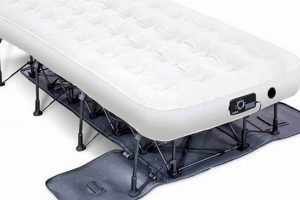
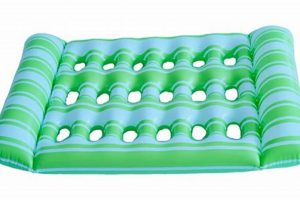
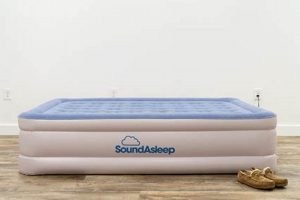
A sleep surface that incorporates air chambers, allowing individuals to modify its firmness, constitutes a notable advancement in bedding technology. These chambers are typically inflated or deflated using an integrated pump system, granting users a high degree of personalization in their sleep experience. The level of support can be altered, potentially accommodating varying body weights and preferred sleep positions.
The adaptability offered by these systems holds significant advantages. Individuals experiencing back pain or other musculoskeletal discomfort may find relief through precise adjustment of the sleeping surface. Furthermore, couples with differing firmness preferences can often utilize models featuring independent adjustability on each side, fostering improved sleep quality for both partners. Historically, these beds emerged as a response to the need for customized comfort and pressure relief, evolving from basic inflatable mattresses to sophisticated systems incorporating advanced materials and control mechanisms.
The following sections will delve into the construction, functionality, benefits, and considerations involved in selecting this type of sleep solution, providing a thorough understanding of its place within the broader landscape of mattress options.
Selecting an Air Adjustable Mattress
The selection process requires careful consideration of several factors to ensure optimal comfort and long-term satisfaction. Evaluating specific needs and product features is paramount.
Tip 1: Chamber Configuration: Determine the number of independent air chambers required. Models with dual-zone adjustability are essential for couples with differing firmness preferences, allowing each individual to customize their side independently.
Tip 2: Pump Quality: Investigate the pump’s noise level and reliability. A quiet, durable pump will minimize sleep disturbances and ensure longevity. Consider models with remote control or smartphone app integration for convenient adjustments.
Tip 3: Material Construction: Examine the mattress’s internal and external materials. High-quality foam layers, durable fabrics, and reinforced seams contribute to overall comfort, support, and lifespan. Prioritize breathable materials to regulate temperature and prevent overheating.
Tip 4: Height and Profile: Take note of the overall mattress height, particularly if using an existing bed frame. Ensure compatibility with the bed frame and ease of getting in and out of bed. A lower profile may be suitable for individuals with mobility limitations.
Tip 5: Warranty and Trial Period: Scrutinize the manufacturer’s warranty and trial period. A comprehensive warranty provides protection against defects, while a generous trial period allows sufficient time to evaluate the mattress’s comfort and suitability.
Tip 6: Read Independent Reviews: Prior to purchase, consult independent reviews from verified customers. These reviews can provide valuable insights into real-world performance, durability, and customer service experiences.
Adhering to these guidelines will assist in identifying a model that aligns with individual requirements, promoting restorative sleep and long-term satisfaction.
The next section will cover the potential drawbacks and address common misconceptions surrounding these sleep systems.
1. Customizable Firmness

Customizable firmness is intrinsically linked to the functionality and appeal of air adjustable mattresses. The core design principle of these mattresses centers around the ability to manipulate the air pressure within internal chambers, directly influencing the sleeping surface’s feel. This adjustability is not merely a superficial feature; it represents the primary mechanism through which individuals can tailor the mattress to their specific comfort needs and postural requirements. The cause-and-effect relationship is clear: increasing air pressure results in a firmer surface, while decreasing pressure yields a softer feel.
The importance of customizable firmness as a component cannot be overstated. It addresses a fundamental challenge in mattress design catering to the diverse body types, sleep positions, and comfort preferences of potential users. For instance, an individual experiencing lower back pain might benefit from a firmer setting that provides increased spinal support, while a side sleeper might prefer a softer surface to reduce pressure points on the shoulders and hips. Dual-zone models offer an even greater degree of customization, allowing couples with differing needs to adjust their respective sides of the mattress independently, mitigating the compromise inherent in traditional mattress designs.
In summary, customizable firmness is not just a feature, it is the raison d’tre of air adjustable mattresses. It provides users with a powerful tool to actively manage their sleep environment, accommodating changes in physical condition, lifestyle, or personal preference. However, achieving optimal customization requires careful consideration of factors such as chamber configuration, pump system precision, and individual responsiveness to pressure adjustments, highlighting the practical significance of understanding this core attribute. The absence of customizable firmness would render the air adjustable mattress concept ineffective and undermine its primary benefit.
2. Dual-Zone Adjustability

Dual-zone adjustability represents a pivotal advancement in air adjustable mattress technology, directly addressing the common predicament of differing comfort preferences between sleeping partners. This feature, characterized by independent air chambers on each side of the mattress, enables each individual to customize the firmness level without impacting the other. The practical effect is the elimination of compromise; one partner can select a firmer setting for enhanced back support, while the other can opt for a softer surface that minimizes pressure points. The importance of dual-zone adjustability as a component of air adjustable mattresses lies in its ability to cater to the diverse needs within a shared sleep environment, maximizing the potential for restorative sleep for both individuals. For example, a couple where one partner has chronic back pain and the other prefers a plush sleeping surface can both achieve their desired level of comfort, a scenario unattainable with a traditional mattress. Understanding this feature is critical for those seeking personalized sleep solutions within a co-sleeping arrangement.
Beyond simple comfort, dual-zone adjustability can address specific medical considerations. Individuals recovering from injuries or managing chronic conditions may require specific support configurations that differ significantly from their partner’s needs. In such cases, the independent adjustability allows for precise control over pressure distributio
n, potentially aiding in pain management and facilitating a more comfortable recovery process. Furthermore, this feature mitigates motion transfer, a common complaint associated with shared mattresses. By minimizing the impact of one partner’s movements on the other’s side of the bed, dual-zone adjustability contributes to a more restful sleep experience for both individuals.
In conclusion, dual-zone adjustability is not merely a value-added feature; it is a fundamental component of the air adjustable mattress system, directly impacting its ability to accommodate diverse needs and optimize sleep quality within a shared bed. While challenges exist in ensuring accurate and consistent pressure regulation across independent chambers, the practical benefits for couples with differing comfort preferences are undeniable. The understanding of dual-zone adjustability strengthens the user ability to select the sleep system aligned with individual and shared needs, which elevates the value of a product.
3. Pump System Reliability

The pump system constitutes a critical component within the architecture of air adjustable mattresses. Its reliability directly impacts the functionality, longevity, and overall user satisfaction associated with these sleep systems. The pump is responsible for both inflating and deflating the internal air chambers, thereby controlling the firmness level of the mattress. Any compromise in its performance has cascade effects on the entire sleeping experience.
- Inflation/Deflation Consistency
The pump’s ability to consistently achieve and maintain desired pressure levels within the air chambers is paramount. Inconsistent performance can result in uneven support, leading to discomfort and potential musculoskeletal issues. For example, if the pump fails to maintain pressure overnight, the mattress may gradually deflate, negating the user’s initial firmness setting.
- Operational Noise Levels
Pump operation inevitably generates noise. Excessive noise during inflation or adjustment can disrupt sleep, particularly for light sleepers or those sharing a bed. Manufacturers often specify noise levels in decibels; quieter pumps are generally considered more desirable, contributing to a more tranquil sleep environment.
- Durability and Lifespan
The pump’s lifespan directly correlates with the overall longevity of the mattress. Frequent failures or malfunctions necessitate repairs or replacements, incurring additional costs and inconveniences. Pumps constructed with robust components and subjected to rigorous testing typically exhibit greater durability and require less frequent maintenance.
- Control System Integration
Modern air adjustable mattresses often incorporate sophisticated control systems, enabling users to adjust firmness levels via remote controls or smartphone applications. The pump’s seamless integration with these systems is essential for intuitive operation. Communication failures or software glitches can hinder the adjustment process and diminish user satisfaction. Consider examples from actual feedback and performance in real-world cases.
In conclusion, the reliability of the pump system is inextricably linked to the functionality and perceived value of air adjustable mattresses. While factors such as material quality and chamber design contribute to overall performance, a malfunctioning or unreliable pump can undermine the benefits of these advanced sleep solutions. Manufacturers who prioritize pump system engineering and testing demonstrate a commitment to long-term product performance and user satisfaction, as well as, product quality for the consumer.
4. Material Durability

Material durability is intrinsically linked to the long-term performance and value of an air adjustable mattress. As these mattresses incorporate complex internal components, including air chambers, pumps, and control systems, the longevity of the surrounding materials directly impacts the system’s overall lifespan. Compromises in material quality can lead to premature wear and tear, compromising the mattress’s ability to maintain its intended functionality. For instance, if the outer fabric is prone to abrasion or tearing, it can expose the internal components to damage, ultimately affecting the air chambers’ integrity and the pump’s operational efficiency. In cases where material durability is lacking, seam failure, foam degradation, and valve leaks manifest, diminishing the mattress’s lifespan and undermining its pressure regulation capabilities.
The selection of materials for an air adjustable mattress directly influences its ability to withstand the rigors of daily use. High-density foams, reinforced fabrics, and robust valve systems contribute to enhanced durability, minimizing the risk of deformation, sagging, and air leakage over time. In contrast, inferior materials are susceptible to compression set, a phenomenon where the foam loses its resilience, resulting in uneven support and reduced comfort. Furthermore, the type of fabric used for the mattress cover plays a crucial role in its ability to resist staining, tearing, and allergen accumulation. For example, a mattress with a durable, stain-resistant cover can maintain its appearance and hygiene for an extended period, minimizing the need for frequent cleaning or replacement.
In conclusion, material durability represents a critical factor in the overall quality and value proposition of an air adjustable mattress. While features such as customizable firmness and dual-zone adjustability contribute to user satisfaction, the longevity and reliability of the mattress hinge on the selection of high-quality, durable materials. Manufacturers committed to producing long-lasting air adjustable mattresses prioritize material selection, ensuring that these sleep systems provide consistent comfort and support for years to come. A consumer should prioritize material analysis as part of purchase decisions to select a durable product.
5. Pressure Relief

Pressure relief represents a significant attribute of air adjustable mattresses, directly influencing sleep quality and musculoskeletal health. The adjustable air chambers facilitate a customizable sleep surface that conforms to the body’s contours, reducing pressure points at critical areas like the shoulders, hips, and lower back. This conformity allows for more even weight distribution, minimizing localized stress on joints and tissues. Individuals experiencing conditions such as arthritis, fibromyalgia, or back pain may find significant relief through the precise pressure modulation offered by these mattresses. For instance, a side sleeper, adjusting the mattress to a softer setting, can alleviate pressure on the shoulder and hip, promoting better circulation and reducing nighttime discomfort. The effectiveness of pressure relief also depends on the quality and configuration of the comfort layers above the air chambers.
The practical significance of pressure relief extends beyond simple comfort. By minimizing pressure points, these mattresses can improve blood circulation, reducing the likelihood of numbness, tingling, and other circulatory-related issues durin
g sleep. Furthermore, the ability to fine-tune the sleeping surface can aid in spinal alignment, potentially reducing strain on the back muscles and ligaments. Consider an individual recovering from surgery, where precise pressure management is crucial for preventing bedsores and promoting healing. The adaptive nature of an air adjustable mattress allows for targeted support and pressure relief, optimizing the recovery process. Conversely, inadequate pressure relief can exacerbate existing conditions, leading to increased pain, stiffness, and sleep disruption. Models with zoned air chambers can provide variable pressure relief across different areas of the body to meet an individual needs.
In conclusion, pressure relief is not merely a desirable feature but a critical component of air adjustable mattresses, directly impacting their therapeutic potential. While factors such as material durability and pump system reliability contribute to the overall quality, the ability to effectively minimize pressure points is paramount for maximizing comfort, promoting circulation, and alleviating musculoskeletal discomfort. Future advancements in air adjustable mattress technology will likely focus on refining pressure mapping and automated adjustment systems to further enhance the pressure-relieving benefits of these sleep solutions. A person selecting this type of mattress should consider the materials, configuration and independent consumer reviews.
Frequently Asked Questions
This section addresses common inquiries and concerns regarding air adjustable mattresses, providing factual information to aid in informed decision-making.
Question 1: What is the typical lifespan of an air adjustable mattress?
The lifespan varies depending on the quality of materials and usage patterns. Generally, a well-maintained air adjustable mattress can last between 8 to 10 years. Pump lifespan can be shorter and require replacement.
Question 2: Are air adjustable mattresses suitable for individuals with back pain?
The adjustable firmness can provide customized support, potentially alleviating back pain. However, consulting a healthcare professional is recommended before making a decision.
Question 3: How often does the pump require maintenance or replacement?
Pump maintenance requirements depend on the specific model. Some pumps may require occasional filter cleaning. Replacement frequency varies, but pumps generally last several years with normal use. Refer to the manufacturer’s guidelines.
Question 4: Do air adjustable mattresses emit significant electromagnetic fields (EMF)?
The EMF emissions from the pump are generally low and within acceptable safety standards. Concerns can be mitigated by positioning the pump away from the head during sleep.
Question 5: What is the weight capacity of a standard air adjustable mattress?
Weight capacity varies by model, typically ranging from 500 to 700 pounds. Exceeding the weight limit can damage the air chambers and compromise the mattress’s support.
Question 6: Are air adjustable mattresses compatible with adjustable bed frames?
Most air adjustable mattresses are compatible with adjustable bed frames, but it is crucial to verify compatibility with the specific frame and mattress model before purchase.
These FAQs provide a foundation for understanding key aspects of air adjustable mattresses. Further research and consultation with sleep professionals are encouraged for personalized guidance.
The subsequent section will explore potential alternatives to these sleep systems and comparative analyses of their respective benefits and drawbacks.
Conclusion
The preceding analysis has explored the multifaceted nature of the air adjustable mattress, detailing its construction, functionality, benefits, and limitations. Core attributes, including customizable firmness, dual-zone adjustability, pump system reliability, material durability, and pressure relief, have been examined. Furthermore, common questions and concerns regarding these sleep systems have been addressed, providing a comprehensive overview of their place within the broader bedding market.
Ultimately, the suitability of an air adjustable mattress hinges on individual needs, preferences, and budgetary considerations. Informed decision-making necessitates careful evaluation of product specifications, independent reviews, and personal comfort trials. The ongoing evolution of sleep technology suggests further advancements in air adjustable mattress design, potentially leading to enhanced customization, improved durability, and greater accessibility in the future. Continued research and development are essential for optimizing the performance and therapeutic benefits of these sleep solutions.