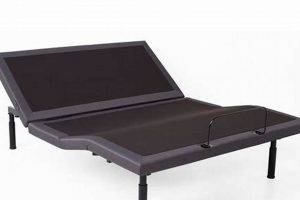
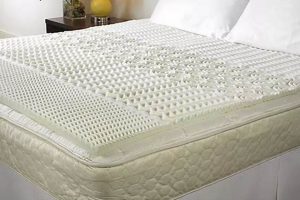
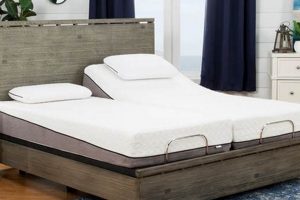
The core component of a wall bed system providing sleeping support is a key consideration. This critical element, often constructed from innerspring, memory foam, or latex, determines the comfort level and suitability of the unit for regular or occasional use. Its dimensions must align precisely with the frame of the foldable bed structure to ensure proper operation and prevent damage.
These sleep solutions present a valuable method for maximizing space in smaller living areas, guest rooms, or multi-purpose spaces. By vertically storing the sleeping surface when not in use, available floor area increases significantly. Historically, the concept has evolved from rudimentary folding beds to sophisticated, spring-assisted systems that offer ease of operation and aesthetic integration with interior design.
The following sections will delve into the selection criteria for suitable sleeping surfaces, the mechanics and engineering of the folding mechanism, and the installation process. Furthermore, considerations for safety features, design integration within various living spaces, and long-term maintenance will be addressed comprehensively.
Selection and Maintenance Guidance
Optimizing the use of a space-saving bed requires careful planning and consistent upkeep. The following guidelines provide a framework for ensuring longevity, safety, and optimal performance.
Tip 1: Measure Dimensions Accurately: Prior to purchase, precisely measure the intended installation location. Consider both the footprint when folded and the clearance required when deployed to avoid obstructions.
Tip 2: Evaluate Support Mechanism Strength: Assess the weight capacity of the lift mechanism to ensure it accommodates the selected sleeping surface and any bedding. Overloading the mechanism can lead to premature failure.
Tip 3: Choose a Compatible Sleeping Surface: Select a sleep surface that conforms to the manufacturer’s specifications regarding thickness and weight. Exceeding these limits can impair functionality and increase the risk of damage.
Tip 4: Secure Installation: Adhere strictly to the manufacturer’s installation instructions. Proper anchoring to wall studs is paramount for structural integrity and user safety.
Tip 5: Implement Regular Inspection: Periodically examine the hinges, springs, and locking mechanisms for signs of wear or loosening. Address any issues promptly to prevent accidents.
Tip 6: Follow Cleaning Protocols: Utilize recommended cleaning methods for both the sleeping surface and the frame. Avoid harsh chemicals that could degrade materials or compromise structural integrity.
Tip 7: Lubricate Moving Parts: Apply appropriate lubricants to hinges and other moving parts to ensure smooth operation and minimize friction. Refer to the manufacturer’s recommendations for specific lubricant types.
Adherence to these preventative measures will help to ensure safe and efficient operation while extending the product’s lifespan.
The subsequent sections will explore considerations related to aesthetic integration, safety features, and strategies for optimizing space utilization in various living environments.
1. Sleeping Surface Support

The provision of adequate Sleeping Surface Support is a fundamental requirement for a functional and comfortable sleep solution, particularly within the context of space-saving bed configurations. The design and composition directly influence the overall user experience and the long-term viability of the entire system.
- Material Composition and Ergonomics
The selection of materials, such as innerspring coils, memory foam, or latex, dictates the level of contouring and pressure relief offered. A surface lacking sufficient support can lead to discomfort and potential musculoskeletal issues. Proper ergonomics are essential to maintaining spinal alignment during rest, especially with extended use of the wall bed.
- Weight Distribution and Load Capacity
The ability to evenly distribute body weight is paramount. An uneven distribution can result in localized pressure points and a compromised sleep quality. The load capacity of the internal structure must also be considered to prevent sagging or deformation over time, particularly with heavier individuals or dual occupancy.
- Thickness and Folding Constraints
While greater thickness may enhance comfort, it can also impede the smooth operation of the folding mechanism. The design must strike a balance between comfort and the physical constraints imposed by the storage configuration. Exceeding maximum thickness limits can damage the hardware and void warranties.
- Durability and Sag Resistance
The long-term durability and resistance to sagging are critical factors. Inferior materials can degrade rapidly, leading to a loss of support and requiring premature replacement. Selecting a sleeping surface with reinforced edges and high-density core materials can mitigate these issues.
The aforementioned elements of Sleeping Surface Support are vital considerations for space-saving sleep setups. A properly engineered sleeping surface, coupled with a robust folding mechanism, leads to a durable, comfortable, and space-efficient solution. Conversely, neglecting these factors can compromise user satisfaction and shorten the lifespan of the entire assembly.
2. Folding Mechanism Durability

The long-term functionality of a space-saving sleep solution is intrinsically linked to the robustness of its folding mechanism. This structural component endures repeated stress and strain, making its durability paramount to the unit’s lifespan and the user’s safety and satisfaction.
- Material Composition and Fatigue Resistance
The choice of materials, typically steel alloys, directly influences the mechanism’s ability to withstand cyclical loading without failure. Low-grade materials can exhibit premature fatigue, leading to cracks, deformation, and eventual collapse. High-tensile steel, properly heat-treated, offers enhanced resistance to fatigue and extends the mechanism’s operational life.
- Joint Design and Stress Distribution
The design of joints and hinges is crucial for distributing stress evenly throughout the mechanism. Poorly designed joints can create stress concentrations, accelerating wear and tear. Reinforced joints, utilizing welding or robust fasteners, enhance the mechanism’s load-bearing capacity and improve its resistance to failure.
- Spring System and Counterbalance Efficiency
The spring system, whether employing torsion springs or gas struts, plays a vital role in counterbalancing the weight of the sleeping surface. An inefficient or failing
spring system increases the stress on other components, potentially leading to premature wear and tear. A properly calibrated and well-maintained spring system ensures smooth operation and reduces the load on the folding mechanism. - Corrosion Resistance and Environmental Factors
Environmental factors, such as humidity and temperature fluctuations, can contribute to corrosion and degradation of the folding mechanism. Protective coatings, such as powder coating or galvanization, can mitigate these effects and extend the mechanism’s lifespan. Regular inspection and maintenance are also essential for identifying and addressing corrosion issues before they compromise structural integrity.
The facets of Folding Mechanism Durability directly influence the long-term viability of a space-saving sleep solution. A robust and well-maintained mechanism not only ensures safe and reliable operation but also maximizes the return on investment by extending the unit’s lifespan. Conversely, compromising on mechanism quality can lead to premature failure, posing safety risks and necessitating costly repairs or replacements.
3. Space Optimization Efficacy

The “mattress murphy bed” inherently addresses the concept of Space Optimization Efficacy. Its design serves to free up floor area within a room when the sleeping surface is not required. The bed’s ability to fold vertically against a wall is the primary mechanism through which this efficacy is achieved. A direct cause-and-effect relationship exists: deploying this type of bed results in a temporary reduction of usable space, while stowing it creates an immediate increase. In smaller living spaces, the value of this transformation is particularly significant. Consider a studio apartment where the bed occupies a substantial portion of the floor during nighttime use. By day, the space can be repurposed for work, exercise, or entertainment.
The level of efficacy depends on the specific design of the “mattress murphy bed” and its integration within the room. Models that incorporate storage cabinets or desks enhance space utility beyond simple bed retraction. For instance, a wall bed unit with built-in shelving can simultaneously provide sleeping accommodations and organize belongings, eliminating the need for separate storage furniture. Furthermore, careful planning of the surrounding decor contributes to the seamless transition between sleeping and living modes. Ensuring adequate clearance for the bed’s deployment and retraction prevents disruptions to daily activities. In essence, efficacy increases when the design considers both the bed’s function and its impact on the surrounding environment.
Ultimately, the success of a “mattress murphy bed” hinges on its ability to maximize functionality within constrained spatial parameters. By understanding the principles of Space Optimization Efficacy, users can make informed decisions about model selection, installation, and integration into their living environments. The challenges involve balancing comfort, aesthetics, and practicality, but the potential rewards include a more versatile and livable space. This core principle contributes to the overall utility and desirability of this type of furnishing.
4. Installation Safety Standards

The structural integrity and safe operation of any “mattress murphy bed” are intrinsically linked to adherence to established Installation Safety Standards. Improper installation poses a significant risk of injury, property damage, and functional failure. A “mattress murphy bed” relies on secure anchoring to wall studs and a properly calibrated deployment mechanism. Failure to meet these requirements can lead to the unit detaching from the wall during use or collapsing unexpectedly, resulting in potential harm to the user. For instance, if the bed frame is not adequately secured to load-bearing studs, the weight of the sleeping surface and occupants can cause the mounting hardware to fail, leading to a sudden and uncontrolled descent. Thus, correct installation isn’t simply a procedural step; it’s a critical component of the bed’s safety and functionality.
Effective installation necessitates a thorough understanding of the manufacturer’s specifications and local building codes. These codes often stipulate specific requirements for anchoring hardware, wall stud spacing, and load-bearing capacity. Employing a professional installer ensures that these standards are met and that the installation is performed correctly. A professional installer possesses the necessary tools, experience, and knowledge to identify potential structural issues within the wall and to select appropriate anchoring methods. For example, if the wall is found to be constructed of drywall without adequate backing, the installer can employ specialized anchors or reinforce the wall structure to provide a secure mounting surface. Furthermore, proper calibration of the spring or piston mechanism is crucial for smooth and controlled operation. An incorrectly calibrated mechanism can cause the bed to deploy or retract too quickly, creating a safety hazard.
In summary, Installation Safety Standards constitute a non-negotiable element of “mattress murphy bed” implementation. Ignoring these standards introduces unacceptable risks. Proper installation, whether performed by a qualified professional or a knowledgeable individual adhering strictly to manufacturer guidelines, is paramount to ensuring the safe and reliable operation of these space-saving sleep solutions. This understanding fosters responsible use and contributes to the long-term viability of the product.
5. Long-Term Maintenance

Consistent upkeep is essential for preserving the functionality, safety, and longevity of a “mattress murphy bed.” Due to the complex mechanical components and the stresses incurred during regular use, neglecting maintenance can lead to premature wear, operational issues, and potential safety hazards.
- Hardware Inspection and Tightening
Hinges, bolts, screws, and other fasteners are subject to loosening over time due to vibrations and the repeated movement of the folding mechanism. Regular inspection and tightening of these components are crucial to preventing instability and potential structural failure. For example, loose bolts on the bed frame can cause misalignment, leading to uneven weight distribution and increased stress on other parts of the system.
- Mechanism Lubrication and Adjustment
The folding mechanism, whether spring-loaded or piston-driven, requires periodic lubrication to ensure smooth and efficient operation. Lack of lubrication can cause increased friction, leading to stiffness, noise, and accelerated wear of moving parts. Additionally, the mechanism may require adjustment to maintain proper tension and alignment. For instance, gas struts can lose pressure over time, necessitating replacement or adjustment to ensure the bed deploys and retracts smoothly.
- Surface Cleaning and Preservation
The exposed surfaces of the “mattress murphy bed,” including the frame, cabinetry, and sleeping surface, require regular cleaning to prevent the buildup o
f dust, dirt, and stains. The choice of cleaning agents should be appropriate for the materials used in construction to avoid damage or discoloration. Furthermore, protective coatings or finishes may need periodic reapplying to maintain the aesthetic appearance and prevent deterioration caused by moisture or UV exposure. - Structural Assessment and Repair
Periodic assessment of the overall structural integrity of the “mattress murphy bed” is essential for identifying potential issues before they escalate. This includes checking for cracks, warps, or other signs of damage to the frame, panels, and supporting structures. Prompt repair of any identified damage is crucial to preventing further deterioration and ensuring the continued safe operation of the bed. For example, a hairline crack in a load-bearing component can propagate over time, eventually leading to a complete failure.
Addressing these maintenance facets ensures the “mattress murphy bed” remains a reliable and safe space-saving solution. By proactively maintaining the hardware, mechanism, surfaces, and structural elements, the useful lifespan can be significantly extended, minimizing the risk of costly repairs or replacements.
Frequently Asked Questions about “Mattress Murphy Bed” Systems
The following questions and answers address common inquiries and concerns regarding space-saving sleep solutions, specifically “mattress murphy bed” systems. The information provided is intended to offer clarity and promote informed decision-making.
Question 1: What is the typical lifespan of a “mattress murphy bed” system?
The lifespan is dependent on several factors including build quality, frequency of use, and adherence to maintenance protocols. A well-constructed unit, subjected to moderate use and consistent maintenance, can reasonably be expected to last for 10 to 20 years.
Question 2: Are “mattress murphy beds” safe for everyday use?
When properly installed and operated according to the manufacturer’s instructions, these beds are safe for daily use. Anchoring to wall studs is paramount, and regular inspection of the locking mechanism is essential.
Question 3: What type of sleeping surface is best suited for a “mattress murphy bed”?
Sleeping surfaces specifically designed for these units are generally recommended. These are engineered to meet weight and thickness constraints without compromising comfort or durability. Standard innerspring, memory foam, or latex types can be suitable, provided they meet the specified criteria.
Question 4: Can a “mattress murphy bed” be installed in any room?
Installation is contingent upon the structural integrity of the wall and the available space. Load-bearing walls are a prerequisite, and sufficient clearance is necessary to accommodate both the folded and deployed positions.
Question 5: How much weight can a “mattress murphy bed” typically support?
Weight capacity varies by model, but most units are designed to support at least two adults. Refer to the manufacturer’s specifications for precise weight limitations.
Question 6: What are the key maintenance requirements for a “mattress murphy bed”?
Regular maintenance includes inspecting and tightening hardware, lubricating moving parts, and cleaning both the surface and the surrounding frame. Adherence to these practices will extend the systems operational life.
The preceding responses offer a concise overview of common inquiries related to these beds. Further investigation into specific models and installation requirements is recommended prior to purchase and implementation.
The following section will delve into case studies of utilizing these beds in different environments.
Conclusion
The preceding analysis has explored the multifaceted nature of the “mattress murphy bed,” encompassing selection criteria, mechanical engineering considerations, installation protocols, and maintenance procedures. The inherent functionality of these units as space-saving solutions has been consistently underscored, emphasizing the importance of durable construction and adherence to safety standards. Key considerations involve material selection for the sleeping surface, the robustness of the folding mechanism, and the integration of the unit within diverse living environments.
The effective implementation of a “mattress murphy bed” system necessitates a comprehensive understanding of its inherent limitations and potential benefits. Continued innovation in design and engineering will likely enhance functionality and aesthetic appeal, further solidifying its role as a valuable component of modern, space-conscious living. Responsible ownership entails diligent maintenance and proactive attention to safety, ensuring long-term utility and minimizing potential hazards.

![Best Mattress for Split King Adjustable Bed Comfort [Guide] | Organic & Natural Mattress Buyer’s Guide: Non-Toxic Sleep Solutions](https://mattressworldpa.com/wp-content/uploads/2025/07/th-7295-300x200.jpg "Best Mattress for Split King Adjustable Bed Comfort [Guide] Organic & Natural Mattress Buyer’s Guide: Non-Toxic Sleep Solutions")