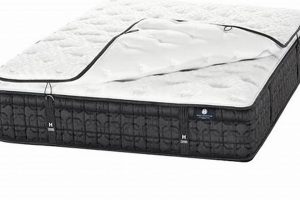
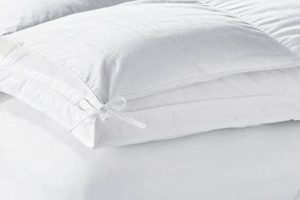
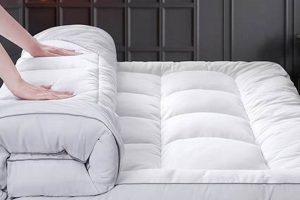
A bedding accessory designed to enhance the comfort of a twin-sized bed, this product is typically filled with down feathers or a down alternative. Placed directly on top of the mattress, it provides an additional layer of cushioning and support, improving the sleep surface. For example, a lightweight version might be used to soften a firmer mattress, while a thicker option can add significant plushness.
The inclusion of such an item in sleep arrangements can yield benefits such as pressure relief, potentially alleviating aches and pains. Furthermore, down fill offers thermal regulation, helping to maintain a comfortable body temperature throughout the night. Historically, using feathers for bedding insulation dates back centuries, evolving into the specialized product available today that aims to improve sleep quality and mattress longevity.
The subsequent sections will detail the various types of fill materials used in these products, discuss considerations for selecting the appropriate thickness and construction, and provide guidance on maintenance and care to ensure lasting comfort and performance.
Selecting a Twin Down Mattress Topper
The following guidelines offer crucial considerations for individuals seeking to purchase a product designed to improve sleep comfort and mattress longevity on a twin-sized bed. Proper selection is vital for optimal results.
Tip 1: Assess Mattress Condition: Evaluate the existing mattress for sags, indentations, or significant wear. A product of this type can enhance a slightly worn mattress, but it will not compensate for severe damage. If the mattress is excessively worn, replacement may be necessary before considering a topper.
Tip 2: Determine Fill Material Preference: Down, feathers, or synthetic alternatives each possess unique characteristics. Down offers superior loft and warmth but may trigger allergies. Feather blends are more affordable but can be less soft. Synthetic fills are hypoallergenic and easier to maintain but may lack the breathability of natural down.
Tip 3: Consider Loft and Thickness: Thicker toppers offer more cushioning and pressure relief. Evaluate individual sleep preferences and body weight to determine the appropriate loft. Lighter individuals may find a thinner topper sufficient, while heavier individuals may benefit from a thicker option.
Tip 4: Examine Construction Quality: Look for baffle box construction to prevent fill from shifting and creating uneven surfaces. Ensure the cover fabric is durable and breathable, preferably made of cotton or a similar natural material.
Tip 5: Review Warranty and Return Policies: A reputable manufacturer will offer a warranty against defects and a reasonable return policy. Read the terms and conditions carefully before making a purchase to ensure recourse in case of dissatisfaction.
Tip 6: Check for Certifications: Look for certifications like Responsible Down Standard (RDS) or OEKO-TEX Standard 100 to ensure the down is ethically sourced and the product is free from harmful substances.
By carefully considering these factors, individuals can make an informed decision when selecting a twin-sized bedding accessory intended to optimize their sleep environment.
The subsequent sections will delve into the practical aspects of maintaining the selected product to ensure long-lasting comfort and performance.
1. Size compatibility

Size compatibility represents a fundamental aspect of a twin down mattress topper. This term refers to the degree to which the dimensions of the mattress topper align with the standardized measurements of a twin-sized bed. A mismatch in dimensions can negate the benefits of the topper, rendering it ineffective or even detrimental to sleep quality. For instance, a topper that is too small leaves portions of the mattress uncovered, resulting in uneven support. Conversely, an oversized topper may bunch up or overhang, creating discomfort and potentially damaging the product itself. The industry standard for a twin mattress is typically 38 inches wide by 75 inches long. Therefore, a compatible topper should adhere closely to these measurements to ensure optimal performance and aesthetic appeal.
The practical significance of size compatibility extends to several areas. Firstly, proper fit facilitates even weight distribution, maximizing pressure relief and support. Secondly, it contributes to the overall stability of the bedding arrangement, preventing slippage and movement during sleep. Thirdly, a correctly sized topper integrates seamlessly with fitted sheets, maintaining a smooth and tidy appearance. For example, a topper with inaccurate dimensions may cause fitted sheets to pull and wrinkle, leading to discomfort and requiring frequent readjustment. Finally, ensuring correct size compatibility is crucial for maximizing the lifespan of the product. An ill-fitting topper can experience undue stress, leading to premature wear and tear, potentially diminishing its effectiveness and requiring earlier replacement.
In conclusion, size compatibility is not merely a trivial consideration but a crucial determinant of the effectiveness and longevity of a twin down mattress topper. Accurate dimensions are essential for realizing the intended benefits of the product, including enhanced comfort, improved support, and prolonged mattress life. Neglecting this aspect can lead to dissatisfaction, discomfort, and ultimately, a waste of resources. Therefore, verification of size compatibility should be a primary step in the selection process.
2. Fill power

Fill power serves as a critical determinant of the quality and performance of a twin down mattress topper. It quantifies the loft and insulation capacity of the down fill, directly impacting the topper’s comfort and support characteristics. Higher fill power generally correlates with increased warmth, lighter weight, and enhanced durability. Understanding this metric is essential for informed product selection.
- Loft and Comfort
Fill power directly dictates the loft, or fluffiness, of the down. A higher fill power signifies that a given weight of down occupies a larger volume, creating a more plush and supportive surface. This translates to improved pressure relief and contouring to the body, enhancing sleep comfort. For instance, a topper with 700 fill power will provide significantly more cushioning than one with 500 fill power, even if both contain the same total weight of down.
- Insulation and Warmth
Increased fill power also enhances the insulation properties of the topper. The loftier the down, the more air it traps, creating a thermal barrier that retains body heat. This is particularly important for individuals who tend to sleep cold. A higher fill power topper will provide greater warmth without adding excessive weight or bulk. Conversely, in warmer
climates, a lower fill power may be preferable to prevent overheating. - Weight and Compressibility
Paradoxically, higher fill power down is often lighter than lower fill power down for a given level of warmth and support. This is because less down is required to achieve the desired loft and insulation. This reduced weight can enhance the overall comfort and ease of handling of the topper. Furthermore, higher fill power down tends to be more compressible, making the topper easier to store and transport when not in use.
- Durability and Longevity
Fill power is an indicator of the quality and resilience of the down. Higher fill power down tends to be more durable and resistant to compression over time. This means that a topper with a higher fill power will maintain its loft and support characteristics for a longer period, providing sustained comfort and value. Lower fill power down is more prone to flattening and losing its insulating properties, requiring more frequent replacement of the topper.
Therefore, when selecting a twin down mattress topper, careful consideration of fill power is paramount. This metric directly impacts the topper’s comfort, warmth, weight, and longevity, ultimately influencing the overall sleep experience. Investing in a topper with an appropriate fill power, tailored to individual needs and preferences, ensures optimal performance and lasting satisfaction.
3. Construction quality

Construction quality fundamentally determines the performance and longevity of a twin down mattress topper. This encompasses the materials used, the manufacturing techniques employed, and the overall structural design. Inferior construction compromises the topper’s ability to provide consistent support, maintain its shape, and withstand regular use. For instance, a topper with poorly stitched seams is prone to leakage of down fill, resulting in uneven distribution and diminished comfort. Similarly, a low-quality cover fabric can easily tear or pill, impacting both the aesthetic appeal and the functional integrity of the product. The selection of down-proof fabric is crucial; without it, the down will inevitably escape, leading to discomfort and a reduction in the topper’s loft.
Baffle box construction is a significant factor influencing construction quality. This design involves creating individual compartments within the topper to contain the down fill, preventing it from shifting and clumping. Without baffle box construction, the down is free to migrate, leading to areas of concentrated fill and other areas devoid of fill, thereby compromising uniform support and thermal regulation. Another aspect is the quality of the stitching. Reinforced seams and tight stitch densities contribute to the topper’s durability, preventing tears and seam separation under pressure. The type of fill used also contributes to the overall construction; ethically sourced down with a high fill power will provide better loft and last longer than cheaper, less-processed alternatives. Consider the real-life example of two seemingly identical toppers: one with baffle box construction and reinforced seams will provide consistent comfort and support for years, while the other, lacking these features, will quickly flatten and become lumpy, requiring premature replacement.
In summary, construction quality is paramount in evaluating a twin down mattress topper. It directly impacts the product’s comfort, durability, and overall value. Prioritizing construction details, such as baffle box design, seam reinforcement, and the use of down-proof fabric, ensures a worthwhile investment that provides consistent and lasting sleep enhancement. Neglecting these factors often results in dissatisfaction and a shortened product lifespan, underscoring the importance of diligent assessment before purchase.
4. Thermal properties

Thermal properties are integral to the functionality of a twin down mattress topper, directly influencing sleep comfort. The down fill, characterized by its loft and structure, creates air pockets that act as insulators, regulating temperature. This insulation minimizes heat transfer, maintaining a consistent sleeping environment. Consequently, the appropriateness of a given topper depends on individual temperature preferences and ambient climate conditions. For example, individuals residing in cooler climates often benefit from the enhanced warmth provided by a thicker, high-fill-power down topper, while those in warmer climates might prefer a thinner option with greater breathability.
The insulating capacity of the down impacts the sleeper’s thermal equilibrium, affecting the quality of rest. Excessive heat retention can lead to discomfort and restlessness, while insufficient insulation results in shivering and disturbed sleep. Therefore, the selection of a topper should consider the balance between warmth and breathability. Toppers utilizing down clusters with a higher fill power tend to offer superior insulation but may also trap more heat. Conversely, toppers with a lower fill power, or those incorporating a blend of down and feathers, typically exhibit enhanced breathability at the expense of warmth. Practical applications of this understanding include choosing a down alternative for individuals prone to night sweats or selecting a down topper with a cotton cover to promote airflow.
In conclusion, the thermal properties of a twin down mattress topper are pivotal in determining its suitability for individual sleepers. Understanding the interplay between fill power, insulation, and breathability is essential for optimizing sleep comfort. Selecting a topper that aligns with personal temperature preferences and environmental factors can significantly improve sleep quality. Failure to consider these thermal characteristics can lead to discomfort and diminished satisfaction, underscoring the importance of informed decision-making.
5. Maintenance requirements
Maintenance requirements represent a crucial determinant of the lifespan and performance of a twin down mattress topper. Regular and appropriate care directly influences its ability to provide consistent support, maintain its loft, and remain hygienic. Neglecting these requirements precipitates premature degradation, reduced comfort, and potential allergen accumulation. The causal relationship is evident: infrequent cleaning, for instance, allows the buildup of dust mites, body oils, and other contaminants, compromising the down’s structure and reducing its insulating capacity. A tangible example is the progressive flattening of the topper and the development of unpleasant odors due to the lack of routine cleaning, effectively nullifying its intended benefits.
Practical applications of understanding maintenance requirements translate into specific care protocols. Periodic fluffing helps restore the down’s loft, ensuring uniform distribution and preventing clumping. Spot cleaning addresses localized spills and stains, preventing them from becoming embedded within the fabric. Professional cleaning, conducted according to the manufacturer’s instructions, effectively removes accumulated allergens and restores the down’s natural resilience. Airing the topper outdoors
on a dry, sunny day helps eliminate moisture and odors. Storing the topper properly, in a breathable bag away from direct sunlight and moisture, prevents mildew growth and structural damage. These actions extend the topper’s useful life and preserve its comfort characteristics.
In conclusion, the maintenance requirements of a twin down mattress topper are inextricably linked to its long-term value and functionality. Consistent adherence to proper care procedures ensures optimal performance, hygiene, and durability. While the effort required may seem burdensome, the alternative premature degradation and compromised sleep quality underscores the importance of diligent upkeep. Ultimately, understanding and fulfilling these requirements represents a practical investment in sleep comfort and product longevity.
Frequently Asked Questions
The following addresses common inquiries regarding a bedding accessory designed to enhance comfort on a twin-sized bed. These questions aim to provide clarity and informed decision-making.
Question 1: How often should a twin down mattress topper be cleaned?
Professional cleaning is recommended every one to two years. Spot cleaning should address spills promptly. Regular airing helps maintain freshness.
Question 2: Can a twin down mattress topper rectify a severely worn mattress?
While it enhances comfort, it will not compensate for significant structural damage. A severely worn mattress may require replacement.
Question 3: Is a twin down mattress topper suitable for individuals with allergies?
Those with down allergies should consider hypoallergenic alternatives. Regular cleaning minimizes allergen accumulation.
Question 4: What is the ideal fill power for a twin down mattress topper?
Fill power preferences vary. Higher fill power provides greater loft and warmth; lower fill power offers breathability.
Question 5: How does baffle box construction improve a twin down mattress topper?
Baffle box construction prevents down from shifting, ensuring even distribution and consistent support.
Question 6: Will a twin down mattress topper fit all twin-sized beds?
Standard twin dimensions are generally consistent. Confirm measurements to ensure proper fit.
In summary, the suitability of a twin down mattress topper depends on individual preferences, mattress condition, and proper maintenance.
The next section will discuss factors to consider when comparing different brands and models.
Conclusion
This discussion has thoroughly examined the attributes and considerations relevant to a twin down mattress topper. From understanding fill power and construction quality to acknowledging thermal properties and maintenance requirements, informed decision-making is essential for realizing the intended benefits. A proper selection optimizes sleep comfort and contributes to the longevity of the underlying mattress.
Continued diligence in evaluating specific product features and aligning them with individual needs remains crucial. Future advancements in materials and manufacturing may further enhance the functionality and durability of these bedding accessories. Prioritizing informed choices ensures both satisfactory sleep experiences and sustained value.