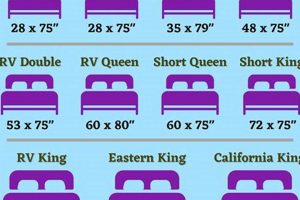
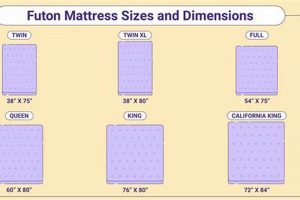
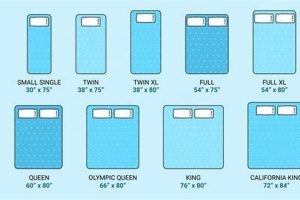
The measurements of a standard full-size bed frame or mattress are generally 54 inches wide and 75 inches long. These figures represent the industry-accepted dimensions for this size category, ensuring compatibility between different manufacturers of bedding and frames. Knowing these measurements allows consumers to select appropriate sheets, comforters, and other bedding accessories.
Understanding these measurements is crucial for space planning within bedrooms, especially in smaller living spaces where maximizing floor area is essential. The size provides a balance between accommodating one or two sleepers comfortably without consuming excessive room space. Historically, this bed size has offered a practical solution for single adults or couples in apartments and smaller homes.
With this fundamental understanding established, the following sections will delve into the suitability of this size for various individuals and sleeping arrangements, the factors to consider when choosing one, and how it compares to other common mattress sizes available on the market.
Guidance Regarding Full Mattress Size
The following provides crucial advice when considering a standard full-size mattress based on its measurements.
Tip 1: Room Size Assessment: Evaluate bedroom dimensions prior to purchase. The established width and length must allow sufficient space for movement and furniture placement.
Tip 2: Occupancy Consideration: A width of 54 inches may prove restrictive for two adults. A single sleeper or occasional double occupancy is more appropriate for this size.
Tip 3: Bedding Selection: Acquire bedsheets and comforters specifically designed for this standardized size. Ill-fitting bedding can diminish sleep quality and mattress lifespan.
Tip 4: Frame Compatibility: Verify frame measurements match mattress dimensions. Discrepancies can lead to instability and premature wear.
Tip 5: Height Considerations: Account for the thickness of the mattress. Combined with the frame height, ensure comfortable ingress and egress from the bed.
Tip 6: Measuring Existing Spaces: Before buying, precisely measure spaces like doorframes and stairwells to ensure the mattress can be moved into your room easily.
Tip 7: Comparing with Other Sizes: Compare the exact measurements with those of queen or twin mattresses to determine the optimal fit for individual needs and spatial limitations.
Adhering to these guidelines ensures informed decision-making, promoting both comfort and practicality.
The subsequent section will summarize key features and benefits of selecting a full-size mattress, reinforcing its position within the range of available options.
1. Width

The width of 54 inches is a defining characteristic of the full-size mattress category. This measurement directly impacts the suitability of the mattress for different users and room sizes. It is an immutable dimension dictated by industry standards.
- Single Occupancy Comfort
The 54-inch width provides ample space for a single adult sleeper. This dimension allows for comfortable movement during sleep and prevents feelings of confinement. For individuals who prefer more space than a twin mattress offers, but do not require the expanse of a queen, the full-size width presents an optimal balance.
- Double Occupancy Limitations
While a full-size mattress can accommodate two adults, the 54-inch width provides each sleeper with only 27 inches of personal space. This restricted area may result in discomfort or disturbed sleep for couples or co-sleepers who prefer more individual room. The lack of space can lead to increased partner disturbance and reduced overall sleep quality.
- Spatial Efficiency
The specified width contributes to the overall spatial efficiency of the mattress. In smaller bedrooms, a 54-inch wide mattress allows for adequate floor space, enabling easier movement and furniture placement. This is a crucial factor in apartments, dorm rooms, or any living situation where square footage is limited.
- Bedding Selection and Availability
The 54-inch width dictates bedding requirements. Full-size sheets, comforters, and other bedding accessories are manufactured to precisely fit this dimension. Consequently, there is a wide availability of bedding options specifically designed for mattresses conforming to this standard, ensuring both aesthetic appeal and functional fit.
In summary, the 54-inch width is an integral component of the full mattress category. It governs the mattress’s capacity for single or double occupancy, its spatial footprint within a room, and the availability of compatible bedding. The measurement remains a critical factor for consumers when evaluating if this particular mattress configuration aligns with their individual needs and circumstances.
2. Length

The length of 75 inches is an intrinsic component of the overall dimensional specification for a full-size mattress. This measurement defines the longitudinal extent of the sleeping surface and directly influences the suitability of the mattress for individuals of varying heights.
- Accommodation of Adult Height
The 75-inch length primarily dictates the maximum height of individuals who can comfortably occupy the mattress. While it is suitable for most adults, individuals exceeding approximately 5 feet 10 inches may find their feet extending beyond the mattress edge, potentially leading to discomfort and disrupted sleep. Careful consideration of personal height is crucial when selecting a full-size mattress.
- Space Optimization in Bedrooms
The specified length is a determinant in optimizing bedroom layout and space utilization. A 75-inch long mattress requires a correspondingly sized frame and clear floor space, especially in smaller living areas. Accurate assessment of available room dimensions is necessary to ensure the bed fits comfortably without obstructing movement or other furniture placements.
- Bedding Compatibility Standards
This measurement is a governing factor in the standardized sizing of bedding accessories. Sheets, blankets, and comforters intended for full-size mattresses are manufactured to conform to this length. Consequently, deviations from this standard, such as using queen-size bedding, will result in an improper fit and potential functional issues.
- Comparison to Other Mattress Sizes
The 75-inch length provides a key point of comparison when evaluating alternative mattress sizes. Compared to a twin mattress, which typically shares the same length, the full-size offers increased width. Conversely, queen and king mattresses provide both greater length and width, offering superior accommodation for taller individuals or couples. Understanding these dimensional differences is fundamental for making an informed purchase.
In summary, the 75-inch length is a critical parameter in the assessment of a full-size mattress. This measurement affects user comfort, spatial efficiency, and compatibility with bedding accessories. The measurement is a primary determinant for consumers when evaluating whether this specific configuration meets their individual requirements and spatial constraints.
3. Area

The area of 4050 square inches is a direct mathematical consequence of the defined dimensions of a full-size mattress, specifically the 54-inch width and 75-inch length. It is obtained through the multiplication of these two linear measurements (54 inches x 75 inches = 4050 square inches). Consequently, this value is not an independent property but rather an emergent characteristic, inextricably linked to and determined by the established length and width. This calculated surface area provides a quantitative representation of the available sleeping space, influencing factors such as comfort and occupancy suitability.
The significance of this area lies in its practical implications for space planning and user comfort. For instance, knowing the surface area allows for a more precise assessment of how the mattress will fit within a given bedroom and whether it provides sufficient space for one or two sleepers. A mattress with a larger surface area generally offers greater freedom of movement and reduces the likelihood of positional constraints during sleep. As an example, a single sleeper using a full-size mattress with 4050 square inches will experience more unrestricted movement compared to the same individual using a twin mattress with a smaller surface area.
Understanding the relationship between a full-size mattress dimensions and resulting surface area contributes to informed purchasing decisions. While linear dimensions are crucial, the area provides an aggregated metric representing the overall sleeping space. It is essential to consider the interplay between width, length, and area when evaluating mattress suitability for individual needs and spatial constraints. Challenges in utilizing a full-size mattress effectively often stem from neglecting this holistic dimensional analysis, emphasizing the importance of understanding the 4050 square inch area in relation to the mattress’s length and width.
4. Frame Compatibility

Frame compatibility represents a critical consideration directly influenced by the standardized measurements of a full-size mattress. A full-size mattress, conforming to dimensions of 54 inches in width and 75 inches in length, necessitates a correspondingly sized bed frame to ensure proper support and stability. The cause-and-effect relationship is straightforward: a mismatch between mattress dimensions and frame dimensions will invariably lead to compromised structural integrity, accelerated mattress wear, and diminished user comfort. For example, attempting to support a full-size mattress on a twin-size frame is not feasible due to the frame’s insufficient width. Conversely, placing a full-size mattress on a queen-size frame will leave unsupported gaps, potentially causing the mattress to sag or shift.
The importance of appropriate frame compatibility extends beyond mere structural concerns. A correctly sized frame provides uniform support across the entire mattress surface, preventing localized stress points that can lead to premature degradation of the mattress core and cover. Furthermore, frame compatibility ensures that the mattress maintains its intended shape and firmness, thereby optimizing the user’s sleep experience. For instance, using a platform bed specifically designed for a full-size mattress eliminates the need for a box spring, providing firm, consistent support. Alternatively, a slatted frame with properly spaced slats can enhance airflow beneath the mattress, preventing moisture buildup and prolonging its lifespan. Conversely, an ill-fitting frame may exacerbate issues like motion transfer, reducing sleep quality for couples sharing the bed.
In summary, frame compatibility is inextricably linked to the precise dimensional specifications of a full-size mattress. Achieving optimal sleep comfort and maximizing mattress longevity requires meticulous attention to the match between these two components. Disregarding this connection can result in structural instability, accelerated wear, and compromised user experience. The importance of adhering to industry-standard dimensions and selecting frames accordingly cannot be overstated.
5. Sheet Sizes

The selection of appropriate sheet sizes is inextricably linked to the dimensions of a full-size mattress. Mismatched dimensions result in either ill-fitting sheets that are too loose and prone to slipping, or sheets that are too tight, potentially damaging the fabric and rendering them unusable.
- Fitted Sheet Depth
The depth of the fitted sheet, the measurement from the seam to the corner, must correspond to the thickness of the mattress. If the fitted sheet is too shallow, it will not securely grip the corners, causing it to detach during sleep. Conversely, an excessively deep fitted sheet results in excess fabric that can bunch and create discomfort. Standard full-size fitted sheets are typically designed to accommodate mattresses between 9 and 12 inches thick. Thicker mattresses necessitate deep-pocket sheets.
- Flat Sheet Dimensions
The dimensions of the flat sheet, which drapes over the fitted sheet, are also crucial. A flat sheet too small will not adequately cover the mattress, leaving portions of the fitted sheet exposed. A flat sheet too large can be cumbersome and difficult to manage. Standard full-size flat sheets are typically around 81 inches wide and 96 inches long, providing sufficient coverage for the mattress and allowing for tucking under the sides.
- Pillowcase Compatibility
While not directly related to the mattress dimensions, pillowcases are an integral part of a sheet set. Standard pillowcases are designed to fit standard-size pillows, which are commonly used on full-size beds. Coordinating pillowcases enhance the aesthetic appeal of the bedding ensemble and contribute to overall sleep comfort.
- Material Considerations
The material of the sheets also influences their fit and performance. Natural fibers like cotton may shrink slightly after washing, potentially affecting the fit of the fitted sheet. Synthetic materials, such as microfiber, tend to be more resistant to shrinking. Therefore, it is essential to consider the material composition and follow the manufacturer’s care instructions to maintain the proper fit of the sheets.
Understanding the relationship between full-size mattress dimensions and compatible sheet sizes is crucial for ensuring a comfortable and well-fitting bedding arrangement. Paying attention to the fitted sheet depth, flat sheet dimensions, and material considerations will help to select sheets that provide optimal coverage and enhance sleep quality.
6. Room Size

The dimensions of a sleeping area directly influence the suitability of a full-size mattress. Careful consideration of spatial constraints is necessary to ensure functionality and comfort.
- Minimum Room Dimensions
A room intended for a full-size mattress, measuring 54 inches by 75 inches, must exceed these measurements to allow for movement and additional furniture. A minimum room size of 10 feet by 10 feet is generally recommended to accommodate the bed and provide adequate walking space. Smaller rooms may feel cramped and limit functionality.
- Furniture Placement
The inclusion of furniture, such as dressers, nightstands, and desks, further impacts room size requirements. The placement of these items must be planned in conjunction with the bed to maintain a functional layout. For example, if a dresser is placed at the foot of the bed, the room’s length must accommodate both the bed and the dresser with sufficient clearance for opening drawers and navigating the space.
- Doorway and Pathway Clearance
Adequate clearance around doorways and pathways is essential for ease of movement. The placement of the bed should not obstruct doorways or create narrow passageways that impede access to other areas of the room. Building codes often stipulate minimum pathway widths to ensure safety and accessibility.
- Visual Perception of Space
While actual dimensions are critical, the visual perception of space also influences the suitability of a full-size mattress. A room with high ceilings and ample natural light may feel more spacious than a room with lower ceilings and limited light, even if the floor area is identical. Utilizing light colors and minimalist decor can enhance the perception of spaciousness in smaller rooms.
The interplay between room size and the dimensions of a full-size mattress dictates the usability and comfort of the sleeping area. Careful planning and consideration of furniture placement, pathway clearance, and visual perception are essential for optimizing space utilization and creating a functional and aesthetically pleasing bedroom environment. A holistic assessment of these factors ensures that the selected mattress size is appropriate for the available space.
Frequently Asked Questions
The following addresses common inquiries related to the measurements and suitability of full-size mattresses.
Question 1: Are “full” and “double” mattresses the same size?
Yes, the terms “full” and “double” are used interchangeably to describe a mattress measuring approximately 54 inches wide and 75 inches long.
Question 2: What is the precise surface area of a mattress with standard measurements?
The area calculation involves multiplying the length by width. The resultant surface area is 4050 square inches.
Question 3: How does a standard size compare to a queen-size mattress?
A queen mattress exceeds those measurements and normally 60 inches wide and 80 inches long, which offers additional space for couples.
Question 4: Is a standard size suitable for two adults?
While two adults can occupy this size, it provides limited individual space. Alternative sizes, such as a queen or king, are generally recommended for enhanced comfort when shared by two adults.
Question 5: What sheet sizes are compatible with these measurements?
Sheets labeled as “full” or “double” are designed to fit these dimensions. Ensure the fitted sheet depth matches the mattress thickness.
Question 6: Will these specifications fit in a small bedroom?
Careful evaluation of the room is essential. Measure the space, accounting for additional furniture and movement. Minimum room dimensions of approximately 10 feet by 10 feet are recommended.
Understanding measurements contributes to informed purchasing decisions, optimizing both comfort and practicality. Further aspects and more details will be provided in the next article section.
The ensuing section will address the evolution of mattresses.
Full Mattress Dimensions in Inches
This exploration has meticulously detailed the standard measurements of a full-size mattress, emphasizing the fixed dimensions of 54 inches in width and 75 inches in length. These measurements dictate suitability for single or double occupancy, influence space planning within bedrooms, and determine compatibility with bed frames and bedding accessories. The derived surface area of 4050 square inches serves as a key indicator of available sleeping space. Frame compatibility and sheet sizes must align with these established dimensions to ensure both structural integrity and user comfort.
Recognizing the importance of these specific measurements empowers consumers to make informed purchasing decisions. A thorough understanding of dimensional constraints, spatial considerations, and compatibility factors is paramount for optimizing sleep quality and maximizing the utility of living spaces. Further research into material types, construction methods, and ergonomic considerations will contribute to a more complete assessment of mattress suitability.