



This sleep system combines a supporting structure designed to elevate and house a sleeping surface with a specialized type of cushioning material. The base, often constructed of wood, metal, or a combination thereof, provides a foundation for the overlying component. The upper portion utilizes viscoelastic foam, engineered to conform to the body’s shape and distribute weight evenly.
The rise in popularity of such systems stems from their capacity to enhance sleep quality and promote physical well-being. The support structure ensures proper alignment and prevents sagging, while the conforming layer alleviates pressure points, potentially reducing discomfort and promoting restful sleep. Historical trends indicate a shift from traditional innerspring models to these more advanced, comfort-focused designs.
Understanding the distinct characteristics of various support structure materials, the different densities and compositions of the conforming layer, and the relevant aspects of proper care and maintenance will provide a comprehensive perspective on optimizing this type of sleep arrangement. Consequently, the following sections will delve into these crucial elements in greater detail.
Optimizing Your Sleep Experience
Maximizing the benefits of a sleep system incorporating a support structure and viscoelastic foam requires careful consideration of several factors. The following tips provide guidance for selection, maintenance, and usage.
Tip 1: Consider Support Structure Material: Assess the characteristics of wood, metal, or upholstered frames. Wood offers aesthetic appeal and stability, while metal provides durability and often affordability. Upholstered options contribute to a softer aesthetic and may offer additional padding.
Tip 2: Evaluate Foam Density: Viscoelastic foam density influences support and durability. Higher-density foam generally provides greater support and resists compression over time. Select a density appropriate for individual weight and sleep preferences.
Tip 3: Ensure Proper Ventilation: Adequate airflow is crucial to prevent moisture buildup and maintain hygiene. Select a support structure with appropriate spacing to facilitate ventilation and consider a breathable cover for the viscoelastic foam.
Tip 4: Utilize a Supportive Foundation: A solid or closely spaced slatted foundation is essential to prevent sagging and maintain the integrity of the viscoelastic foam. Avoid using a foundation with excessive gaps or inadequate support.
Tip 5: Regularly Rotate the Foam Layer: Periodic rotation of the viscoelastic foam layer can help distribute wear and prevent uneven compression. Follow manufacturer recommendations for rotation frequency.
Tip 6: Protect Against Spills and Stains: Use a waterproof mattress protector to safeguard the viscoelastic foam from spills, stains, and allergens. Promptly address any spills to minimize potential damage.
Tip 7: Adhere to Weight Limits: Respect the specified weight limits for both the support structure and the viscoelastic foam layer. Exceeding these limits can compromise structural integrity and reduce product lifespan.
Implementing these guidelines can contribute to enhanced comfort, improved sleep quality, and extended product longevity. Attention to these details ensures a more fulfilling and beneficial sleep experience.
The concluding section will summarize the key aspects discussed and offer final recommendations for informed decision-making.
1. Frame Material Durability

Frame material durability is a critical factor in the overall performance and longevity of a sleep system incorporating a support structure and viscoelastic foam. The frame provides the foundation upon which the mattress rests, and its ability to withstand weight and stress directly impacts the comfort and support experienced by the user. Insufficient durability can lead to premature wear, instability, and compromised sleep quality.
- Weight-Bearing Capacity
The frame must possess adequate strength to support the combined weight of the viscoelastic foam layer and the individuals using it. Materials such as solid hardwood or heavy-gauge steel offer superior weight-bearing capacity compared to less robust alternatives like particleboard or lightweight metal. Exceeding the frame’s weight limit can result in structural failure, causing sagging or collapse.
- Resistance to Wear and Tear
Daily use subjects the frame to constant stress and friction. Durable materials resist wear and tear from movement, impacts, and general handling. Scratches, dents, and weakening joints can compromise the frame’s stability and aesthetic appeal. Choosing materials known for their resistance to wear helps maintain the system’s integrity over time.
- Joint Strength and Stability
The points where the frame’s components connect are particularly vulnerable to stress. Strong, well-constructed joints are essential for maintaining the frame’s overall stability and preventing wobbling or squeaking. Dovetail joints in wood frames or welded joints in metal frames are examples of durable construction techniques that enhance long-term stability.
- Environmental Resistance
Exposure to humidity, temperature fluctuations, and other environmental factors can degrade certain frame materials. Wood may warp or rot in damp conditions, while metal can rust or corrode. Selecting materials that are naturally resistant to these elements or treated with protective coatings can prolong the frame’s lifespan and prevent structural damage.
The long-term comfort and support provided by a sleep system integrating a supportive structure and conforming foam are directly tied to the durability of the frame material. Investing in a frame constructed from robust, high-quality materials ensures that the system can withstand the demands of daily use and maintain its integrity for years to come, ultimately contributing to a more restful and beneficial sleep experience.
2. Foam Density Impact

Foam density within a viscoelastic mattress component exerts a significant influence on the overall performance and suitability of a sleep system when paired with a supporting structure. This property dictates the level of support, durability, and temperature regulation, directly affecting the user’s comfort and sleep quality. Understanding the implications of varying densities is crucial for informed selection.
- Support and Pressure Relief
Higher-density foam provides greater resistance to compression, offering enhanced support and spinal alignment. It conforms more slowly to the body’s contours, distributing weight evenly and reducing pressure points. Lower-density foam, conversely, conforms more readily but offers less support and may be more prone to bottoming out, potentially leading to discomfort and pain, particularly for individuals with higher body mass.
- Durability and Longevity
Density is directly correlated with the material’s ability to withstand repeated compression. Higher-density foams retain their shape and support characteristics for a longer period, resisting sagging and deformation. Lower-density foams degrade more quickly, leading to a reduced lifespan and compromised sleep surface. The initial cost savings of lower-density options may be offset by the need for more frequent replacement.
- Temperature Regulation
Denser foams tend to retain more heat due to reduced airflow. Individuals who sleep hot may find higher-density viscoelastic foam uncomfortably warm. Conversely, lower-density foams allow for greater air circulation, promoting cooler sleep. Open-cell foam structures, regardless of density, can further enhance breathability and temperature regulation.
- Motion Isolation
Both high and low densities can provide good motion isolation. However, higher-density foams may absorb movement slightly better due to their increased mass and resistance to compression. The thickness and layering of the viscoelastic material also contribute to motion isolation, independent of density alone.
The selection of appropriate foam density depends on individual preferences, body weight, sleeping position, and sensitivity to temperature. Individuals seeking maximum support and durability should prioritize higher densities. Conversely, those prioritizing contouring and cooler sleep may find lower densities more suitable. Ultimately, testing different densities and considering individual needs is essential to optimizing the benefits of a sleep system that combines a supporting structure with a viscoelastic foam component.
3. Support System Alignment

Proper support system alignment is paramount in realizing the potential benefits of a sleep system comprising a bed frame and a memory foam mattress. The alignment ensures that the sleeper experiences optimal comfort, postural support, and long-term spinal health. Misalignment can negate the advantages offered by the viscoelastic properties of the mattress, leading to discomfort and potential musculoskeletal issues.
- Foundation Integrity
The structural integrity of the bed frame forms the basis of support system alignment. A level and stable frame ensures the even distribution of weight across the memory foam mattress. A warped, broken, or sagging frame compromises the support offered by the mattress, leading to uneven compression and potential discomfort. For example, a broken slat in a slatted frame can create a localized depression, misaligning the spine during sleep and resulting in back pain.
- Mattress Compatibility
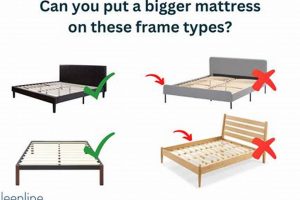
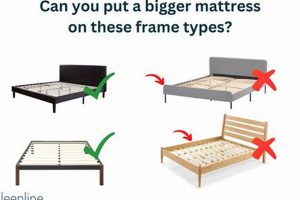
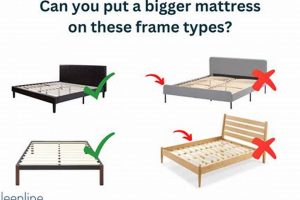
The design of the bed frame must be compatible with the memory foam mattress’s characteristics. Certain frames, particularly those with wide slat spacing or inadequate center support, may not provide sufficient support for the mattress, causing it to sag or deform over time. This incompatibility directly impacts the mattress’s ability to contour to the body and provide proper spinal alignment. Using a frame specifically designed for memory foam mattresses, often featuring closely spaced slats or a solid platform, ensures proper support and preserves the mattress’s shape.
- Ergonomic Considerations
The height of the bed frame, in conjunction with the mattress thickness, should allow for comfortable entry and exit from the bed. An excessively low or high bed can strain the back and joints, negating the benefits of a supportive mattress. Ergonomic bed height facilitates a neutral spine posture during transitions, minimizing strain. Individuals with mobility limitations should particularly consider bed height to promote safe and comfortable use.
- Spinal Alignment Maintenance
The primary goal of support system alignment is to maintain the natural curvature of the spine during sleep. A properly aligned system prevents excessive spinal flexion, extension, or rotation, reducing stress on the intervertebral discs and supporting muscles. The bed frame contributes by providing a stable and level base for the mattress to effectively perform its contouring function. When properly supported, the memory foam mattress can distribute weight evenly, minimizing pressure points and promoting optimal spinal alignment throughout the night.
These interconnected aspects highlight the significance of support system alignment in maximizing the benefits of a sleep system integrating a bed frame and a memory foam mattress. Overlooking the frame’s structural integrity, mattress compatibility, ergonomic considerations, and their combined effect on spinal alignment can compromise the quality of sleep and potentially lead to long-term musculoskeletal issues.
4. Temperature Regulation Properties

Temperature regulation properties are a critical component of a sleep system that integrates a bed frame with a memory foam mattress. Memory foam, while known for its pressure-relieving qualities, exhibits a tendency to retain heat due to its density and closed-cell structure. This inherent heat retention can create an uncomfortably warm sleeping environment, leading to disrupted sleep patterns. Consequently, the design and materials of both the mattress and the bed frame play a crucial role in mitigating this potential drawback and promoting thermal comfort. For example, traditional memory foam mattresses paired with solid platform bed frames lacking adequate ventilation often exacerbate heat retention, resulting in a less restful sleep experience.
Addressing the heat retention issue involves various strategies. Open-cell memory foam, engineered to enhance airflow, is frequently incorporated to improve breathability. Similarly, gel-infused memory foam aims to dissipate heat more effectively. Bed frame designs also contribute to temperature regulation. Slatted frames, in contrast to solid platforms, facilitate air circulation around the mattress, allowing heat to dissipate more readily. Metal frames, known for their thermal conductivity, can also aid in heat transfer away from the mattress surface. The practical significance of understanding these interdependencies lies in the ability to customize the sleep environment to individual needs. Individuals who tend to sleep hot may benefit from a combination of open-cell or gel-infused memory foam and a slatted metal bed frame.
In summary, the thermal properties of a memory foam mattress and the design of the bed frame are inextricably linked. While memory foam offers undeniable comfort and support, its heat retention characteristics must be actively managed. Optimizing airflow through mattress material selection and frame design constitutes a proactive approach to creating a sleep environment conducive to restful and restorative sleep. Challenges remain in fully eliminating heat retention, necessitating ongoing research and development in materials science and engineering. The broader theme underscores the importance of considering the holistic interplay of various components in designing effective and comfortable sleep systems.
5. Motion Isolation Capability

The motion isolation capability of a sleep system centered around a bed frame and a memory foam mattress directly influences the quality of sleep, particularly for couples or individuals sharing a sleeping surface. This capability refers to the mattress’s ability to absorb and minimize the transfer of movement from one area to another. The viscoelastic properties of memory foam inherently contribute to motion isolation, as the material conforms to the body’s shape and absorbs energy, limiting the propagation of movement across the surface. For example, if one partner shifts position during the night, a mattress with effective motion isolation will minimize the disturbance felt by the other partner. The bed frame’s construction also plays a role; a stable and sturdy frame minimizes overall movement and vibrations, further enhancing motion isolation. A poorly constructed frame, conversely, can amplify movement, negating some of the benefits of the memory foam layer. The practical significance of understanding this connection lies in the ability to select a sleep system that minimizes sleep disturbances and promotes more restful sleep.
Further enhancing motion isolation involves considering the density and thickness of the memory foam layer. Higher density foams generally exhibit superior motion isolation properties due to their increased ability to absorb energy. Similarly, a thicker memory foam layer provides a greater buffer against movement transfer. The type of bed frame can also contribute. Solid platform beds, for example, typically offer better motion isolation than slatted frames, as they provide a more stable and less resonant base. Real-world applications include hospital beds, where minimizing patient disturbance is crucial, and apartments where minimizing noise transfer between floors is essential. These examples illustrate the broad relevance and applicability of motion isolation in diverse environments.
In summary, the motion isolation capability of a bed frame with a memory foam mattress represents a critical factor in sleep quality, particularly for shared sleep surfaces. The inherent properties of memory foam, combined with the stability of the bed frame, work synergistically to minimize motion transfer and promote undisturbed sleep. Challenges remain in quantifying and standardizing motion isolation performance across different mattress and frame combinations. Nevertheless, understanding the underlying principles and considering the factors influencing motion isolation empowers consumers to make informed decisions and select a sleep system that meets their individual needs and preferences, ultimately contributing to improved sleep quality and overall well-being.
Frequently Asked Questions
The following questions address common concerns and misconceptions surrounding the selection, use, and maintenance of bed frames used in conjunction with memory foam mattresses.
Question 1: Are all bed frames suitable for use with memory foam mattresses?
No. Bed frames with widely spaced slats or inadequate center support may not provide sufficient support for a memory foam mattress, potentially leading to sagging and premature wear. Frames designed with closely spaced slats or solid platforms are generally recommended.
Question 2: Does memory foam mattress density affect the required bed frame support?
Yes. Higher density memory foam mattresses, while providing greater support, also exert more weight on the bed frame. Frames must be sufficiently robust to accommodate the combined weight of the mattress and occupants to prevent structural failure.
Question 3: What is the recommended bed frame material for optimal memory foam mattress performance?
Both wood and metal frames can provide adequate support for memory foam mattresses. The optimal material depends on individual aesthetic preferences and budget considerations. Solid wood frames generally offer greater stability, while metal frames provide durability and affordability.
Question 4: How does bed frame design influence memory foam mattress ventilation and temperature regulation?
Bed frames with open designs, such as those with slats, promote air circulation around the memory foam mattress, facilitating heat dissipation and minimizing overheating. Solid platform frames offer less ventilation and may exacerbate heat retention.
Question 5: Is a box spring necessary when using a memory foam mattress with a bed frame?
Generally, no. Memory foam mattresses are designed to be used directly on a supportive surface, such as a platform bed frame or closely spaced slats. A box spring is typically unnecessary and may actually detract from the mattress’s contouring benefits.
Question 6: How can bed frame noise be minimized when using a memory foam mattress?
Ensure all bed frame components are tightly secured to prevent movement and friction. Applying lubricant to joints and using rubber or felt pads between the frame and the floor can further reduce noise. Selecting a frame constructed from solid, stable materials also contributes to noise reduction.
Understanding these points can aid in the proper selection and use of a sleep system to maximize both comfort and longevity. Proper attention should be paid to material and construction.
The subsequent section will delve into the comparison of different types of sleep arrangement components.
Conclusion
This exploration of the bed frame with memory foam mattress configuration has highlighted critical factors influencing sleep quality and system longevity. Frame material durability, foam density impact, support system alignment, temperature regulation properties, and motion isolation capability all represent essential considerations for informed decision-making. Ignoring these interconnected elements can compromise the intended benefits of this sleep arrangement.
The careful evaluation of these elements remains paramount. The selection of compatible components, coupled with diligent maintenance practices, will yield optimal performance and contribute significantly to enhanced rest and overall well-being. Future advancements in materials science and ergonomic design promise further improvements in the efficacy and comfort of sleep systems incorporating this particular configuration.

![Ultimate King Size Bed Frame with Mattress [Deals] | Organic & Natural Mattress Buyer’s Guide: Non-Toxic Sleep Solutions](https://mattressworldpa.com/wp-content/uploads/2025/07/th-3215-300x200.jpg "Ultimate King Size Bed Frame with Mattress [Deals] Organic & Natural Mattress Buyer’s Guide: Non-Toxic Sleep Solutions")
![Best Queen Frame with Air Mattress [Deals!] | Organic & Natural Mattress Buyer’s Guide: Non-Toxic Sleep Solutions](https://mattressworldpa.com/wp-content/uploads/2025/07/th-3213-300x200.jpg "Best Queen Frame with Air Mattress [Deals!] Organic & Natural Mattress Buyer’s Guide: Non-Toxic Sleep Solutions")